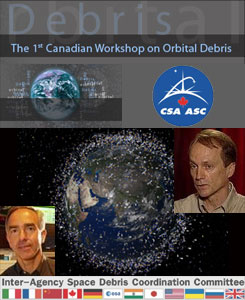
The Canadian Space Agency is organizing its ‘1st Orbital Debris Workshop’ for June 21-22 at the CSA Conference Centre in St-Hubert, Quebec. The agenda includes presentations and sessions by representatives from the Inter-Agency Debris Coordination Committee (IADC), NASA and ESA among others, aiming to provide information and initiate discussions about the ever more critical issue of human-generated orbital debris. The event is a collaboration between relevant stakeholders, including industry, universities, research organizations, and government departments. Speakers and Session Leaders include Steven MacLean (R) CSA President, Heiner Klinkrad (L) of ESA/IADC, and Nicholas Johnson NASA-JSC. Canada hosts this gathering as the subject multiplies in terms of risk to space-faring humans and all space exploration, transportation, communication, and scientific assets. This global concern is addressed by the IADC, which the CSA joined in 2010. The workshop will cover related topics including Monitoring and Measurement, Protection, Mitigation and Regulation. Reports compiled by NASA in 2009 indicate the existence of: 19,000 orbital debris objects larger than 10cm; 500,000 in the 1-10cm range; and tens of millions smaller than 1cm. An orbital collision with even a very small object can have severe consequences due to the excessive velocities involved. (Credit: CSA, IADC)
9th International Conference on Low-Cost Planetary Missions in Laurel MD
The International Academy of Astronautics (IAA) and Johns Hopkins University Applied Physics Laboratory will sponsor the 9th IAA Low Cost Planetary Missions Conference on June 21-23 in Laurel MD. Several hundred planetary scientists, technologists, engineers, managers, and agency officials are expected to attend the biennial conference devoted to cost-efficient planetary missions. There will be over 50 oral presentations covering various missions including Chandrayaan-2 (TR), O / OREOS, Akatsuki, Hayabusa, MESSENGER, MAVEN, IKAROS, GRAIL, EPOXI and Stardust NEXT. JAXA Scientist Masato Nakamura will give a talk on ‘Return to Venus of AKATSUKI (TL),’and Astrobotic President David Gump (inset) will discuss ‘Delivery of Lunar Surface Payloads on a Cost Shared Commercial Robotic Expedition.’ Astrobotic was awarded US$10M from the NASA Innovative Lunar Demonstrations Data Program to design, build and test the primary structure for its spacecraft / lander (BL). JN Goswami (BR) of ISRO will give an overview of the upcoming Chandrayaan-2 mission. The 2650 Kg orbiter (TR), lander and rover (C) are slated for launch onboard a GSLV rocket NET 2014. Honorary chairs at the event include JAXA scientist Hiroki Matsuo and former ISRO Chairman and IAA President, Madhavan Nair (CR). (Credit: Astrobotic, ISRO, viewline.com, sigada.org)
= All times for terrestrial events in local time unless noted.
= All times for international terrestrial events in local time unless noted.
= All times for space events, and…
= All times for international space / astro events in Hawaii Standard Time unless noted. Add 10 hours to obtain UT (‘Universal Time;’ Greenwich, England).
Jun 20 — International Space Station, LEO: E-28 crew members continue their scheduled science, maintenance and exercise activities; ESA Johannes Kepler Automated Transfer Vehicle-2 scheduled to undock from the ISS Zvezda service module port at 09:48 CDT and will burn up in the atmosphere over the Pacific Ocean.
Jun 20 — NASA Lunar Reconnaissance Orbiter (LRO), Lunar Orbit: Lunar Orbiter Laser Altimeter (LOLA) aboard the LRO functioning nominally and has already taken more than 10 times as many elevation measurements as all previous missions combined.
Jun 20 — Mars Rover Opportunity, Red Planet: Opportunity continues trek to Endeavour crater, recently setting a new one-sol backwards driving distance record with a drive exceeding 165 meters.
Jun 20 — Adler Planetarium, Chicago IL: ‘Astro Explorers Jr,’ event for children over 5-years old to explore the exciting world of engineering through hands-on activities, museum exploration and more.
Jun 20-21 — New York University, New York City NY: ‘SciCoder Workshop 2011,’ event designed to introduce the young researcher to modern programming practices, languages, and tools as specifically applicable to scientific research.
Jun 20-26 — The French Aerospace Industries Association, Paris, France: ‘49th Paris Air Show 2011,’ featuring ESA scientists and full-size models of the Ariane 1 & 5 launchers
Continued from . . .
May 31 — NASA Lunar Science Institute, Lunar and Planetary Institute, Houston TX: ‘Lunar Exploration Summer Intern Program,’ 10-week program to evaluate possible landing sites for robotic and human exploration missions; through Aug 5.
Jun 13 — Space Voyage Academy, Littleton CO: ‘Space Voyage Summer Academy Camp,’ an enrichment program about space for students ages 5-16; through Jul 29.
Jun 18 — Colorado Space Grant Consortium, Virginia Space Grant Consortium, et al, Wallops Flight Facility VA: ‘RockOn! 2011: The Next How To Workshop;’ through Jun 23.
NET Jun 21 — RSA, Launch Soyuz / Progress 43P, Baikonur Cosmodrome, Kazakhstan: RSA Soyuz rocket set to launch 43rd Progress cargo delivery ship to ISS.
Jun 21 — NASA Headquarters, Washington DC:Media teleconference at 14:00 EDT to discuss results of the Lunar Reconnaissance Orbiter (LRO) mission and upcoming mission plans with panelists Douglas Cooke, Michael Wargo, and Richard Vondrak.
Jun 21 — Summer Solstice: Days are longer and nights shortest (opposite in southern hemisphere) as the Sun, traveling along the ecliptic, reaches a point farthest north of the celestial equator; 07:17.
Jun 21 — Mars: 4.3° SSE of Pleiades; 00:00.
WEDNESDAY
Jun 22 — The SETI Institute, Mountain View CA: Colloquium Series Lecture: ‘Laser Plasma Spectrochemistry,’ Richard Russo.
Jun 23 — Moon: At Last Quarter, 01:48; At Apogee (Distance 63.39 Earth-Radii), 18:00.
Jun 23 — Asteroid 2009 WW104: Near-Earth Flyby (0.028 AU).
FRIDAY
Jun 24-25 — NASA, Tallahassee FL: Public viewing for the Multi-Purpose Crew Vehicle spacecraft that will carry humans into deep space at the Tallahassee Challenger Learning Center.
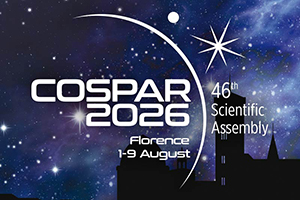
Includes ~150 meetings covering the fields of COSPAR Scientific Commissions / Panels / Task Groups, such as SC B: The Earth-Moon System, Planets, and...
At the Palais des Nations and online. Outer space is entering a renewed phase of strategic importance, defined by rapid innovation, growing competition and deepening...
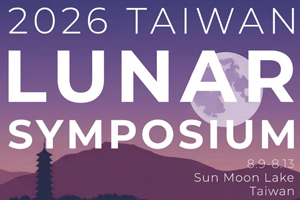
This international lunar science meeting has two objectives: to provide a platform for leading experts to review recent advances across lunar research, from the...
At CSIR International Convention Centre. Key topics are Earth Observation, Developing Space Tourism, Space Supply Manufacturing. Cultural tours are offered.
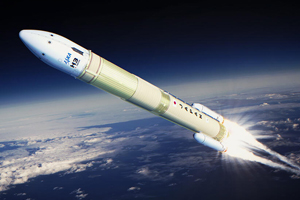
(No earlier than 10 Aug) Japan to launch the MICHIBIKI No. 7 | Quasi-Zenith Satellite System (QZS-7) navigation satellite. Launch window remains open through...
Participants will receive theoretical and hands-on training in electron imaging and X-ray spectroscopy for application to planetary samples. This training opportunity is targeted at...
"Leading Australia’s Space Future for Our Strategic Advantage". Southern Space 2026 brings together decision-makers who set the direction for Australia’s space sector. It is...
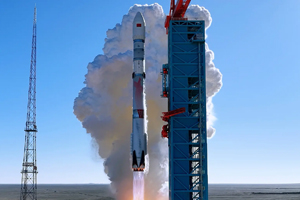
The second test launch of LandSpace's ZQ-3 rocket with undisclosed test payloads. Zhuque-3 first stage booster will attempt to land on its downrange landing...
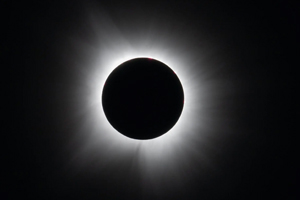
A total solar eclipse with a magnitude of 1.0386 (greatest eclipse 17:47:06 UTC) will be visible in parts of Greenland, Iceland, northern Russia, the Atlantic...
Includes presentation of the Neil Armstrong Award of Excellence, activities for the new class of Astronaut Scholars, 2-day Technical Conference where Scholars present their...
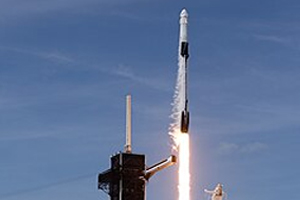
During U.S. spacewalk 97, two astronauts will replace a Space-to-Ground antenna on the orbital complex. The antenna is a critical communication system NASA uses...
Key themes include: Characterizing exoplanet-host solar-like stars; Star-planet interactions; Planet populations around solar-like stars. At University of Liège.
 The International Academy of Astronautics (IAA) and Johns Hopkins University Applied Physics Laboratory will sponsor the 9th IAA Low Cost Planetary Missions Conference on June 21-23 in Laurel MD. Several hundred planetary scientists, technologists, engineers, managers, and agency officials are expected to attend the biennial conference devoted to cost-efficient planetary missions. There will be over 50 oral presentations covering various missions including Chandrayaan-2 (TR), O / OREOS, Akatsuki, Hayabusa, MESSENGER, MAVEN, IKAROS, GRAIL, EPOXI and Stardust NEXT. JAXA Scientist Masato Nakamura will give a talk on ‘Return to Venus of AKATSUKI (TL),’and Astrobotic President David Gump (inset) will discuss ‘Delivery of Lunar Surface Payloads on a Cost Shared Commercial Robotic Expedition.’ Astrobotic was awarded US$10M from the NASA Innovative Lunar Demonstrations Data Program to design, build and test the primary structure for its spacecraft / lander (BL). JN Goswami (BR) of ISRO will give an overview of the upcoming Chandrayaan-2 mission. The 2650 Kg orbiter (TR), lander and rover (C) are slated for launch onboard a GSLV rocket NET 2014. Honorary chairs at the event include JAXA scientist Hiroki Matsuo and former ISRO Chairman and IAA President, Madhavan Nair (CR). (Credit: Astrobotic, ISRO, viewline.com, sigada.org)
 = All times for terrestrial events in local time unless noted.
 = All times for international terrestrial events in local time unless noted.
 = All times for space events, and…
 = All times for international space / astro events in Hawaii Standard Time unless noted. Add 10 hours to obtain UT (‘Universal Time;’ Greenwich, England).
 Jun 20 — International Space Station, LEO: E-28 crew members continue their scheduled science, maintenance and exercise activities; ESA Johannes Kepler Automated Transfer Vehicle-2 scheduled to undock from the ISS Zvezda service module port at 09:48 CDT and will burn up in the atmosphere over the Pacific Ocean.