China Launch of Tiangong 1 Mini-Space Station Laboratory Aboard Long March 2F Rocket
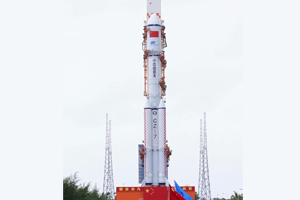
China is advancing its space efforts with the possible launch of Tiangong-1 (TR) by the end of the month from Jiuquan, China. Tiangong, or “Heavenly Palace,” is an 8.5 ton space laboratory module which will serve as a test-bed for docking maneuvers and the development of orbital technologies. Over the next 2 years, China plans to launch 3 missions to Tiangong-1 using Shenzhou Spacecraft 8, 9 and 10. The 3rd mission, Shenzhou 10 (B), is expected to transport China astronauts to live and work aboard the orbiting facility. Tiangong-1 will be followed by 2 more labs, the Tiangong 2 and 3, for the construction of a 70-ton space station planned NET 2020. Other space endeavors include the launch of the Chang’e 3 lunar lander / rover NET 2013. (Credit: China Manned Space Ofc, space.com)
USA Lectures Demonstrate Advances in Milky Way Science & Exploration
With over 200 Billion stars and a diameter of 100,000 light years, the Milky Way Galaxy may contain a multitude of habitable planets, alien life and countless other exciting discoveries. Several events this week highlight humanity’s 21st Century Galactic exploration goals and achievements. On August 24, at the SETI Institute in Mountain View CA, Professor Geoff Marcy (TR) will review the results of the NASA Kepler mission, dedicated to discovering the first Earth-like worlds around other stars. Marcy and his UC Berkeley team discovered the 1st multiple-planet system, the 1st Saturn-mass planet and the 1st Neptune-mass planet. In his lecture he will discuss what properties make a planet suitable for life, and strategies for estimating the occurrence of life in the universe. On the other side of the continent, Jim Zimbelman (BL) will present a lecture on 2 human-made objects that have left the confines of our Solar System, Voyagers 1 and 2. The Smithsonian Geologist’s talk, on Aug 24 at the National Mall in Washington DC, will focus on the current, interstellar locations of the 2 probes. On Aug 27, the International Lunar Observatory Association continues its successful Galaxy Forum program with the 3rd annual Galaxy Forum Kansas at the Kansas Cosmosphere and Space Center in Huntsville. (Credit: SETI, Kansas Cosmosphere, NASA)
= All times for terrestrial events in local time unless noted.
= All times for international terrestrial events in local time unless noted.
= All times for space events, and…
= All times for international space / astro events in Hawaii Standard Time unless noted. Add 10 hours to obtain UT (‘Universal Time;’ Greenwich, England).
Aug 22 — International Space Station, LEO: The 6 E-28 crew members continue station maintenance and a variety of science experiments; Progress 43 to undock from the aft port of the Zvezda service module tomorrow at 05:35 EDT for a fiery disposal over the Pacific Ocean.
Aug 22 — NASA Lunar Reconnaissance Orbiter (LRO), Lunar Orbit:All systems nominal in scientific phase of mission as LRO continues to make digital elevation and terrain maps that will be a fundamental reference for future human exploration.
Aug 22 — Mars, Red Planet: Some scientists speculate that recent high-res imagery showing river-like channels were created not by water but by massive, fast-moving lava flows of a type not seen on Earth.
Aug 22 — NASA Juno Mission, Deep Space: Juno continues Inner Cruise Mode 1 phase of mission.
Aug 22 — NASA GSFC Visitor Center, Greenbelt MD: Proposal Writing Workshop.
Aug 22-24 — International Primitive Body Exploration Working Group (IPBEWG), Pasadena CA: ‘IPBEWG 2011 Workshop,’ participants to discuss areas for future collaboration, such as missions / payloads, data sharing policies, ITAR, agency plans, Decadal survey and implications, human-based exploration, planetary protection and more.
Aug 24 — Asteroid (Near-Earth Flyby): 2000 CP101 (0.069 AU); 2011 OY17 (0.078 AU).
THURSDAY
NET Aug 25 — RSA, Launch Soyuz / Glonass K, Plesetsk Cosmodrome, Russia: A Russian government Soyuz rocket set to launch a Glonass K navigation satellite.
Aug 25-26 — NASA Small Bodies Assessment Group (SBAG), Pasadena CA: ‘5th Meeting of the SBAG.’
Aug 25-27 — Primland Astronomy, Meadows of Dan VA: ‘Star Master Weekend,’ featuring SETI Astronomer Seth Shostak.
Aug 25 — Moon: 2.6° S of Mars, 03:00; 9.4° SSW of Pollux, 17:00.
Aug 25 — Northern Iota Aquarids Meteor Shower Peak: Appearing to radiate from the constellation Aquarius, this meteor shower produces 5-10 meteors per hour.
Aug 25 — Gamma Leonid Meteors: A daylight meteor shower appearing to radiate from Constellation Leo.
Aug 25 — Asteroid 2011 BL45: Near-Earth Flyby (0.099 AU).
Aug 28 – Sep 1 — International Living With a Star Steering Committee, Chinese Academy of Sciences – Center for Space Science and Applied Research, Beijing, China: ‘2011 ILWS Workshop: Towards the Next Solar Maximum.’
Includes ~150 meetings covering the fields of COSPAR Scientific Commissions / Panels / Task Groups, such as SC B: The Earth-Moon System, Planets, and...
At the Palais des Nations and online. Outer space is entering a renewed phase of strategic importance, defined by rapid innovation, growing competition and deepening...
This international lunar science meeting has two objectives: to provide a platform for leading experts to review recent advances across lunar research, from the...
At CSIR International Convention Centre. Key topics are Earth Observation, Developing Space Tourism, Space Supply Manufacturing. Cultural tours are offered.
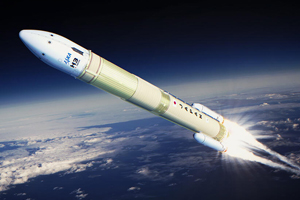
(No earlier than 10 Aug) Japan to launch the MICHIBIKI No. 7 | Quasi-Zenith Satellite System (QZS-7) navigation satellite. Launch window remains open through...
Participants will receive theoretical and hands-on training in electron imaging and X-ray spectroscopy for application to planetary samples. This training opportunity is targeted at...
"Leading Australia’s Space Future for Our Strategic Advantage". Southern Space 2026 brings together decision-makers who set the direction for Australia’s space sector. It is...
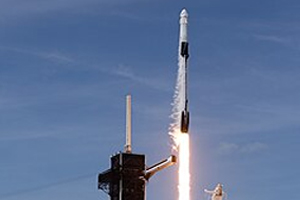
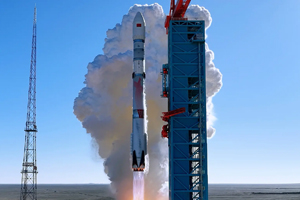
The second test launch of LandSpace's ZQ-3 rocket with undisclosed test payloads. Zhuque-3 first stage booster will attempt to land on its downrange landing...
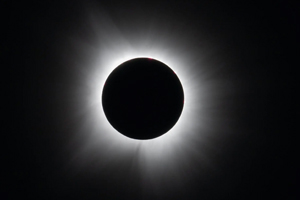
A total solar eclipse with a magnitude of 1.0386 (greatest eclipse 17:47:06 UTC) will be visible in parts of Greenland, Iceland, northern Russia, the Atlantic...
Includes presentation of the Neil Armstrong Award of Excellence, activities for the new class of Astronaut Scholars, 2-day Technical Conference where Scholars present their...
During U.S. spacewalk 97, two astronauts will replace a Space-to-Ground antenna on the orbital complex. The antenna is a critical communication system NASA uses...
Key themes include: Characterizing exoplanet-host solar-like stars; Star-planet interactions; Planet populations around solar-like stars. At University of Liège.
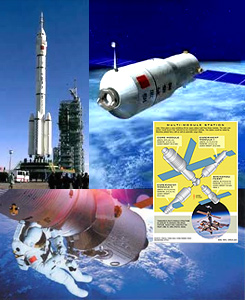 China is advancing its space efforts with the possible launch of Tiangong-1 (TR) by the end of the month from Jiuquan, China. Tiangong, or “Heavenly Palace,” is an 8.5 ton space laboratory module which will serve as a test-bed for docking maneuvers and the development of orbital technologies. Over the next 2 years, China plans to launch 3 missions to Tiangong-1 using Shenzhou Spacecraft 8, 9 and 10. The 3rd mission, Shenzhou 10 (B), is expected to transport China astronauts to live and work aboard the orbiting facility. Tiangong-1 will be followed by 2 more labs, the Tiangong 2 and 3, for the construction of a 70-ton space station planned NET 2020. Other space endeavors include the launch of the Chang’e 3 lunar lander / rover NET 2013. (Credit: China Manned Space Ofc, space.com)
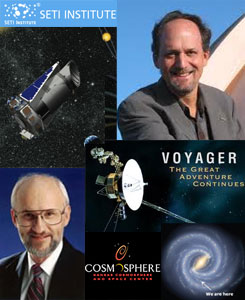 With over 200 Billion stars and a diameter of 100,000 light years, the Milky Way Galaxy may contain a multitude of habitable planets, alien life and countless other exciting discoveries. Several events this week highlight humanity’s 21st Century Galactic exploration goals and achievements. On August 24, at the SETI Institute in Mountain View CA, Professor Geoff Marcy (TR) will review the results of the NASA Kepler mission, dedicated to discovering the first Earth-like worlds around other stars. Marcy and his UC Berkeley team discovered the 1st multiple-planet system, the 1st Saturn-mass planet and the 1st Neptune-mass planet. In his lecture he will discuss what properties make a planet suitable for life, and strategies for estimating the occurrence of life in the universe. On the other side of the continent, Jim Zimbelman (BL) will present a lecture on 2 human-made objects that have left the confines of our Solar System, Voyagers 1 and 2. The Smithsonian Geologist’s talk, on Aug 24 at the National Mall in Washington DC, will focus on the current, interstellar locations of the 2 probes. On Aug 27, the International Lunar Observatory Association continues its successful Galaxy Forum program with the 3rd annual Galaxy Forum Kansas at the Kansas Cosmosphere and Space Center in Huntsville. (Credit: SETI, Kansas Cosmosphere, NASA)
 = All times for terrestrial events in local time unless noted.
 = All times for international terrestrial events in local time unless noted.
 = All times for space events, and…
 = All times for international space / astro events in Hawaii Standard Time unless noted. Add 10 hours to obtain UT (‘Universal Time;’ Greenwich, England).
 Aug 22 — International Space Station, LEO: The 6 E-28 crew members continue station maintenance and a variety of science experiments; Progress 43 to undock from the aft port of the Zvezda service module tomorrow at 05:35 EDT for a fiery disposal over the Pacific Ocean.