Expedition 29 Crew Members to Launch to ISS Aboard Soyuz TMA-22
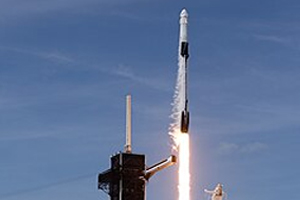
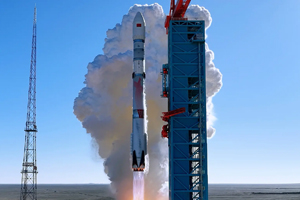
Three remaining crew members of Expedition 29 are set to launch aboard a Soyuz TMA-22 Spacecraft to the International Space Station (ISS) from Baikonur Cosmodrome, Kazakhstan on Nov 13. RSA cosmonauts Anton Shkaplerov and Anatoli Ivanishin along with NASA astronaut Dan Burbank will join Cmdr Mike Fossum, Satoshi Furukawa and Sergei Volkov, who have been aboard the ISS since June. The recent loss of the Progress M-12M resupply spacecraft on August 24 delayed the original mission date in September and nearly left the ISS unstaffed. The upcoming launch leaves nearly a week to spare before the last 3 astronauts aboard the ISS are scheduled to leave. Dan Burbank will become the Cmdr for Expedition 30. He, along with Ivanishin and Shkaplerov will work as a 3-person crew for 36 days until they are joined by astronauts Don Pettit, Oleg Kononenko Andre Kuipers, who are expected launch to the station aboard the Soyuz spacecraft NET December 26. (Credit: NASA)
Phobos-Grunt: Russia Returns to Planetary Science Carrying 1st China Mars Mission Yinghuo-1
Set to launch in early November from the Baikonur Cosmodrome in Kazakhstan, the Phobos-Grunt sample-return mission will be the 1st Russia planetary mission in 15 years. After a 10 month journey to Mars, the probe will spend several months studying the planet and its moons from orbit before landing on Phobos. Soil extraction will begin immediately after landing with the robotic arm performing 15 to 20 scoops over 2 to 7 days, yielding a total of 85 to 160g of soil. The return rocket, situated on top of the lander, will then need to accelerate to 35km/hour to escape the Phobos gravity. Phobos-Grunt is expected to return to Earth in August 2014. If successful, it will be the first spacecraft to return a macroscopic extraterrestrial sample from a planetary body since Luna 24 in 1976. The mission will also be carrying the China probe Yinghuo-1, a micro-satellite weighing 110kg. As China’s 1st mission to Mars, Yinghuo-1 will utilize 2 scientific instruments and 2 cameras to explore the Martian magnetic field, its upper atmosphere, and study the impact of dust storms on the upper atmosphere. The micro-satellite will separate from the probe after the 350 million km journey, and then spend 1 year in orbit. China will utilize the Russia deep space network for this mission, as its own system will not be ready until 2016. On Nov 9-10, Explore Mars, Inc. will present the Women and Mars Conference at George Washington University in Washington, D.C. to show the world that right now women are involved with Space and Mars on all levels of work. (Credit: ESA, CNSA, Roscosmos)
= All times for terrestrial events in local time unless noted.
= All times for international terrestrial events in local time unless noted.
= All times for space events, and…
= All times for international space / astro events in Hawaii Standard Time unless noted. Add 10 hours to obtain UT (‘Universal Time;’ Greenwich, England).
Nov 7 — International Space Station, LEO: E-29 crew members continue science activities and station maintenance as they await the arrival of 3 new crew members early next week.
Nov 7 — NASA Lunar Reconnaissance Orbiter (LRO), Lunar Orbit: All systems nominal in scientific phase of mission as LRO continues to make digital elevation and terrain maps that will be a fundamental reference for future human exploration.
Nov 7 — ESA Mars Express, Red Planet: Orbiting spacecraft operations continue to be on hold as scientists investigate solid-state mass memory system.
NET Nov 8 — RSA, Launch Zenit 3F / Phobos – Grunt, Baikonur Cosmodrome, Kazakhstan: A Zenit rocket set to launch the Phobos-Grunt mission to return samples from Mars moon, Phobos, and also carry small China spacecraft Yinghuo 1.
Nov 8 — Asteroid 2005 YU55: NASA scientists to track 400m-wide Asteroid 2005 YU55, which will fly past Earth slightly closer than the Moon’s orbit at a distance of 324,600 km; Flyby will be the closest of any near-Earth asteroid since 1976 and until 2028.
Nov 8 — USA Department of Education, NASA, ISS, LEO: E-29 Cmdr Mike Fossum to speak with students live from the ISS in celebration of International Education Week at 09:55 – 10:15 EST.
Nov 8 — Langley Research Center, Hampton VA: NASA inviting 50 Twitter followers for a Tweetup and behind-the-scenes tour of the agency’s first laboratory, NASA’s Langley Research Center, from 10:00-16:00.
Nov 9 — Stennis Space Center, Hancock County MS: Test firing of NASA J-2X rocket engine which will carry the Orion spacecraft, its crew, cargo, equipment and science experiments beyond Earth orbit; 15:00 CST.
Nov 10 — Asteroid 2011 TP6: Near-Earth Flyby (0.046 AU).
FRIDAY
Nov 11 — American Museum of Natural History, New York City NY: ‘Margaret Mead Film Festival: Space Tourists,’ a documentary by filmmaker Christian Frei which follows space tourist Anoushesh Ansari, who paid US$20M to travel to the International Space Station.
Nov 11-13 — Kennedy Space Center, Cape Canaveral FL: ‘LAUNCH: Energy Forum,’ event to propel innovative solutions that help those outside the agency make the connection between our lives on Earth and how we live and work in space.
Nov 12 — Northern Taurid Meteors: Appearing to radiate from Constellation Taurus, the Northern Taurid Meteors are associated with Comet Encke and appear at a rate of about 7 per hour, moving slowly across the sky at about 29km/sec.
Nov 12 — Moon: 5.9° N of Aldebaran; 11:00.
Nov 12 — Mercury: 2.0° SSW of Venus; 22:00.
Nov 12 — Asteroid 8088 Australia: Near-Earth Flyby (1.000 AU).
SUNDAY
NET Nov 13 — RSA, Launch Soyuz / ISS 28S, Baikonur Cosmodrome, Kazakhstan: RSA Soyuz rocket set to launch Soyuz spacecraft to the International Space Station with members of the next Expedition crew.
Includes ~150 meetings covering the fields of COSPAR Scientific Commissions / Panels / Task Groups, such as SC B: The Earth-Moon System, Planets, and...
At the Palais des Nations and online. Outer space is entering a renewed phase of strategic importance, defined by rapid innovation, growing competition and deepening...
This international lunar science meeting has two objectives: to provide a platform for leading experts to review recent advances across lunar research, from the...
At CSIR International Convention Centre. Key topics are Earth Observation, Developing Space Tourism, Space Supply Manufacturing. Cultural tours are offered.
(No earlier than 10 Aug) Japan to launch the MICHIBIKI No. 7 | Quasi-Zenith Satellite System (QZS-7) navigation satellite. Launch window remains open through...
Participants will receive theoretical and hands-on training in electron imaging and X-ray spectroscopy for application to planetary samples. This training opportunity is targeted at...
"Leading Australia’s Space Future for Our Strategic Advantage". Southern Space 2026 brings together decision-makers who set the direction for Australia’s space sector. It is...
The second test launch of LandSpace's ZQ-3 rocket with undisclosed test payloads. Zhuque-3 first stage booster will attempt to land on its downrange landing...
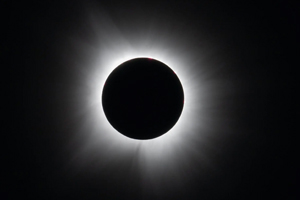
A total solar eclipse with a magnitude of 1.0386 (greatest eclipse 17:47:06 UTC) will be visible in parts of Greenland, Iceland, northern Russia, the Atlantic...
Includes presentation of the Neil Armstrong Award of Excellence, activities for the new class of Astronaut Scholars, 2-day Technical Conference where Scholars present their...
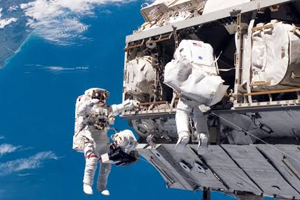
During U.S. spacewalk 97, two astronauts will replace a Space-to-Ground antenna on the orbital complex. The antenna is a critical communication system NASA uses...
Key themes include: Characterizing exoplanet-host solar-like stars; Star-planet interactions; Planet populations around solar-like stars. At University of Liège.
 Three remaining crew members of Expedition 29 are set to launch aboard a Soyuz TMA-22 Spacecraft to the International Space Station (ISS) from Baikonur Cosmodrome, Kazakhstan on Nov 13. RSA cosmonauts Anton Shkaplerov and Anatoli Ivanishin along with NASA astronaut Dan Burbank will join Cmdr Mike Fossum, Satoshi Furukawa and Sergei Volkov, who have been aboard the ISS since June. The recent loss of the Progress M-12M resupply spacecraft on August 24 delayed the original mission date in September and nearly left the ISS unstaffed. The upcoming launch leaves nearly a week to spare before the last 3 astronauts aboard the ISS are scheduled to leave. Dan Burbank will become the Cmdr for Expedition 30. He, along with Ivanishin and Shkaplerov will work as a 3-person crew for 36 days until they are joined by astronauts Don Pettit, Oleg Kononenko Andre Kuipers, who are expected launch to the station aboard the Soyuz spacecraft NET December 26. (Credit: NASA)
 Set to launch in early November from the Baikonur Cosmodrome in Kazakhstan, the Phobos-Grunt sample-return mission will be the 1st Russia planetary mission in 15 years. After a 10 month journey to Mars, the probe will spend several months studying the planet and its moons from orbit before landing on Phobos. Soil extraction will begin immediately after landing with the robotic arm performing 15 to 20 scoops over 2 to 7 days, yielding a total of 85 to 160g of soil. The return rocket, situated on top of the lander, will then need to accelerate to 35km/hour to escape the Phobos gravity. Phobos-Grunt is expected to return to Earth in August 2014. If successful, it will be the first spacecraft to return a macroscopic extraterrestrial sample from a planetary body since Luna 24 in 1976. The mission will also be carrying the China probe Yinghuo-1, a micro-satellite weighing 110kg. As China’s 1st mission to Mars, Yinghuo-1 will utilize 2 scientific instruments and 2 cameras to explore the Martian magnetic field, its upper atmosphere, and study the impact of dust storms on the upper atmosphere. The micro-satellite will separate from the probe after the 350 million km journey, and then spend 1 year in orbit. China will utilize the Russia deep space network for this mission, as its own system will not be ready until 2016. On Nov 9-10, Explore Mars, Inc. will present the Women and Mars Conference at George Washington University in Washington, D.C. to show the world that right now women are involved with Space and Mars on all levels of work. (Credit: ESA, CNSA, Roscosmos)
 = All times for terrestrial events in local time unless noted.
 = All times for international terrestrial events in local time unless noted.
 = All times for space events, and…
 = All times for international space / astro events in Hawaii Standard Time unless noted. Add 10 hours to obtain UT (‘Universal Time;’ Greenwich, England).
 Nov 7 — International Space Station, LEO: E-29 crew members continue science activities and station maintenance as they await the arrival of 3 new crew members early next week.
 Sep 22 — Space Adventures, NASA, ESA, JAXA, Online: Closing date submissions for ‘YouTube Space Lab Competition;’ through Dec 7.