2011 Galaxy Forum Program to Galactivate Asia 21st Century Education, Lunar Science Initiatives
Galaxy Forum returns to Asia this week for the 10th and 11th events of its ambitious 2011 program. On December 8, Galaxy Forum China-Beijing will feature presentations by China Lunar Exploration Program chief lunar scientist Ziyuan Ouyang, former SHAO Director Shuhua Ye, academicians Xiangqun Cui and Jiansheng Chen, astronomers Ming Zhu and Maohai Huang, and NAOC outreach educator Guo Hongfeng. Over 100 high school teachers from the Beijing area are expected to attend the all-day event at the National Astronomical Observatories of China. Then on Saturday, Dec 10, the Galaxy Forum program returns to Japan. NewSpace entrepreneur Misuzu Onuki will moderate the forum at the National Museum of Emerging Science and Innovation, known as the Miraikan, in Tokyo. Featured speakers include Hidehiko Agata of NAOJ and Junya Terazono of the University of Aizu, and Toshiaki Takemae of JAXA and the Young Astronauts Club. International Lunar Observatory Association (ILOA) Founding Director Steve Durst and renowned artist and Galaxy Garden Hawaii creator Jon Lomberg will also be presenting at both events. Sponsored by ILOA, Galaxy Forum has emerged as a world-class program helping to advance 21st Century Education by providing educators around the world with cutting-edge Galaxy Education resources, and opportunities to learn from, and interact with, leading astronomers, space exploration experts, artists and cultural practitioners. (Image Credit: ILOA, JAXA, NAOC)
Planetary Science, Extrasolar Planet Discovery Advancing at San Francisco Bay Area Events
The Kepler Space Observatory, designed to search for Earth-sized planets residing in habitable zones within the Milky Way Galaxy, will be the focus of several events happening in Northern California. On December 5-9, NASA Ames Research Center will hold the ‘1st Kepler Science Conference’ in Moffett Field. Scientists will present the full range of scientific results that have emerged from more than 2 years of observations. Presently, the 1040-kg space observatory, a project under NASA’s Discovery Program, has discovered 1235 planet candidates with 26 confirmed planets and 2165 eclipsing binary stars. Speakers include Ames Center Director Pete Worden, Kepler PI William Borucki (TL) and NASA Astrobiology Institute Director Carl Pilcher. On December 7, The SETI Institute in Mountain View will host a talk by MIT Scientist Sara Seager (CR) on ‘The Search for Habitable Exoplanets in the Kepler Era and Beyond.’ On Dec 5-9, The American Geophysical Union (AGU) will host its 44th AGU Fall Meeting in San Francisco. Over 20,000 participants are expected to attend the event which includes thousands of talks and poster presentations as well as 21,000 submitted abstracts. Data from the Kepler spacecraft will be featured in sessions on ‘The Geophysical and Atmospheric Science of Extrasolar Planets.’ (Image Credit: NASA, SETI, AGU)
= All times for terrestrial events in local time unless noted.
= All times for international terrestrial events in local time unless noted.
= All times for space events, and…
= All times for international space / astro events in Hawaii Standard Time unless noted. Add 10 hours to obtain UT (‘Universal Time;’ Greenwich, England).
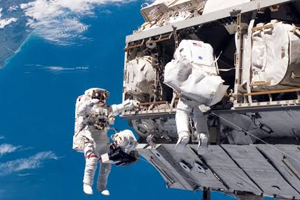
Dec 5 — International Space Station, LEO: E-30 crew members Cmdr Dan Burbank and flight engineers Anton Shkaplerov and Anatoly Ivanishin continue to focus on science experiments and maintenance activities aboard the ISS.
Dec 5 — NASA Lunar Reconnaissance Orbiter (LRO), Lunar Orbit: Scientists continue to study imagery of lunar surface taken from an altitude of 22-24km which reveals more possessions left behind from Apollo astronauts who visited the Moon from 1969-1972. Arizona State University LRO chief scientist Mark Robinson, predicted it would take 10M-100M years for dust to cover signs of Apollo landings.
Dec 5 — Mars Reconnaissance Orbiter, Red Planet: NASA orbiter continues to return imagery of the Red Planet that show subtly shifting motion of large sand dunes which indicate high-speed winds are more common than once thought.
Dec 7-9 — Kennedy Space Center, Cape Canaveral FL: ‘Astronaut Encounter: Apollo Astronaut Al Worden,’ half-hour, interactive Q&A-oriented program aims to inspire children and adults alike to strive for excellence.
Dec 7 — Puppid – Velid Meteors: The Puppid-Velids meteors are weak, but can produce very bright fireballs appearing to originate from a series of radiants located at the southern constellations of Carina, Puppis, Pyxis and Vela.
Dec 9 — NASA, Seattle WA: ‘2nd NASA Future Forum 2011,’ featuring panelists from NASA, Aerojet, Blue Origin, Boeing, Sierra Nevada, SpaceX, the University of Washington, Virgin Galactic and the Washington Technology Industry Association.
Dec 10-16 — Kennedy Space Center, Cape Canaveral FL: ‘Astronaut Encounter: Space Shuttle Astronaut Don Thomas,’ half-hour, interactive Q&A-oriented program aims to inspire children and adults alike to strive for excellence.
Dec 10 — Moon: Full Moon (Hunter’s Moon), 04:37; Total Lunar Eclipse,
Dec 10 — Asteroid 2011 WK5: Near-Earth Flyby (0.082 AU).
Dec 10 — Asteroid 5143 Heracles: Closest Approach to Earth (0.197 AU).
SUNDAY
NET Dec 11 — RSA, Launch Proton / Amos 5 & Luch 5A, Baikonur Cosmodrome, Kazakhstan: A Russian government Proton rocket and Breeze M upper stage set to launch the Israeli Amos 5 communications satellite and the RSA Luch 5a data relay satellite.
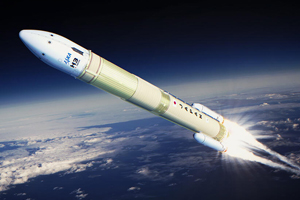
NET Dec 11 — JAXA, Launch H-2A / IGS, Tanegashima Space Center, Japan: A Japan H2-A rocket set to launch an Information Gathering Satellite for the Japan Government.
Includes ~150 meetings covering the fields of COSPAR Scientific Commissions / Panels / Task Groups, such as SC B: The Earth-Moon System, Planets, and...
At the Palais des Nations and online. Outer space is entering a renewed phase of strategic importance, defined by rapid innovation, growing competition and deepening...
This international lunar science meeting has two objectives: to provide a platform for leading experts to review recent advances across lunar research, from the...
At CSIR International Convention Centre. Key topics are Earth Observation, Developing Space Tourism, Space Supply Manufacturing. Cultural tours are offered.
(No earlier than 10 Aug) Japan to launch the MICHIBIKI No. 7 | Quasi-Zenith Satellite System (QZS-7) navigation satellite. Launch window remains open through...
Participants will receive theoretical and hands-on training in electron imaging and X-ray spectroscopy for application to planetary samples. This training opportunity is targeted at...
"Leading Australia’s Space Future for Our Strategic Advantage". Southern Space 2026 brings together decision-makers who set the direction for Australia’s space sector. It is...
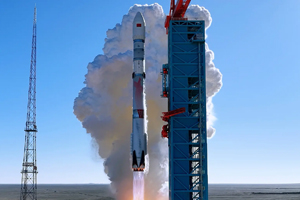
The second test launch of LandSpace's ZQ-3 rocket with undisclosed test payloads. Zhuque-3 first stage booster will attempt to land on its downrange landing...
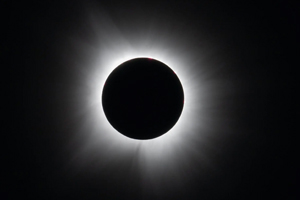
A total solar eclipse with a magnitude of 1.0386 (greatest eclipse 17:47:06 UTC) will be visible in parts of Greenland, Iceland, northern Russia, the Atlantic...
Includes presentation of the Neil Armstrong Award of Excellence, activities for the new class of Astronaut Scholars, 2-day Technical Conference where Scholars present their...
During U.S. spacewalk 97, two astronauts will replace a Space-to-Ground antenna on the orbital complex. The antenna is a critical communication system NASA uses...
Key themes include: Characterizing exoplanet-host solar-like stars; Star-planet interactions; Planet populations around solar-like stars. At University of Liège.
 Galaxy Forum returns to Asia this week for the 10th and 11th events of its ambitious 2011 program. On December 8, Galaxy Forum China-Beijing will feature presentations by China Lunar Exploration Program chief lunar scientist Ziyuan Ouyang, former SHAO Director Shuhua Ye, academicians Xiangqun Cui and Jiansheng Chen, astronomers Ming Zhu and Maohai Huang, and NAOC outreach educator Guo Hongfeng. Over 100 high school teachers from the Beijing area are expected to attend the all-day event at the National Astronomical Observatories of China. Then on Saturday, Dec 10, the Galaxy Forum program returns to Japan. NewSpace entrepreneur Misuzu Onuki will moderate the forum at the National Museum of Emerging Science and Innovation, known as the Miraikan, in Tokyo. Featured speakers include Hidehiko Agata of NAOJ and Junya Terazono of the University of Aizu, and Toshiaki Takemae of JAXA and the Young Astronauts Club. International Lunar Observatory Association (ILOA) Founding Director Steve Durst and renowned artist and Galaxy Garden Hawaii creator Jon Lomberg will also be presenting at both events. Sponsored by ILOA, Galaxy Forum has emerged as a world-class program helping to advance 21st Century Education by providing educators around the world with cutting-edge Galaxy Education resources, and opportunities to learn from, and interact with, leading astronomers, space exploration experts, artists and cultural practitioners. (Image Credit: ILOA, JAXA, NAOC)
 The Kepler Space Observatory, designed to search for Earth-sized planets residing in habitable zones within the Milky Way Galaxy, will be the focus of several events happening in Northern California. On December 5-9, NASA Ames Research Center will hold the ‘1st Kepler Science Conference’ in Moffett Field. Scientists will present the full range of scientific results that have emerged from more than 2 years of observations. Presently, the 1040-kg space observatory, a project under NASA’s Discovery Program, has discovered 1235 planet candidates with 26 confirmed planets and 2165 eclipsing binary stars. Speakers include Ames Center Director Pete Worden, Kepler PI William Borucki (TL) and NASA Astrobiology Institute Director Carl Pilcher. On December 7, The SETI Institute in Mountain View will host a talk by MIT Scientist Sara Seager (CR) on ‘The Search for Habitable Exoplanets in the Kepler Era and Beyond.’ On Dec 5-9, The American Geophysical Union (AGU) will host its 44th AGU Fall Meeting in San Francisco. Over 20,000 participants are expected to attend the event which includes thousands of talks and poster presentations as well as 21,000 submitted abstracts. Data from the Kepler spacecraft will be featured in sessions on ‘The Geophysical and Atmospheric Science of Extrasolar Planets.’ (Image Credit: NASA, SETI, AGU)
 = All times for terrestrial events in local time unless noted.
 = All times for international terrestrial events in local time unless noted.
 = All times for space events, and…
 = All times for international space / astro events in Hawaii Standard Time unless noted. Add 10 hours to obtain UT (‘Universal Time;’ Greenwich, England).
 Dec 5 — International Space Station, LEO: E-30 crew members Cmdr Dan Burbank and flight engineers Anton Shkaplerov and Anatoly Ivanishin continue to focus on science experiments and maintenance activities aboard the ISS.
 Sep 22 — Space Adventures, NASA, ESA, JAXA, Online: Closing date submissions for ‘YouTube Space Lab Competition;’ through Dec 7.