Yuri’s Night: International Events to Celebrate Over 50 Years of Human Spaceflight
A global celebration of human space achievement will take place on April 12 as the world remembers the 1st human space flight of Russia Cosmonaut Yuri Gagarin TL) and the inaugural launch of Space Shuttle Columbia (STS-1) by NASA Astronauts John Young and Robert Crippen (BR) exactly 20 years later. Now in its 12th year, Yuri’s night has become the world’s largest Space celebration with over 100,000 people participating in over 500 events, spanning 7 continents and 75 countries in 2011. This year’s theme, “Make an Impact,” reminds participants of the importance of human space travel, and it encourages them to make their own impact locally through their Yuri’s Night event. The Blackstarr Group will host ‘Yuri’s Night LA’ on April 12 in Los Angeles CA. Space industry leaders from Virgin Galactic, SpaceX, NASA, Space Frontier Foundation, and XCOR are expected to attend the free event including Yuri’s Night Founders Loretta Hidalgo and George Whitesides (BL). The British Interplanetary Society will hold its Yuri’s Night celebration in London, with a screening of the hit internet film, ‘First Orbit’ and a presentation by Producer / Director Chris Riley. This year, over 120 Yuri’s Night events have been registered in 35 countries. (Image Credit: yurisnight.net, NASA, Zork Magazine, sales.vgtrk.com)
Tokyo to Host Regional Earth Observation Symposium
The 5th GEOSS Asia-Pacific Symposium takes place on April 2-4 in Tokyo, Japan at Miraikan, the National Museum of Emerging Science and Innovation. The Global Earth Observation System of Systems project is being designed to connect Earth observation content and decision-support tool providers with end users in order to enhance the relevance of Earth observations to global issues including: development, natural resource management, disasters and climate change. An extraordinary range of timely information, raw data, imagery and analytical software packages, as well as common technical standards for cohesive use of data from thousands of different instruments, will all provide enhanced understanding of the world we inhabit. This symposium will further strengthen international networking and provide a venue for regional members to share their progress and experiences with the global community of GEO members totaling 88 nations. On Monday morning there will be a welcome address by renowned Japan astronaut and Director of Miraikan Dr. Mamoru Mohri, and a keynote speech by Professor Takashi Onishi, President of the Science Council of Japan. (Image Credit: GEO, Google)
= All times for terrestrial events in local time unless noted.
= All times for international terrestrial events in local time unless noted.
= All times for space events, and…
= All times for international space / astro events in Hawaii Standard Time unless noted. Add 10 hours to obtain UT (‘Universal Time;’ Greenwich, England).
Weekly Planet Watch – Morning Planets: Saturn (S) / Evening Planets: Venus (W), Mars (S), Jupiter (W).
MONDAY
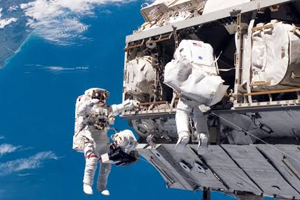
Apr 2 — International Space Station, LEO: E-30 crew members continue performing a variety of routine maintenance activities as well as unloading 7.2 tons of food, fuel and supplies from the “Edoardo Amaldi” ATV-3.
Apr 2 — Lunar Reconnaissance Orbiter (LRO), Lunar Orbit: NASA LRO functioning nominally in its 50±15 km near-circular orbit as it makes digital elevation and surface maps that will be a fundamental reference for future human exploration.
Apr 2 — Mars Science Laboratory (MSL), In Transit to Red Planet: NASA MSL spacecraft continues trek to Mars after a successful course correction; Rover to explore Mount Sharp shortly after Aug 2012 arrival.
Apr 2 — Jupiter Juno Mission, In Transit to Jupiter: Juno spacecraft completes 241st day of mission as it continues long journey to Jupiter.
Apr 5 — NASA Headquarters, Federal Aviation Administration (FAA), Washington DC: NASA and FAA to conduct training and photographic flights over Washington DC metropolitan area between 09:30 and 11:00 EDT.
Apr 5 — Smithsonian National Air and Space Museum, Washington DC: Flights of Fancy: Stories for Children, ‘Floating in Space,’ Franklyn Branley.
Includes ~150 meetings covering the fields of COSPAR Scientific Commissions / Panels / Task Groups, such as SC B: The Earth-Moon System, Planets, and...
At the Palais des Nations and online. Outer space is entering a renewed phase of strategic importance, defined by rapid innovation, growing competition and deepening...
This international lunar science meeting has two objectives: to provide a platform for leading experts to review recent advances across lunar research, from the...
At CSIR International Convention Centre. Key topics are Earth Observation, Developing Space Tourism, Space Supply Manufacturing. Cultural tours are offered.
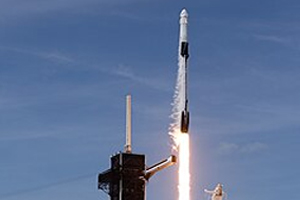
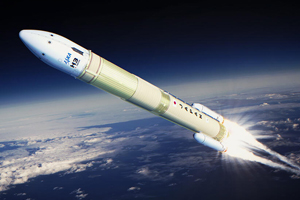
(No earlier than 10 Aug) Japan to launch the MICHIBIKI No. 7 | Quasi-Zenith Satellite System (QZS-7) navigation satellite. Launch window remains open through...
Participants will receive theoretical and hands-on training in electron imaging and X-ray spectroscopy for application to planetary samples. This training opportunity is targeted at...
"Leading Australia’s Space Future for Our Strategic Advantage". Southern Space 2026 brings together decision-makers who set the direction for Australia’s space sector. It is...
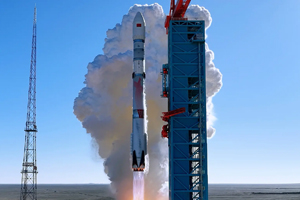
The second test launch of LandSpace's ZQ-3 rocket with undisclosed test payloads. Zhuque-3 first stage booster will attempt to land on its downrange landing...
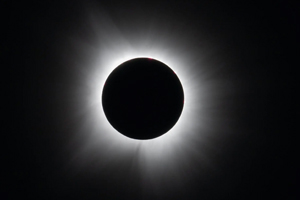
A total solar eclipse with a magnitude of 1.0386 (greatest eclipse 17:47:06 UTC) will be visible in parts of Greenland, Iceland, northern Russia, the Atlantic...
Includes presentation of the Neil Armstrong Award of Excellence, activities for the new class of Astronaut Scholars, 2-day Technical Conference where Scholars present their...
During U.S. spacewalk 97, two astronauts will replace a Space-to-Ground antenna on the orbital complex. The antenna is a critical communication system NASA uses...
Key themes include: Characterizing exoplanet-host solar-like stars; Star-planet interactions; Planet populations around solar-like stars. At University of Liège.
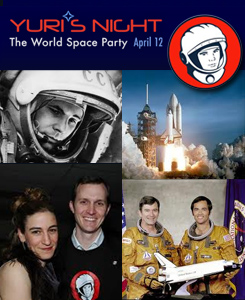 A global celebration of human space achievement will take place on April 12 as the world remembers the 1st human space flight of Russia Cosmonaut Yuri Gagarin TL) and the inaugural launch of Space Shuttle Columbia (STS-1) by NASA Astronauts John Young and Robert Crippen (BR) exactly 20 years later. Now in its 12th year, Yuri’s night has become the world’s largest Space celebration with over 100,000 people participating in over 500 events, spanning 7 continents and 75 countries in 2011. This year’s theme, “Make an Impact,” reminds participants of the importance of human space travel, and it encourages them to make their own impact locally through their Yuri’s Night event. The Blackstarr Group will host ‘Yuri’s Night LA’ on April 12 in Los Angeles CA. Space industry leaders from Virgin Galactic, SpaceX, NASA, Space Frontier Foundation, and XCOR are expected to attend the free event including Yuri’s Night Founders Loretta Hidalgo and George Whitesides (BL). The British Interplanetary Society will hold its Yuri’s Night celebration in London, with a screening of the hit internet film, ‘First Orbit’ and a presentation by Producer / Director Chris Riley. This year, over 120 Yuri’s Night events have been registered in 35 countries. (Image Credit: yurisnight.net, NASA, Zork Magazine, sales.vgtrk.com)
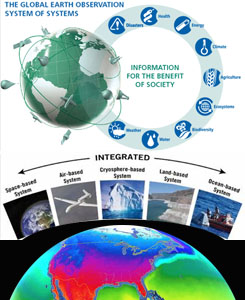 The 5th GEOSS Asia-Pacific Symposium takes place on April 2-4 in Tokyo, Japan at Miraikan, the National Museum of Emerging Science and Innovation. The Global Earth Observation System of Systems project is being designed to connect Earth observation content and decision-support tool providers with end users in order to enhance the relevance of Earth observations to global issues including: development, natural resource management, disasters and climate change. An extraordinary range of timely information, raw data, imagery and analytical software packages, as well as common technical standards for cohesive use of data from thousands of different instruments, will all provide enhanced understanding of the world we inhabit. This symposium will further strengthen international networking and provide a venue for regional members to share their progress and experiences with the global community of GEO members totaling 88 nations. On Monday morning there will be a welcome address by renowned Japan astronaut and Director of Miraikan Dr. Mamoru Mohri, and a keynote speech by Professor Takashi Onishi, President of the Science Council of Japan. (Image Credit: GEO, Google)
 = All times for terrestrial events in local time unless noted.
 = All times for international terrestrial events in local time unless noted.
 = All times for space events, and…
 = All times for international space / astro events in Hawaii Standard Time unless noted. Add 10 hours to obtain UT (‘Universal Time;’ Greenwich, England).
 Apr 2 — International Space Station, LEO: E-30 crew members continue performing a variety of routine maintenance activities as well as unloading 7.2 tons of food, fuel and supplies from the “Edoardo Amaldi” ATV-3.