Independent Human Moon Mission: Prospects Emerging From Rising Tide of 21st Century Exploration
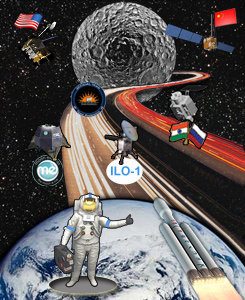
The Moon’s South Pole invites first visits / development of a whole new world and humanity’s renewal as multi-world species. A cooperative initiative coalescing between independent, national and international enterprises could see 2-4 people on the surface for 1-4 weeks at an estimated cost of US$5-10 billion. The immediate objectives would be to lay foundations for a permanent outpost and service preexisting robotic laboratories. There is currently a swell of robotic Moon missions that have or may(*) declare for Moon South Pole landing, including: GLXP Team Phoenicia, Astrobotic and others in 2014-15; India/Russia Chandrayaan-2* NET 2014; ILO-1 in 2015, China Chang’e-4* in 2015-2016, and China Chang’e-5, 6* in 2016-2018; as well as concepts from NASA, Japan, Europe and Russia from 2013 and beyond. Emerging from the growing tide of exploration are various plans for Human Moon missions. The International Lunar Observatory Association has a goal to fund 10% of the estimated cost of a Human Moon South Pole surface mission by the end of the decade. A privately circulated proposal, known as “Golden Spike” and backed by respected scientific and astronautical entities, envisions the development of a reliable “Cislunar Superhighway”. NASA is developing plans based on the Orion capsule to conduct a Human flight to lunar orbit by 2021. Space Adventures, a space tourism outfit, is advertising a 2017 circum-lunar flight priced at US$150 million. Perhaps the Sputnik effect of a successful China Chang’e-3 Moon-lander in 2013 will catalyze significant acceleration of independent Human Moon mission efforts. (Image Credit: ILOA, Team Phoenica, Moon Express, SpaceX, ISRO, CNSA, NASA, William Neff – The Plain Dealer)
International Space Conferences in Washington DC Focus on Exploration, Development
Space industry leaders, scientists and entrepreneurs will gather in Washington DC for 2 international conferences aimed to advance future space initiatives in the global community. On May 22-24, the AIAA and the International Astronautical Federation will hold ‘Global Space Exploration Conference 2012.’ The event will open with a ‘Heads of Space Agencies Global Space Exploration’ panel moderated by AIAA Executive Director Bob Dickman, featuring NASA Administrator Charles Bolden, ESA Director Jean-Jacques Dordain, Canadian Space Agency President Steve MacLean, Russian Federal Space Agency Head Vladimir Alexandrovich Popovkin (T2), JAXA President Tachikawa Keiji (B2) and ISRO Scientist Ranganath Navalgund (B4). University of Notre Dame Professor Clive Neal (B1) will give a keynote lecture on ‘Exploring the Moon and Asteroids: A Synergistic Approach.’ The event will include 16 sessions on various topics such as returning to the Moon, robotic precursors to human exploration, and lunar and asteroid mining. On May 24-28, the National Space Society will hold the ‘31st International Space Development Conference.’ Participants will discuss transportation to and through space and the technology needed to live and work in space. Featured speakers include Virgin Galactic CEO George Whitesides (T4), Apollo 11 Astronaut Buzz Aldrin (T3) and NASA Deputy Administrator Lori Garver (B3). Sierra Nevada Space Systems Chairman Mark Sirangelo (T1) will be the May 25 keynote speaker and will also present the Space Pioneer Awards to John Glenn and Scott Carpenter. Pictured: MDA Vice President Space Division Christian Sallaberger (T1). (Image Credit: AIAA, IAF, NSS, NASA, nias.res.in, SpaceX, Virgin Galactic, GLEX2012.org, zimbio.com, googlelunarxprize.com)
= All times for terrestrial events in local time unless noted.
= All times for international terrestrial events in local time unless noted.
= All times for space events, and…
= All times for international space / astro events in Hawaii Standard Time unless noted. Add 10 hours to obtain UT (‘Universal Time;’ Greenwich, England).
May 21 — International Space Station, LEO: E-31 crew members continue operating at full strength aboard the ISS; If May 19 launch of SpaceX Dragon C2 successful, crew members will use Canadarm2 to grapple Dragon on May 22 for a berthing to the Harmony node.
May 21 — Lunar Reconnaissance Orbiter (LRO), Lunar Orbit: NASA LRO functioning nominally in its 50±15 km near-circular orbit as it makes digital elevation and surface maps that will be fundamental references for future human exploration.
May 21 — Mars Opportunity Rover, Red Planet: All systems nominal with NASA rover as it resumes operations at the north end of Cape York; Total odometry to date: 34,365.04 meters.
May 21 — Jupiter Juno Mission, Jupiter Trajectory: Juno spacecraft is in excellent health and is operating nominally; Four instruments are turned on: the Magnetometer experiment (FGM & ASC), JEDI, MWR and Waves.
May 21 — Asteroid 29075 (1950 DA): Closest Approach to Earth (0.238 AU).
Continued from…
May 18 — Kennedy Space Center, Cape Canaveral FL: Media pre-launch / post launch coverage of the SpaceX Falcon 9 rocket carrying a Dragon capsule for NASA’s Commercial Orbital Transportation Services (COTS); through May 23.
May 22-24 — American Institute of Aeronautics and Astronautics, International Astronautical Federation, Washington DC: ‘Global Space Exploration Conference 2012.’
Includes ~150 meetings covering the fields of COSPAR Scientific Commissions / Panels / Task Groups, such as SC B: The Earth-Moon System, Planets, and...
At the Palais des Nations and online. Outer space is entering a renewed phase of strategic importance, defined by rapid innovation, growing competition and deepening...
This international lunar science meeting has two objectives: to provide a platform for leading experts to review recent advances across lunar research, from the...
At CSIR International Convention Centre. Key topics are Earth Observation, Developing Space Tourism, Space Supply Manufacturing. Cultural tours are offered.
(No earlier than 10 Aug) Japan to launch the MICHIBIKI No. 7 | Quasi-Zenith Satellite System (QZS-7) navigation satellite. Launch window remains open through...
Participants will receive theoretical and hands-on training in electron imaging and X-ray spectroscopy for application to planetary samples. This training opportunity is targeted at...
"Leading Australia’s Space Future for Our Strategic Advantage". Southern Space 2026 brings together decision-makers who set the direction for Australia’s space sector. It is...
The second test launch of LandSpace's ZQ-3 rocket with undisclosed test payloads. Zhuque-3 first stage booster will attempt to land on its downrange landing...
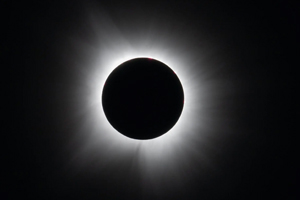
A total solar eclipse with a magnitude of 1.0386 (greatest eclipse 17:47:06 UTC) will be visible in parts of Greenland, Iceland, northern Russia, the Atlantic...
Includes presentation of the Neil Armstrong Award of Excellence, activities for the new class of Astronaut Scholars, 2-day Technical Conference where Scholars present their...
During U.S. spacewalk 97, two astronauts will replace a Space-to-Ground antenna on the orbital complex. The antenna is a critical communication system NASA uses...
Key themes include: Characterizing exoplanet-host solar-like stars; Star-planet interactions; Planet populations around solar-like stars. At University of Liège.
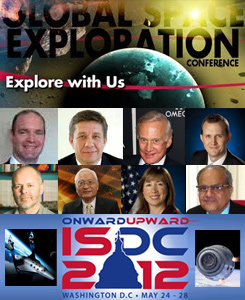 Space industry leaders, scientists and entrepreneurs will gather in Washington DC for 2 international conferences aimed to advance future space initiatives in the global community. On May 22-24, the AIAA and the International Astronautical Federation will hold ‘Global Space Exploration Conference 2012.’ The event will open with a ‘Heads of Space Agencies Global Space Exploration’ panel moderated by AIAA Executive Director Bob Dickman, featuring NASA Administrator Charles Bolden, ESA Director Jean-Jacques Dordain, Canadian Space Agency President Steve MacLean, Russian Federal Space Agency Head Vladimir Alexandrovich Popovkin (T2), JAXA President Tachikawa Keiji (B2) and ISRO Scientist Ranganath Navalgund (B4). University of Notre Dame Professor Clive Neal (B1) will give a keynote lecture on ‘Exploring the Moon and Asteroids: A Synergistic Approach.’ The event will include 16 sessions on various topics such as returning to the Moon, robotic precursors to human exploration, and lunar and asteroid mining. On May 24-28, the National Space Society will hold the ‘31st International Space Development Conference.’ Participants will discuss transportation to and through space and the technology needed to live and work in space. Featured speakers include Virgin Galactic CEO George Whitesides (T4), Apollo 11 Astronaut Buzz Aldrin (T3) and NASA Deputy Administrator Lori Garver (B3). Sierra Nevada Space Systems Chairman Mark Sirangelo (T1) will be the May 25 keynote speaker and will also present the Space Pioneer Awards to John Glenn and Scott Carpenter. Pictured: MDA Vice President Space Division Christian Sallaberger (T1). (Image Credit: AIAA, IAF, NSS, NASA, nias.res.in, SpaceX, Virgin Galactic, GLEX2012.org, zimbio.com, googlelunarxprize.com)
 = All times for terrestrial events in local time unless noted.
 = All times for international terrestrial events in local time unless noted.
 = All times for space events, and…
 = All times for international space / astro events in Hawaii Standard Time unless noted. Add 10 hours to obtain UT (‘Universal Time;’ Greenwich, England).
 May 21 — International Space Station, LEO: E-31 crew members continue operating at full strength aboard the ISS; If May 19 launch of SpaceX Dragon C2 successful, crew members will use Canadarm2 to grapple Dragon on May 22 for a berthing to the Harmony node.