In Situ Assets, Property Rights Highlight Space Resources Roundtable / PTMSS in Golden CO
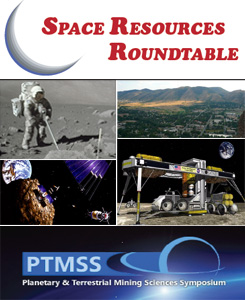
The 13th Space Resources Roundtable and the Planetary and Terrestrial Mining Sciences Symposium are being held jointly on June 4-7 at the Colorado School of Mines. The meetings will bring together individuals and organizations from the space exploration community, financial sector, and mining and minerals industries, to discuss In-Situ Resource Utilization (ISRU) on the Moon, Mars and asteroids. The program includes keynote addresses from principals of three renowned space enterprise start ups: Chris Lewicki of Planetary Resources, Alan Stern of Moon Express, and Jim Keravala of Shackleton Energy Co. A key to the dynamics of ISRU is establishing a framework for Space / Multi-World property rights. This fundamental issue will be discussed during Technical Session 2 with presentations by Steve Durst of ILOA, Charles Faires of UNCOPUOS, Wayne White Jr. of SpaceBooster LLC and G.W. Nemitz of Orbital Development. On June 6-8 scientists will meet in Boulder, Colorado for Dust, Atmosphere and Plasma: Moon and Small Bodies, a workshop supported by the NASA Lunar Science Institute (Colorado Center), the Laboratory for Atmospheric and Space Physics, and the Center for Integrated Plasma Studies. (Image Credit: SRR, PRMSS, NASA, Denise Watt, Alice Wolters)
2nd Venus Transit of Space Age to Aid Exoplanet Hunters
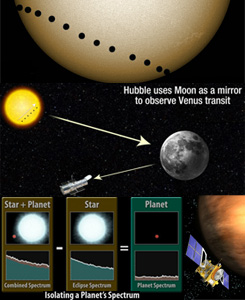
On June 5-6 Venus will provide stargazers, astronomers and scientists a rare show as it transits in front of the Sun. Just the 2nd time this has occurred in the Space Age, and 8th since the invention of the telescope, the event presents a unique opportunity to refine the search for Earth-like exoplanets. Many of the premier Earth-based and space telescopes will be trained on the site including the Hubble Space Telescope, the Solar Dynamics Observatory and the ESA Venus Express satellite (BR). Unable to peer directly at the Sun without damaging its sensitive instruments, Hubble will utilize the Moon as a mirror to observe the event. The Space Telescope will lock onto one location of the Moon’s surface for the entire 7-hour transit. Researchers will then see if Hubble can determine the makeup of Venus’ atmosphere by studying the 0.001% of the sunlight that pours through it. Venus Express will make observations of the planet’s atmosphere that will be compared with Hubble and ground-based telescopes to help planet hunters test their techniques. Venus transits come in pairs, separated by eight years. The time between pairs varies between 121.5 – 105.5 years; the next one will occur in 2117. (Image Credit: NASA, ESA)
= All times for terrestrial events in local time unless noted.
= All times for international terrestrial events in local time unless noted.
= All times for space events, and…
= All times for international space / astro events in Hawaii Standard Time unless noted. Add 10 hours to obtain UT (‘Universal Time;’ Greenwich, England).
Jun 4 — International Space Station, LEO: E-31 crew members continue scientific experiments and station maintenance after successful departure and return to Earth of SpaceX Dragon.
Jun 4 — Lunar Reconnaissance Orbiter (LRO), Lunar Orbit: NASA LRO functioning nominally in its 50±15 km near-circular orbit as it makes digital elevation and surface maps that will be fundamental references for future human exploration.
Jun 4 — Mars Rover Opportunity, Red Planet: Opportunity continues on the hunt for more light-toned veins of gypsum to analyze; As of Sol 2968 (May 30, 2012), solar array energy production was 345 watt-hours; Total odometry: 34,456.53 meters.
Jun 4 — Jupiter Juno Mission, Jupiter Trajectory: Juno spacecraft in excellent health and operating nominally; The craft is moving away from Earth at a relative velocity of 153,200 kilometers per hour.
Jun 4-6 — Temple University, George Washington University, et al,Philadelphia PA: ‘Moving Forward in Space.’
Jun 5 — Transit of Venus: Venus to pass directly between Earth and the Sun, as observers see the distant planet as a small dot gliding slowly across the face of the Sun; Transit begins at 12:04pm HST; Next Transit of Venus to occur in 105 years (2117).
NET Jun 5 — International Launch Services, Launch Proton / SES 5, Baikonur Cosmodrome, Kazakhstan: An ILS Proton rocket with a Breeze M upper stage set to deploy the SES 5 satellite which will provide communications services over Africa, Europe and the Middle East.
Jun 6 — Asteroid 2006 SG7: Near-Earth Flyby (0.086 AU).
THURSDAY
Jun 7 — RSA, Launch Kanopus-V & BelKA 2, Baikonur Cosmodrome, Kazakhstan: A Soyuz rocket with Fregat upper stage set to launch the Kanopus-Vulkan remote sensing satellite for the Russian government, the BelKA 2 Earth observation spacecraft for Belarus, and several other secondary payloads.
Jun 7 — Cassini Titan Flyby, Saturn Orbit: Spacecraft conducts flyby of Titan today.
Includes ~150 meetings covering the fields of COSPAR Scientific Commissions / Panels / Task Groups, such as SC B: The Earth-Moon System, Planets, and...
At the Palais des Nations and online. Outer space is entering a renewed phase of strategic importance, defined by rapid innovation, growing competition and deepening...
This international lunar science meeting has two objectives: to provide a platform for leading experts to review recent advances across lunar research, from the...
At CSIR International Convention Centre. Key topics are Earth Observation, Developing Space Tourism, Space Supply Manufacturing. Cultural tours are offered.
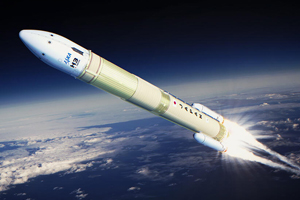
(No earlier than 10 Aug) Japan to launch the MICHIBIKI No. 7 | Quasi-Zenith Satellite System (QZS-7) navigation satellite. Launch window remains open through...
Participants will receive theoretical and hands-on training in electron imaging and X-ray spectroscopy for application to planetary samples. This training opportunity is targeted at...
"Leading Australia’s Space Future for Our Strategic Advantage". Southern Space 2026 brings together decision-makers who set the direction for Australia’s space sector. It is...
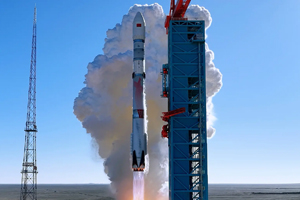
The second test launch of LandSpace's ZQ-3 rocket with undisclosed test payloads. Zhuque-3 first stage booster will attempt to land on its downrange landing...
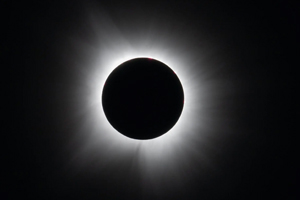
A total solar eclipse with a magnitude of 1.0386 (greatest eclipse 17:47:06 UTC) will be visible in parts of Greenland, Iceland, northern Russia, the Atlantic...
Includes presentation of the Neil Armstrong Award of Excellence, activities for the new class of Astronaut Scholars, 2-day Technical Conference where Scholars present their...
During U.S. spacewalk 97, two astronauts will replace a Space-to-Ground antenna on the orbital complex. The antenna is a critical communication system NASA uses...
Key themes include: Characterizing exoplanet-host solar-like stars; Star-planet interactions; Planet populations around solar-like stars. At University of Liège.
 Planetary and Terrestrial Mining Sciences Symposium are being held jointly on June 4-7 at the Colorado School of Mines. The meetings will bring together individuals and organizations from the space exploration community, financial sector, and mining and minerals industries, to discuss In-Situ Resource Utilization (ISRU) on the Moon, Mars and asteroids. The program includes keynote addresses from principals of three renowned space enterprise start ups: Chris Lewicki of Planetary Resources, Alan Stern of Moon Express, and Jim Keravala of Shackleton Energy Co. A key to the dynamics of ISRU is establishing a framework for Space / Multi-World property rights. This fundamental issue will be discussed during Technical Session 2 with presentations by Steve Durst of ILOA, Charles Faires of UNCOPUOS, Wayne White Jr. of SpaceBooster LLC and G.W. Nemitz of Orbital Development. On June 6-8 scientists will meet in Boulder, Colorado for Dust, Atmosphere and Plasma: Moon and Small Bodies, a workshop supported by the NASA Lunar Science Institute (Colorado Center), the Laboratory for Atmospheric and Space Physics, and the Center for Integrated Plasma Studies. (Image Credit: SRR, PRMSS, NASA, Denise Watt, Alice Wolters)
 On June 5-6 Venus will provide stargazers, astronomers and scientists a rare show as it transits in front of the Sun. Just the 2nd time this has occurred in the Space Age, and 8th since the invention of the telescope, the event presents a unique opportunity to refine the search for Earth-like exoplanets. Many of the premier Earth-based and space telescopes will be trained on the site including the Hubble Space Telescope, the Solar Dynamics Observatory and the ESA Venus Express satellite (BR). Unable to peer directly at the Sun without damaging its sensitive instruments, Hubble will utilize the Moon as a mirror to observe the event. The Space Telescope will lock onto one location of the Moon’s surface for the entire 7-hour transit. Researchers will then see if Hubble can determine the makeup of Venus’ atmosphere by studying the 0.001% of the sunlight that pours through it. Venus Express will make observations of the planet’s atmosphere that will be compared with Hubble and ground-based telescopes to help planet hunters test their techniques. Venus transits come in pairs, separated by eight years. The time between pairs varies between 121.5 – 105.5 years; the next one will occur in 2117. (Image Credit: NASA, ESA)
 = All times for terrestrial events in local time unless noted.
 = All times for international terrestrial events in local time unless noted.
 = All times for space events, and…
 = All times for international space / astro events in Hawaii Standard Time unless noted. Add 10 hours to obtain UT (‘Universal Time;’ Greenwich, England).
 Jun 4 — International Space Station, LEO: E-31 crew members continue scientific experiments and station maintenance after successful departure and return to Earth of SpaceX Dragon.