Twin Probes Investigate Radiation Belts to Advance Scientific Understanding, Space Exploration
The NASA Radiation Belt Storm Probes (RBSP) mission is set to launch aboard a United Launch Alliance Atlas V rocket at 04:08 EDT on August 23 from Space Launch Complex 41 at Cape Canaveral Air Force Station in Florida. The mission, scheduled to last 2 years at a cost of over US $600 million, will explore the most violent regions of near-Earth space: the Van Allen radiation belts, two doughnut-shaped rings of very high energy electrons and protons. The belts lie close to Earth, sandwiched between satellites in geostationary orbit above and satellites in low Earth orbit below. Two identical RBSP spacecraft, each weighing 670 kg and carrying the most comprehensive instrumentation ever sent into the radiation belts, will follow similar paths taking them through the inner and outer belts in highly elliptical orbits ranging from 600-37,000 km in altitude. The probes will investigate changes in Earth’s space environment caused by the Sun that can disable satellites, create power grid failures, disrupt GPS service and pose serious risks to crew aboard the International Space Station. They will also enable researchers to understand fundamental radiation and particle acceleration processes throughout the universe via three-dimensional imaging. (Image Credits: NASA, JHU Applied Physics Laboratory)
Armadillo Aerospace Set for Commercial Payload Launch of STIG-B From Spaceport America
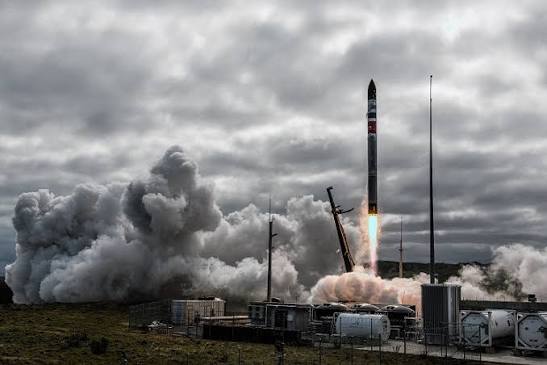
At the frontier of the NewSpace industry, Armadillo Aerospace is developing reusable rocket powered vehicles with a focus on Vertical Takeoff, Vertical Landing capabilities. Ongoing efforts are centered on suborbital research and passenger flights using the Suborbital Transport with Inertial Guidance (STIG) rockets. The newly commissioned STIG-B is designed to fly 50kg payloads to a 100-km altitude or 5kg payloads to 150-km altitude using liquid oxygen and ethanol fuel. In early September, Armadillo is expected to conduct its first official launch from Spaceport America in New Mexico under a new 2-year FAA issued Operator Launch License. The STIG-B-1 mission will carry two payloads to 100km and provide a 3-minute opportunity window for experiments to be conducted in the microgravity environment of space. If successful the launch will qualify the STIG-B for the NASA Flight Opportunities Program. The revenue generating payloads are being flown for Vega Space, originally a German firm now part of the Italy-based space services company Telespazio, and University of Purdue, which has a renowned School of Aeronautics and Astronautics in Indiana, USA that counts Neil Armstrong, Eugene Cernan and Gus Grissom among its alumni. Approximately 37 percent of all USA human space flights have included a Purdue alumnus. (Image Credits: Armadillo Aerospace, Vega Space, Purdue University)
= All times for terrestrial events in local time unless noted.
= All times for international terrestrial events in local time unless noted. = All times for space events, and… = All times for international space / astro events in Hawaii Standard Time unless noted. Add 10 hours to obtain UT (‘Universal Time;’ Greenwich, England).
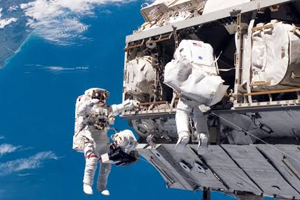
Aug 20 — ISS, LEO: Expedition 32 Commander Gennady Padalka and Flight Engineer Yuri Malenchenko to conduct 163rd spacewalk in support of space station assembly and maintenance, broadcast live on NASA TV.
Aug 20 — Curiosity, Red Planet: Preparing / testing motor controllers for its first drive on Mars this week, likely to include short forward and reverse segments and a turn.
Aug 20 — Dawn Mission, Main Asteroid Belt: Dawn spacecraft departure for Ceres set for NET Sep 5 after equipment used to maintain position in space malfunctioned before spacecraft could leave Vesta.
Aug 20 — XCOR Aerospace, Mojave CA:First XCOR Lynx test flights could begin as early as end of 2012, with first revenue flights potentially to come by end of 2013.
Aug 20 — Sierra Nevada Corporation, Sparks NV: Mark Sirangelo, Space Systems division head, sees 3 alternative markets for its Dream Chaser: servicing other spacecraft in LEO, long-duration / autonomous orbital sojourns and orbital tourism.
Aug 20 — SpaceX, Hawthorne CA: Founder, CEO and chief designer Elon Musk confident first human Mars mission can happen in next 12-15 years.
Aug 21 — The Space Foundation, Secure World Foundation, Washington DC: ‘Defense & Industry on Space Cooperation;’ Congressional briefing to discuss current international initiatives aimed at outer space security and sustainability.
Aug 21 — Moon: 1.1° SSE of Spica, 13:00; 5.2° SSW of Saturn, 14:00; 2.4° SW of Mars, 19:00.
NET Aug 23 — ULA, Launch Atlas 5 / RBSP, Cape Canaveral FL: A ULA Atlas 5 rocket set to launch Radiation Belt Storm Probes mission for NASA: 2 spacecraft to fly in highly elliptical orbits to study Earth’s radiation belts and probe influences of Sun; 04:08 EDT.
Includes ~150 meetings covering the fields of COSPAR Scientific Commissions / Panels / Task Groups, such as SC B: The Earth-Moon System, Planets, and...
From 02 to 07 August 2026, a few thousand geoscientists across diverse disciplines will gather at the 23rd annual meeting of the Asia Oceania Geosciences...
At the Palais des Nations and online. Outer space is entering a renewed phase of strategic importance, defined by rapid innovation, growing competition and deepening...
This international lunar science meeting has two objectives: to provide a platform for leading experts to review recent advances across lunar research, from the...
At CSIR International Convention Centre. Key topics are Earth Observation, Developing Space Tourism, Space Supply Manufacturing. Cultural tours are offered.
(No earlier than 10 Aug) Japan to launch the MICHIBIKI No. 7 | Quasi-Zenith Satellite System (QZS-7) navigation satellite. Launch window remains open through...
Participants will receive theoretical and hands-on training in electron imaging and X-ray spectroscopy for application to planetary samples. This training opportunity is targeted at...
"Leading Australia’s Space Future for Our Strategic Advantage". Southern Space 2026 brings together decision-makers who set the direction for Australia’s space sector. It is...
The second test launch of LandSpace's ZQ-3 rocket with undisclosed test payloads. Zhuque-3 first stage booster will attempt to land on its downrange landing...
A total solar eclipse with a magnitude of 1.0386 (greatest eclipse 17:47:06 UTC) will be visible in parts of Greenland, Iceland, northern Russia, the Atlantic...
Includes presentation of the Neil Armstrong Award of Excellence, activities for the new class of Astronaut Scholars, 2-day Technical Conference where Scholars present their...
During U.S. spacewalk 97, two astronauts will replace a Space-to-Ground antenna on the orbital complex. The antenna is a critical communication system NASA uses...
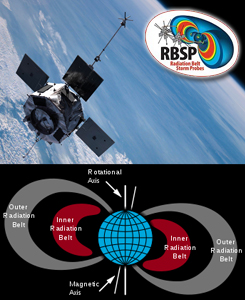 The NASA Radiation Belt Storm Probes (RBSP) mission is set to launch aboard a United Launch Alliance Atlas V rocket at 04:08 EDT on August 23 from Space Launch Complex 41 at Cape Canaveral Air Force Station in Florida. The mission, scheduled to last 2 years at a cost of over US $600 million, will explore the most violent regions of near-Earth space: the Van Allen radiation belts, two doughnut-shaped rings of very high energy electrons and protons. The belts lie close to Earth, sandwiched between satellites in geostationary orbit above and satellites in low Earth orbit below. Two identical RBSP spacecraft, each weighing 670 kg and carrying the most comprehensive instrumentation ever sent into the radiation belts, will follow similar paths taking them through the inner and outer belts in highly elliptical orbits ranging from 600-37,000 km in altitude. The probes will investigate changes in Earth’s space environment caused by the Sun that can disable satellites, create power grid failures, disrupt GPS service and pose serious risks to crew aboard the International Space Station. They will also enable researchers to understand fundamental radiation and particle acceleration processes throughout the universe via three-dimensional imaging. (Image Credits: NASA, JHU Applied Physics Laboratory)
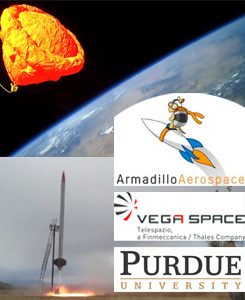 At the frontier of the NewSpace industry, Armadillo Aerospace is developing reusable rocket powered vehicles with a focus on Vertical Takeoff, Vertical Landing capabilities. Ongoing efforts are centered on suborbital research and passenger flights using the Suborbital Transport with Inertial Guidance (STIG) rockets. The newly commissioned STIG-B is designed to fly 50kg payloads to a 100-km altitude or 5kg payloads to 150-km altitude using liquid oxygen and ethanol fuel. In early September, Armadillo is expected to conduct its first official launch from Spaceport America in New Mexico under a new 2-year FAA issued Operator Launch License. The STIG-B-1 mission will carry two payloads to 100km and provide a 3-minute opportunity window for experiments to be conducted in the microgravity environment of space. If successful the launch will qualify the STIG-B for the NASA Flight Opportunities Program. The revenue generating payloads are being flown for Vega Space, originally a German firm now part of the Italy-based space services company Telespazio, and University of Purdue, which has a renowned School of Aeronautics and Astronautics in Indiana, USA that counts Neil Armstrong, Eugene Cernan and Gus Grissom among its alumni. Approximately 37 percent of all USA human space flights have included a Purdue alumnus. (Image Credits: Armadillo Aerospace, Vega Space, Purdue University)
 = All times for terrestrial events in local time unless noted.
 = All times for international terrestrial events in local time unless noted.
 = All times for space events, and…
 = All times for international space / astro events in Hawaii Standard Time unless noted. Add 10 hours to obtain UT (‘Universal Time;’ Greenwich, England).
 Aug 20 — ISS, LEO: Expedition 32 Commander Gennady Padalka and Flight Engineer Yuri Malenchenko to conduct 163rd spacewalk in support of space station assembly and maintenance, broadcast live on NASA TV.