Japan to Launch 50th and Final H2A Rocket on June 23, Continues H3 and Lunar Pursuits
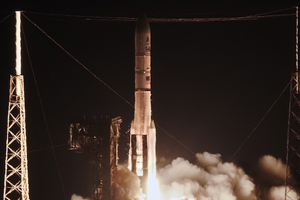
Japan is set to launch its H2A rocket on June 23 from Tanegashima Space Center, carrying the GOSAT-GW satellite, which aims to enhance national capabilities to monitor greenhouse gas emissions and climate change. This launch marks a major milestone — the 50th and final flight of the dependable H2A rocket, a workhorse since 2001. The H3 next-generation rocket, which has 5 launches to date, will become its successor. H3 will be more flexible (providing variability in first stage engines, number of rocket boosters and size of fairing), more cost-effective, and more powerful (expected to launch 7,000-8,000kg to GTO in the future) than its predecessor. Japan is restricted annually to 17 launches per year, according to a 2010 agreement, has a record of 5 launches in one year and aims for at least 10 launches per year of H3 by early 2030s. Company Interstellar Technologies is constructing a private spaceport, Hokkaido Spaceport, for launch of its MOMO rockets. Through the Artemis program, Japan is developing a pressurized rover “Lunar Cruiser” and hopes to see a Japan Astronaut land on the Moon around 2028 via Artemis 4 or later missions. Recent robotic lunar missions from Japan include the mostly successful JAXA SLIM lander which survived 3 lunar nights, and the 2 attempts to touchdown on the surface by commercial enterprise ispace. (Image credits: JAXA)
MONDAY
☆Jun 23 — International Space Station, ~415-km LEO: Expedition 73 seven-member crew are awaiting launch of 4 crew members of Axiom 4 mission for their 2-week stay while evaluating air leak recent repair in Zvezda service module; team continues 2-hour exercise routines wearing special sensors, observing Earth with hyperspectral camera, maintaining spacesuits; student Q&A with Ayers & McClain occurring today 11:30 EDT.
☆Jun 23 — Tiangong Space Station, ~390-km LEO: Shenzhou 20 three-member crew working with cell culture experiments to observe and preserve cellular growth, differentiation and function; routine health checks include auditory tests, ultrasounds, ECG/blood pressure measurements and cardiopulmonary function checks; Tianzhou 9 cargo craft being prepared for July launch.
☾ Jun 23 — Lunar Reconnaissance Orbiter, Moon Orbit: NASA spacecraft reaches 15 full years / enters 16th year in Moon orbit today; launched Jun 18, 2009, arrived at Moon 5 days later.
☆ Jun 23 — JAXA, Launch H2A 202 / GOSAT-GW,Yoshinobu LC LP-1, Tanegashima Space Center, Japan: Greenhouse Gases Observing Satellite (GOSAT, also known as Ibuki) to SSO.
★ Jun 23 — United Launch Alliance, Launch Atlas V551 / Project Kuiper (KA-02), SLC41, Cape Canaveral SFS FL: 2nd launch for Kuiper satellites; planned to become a constellation of 3,276 in 98 orbital planes.
☆ Jun 23 — Apollo Asteroid 2025 LT: Near-Earth Flyby (0.008 AU)
● = Terrestrial and o = International terrestrial events in local time; ☾ = Moon, ★ = Space and ☆ = International space events in Hawai’i time unless noted.
Planetary Defense Seeks Prevention of Events that Prompted Asteroid Day
Just 2 days ahead of Asteroid Day, acknowledged June 30 annually by the UN since 2016, the active and dynamic Los Angeles Section of the American Institute for Aeronautics and Astronautics (AIAA) is convening Planetary Defense and Asteroid Exploration Mini-Conference 2025 on June 28. Presentations are by Investigation Lead and team member of the recent NASA Double Asteroid Redirection Test (DART), which changed an asteroid orbit by crashing a spacecraft into it, producer / writer of IMAX “Asteroid Hunters,” researchers of Near-Earth Object Apophis, and theorists on various methods of asteroid deflection. 3 presenters have asteroids named after them. Speakers and audience are both in-person and online; all are invited. June 30 marks the 1908 Tunguska Meteor explosion and was initiated after the 2013 Chelyabinsk meteor air burst. Tunguska is postulated to have been a 6,000,000,000kg iron asteroid that exploded and shed half its weight over Siberia at altitude of 10-15km, traveling 72,000kph, heating to ~25,000°C, flattening ~80 million trees in an area of 2,150km2, an area larger than London, UK, where seismic recorders noted the event, before continuing into solar orbit. Chelyabinsk was a smaller event but encouraged international collaboration for planetary defense against such objects coming from Space toward Earth. (Image Credits: AIAA; Pictured have eponymous asteroids, L-R: Andy Rivkin, Marina Brozovic, Brent Barbee)
● Jun 1 – Jul 19 — Astronaut Scholarship Foundation, Online / Orlando FL: Astronaut Challenge; aiming to raise US$74,000 for 74 Astronaut Scholars.
● Jun 2 – Aug 10 — University of Hawai’i Institute for Astronomy, Islands of Hawai’i, O’ahu, Maui: Paid research internship for undergraduate students.
oJun 22-27 — NASA, SSERVI, ESA, Institut für Planetologie, Universität Münster, The Open University, Münster, Germany:European Lunar Symposium (ELS) 2025.
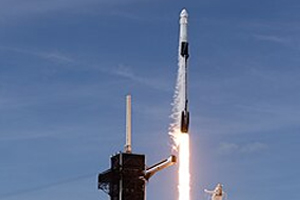
★ NET Jun 24 — SpaceX, Launch Falcon 9 / Axiom Space Mission 4, SLC 4E, Vandenberg SFB CA: Crew Dragon to ISS for ~14 days: Commander is NASA Astronaut Peggy Whitson; Sławosz Uznański is from Poland; Tibor Kapu is from Hungary; Shubhanshu Shukla is 1 of 4 ISRO Gaganyaan Vyomanauts and will oversee 7 experiments of ~60 total.
★ Jun 24 — SpaceX,Launch Falcon 9 / Starlink Group 10-34,SLC-40, Cape Canaveral SFS FL: Next batch of Starlink satellites to launch for mega-constellation.
o Jun 24 — ispace,Tokyo, Japan:Press conference to provide an update on the HAKUTO-R Mission 2 Technical Cause Analysis; 10:00 JST (01:00 UTC).
●Jun 24-25 — NASA Small Bodies Assessment Group (SBAG),Arvada CO: 33rd Meeting of the NASA SBAG; at Arvada Center and online.
☾ Jun 24 — Moon: 4.0° N of M35 cluster, 22:00.
☆ Jun 24 — Jupiter: At conjunction with the Sun; 6.159 AU from Earth, 05:00.
☆ Jun 24 — Aten Asteroid 2018 MN8: Near-Earth Flyby (0.055 AU)
o Jun 26-27 — Islamic New Year 1447 AH,Worldwide: New Year 1 Muharram (1st day) begins at sunset Jun 26 although some locales delay one day if New Moon is not visible.
o Jun 26-28 — Asteroid Foundation, Luxembourg: Asteroid Day events: Astronomer For A Night, Space Lecture, Festival, and Art & Science Performance; at Cercle Cité and live-streamed.
☾ Jun 26 — Moon: 5.7° S of Castor, 04:00; 2.46° S of Pollux, 10:00; 2.76° NNE of Mercury, 22:00.
☆ Jun 26 — Aten Asteroid 2022 MM1: Near-Earth Flyby (0.073 AU)
FRIDAY
☆Jun 27 — International Space Station, ~415-km LEO: Expedition 73 Nichole Ayers and Anne McClain participate in 20-minute Student Q&A today, 11:05 EDT, live coverage.
★ Jun 27 — Interface Region Imaging Spectrograph (IRIS), Sun-Synchronous Orbit: NASA observation satellite investigating the physical conditions of the chromosphere of Sun reaches 12 full reaches / enters 13th year in space, launched 2013.
☾ Jun 27 — Moon: 2.17° NNE of Beehive Cluster, 10:00.
SATURDAY
★ Jun 28 — SpaceX, Launch Falcon 9 / Starlink Group 15-7, SLC-4E, Vandenberg SFB CA: Next batch of Starlink satellites to launch for LEO mega-constellation.
At the Spokane Convention Center. The meeting will have a broad scope, with a wide-ranging program of science and workforce topics, and celebrating planetary...
Convene, connect, and collaborate at the 19th annual von Braun Space Exploration Symposium! This year’s event will spotlight how bold ideas, emerging technologies, and...
Themes include: Space & the Arctic; Space & AI; Space & International Collaboration. There is a Student Session, a Technical Session, a Frontier Session,...
Oslo Spaceport Norway offers monthly a knowledgeable speaker and opportunity for networking, 17:00-20:00 local time; free entry but registration required. Ground Control is for...
45 satellites to launch for Amazon Leo, formerly named Project Kuiper. This LEO mega constellation will offer broadband internet access with 3,276 satellites.
Occurring 31 October from 09:00-11:00 local time (16:00-18:00 HST, 19:00-21:00 PDT, 22:00-24:00 EDT on 30 October), this Galaxy Forum will be in hybrid format...
Originally planned around this date for Wenchang, China -- TBC (to be confirmed); As the only professional association for astronauts, ASE supports the advancement of...
Coordinating Division Division C Education, Outreach and Heritage The IAU Symposium on Innovative Research and Techniques in Astronomy Communication will take place from November...
Change clocks back 1 hour from Daylight Saving to Standard Time; does not include Hawai’i, Arizona (except the Navajo Nation), American Samoa, Guam, Northern...
ESWW is the main annual event in the European Space Weather and Space Climate calendar. It is an international meeting organised annually within the...
IAU Symposium: IAUS409 - A Journey Towards Effective Astronomy Communication; online and at National Astronomical Observatory of Japan, 2-21-2 Osawa Mitaka, Tokyo. Topics include:...
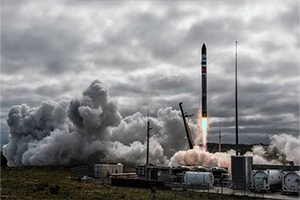
Launch Complex 1, ~39°S, Mahia Peninsula, New Zealand
iQPS Launch 9, an Earth observation satellite with Synthetic aperture radar for Japan-based imaging company iQPS, to launch on "The Sea God Surveys" mission...
Launch window 10:34am - 2:34pm local time for the 15th batch of classified satellites for a reconnaissance constellation built by SpaceX and Northrop Grumman...