14 Humans in Space Represent 7 Countries Prioritizing Peace, International Collaboration and Science
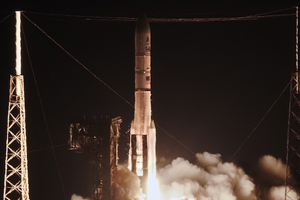
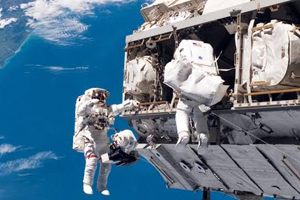
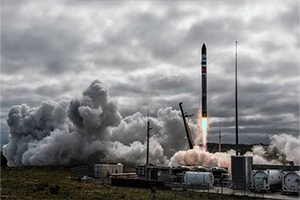
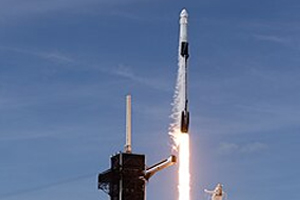
International Space Station Expedition 73 seven members and four Axiom-4 mission Astronauts work together in Low Earth Orbit at least until the beginning of this week. At any given time at least 200 experiments are ongoing at ISS, and Axiom is set to accomplish ~60 scientific studies and activities representing 31 countries (including USA, India, Poland, Hungary, Saudi Arabia, Brazil, Nigeria, UAE, and nations across Europe). These experiments will enhance global knowledge in human research, Earth observation, and life, biological and material sciences. Expedition 73 includes members from USA, Russia and Japan. The Ax-4 crew has members from India, Poland, and Hungary: Shubhanshu Shukla is the 1st national Vyomanaut for India since 1984, Sławosz Uznański of ESA is the 1st Polish Astronaut since 1978, and Tibor Kapu is the 1st national Hungarian Astronaut since 1980. In a slightly lower altitude orbit, the Tiangong Space Station currently hosts 3 Taikonauts from China. CMSA announced that perhaps as soon as Shenzhou 21, launching in October, there may be participation with Taikonauts from China’s Special Administrative Regions of Hong Kong and Macau. Following this, China plans to welcome its first international guest to Tiangong, a Pakistan citizen. Eventual physical expansion of Tiangong will allow for further international visitors and experiments. (Image credits: ISS partners, Axiom, CMSA, CNSA, CCTV, NASA)
MONDAY
☆Jul 7 — International Space Station, ~415-km LEO: Expedition 73 seven-member crew and four members of Axiom-4 mission work on dozens of new experiments for international organizations and interacting with students from around the globe; AX-4 crew may undock station later this week after 2-week mission complete; though NASA ISS tracking website is no longer, ISS is making visible passes this week and can be tracked via Heavens-Above.
☆Jul 7 — Tiangong Space Station, ~390-km LEO: Shenzhou 20 three-member crew checking exterior shielding installations and modifications after performing second EVA last week; working with experiments involving a Raman spectrometer, streptomyces bacteria, exercise tests; expecting arrival of next cargo via Tianzhou-9 early next week; recently participated in ‘Tiangong Classroom Event’ involving 300 students from Hungary.
★ Jul 7 — SpaceX,Launch Falcon 9 / Starlink Group 10-28,SLC-40, Cape Canaveral SFS FL: Next batch of Starlink satellites to launch for LEO mega-constellation.
● = Terrestrial and o = International terrestrial events in local time; ☾ = Moon, ★ = Space and ☆ = International space events in Hawai’i time unless noted.
Space Month July Sees Effort to Increase Understanding of the Pluto System
At 5,000,000,000 km from Earth, a trip to Pluto takes over 9 years with a slingshot boost from Jupiter and 12 years without. Sunlight takes 5.5 hours to get there. Pluto diameter is about half the width of USA in North America, ~2250 km. Discovered in 1930 by Clyde Tombaugh of Kansas, in 2006 it was declared Pluto might have objects cross its orbital path and thus was categorized a dwarf planet. Also in 2006, NASA interviewed Venetia Burney, who at age 11 in 1930 suggested the name Pluto. Her great uncle Henry Madan named Mars moons Phobos and Deimos. Charon, largest of 5 known Pluto moons, is about half Pluto size, proportionally larger than any other Solar System moon. NASA New Horizons spacecraft was the first and so far only to approach the Pluto system, closest on July 14, 2015. This year July 14-18, researchers will share knowledge gained since then using data from New Horizons, James Webb and Hubble, on all aspects of the Pluto system and dwarf planets of the Kuiper Belt. Conveners are Lunar and Planetary Institute, Universities Space Research Association, Johns Hopkins University Applied Physics Laboratory, NASA, and Southwest Research Institute. Includes July 14 evening reception with Pluto Flyby team members, July 16 public presentation with team members. Cost $110-440, students, professionals, in-person, online.(Image credits: NASA, JHUAPL, SwRI; CW from L: Burney, Pluto from 768,000 km and “heart” called Tombaugh Regio, Tombaugh with 9-in homemade telescope, Pluto eccentric orbit and Kuiper Belt)
● Jun 1 – Jul 19 — Astronaut Scholarship Foundation, Online / Orlando FL: Astronaut Challenge; aiming to raise US$74,000 for 74 Astronaut Scholars.
● Jun 2 – Aug 10 — University of Hawai’i Institute for Astronomy, Islands of Hawai’i, O’ahu, Maui: Paid research internship for undergraduate students.
o Jun 30 – Aug 22 — International Space University, Korean Federation of Science and Technology Societies (KOFST), Hanyang University ERICA Campus, Seoul, S Korea:37th Space Studies Program (SSP).
oJul 6-11 — European Association of Geochemistry, Geochemical Society, Prague, Czech Republic: 2025 Goldschmidt Conference.
☆ NET Jul 9 — China Rocket Co, Launch Jielong-3 / Payload TBA, Floating Barge, Yellow Sea, China: Sixth launch of commercial Jielong-3 rocket, also known as Smart Dragon-3, with payload to be announced.
☆ Jul 9 — Apollo Asteroid 2019 NW5: Near-Earth Flyby (0.038 AU)
★ Jul 13 — Juno, Perijove 74 / 73rd Science Flyby,Jupiter Orbit: NASA craft to perform Jupiter flyby during Perijove 74, its 74th close flyby of Jupiter and 73rd science flyby with instruments turned on.
☆ Jul 13 — Venus: 3.2°N of Aldebaran, 07:00.
☆ Jul 13 — Apollo Asteroid 2012 RR16: Near-Earth Flyby (0.062 AU)
At the Spokane Convention Center. The meeting will have a broad scope, with a wide-ranging program of science and workforce topics, and celebrating planetary...
Convene, connect, and collaborate at the 19th annual von Braun Space Exploration Symposium! This year’s event will spotlight how bold ideas, emerging technologies, and...
Themes include: Space & the Arctic; Space & AI; Space & International Collaboration. There is a Student Session, a Technical Session, a Frontier Session,...
Oslo Spaceport Norway offers monthly a knowledgeable speaker and opportunity for networking, 17:00-20:00 local time; free entry but registration required. Ground Control is for...
45 satellites to launch for Amazon Leo, formerly named Project Kuiper. This LEO mega constellation will offer broadband internet access with 3,276 satellites.
Occurring 31 October from 09:00-11:00 local time (16:00-18:00 HST, 19:00-21:00 PDT, 22:00-24:00 EDT on 30 October), this Galaxy Forum will be in hybrid format...
Originally planned around this date for Wenchang, China -- TBC (to be confirmed); As the only professional association for astronauts, ASE supports the advancement of...
Coordinating Division Division C Education, Outreach and Heritage The IAU Symposium on Innovative Research and Techniques in Astronomy Communication will take place from November...
Change clocks back 1 hour from Daylight Saving to Standard Time; does not include Hawai’i, Arizona (except the Navajo Nation), American Samoa, Guam, Northern...
ESWW is the main annual event in the European Space Weather and Space Climate calendar. It is an international meeting organised annually within the...
IAU Symposium: IAUS409 - A Journey Towards Effective Astronomy Communication; online and at National Astronomical Observatory of Japan, 2-21-2 Osawa Mitaka, Tokyo. Topics include:...
Launch Complex 1, ~39°S, Mahia Peninsula, New Zealand
iQPS Launch 9, an Earth observation satellite with Synthetic aperture radar for Japan-based imaging company iQPS, to launch on "The Sea God Surveys" mission...
Launch window 10:34am - 2:34pm local time for the 15th batch of classified satellites for a reconnaissance constellation built by SpaceX and Northrop Grumman...