India Set To Reignite GSLV, Advance Toward Human Spaceflight
Anticipation is building for the next launch of India’s Geosynchronous Satellite Launch Vehicle (GSLV) rocket set for July. After two consecutive failures and a lifetime success rate of only 60%, ISRO has taken 31 months to conduct thorough investigations and over 35 ground tests of the indigenous cryogenic third stage engine, including a simulated high-altitude test, in preparation for this return to flight. The 1,980-kg, 2.5-KW GSAT-14 communications satellite is the designated payload. If successful, India will immediately ramp up preparations for an experimental flight of the next generation GSLV Mark 3 as early as January 2014. This updated variant will double the lift capacity of the system to 4 tons and is the vehicle of choice for the future of the India human spaceflight program. ISRO is currently working with a budget of nearly US$2.2M to conduct pre-project studies and develop critical technologies toward this goal, including environmental control, spacesuit, reentry and crew escape system. The proposed total budget for development of the human program is US$2.3B, expected to begin no earlier than 2017. Success of the GSLV next month will greatly improve prospects for a 2014-2015 launch of the Chandrayaan-2 lunar exploration mission to demonstrate soft-landing and deploy a rover on the surface of the Moon. Pictured: Rakesh Sharma, First Indian in Space, Intercosmos Research Astronaut, Soyuz T-11. (Image Credit: ISRO)
10th IPPW to Discuss Science Goals and Technologies for Future Planetary Missions
The 10th International Planetary Probe Workshop will be held June 17-21 at San Jose State University, California, USA. It is sponsored by ESA, JPL, NASA, AGI, Science and Technology Corp. and others. About 100 scientists, engineers, technologists and space mission designers will speak on new technologies, scientific discoveries and international cooperation for exploring the solar system via planetary probe missions. Tom Spilker from JPL (pictured) and Denis Lebleu from Thales Alenia Space are co-conveners for the ‘Giant Planets’ session which will cover science and engineering aspects of past and future atmospheric entry probes to Jupiter, Saturn, Uranus and Neptune. There are also sessions about Venus and Titan, current projects for airless planetary bodies (such as the Moon, Mercury, NEAs) and Mars landers / in-situ activities. Preceding this event will be a 2-day short course on ‘Entry, Descent, and Landing Systems’ from June 15-16. Students will hear from 24 experts on topics including aerodynamics, software, heatshields, hypersonic / supersonic decelerators, parachutes and recent EDL technology case studies. As the Russia Luna Moon probes (1959) aided our understanding of and further piqued our curiosity about our nearest celestial neighbor, future missions to Jupiter, its moons, the outer solar system and exoplanets will advance humankind’s understanding of the Universe and thirst for exploration. (Image Credit: NASA, JPL, ESA)
= All times for terrestrial events in local time unless noted.
= All times for international terrestrial events in local time unless noted.
= All times for space events, and…
= All times for international space / astro events in Hawaii Standard Time unless noted. Add 10 hours to obtain UT (‘Universal Time;’ Greenwich, England).
Jun 10 — ISS, LEO: Expedition 36/37 crew preparing for undocking of Progress 51P on Jun 11, arrival of ATV-4 Albert Einstein on Jun 15; Misurkin & Yurchikhin reviewing procedures for EVA scheduled Jun 24.
Jun 10 — Juno, Jupiter Trajectory: Traveling at about 27 km/sec relative to Sun with all instruments powered off except magnetometer running at low data rates; will power on instruments shortly before Earth flyby scheduled Oct 9.
Jun 10 — Curiosity, Glenelg Intrigue, Mars: Scientists analyzing ‘Cumberland’ rock sample; rover will head to ‘Mount Sharp’ after observing nearby mudstone & sandstone boundary, ‘Shaler’ layered outcrop, ‘Point Lake’ pitted outcrop.
Jun 10 — Orbital Sciences Corp., Wallops VA: NewSpace company preparing for Pegasus XL launch of IRIS scheduled Jun 26, Antares rocket launch of Cygnus cargo freighter on test flight to ISS Sep 12.
Jun 10 — Spaceport Sweden, Kiruna, Sweden: Establishing education program; students will develop space camp Summer 2013, first intern to begin working at Spaceport Sweden mission control Fall 2013.
Jun 10 — Up Aerospace Inc., Las Cruces NM: Providing SpaceLoft XL sounding rocket sponsored by NASA Flight Opportunities Program to launch suborbital payloads for Celestis Inc., FAA, various schools.
Jun 10-14 — ESA, ASI, National Institute for Astrophysics, et al, Catania, Italy: International Venus Workshop; at the Diocesan Museum of Catania.
Jun 10-21 — Thirty Meter Telescope, Akamai Workforce Initiative, Hawai`i Community College, Kailua-Kona HI:2013 Akamai Observatory Career Exploration; at Kealakehe High School.
Jun 10 – Sep 2 — NASA, Seattle WA:Destination Station exhibit; for public to learn about living in space aboard the ISS; at Pacific Science Center.
Jun 10 — Moon: 5.8° S of Mercury, 11:00.
Jun 10 — Asteroid 2013 LD2: Near-Earth flyby (0.015 AU).
Jun 10 — Asteroid 2013 KK6: Near-Earth flyby (0.059 AU).
Continued from…
May 1 – Jul 1 — University of Colorado – Boulder, Online:Send Your Name & Message to Mars; contest to send name / message to Mars aboard MAVEN spacecraft launching between Nov 18 – Dec 7; winners announced Aug 8.
May 21 – Jul 9 — NASA, Online:Accepting Proposals: Phase II Visionary Advanced Concepts; for cutting-edge ideas to transform future aerospace missions, enable new capabilities, alter approaches to launching, building, operating aerospace systems.
Jun 3 – Aug 9 — Florida Space Grant Consortium, Space Florida,Kennedy Space Center FL: Space & Aeronautics Internships at Exploration Park; paid internship for 4 science / engineering students to work on projects bound for ISS.
Jun 4 – Aug 10 — Space Foundation Discovery Center, Colorado Springs CO:Summer of Discovery; featuring new space, science, space technology related theme each week, Northrop Grumman Science Center, El Pomar Space Gallery.
Jun 5 – Jul 31 — NASA, LEGO Group, Online:NASA-LEGO Design and Build Contest; to inspire students of all ages to use toy bricks to build models of future airplanes and spacecraft.
Jun 11 — ISS, Undocking of Progress 51P Resupply Vehicle, LEO: Progress 51P, filled with ISS waste, to be sent into parking orbit for Russia ground-based radar systems calibration tests; will burn up upon reentry to Earth atmosphere on Jun 19; undocking scheduled at 13:53 UT; live coverage available.
Jun 11 — National Space Club Florida Committee, Cape Canaveral FL: Luncheon at the Radisson Resort at the Port; to provide information on space activities; featuring Commercial Crew Development Panel speakers; US$17-20.
Jun 13 — George Marshall Institute, TechAmerica Space Enterprise Council, Washington DC:Space Launch Industrial Base: Challenges and Opportunities; to discuss government policy, competitiveness of launch industry, options for controlling launch costs; at TechAmerica HQ, 09:00 – 11:00 EDT.
Jun 14 — The Space Show, Online: Gordon Woodcock gives a Space-Based Solar Power analysis from recent International Space Development Conference; with host Dr. David Livingston.
Jun 14 — Space Center Houston, Houston TX:Lunch with an Astronaut, Ken Cameron; US$49.95 adult.
Jun 14 — Moon: 5.5° SSW of Regulus, 08:00.
SATURDAY
Jun 15 — ISS, Docking of ATV 4 Cargo Ship, LEO: European Space Agency ATV 4, named Albert Einstein, scheduled to dock with ISS 13:46 UT; live coverage available.
Jun 15 — Oregon L5 Society, Oregon City OR: ORL5 Meeting; to educate public on possible uses of space, promote establishment of a spacefaring civilization.
Jun 15-19 — University of Oulu, Academy of Finland, Oulu, Finland: Space Climate 5 Symposium; at Sokos Hotel Eden.
Jun 15-20 — NASA, Wallops Island VA: RockOn 2013; participants build, test, fly science payload on suborbital rocket; launch to about 117.5-km altitude occurs Jun 20.
SUNDAY
Jun 16-21 — Max Planck Institute for Extraterrestrial Physics, Munich, Germany: Cosmic Dawn at Ringberg; to discuss latest developments in understanding formation, evolution of the first structures and galaxies in Universe.
Includes ~150 meetings covering the fields of COSPAR Scientific Commissions / Panels / Task Groups, such as SC B: The Earth-Moon System, Planets, and...
From 02 to 07 August 2026, a few thousand geoscientists across diverse disciplines will gather at the 23rd annual meeting of the Asia Oceania Geosciences...
This international lunar science meeting has two objectives: to provide a platform for leading experts to review recent advances across lunar research, from the...
At CSIR International Convention Centre. Key topics are Earth Observation, Developing Space Tourism, Space Supply Manufacturing. Cultural tours are offered.
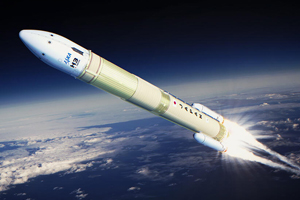
(No earlier than 10 Aug) Japan to launch the MICHIBIKI No. 7 | Quasi-Zenith Satellite System (QZS-7) navigation satellite. Launch window remains open through...
Participants will receive theoretical and hands-on training in electron imaging and X-ray spectroscopy for application to planetary samples. This training opportunity is targeted at...
"Leading Australia’s Space Future for Our Strategic Advantage". Southern Space 2026 brings together decision-makers who set the direction for Australia’s space sector. It is...
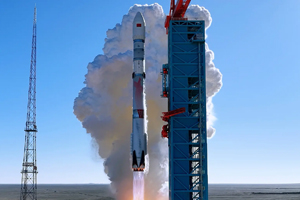
The second test launch of LandSpace's ZQ-3 rocket with undisclosed test payloads. Zhuque-3 first stage booster will attempt to land on its downrange landing...
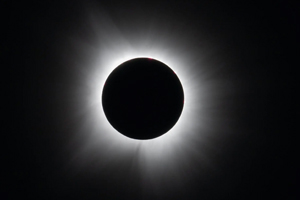
A total solar eclipse with a magnitude of 1.0386 (greatest eclipse 17:47:06 UTC) will be visible in parts of Greenland, Iceland, northern Russia, the Atlantic...
Includes presentation of the Neil Armstrong Award of Excellence, activities for the new class of Astronaut Scholars, 2-day Technical Conference where Scholars present their...
During U.S. spacewalk 97, two astronauts will replace a Space-to-Ground antenna on the orbital complex. The antenna is a critical communication system NASA uses...
Key themes include: Characterizing exoplanet-host solar-like stars; Star-planet interactions; Planet populations around solar-like stars. At University of Liège.
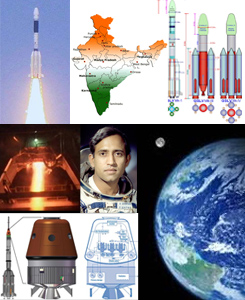 Anticipation is building for the next launch of India’s Geosynchronous Satellite Launch Vehicle (GSLV) rocket set for July. After two consecutive failures and a lifetime success rate of only 60%, ISRO has taken 31 months to conduct thorough investigations and over 35 ground tests of the indigenous cryogenic third stage engine, including a simulated high-altitude test, in preparation for this return to flight. The 1,980-kg, 2.5-KW GSAT-14 communications satellite is the designated payload. If successful, India will immediately ramp up preparations for an experimental flight of the next generation GSLV Mark 3 as early as January 2014. This updated variant will double the lift capacity of the system to 4 tons and is the vehicle of choice for the future of the India human spaceflight program. ISRO is currently working with a budget of nearly US$2.2M to conduct pre-project studies and develop critical technologies toward this goal, including environmental control, spacesuit, reentry and crew escape system. The proposed total budget for development of the human program is US$2.3B, expected to begin no earlier than 2017. Success of the GSLV next month will greatly improve prospects for a 2014-2015 launch of the Chandrayaan-2 lunar exploration mission to demonstrate soft-landing and deploy a rover on the surface of the Moon. Pictured: Rakesh Sharma, First Indian in Space, Intercosmos Research Astronaut, Soyuz T-11. (Image Credit: ISRO)
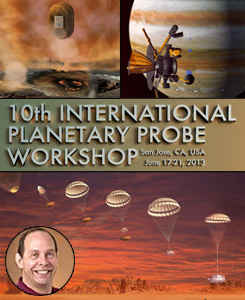 The 10th International Planetary Probe Workshop will be held June 17-21 at San Jose State University, California, USA. It is sponsored by ESA, JPL, NASA, AGI, Science and Technology Corp. and others. About 100 scientists, engineers, technologists and space mission designers will speak on new technologies, scientific discoveries and international cooperation for exploring the solar system via planetary probe missions. Tom Spilker from JPL (pictured) and Denis Lebleu from Thales Alenia Space are co-conveners for the ‘Giant Planets’ session which will cover science and engineering aspects of past and future atmospheric entry probes to Jupiter, Saturn, Uranus and Neptune. There are also sessions about Venus and Titan, current projects for airless planetary bodies (such as the Moon, Mercury, NEAs) and Mars landers / in-situ activities. Preceding this event will be a 2-day short course on ‘Entry, Descent, and Landing Systems’ from June 15-16. Students will hear from 24 experts on topics including aerodynamics, software, heatshields, hypersonic / supersonic decelerators, parachutes and recent EDL technology case studies. As the Russia Luna Moon probes (1959) aided our understanding of and further piqued our curiosity about our nearest celestial neighbor, future missions to Jupiter, its moons, the outer solar system and exoplanets will advance humankind’s understanding of the Universe and thirst for exploration. (Image Credit: NASA, JPL, ESA)
 = All times for terrestrial events in local time unless noted.
 = All times for international terrestrial events in local time unless noted.
 = All times for space events, and…
 = All times for international space / astro events in Hawaii Standard Time unless noted. Add 10 hours to obtain UT (‘Universal Time;’ Greenwich, England).