Space Age Enterprises: OSC Launches LADEE, SpaceX Launches CASSIOPE
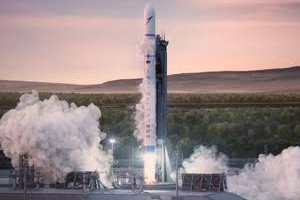
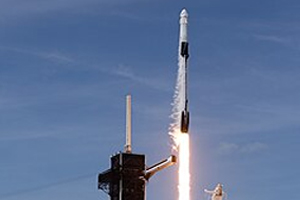
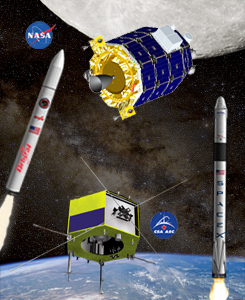
Orbital Sciences Corporation will debut the Minotaur V rocket on September 6 with its launch of Lunar Atmosphere and Dust Environment Explorer (LADEE) from Wallops Flight Facility in Virginia between 23:27 – 23:31 EDT. If successful, this launch will accomplish many firsts: 1st launch of Minotaur V rocket, 1st Moon / Planetary mission launched from Wallops, 1st 5-stage vehicle and 1st Moon mission launched by Orbital. Led by NASA Ames Research Center, LADEE will gather information about the structure and composition of the lunar atmosphere and dust while in a 50-km altitude orbit around the Moon’s equator. LADEE includes a dust detector, neutral mass spectrometer, ultraviolet-visible spectrometer and laser communications terminal. On Sep 10 SpaceX is scheduled to launch its Falcon 9 rocket with Canadian Space Agency’s Cascade, SmallSat and IOnospheric Polar Explorer (CASSIOPE) satellite from Vandenberg AFB in California. Falcon 9 is a 2-stage rocket which uses Merlin 1D engines and liquid oxygen / kerosene propellants. SpaceX is upgrading the Falcon 9 rocket along with the Dragon capsule to send humans into space under NASA’s CCiCAP. CASSIOPE has 8 science instruments which will observe Earth’s ionosphere and gather data on space weather. It also contains a technology demonstrator for a commercial digital broadband carrier. (Image Credit: NASA, OSC, SpaceX, CSA-ASC)
Europe Considers Future Space Exploration Opportunities
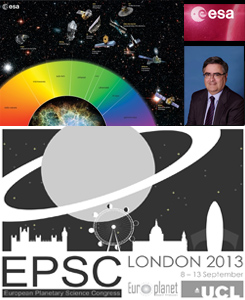
The European Space Agency is hosting Presentation Meeting 2013 – L2 and L3 Science Themes at the Oceanographic Institute of Paris on September 3-4. The open meeting attended by interested parties from the scientific community, industry, national funding agencies and international partners will hear from scientists with various proposals and more than 30 white papers elaborating on science objectives, instrumentation and mission design concepts. Before the end of the year this meeting and subsequent procedures coordinated by Director of Science and Robotic Exploration Alvaro Giménez Cañete will decide the science themes to be explored by the next two L-class ESA missions. This category of large missions is restricted to no more than US$1.2B each. L2 and L3 are expected to launch in 2028 and 2034 respectively. ESA’s first L-class mission, the Jupiter Icy Moon Explorer (JUICE), passed final selection in May 2012 and is set to launch in 2022. The European Planetary Science Congress 2013 takes place at University College London on Sep 8-13. The Congress is designed as a platform for exchange and presentation of results, development of new ideas and networking. For the first time EPSC will include an Industry Day focused on associated companies and stakeholders that shape space policy. (Image Credit: ESA, EPSC)
= All times for terrestrial events in local time unless noted.
= All times for international terrestrial events in local time unless noted.
= All times for space events, and…
= All times for international space / astro events in Hawaii Standard Time unless noted. Add 10 hours to obtain UT (‘Universal Time;’ Greenwich, England).
Sep 2 — ISS, LEO: Expedition 36 continuing to work with Robonaut, making final preparations for HTV-4 undocking; Vinogradov, Misurkin, Cassidy readying for return to Earth set for Sep 10.
Sep 2 — Fermi, LEO: Gamma-ray telescope, now in extended mission phase, will continue studying sky in high-energy wavelengths; science team hopes for at least 5 more years of observations.
Sep 2 — WISE, LEO: Spacecraft will be revived this month for 3-year mission to hunt for near-Earth objects within 45M km of Earth and support NASA Asteroid Initiative.
Sep 2 — SHIPinSPACE Ltd, London, United Kingdom: With US$7.78M in seed-funding, will begin developing fully-reusable, suborbital space tourism vehicle able to carry 48 people for US$60K each.
Sep 2 — Deep Space Industries, McLean VA: Selling merchandise and meteorites through retail division ‘Deep Space by Design’ to fund space projects.
Sep 2-8 — Centre for Planetary Science and Exploration, University of Western Ontario, London, Ontario, Canada: 2013 Planetary Science Short Course; focusing on processes that shaped terrestrial planets, moons, asteroids with emphasis on our Moon and Mars.
Sep 2 — Moon: 6.4° S of Beehive Cluster, 06:00.
Continued from…
Jun 10 – Sep 2 — Johnson Space Center, NASA, Seattle WA:Destination Station exhibit; for public to learn about living in space aboard the ISS; at Pacific Science Center.
Aug 20 – Sep 10 — Goddard Space Flight Center, NASA, Online / Greenbelt MD:Request for Information: Extreme Environments Challenge; to determine level of interest in potential competition for developing technologies to operate in extreme environments.
Aug 26 – Oct 10 — GLXP Team Puli, Online / Budapest, Hungary: IndieGoGo Campaign; requesting funds to send rover to Mauna Kea in Hawai`i to simulate Moon mission and test / control systems from 12,552 km away.
Sep 3 — The Space Show, Online / Tiburon CA: Host Dr. David Livingston talks with Anatoly Zak about his book Russia in Space: The Past Explained – The Future Explored.
Sep 3 — Asteroid 2013 PD39: Near-Earth flyby (0.076 AU).
WEDNESDAY
Sep 4 — ISS, Undocking of HTV-4, LEO: The 4th H-2 transfer vehicle, now filled with ISS waste including NASA engineering experiment module STP-H3, scheduled to undock 16:00 UT, live coverage available; will burn up upon Earth atmospheric reentry Sep 7.
Sep 4 — Marshall Space Flight Center, NASA, Mobile Area Chamber of Commerce, Mobile AL:NASA Business to Business Forum; at Arthur R. Outlaw Convention Center.
Sep 4 — Commercial Spaceflight Federation, Johnson Space Center, NASA, Houston TX:All-Astronaut Panel featuring Christopher J. Ferguson, Jim Voss, Garrett Reisman, Jeff Ashby, Rick Searfoss; at Space Center Houston, 17:00 CDT, free.
Sep 4 — Johnson Space Center, NASA, Online / Houston TX:NASA news conference to preview Orbital Sciences Corporation’s Cygnus spacecraft test flight to ISS, 15:00 CDT.
Sep 4 — Kennedy Space Center, NASA, Titusville FL:Canada in Space – NASA’s Enduring Partner; Canada Astronaut Dave Williams to welcome attendees to official exhibit opening, 18:00 – 20:00 EDT.
Sep 5 — Florida Space Institute, Orlando FL:FSI Space Tech 1.0; at Rosen School of Hospitality Management; US$150-200, free for students / faculty.
Sep 5 — Moon: New Moon, 01:35.
FRIDAY
Sep 6 — Orbital Sciences Corp., Launch Minotaur V / Lunar Atmosphere and Dust Environment Explorer (LADEE), Wallops Island VA: Moon mission of 160 days to study Moon atmosphere and dust; will transmit laser signals to NASA stations in California and New Mexico as well as ESA’s Optical Ground Station in Tenerife, Spain; 23:27 – 23:31 EDT; live coverage available; alternate launch days Sep 7-10.
Sep 6 — Johnson Space Center, NASA, Houston TX:Lunch with an Astronaut, Leroy Chiao; US$49.95 adult.
Sep 6 – Dec 4 — Johnson Space Center, NASA, Seattle WA:Destination Station exhibit; for public to learn about living in space aboard the ISS; at Museum of Flight.
Sep 7 — Virgin Galactic, The Spaceship Company, Mojave CA:Career Fair; at Mojave Air and Spaceport, 08:00 – 11:00 PDT.
Sep 7 — Onizuka Center for International Astronomy Visitor Information Station, Mauna Kea HI: The Universe Tonight: W. M. Keck Observatory; at 2,800-meter altitude on Mauna Kea, 18:00 HST.
Sep 8-12 — European Solar Physics Division, European Physical Society, European Astronomical Society,Dublin, Ireland: 14th European Solar Physics Meeting; at Trinity College.
Sep 8-13 — European Planetary Science Congress, Europlanet, et al, London, United Kingdom: European Planetary Science Congress 2013; at University College London; US$64-507 (€50-395).
Sep 8 — Moon: 1.1° ENE of Spica, 06:00; 0.76° SE of Venus, 12:00.
Includes ~150 meetings covering the fields of COSPAR Scientific Commissions / Panels / Task Groups, such as SC B: The Earth-Moon System, Planets, and...
From 02 to 07 August 2026, a few thousand geoscientists across diverse disciplines will gather at the 23rd annual meeting of the Asia Oceania Geosciences...
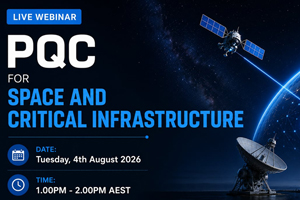
Virtual Series 2026 will offer deeper conversations on why PQC matters and the practical steps businesses should be taking; starts 1:00 pm AEST. Featuring:...
This international lunar science meeting has two objectives: to provide a platform for leading experts to review recent advances across lunar research, from the...
At CSIR International Convention Centre. Key topics are Earth Observation, Developing Space Tourism, Space Supply Manufacturing. Cultural tours are offered.
(No earlier than 10 Aug) Japan to launch the MICHIBIKI No. 7 | Quasi-Zenith Satellite System (QZS-7) navigation satellite. Launch window remains open through...
Participants will receive theoretical and hands-on training in electron imaging and X-ray spectroscopy for application to planetary samples. This training opportunity is targeted at...
"Leading Australia’s Space Future for Our Strategic Advantage". Southern Space 2026 brings together decision-makers who set the direction for Australia’s space sector. It is...
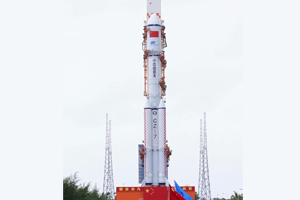
The second test launch of LandSpace's ZQ-3 rocket with undisclosed test payloads. Zhuque-3 first stage booster will attempt to land on its downrange landing...
A total solar eclipse with a magnitude of 1.0386 (greatest eclipse 17:47:06 UTC) will be visible in parts of Greenland, Iceland, northern Russia, the Atlantic...
Includes presentation of the Neil Armstrong Award of Excellence, activities for the new class of Astronaut Scholars, 2-day Technical Conference where Scholars present their...
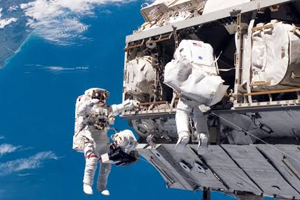
During U.S. spacewalk 97, two astronauts will replace a Space-to-Ground antenna on the orbital complex. The antenna is a critical communication system NASA uses...
 Orbital Sciences Corporation will debut the Minotaur V rocket on September 6 with its launch of Lunar Atmosphere and Dust Environment Explorer (LADEE) from Wallops Flight Facility in Virginia between 23:27 – 23:31 EDT. If successful, this launch will accomplish many firsts: 1st launch of Minotaur V rocket, 1st Moon / Planetary mission launched from Wallops, 1st 5-stage vehicle and 1st Moon mission launched by Orbital. Led by NASA Ames Research Center, LADEE will gather information about the structure and composition of the lunar atmosphere and dust while in a 50-km altitude orbit around the Moon’s equator. LADEE includes a dust detector, neutral mass spectrometer, ultraviolet-visible spectrometer and laser communications terminal. On Sep 10 SpaceX is scheduled to launch its Falcon 9 rocket with Canadian Space Agency’s Cascade, SmallSat and IOnospheric Polar Explorer (CASSIOPE) satellite from Vandenberg AFB in California. Falcon 9 is a 2-stage rocket which uses Merlin 1D engines and liquid oxygen / kerosene propellants. SpaceX is upgrading the Falcon 9 rocket along with the Dragon capsule to send humans into space under NASA’s CCiCAP. CASSIOPE has 8 science instruments which will observe Earth’s ionosphere and gather data on space weather. It also contains a technology demonstrator for a commercial digital broadband carrier. (Image Credit: NASA, OSC, SpaceX, CSA-ASC)
 The European Space Agency is hosting Presentation Meeting 2013 – L2 and L3 Science Themes at the Oceanographic Institute of Paris on September 3-4. The open meeting attended by interested parties from the scientific community, industry, national funding agencies and international partners will hear from scientists with various proposals and more than 30 white papers elaborating on science objectives, instrumentation and mission design concepts. Before the end of the year this meeting and subsequent procedures coordinated by Director of Science and Robotic Exploration Alvaro Giménez Cañete will decide the science themes to be explored by the next two L-class ESA missions. This category of large missions is restricted to no more than US$1.2B each. L2 and L3 are expected to launch in 2028 and 2034 respectively. ESA’s first L-class mission, the Jupiter Icy Moon Explorer (JUICE), passed final selection in May 2012 and is set to launch in 2022. The European Planetary Science Congress 2013 takes place at University College London on Sep 8-13. The Congress is designed as a platform for exchange and presentation of results, development of new ideas and networking. For the first time EPSC will include an Industry Day focused on associated companies and stakeholders that shape space policy. (Image Credit: ESA, EPSC)
 = All times for terrestrial events in local time unless noted.
 = All times for international terrestrial events in local time unless noted.
 = All times for space events, and…
 = All times for international space / astro events in Hawaii Standard Time unless noted. Add 10 hours to obtain UT (‘Universal Time;’ Greenwich, England).