India 1st Mars Mission & USA MAVEN Spacecraft Ready to Launch, Collaborate
Important steps toward advancing humanity as a multi world species are being taken as the 1st India Mars mission is ready to launch aboard a PSLV rocket from the Satish Dhawan Space Center in Sriharikota, India at 14:38 on November 5. Known as Mars Orbiter Mission (MOM) or Mangalyaan (Mars craft), the 1,350-kg craft is foremost a space technology development venture tasked with providing data on orbit maneuvers, deep-space communication and autonomous capabilities. It will also explore the morphology, mineralogy and atmosphere of Mars using 5 indigenous instruments including a Lyman-Alpha Photometer and Methane Sensor. After 25 days in highly-elliptical Earth orbit, an engine burn will send MOM toward Mars where it is expected to enter orbit September 24, 2014 and spend its 6-10 month operational life. NASA is set to launch Mars Atmosphere and Volatile EvolutioN (Maven) on Nov 18 from Kennedy Space Center in Florida. It is scheduled to arrive at Mars 2 days before MOM. Deep Space Network will provide support services for Maven and MOM, and the 2 mission science teams plan to collaborate on overlapping objectives. The US$671M, 8-instrument Maven is expected to spend at least 1 year studying the Mars atmosphere from a 150-km altitude to determine how / why Mars lost 90% of its atmosphere and what effect it had on climate and habitability. MOM and Maven will join ESA’s Mars Express orbiter, marking the 1st time 3 nations have spacecraft simultaneously at Mars. Pictured: ISRO Chairman K. Radhakrishnan (R), Maven P.I. Bruce Jakosky (L). (Image Credit: ISRO, K. Kremer, NASA, GSFC)
Work on Lunar Ice, Dust, Communications to Support Future Moon Development
The Keck Institute for Space Studies at California Institute of Technology with the Jet Propulsion Laboratory is hosting the second in a series of workshops on ‘New Approaches to Lunar Ice Detection and Mapping’ on November 4-7. The study will innovate low-cost mission concepts for detecting and mapping ice deposits on the Moon’s South and North poles. The first workshop hosted by KISS July 22-25 assessed key measurements needed to advance understanding of distribution and abundance of lunar ices. Now in this session, the sub-team studies on specific concepts and technologies are down selected to 2-3 efficient and affordable mission concepts and focused architectures with high potential of realization in the near future. Study Co-Leads Paul Hayne of JPL, Andy Ingersoll of Caltech and David Paige of UCLA emphasize that identifying deposits at small (~100 m) spatial scales will facilitate future extraction, sample analysis and in-situ resource utilization. Future development of the Moon as an extension of Human civilization will also be enhanced by data returns of the current LADEE mission to study the lunar atmosphere and dust environment. LADEE has also experimentally proven the concept of high bandwidth super fast laser communications links between Earth and Moon. This technology could enable the internet to go interplanetary. (Image Credit: KISS, Caltech, UCLA, NASA)
= All times for terrestrial events in local time unless noted.
= All times for international terrestrial events in local time unless noted.
= All times for space events, and…
= All times for international space / astro events in Hawaii Standard Time unless noted. Add 10 hours to obtain UT (‘Universal Time;’ Greenwich, England).
Nov 4 — ISS, LEO: Expedition 37 reviewing procedures / preparing for arrival of 3-member crew Nov 7, Russia EVA set for Nov 9, departure of 3-member crew and change of command ceremony Nov 10.
Nov 4 — WISE, LEO: Spacecraft expected to identify 150 previously unknown NEOs and characterize size, albedo thermal properties of about 2,000 others within 45M km of Earth in 3-year period.
Nov 4 — Curiosity,Cooperstown Trajectory, Mars: Will have 3rd software update uploaded to advance capabilities for using robotic arm while parked on slopes, storing information overnight / resuming autonomous driving the next day.
Nov 4 — Interorbital Systems Corp., Mojave CA: NewSpace company preparing for low-altitude launch of Common Propulsion Module Test Vehicle (CPM-TV) with 4 payloads aboard.
Nov 4 — Masten Space Systems Inc., Mojave CA: Flight testing Xombie technology demonstration rocket Nov 11-22 to mature Autonomous Guidance, Navigation and Control (AGC) precision landing technology.
Nov 4 — Terminal Velocity Aerospace LLC, Moffett Field CA: Will begin arc-jet and other ground testing of newly-developed thermal protection system (TPS) materials at Ames Research Center.
Nov 4-5 — The National Academies Space Studies Board & Board on Physics and Astronomy, Washington DC: Committee on Astronomy and Physics; at Keck Center.
Nov 5 — ISRO, Launch PSLV / Mars Orbiter Mission (Mangalyaan), Satish Dhawan Space Center, Sriharikota, India: Augmented version of 4-stage Polar Satellite Launch Vehicle set to launch Mangalyaan at 14:38 local time; will probe Mars atmosphere, look for methane hotspots and indications of water; launch window Oct 28 – Nov 19.
Nov 5-10 — European Commission,Munich, Germany:Space Tech Expo; to show how space and its applications provide benefits to Europe’s citizens; at Cathedral Square.
Nov 5 — Moon: 7.4° N of Antares, 02:00; at perigee (364,930 km), 23:00.
Nov 7 — RSA, Launch Soyuz TMA-11M / ISS 37S, Baikonur Cosmodrome, Kazakhstan: An RSA Soyuz rocket set to launch members of Expedition 38/39: Richard Mastracchio of NASA, Mikhail Tyurin of RSA, Koichi Wakata of JAXA (will become 1st Japan ISS Commander); will also deliver Olympic torch for 2014 Winter Olympics and UrtheCast Corp.’s Earth observation cameras; 10:14 local time.
Nov 7 — Canadian Space Commerce Association, Toronto, Ontario, Canada:CSCA Meeting; at Blake, Cassels & Graydon LLP.
Nov 8 — Peninsula Astronomical Society, Los Altos Hills CA: Lecture: Origins of the Universe; presented by Karto Keating from UC Berkeley.
Nov 8 — Johnson Space Center, NASA, Houston TX:Lunch with an Astronaut, John-David Bartoe; US$49.95 adult.
Nov 8 — Asteroid 2012 UV136: Near-Earth flyby (0.048 AU).
Nov 8 — Asteroid 2013 RV9: Near-Earth flyby (0.069 AU).
SATURDAY
Nov 9 — ISS, Russia EVA-36, LEO: Olympic torch to be taken on EVA by Kotov, Ryanzansky as part of the torch relay for 2014 Winter Olympics in Sochi, Russia.
Nov 9 — Space Tourism Society, Los Angeles CA:Seminar: Space Experience Economy (SEE); presented by STS founder / president John Spencer and other guests; US$175.
Nov 9 — Asteroid 2013 TN69: Near-Earth flyby (0.083 AU).
SUNDAY
Nov 10 — ISS, Undocking of Soyuz TMA-09M, LEO: Expedition 37 members Yurchikhin, Nyberg, Parmitano return to Earth; Oleg Kotov becomes commander of ISS; undocking scheduled 23:26 UT, live coverage available; will land near Dzhezkazgan, Kazakhstan about 3 hours 24 minutes later.
Nov 10 — International Academy of Astronautics, Bangkok, Thailand:IAA Regional Meeting.
Nov 10 — PlayLab, X Prize Foundation, Galactic Unite,Mississauga, Ontario, Canada: Student Rocket Workshop; children grades 4-7 design, build and test rockets at Northstar Montessori Private School.
Nov 10 — The Space Show, Online / Tiburon CA: Host Dr. David Livingston talks with Chris Stone, senior space policy analyst and strategist.
Includes ~150 meetings covering the fields of COSPAR Scientific Commissions / Panels / Task Groups, such as SC B: The Earth-Moon System, Planets, and...
From 02 to 07 August 2026, a few thousand geoscientists across diverse disciplines will gather at the 23rd annual meeting of the Asia Oceania Geosciences...
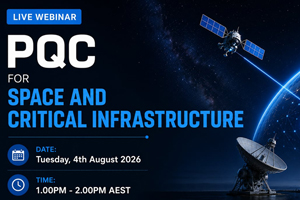
Virtual Series 2026 will offer deeper conversations on why PQC matters and the practical steps businesses should be taking; starts 1:00 pm AEST. Featuring:...
This international lunar science meeting has two objectives: to provide a platform for leading experts to review recent advances across lunar research, from the...
At CSIR International Convention Centre. Key topics are Earth Observation, Developing Space Tourism, Space Supply Manufacturing. Cultural tours are offered.
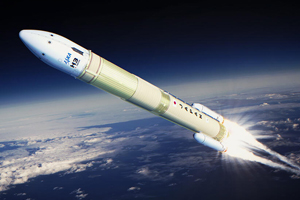
(No earlier than 10 Aug) Japan to launch the MICHIBIKI No. 7 | Quasi-Zenith Satellite System (QZS-7) navigation satellite. Launch window remains open through...
Participants will receive theoretical and hands-on training in electron imaging and X-ray spectroscopy for application to planetary samples. This training opportunity is targeted at...
"Leading Australia’s Space Future for Our Strategic Advantage". Southern Space 2026 brings together decision-makers who set the direction for Australia’s space sector. It is...
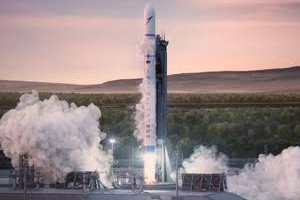
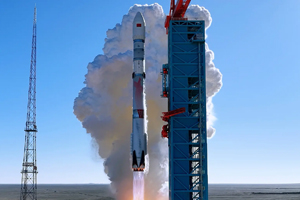
The second test launch of LandSpace's ZQ-3 rocket with undisclosed test payloads. Zhuque-3 first stage booster will attempt to land on its downrange landing...
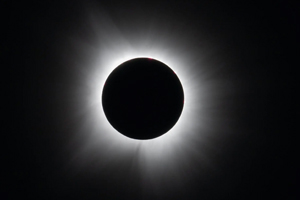
A total solar eclipse with a magnitude of 1.0386 (greatest eclipse 17:47:06 UTC) will be visible in parts of Greenland, Iceland, northern Russia, the Atlantic...
Includes presentation of the Neil Armstrong Award of Excellence, activities for the new class of Astronaut Scholars, 2-day Technical Conference where Scholars present their...
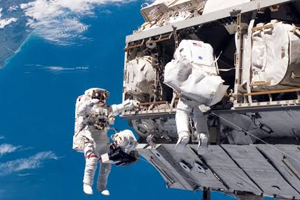
During U.S. spacewalk 97, two astronauts will replace a Space-to-Ground antenna on the orbital complex. The antenna is a critical communication system NASA uses...
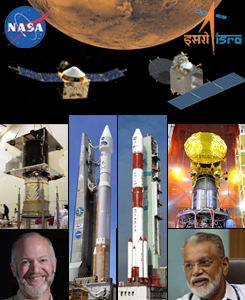 Important steps toward advancing humanity as a multi world species are being taken as the 1st India Mars mission is ready to launch aboard a PSLV rocket from the Satish Dhawan Space Center in Sriharikota, India at 14:38 on November 5. Known as Mars Orbiter Mission (MOM) or Mangalyaan (Mars craft), the 1,350-kg craft is foremost a space technology development venture tasked with providing data on orbit maneuvers, deep-space communication and autonomous capabilities. It will also explore the morphology, mineralogy and atmosphere of Mars using 5 indigenous instruments including a Lyman-Alpha Photometer and Methane Sensor. After 25 days in highly-elliptical Earth orbit, an engine burn will send MOM toward Mars where it is expected to enter orbit September 24, 2014 and spend its 6-10 month operational life. NASA is set to launch Mars Atmosphere and Volatile EvolutioN (Maven) on Nov 18 from Kennedy Space Center in Florida. It is scheduled to arrive at Mars 2 days before MOM. Deep Space Network will provide support services for Maven and MOM, and the 2 mission science teams plan to collaborate on overlapping objectives. The US$671M, 8-instrument Maven is expected to spend at least 1 year studying the Mars atmosphere from a 150-km altitude to determine how / why Mars lost 90% of its atmosphere and what effect it had on climate and habitability. MOM and Maven will join ESA’s Mars Express orbiter, marking the 1st time 3 nations have spacecraft simultaneously at Mars. Pictured: ISRO Chairman K. Radhakrishnan (R), Maven P.I. Bruce Jakosky (L). (Image Credit: ISRO, K. Kremer, NASA, GSFC)
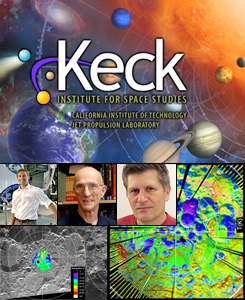 The Keck Institute for Space Studies at California Institute of Technology with the Jet Propulsion Laboratory is hosting the second in a series of workshops on ‘New Approaches to Lunar Ice Detection and Mapping’ on November 4-7. The study will innovate low-cost mission concepts for detecting and mapping ice deposits on the Moon’s South and North poles. The first workshop hosted by KISS July 22-25 assessed key measurements needed to advance understanding of distribution and abundance of lunar ices. Now in this session, the sub-team studies on specific concepts and technologies are down selected to 2-3 efficient and affordable mission concepts and focused architectures with high potential of realization in the near future. Study Co-Leads Paul Hayne of JPL, Andy Ingersoll of Caltech and David Paige of UCLA emphasize that identifying deposits at small (~100 m) spatial scales will facilitate future extraction, sample analysis and in-situ resource utilization. Future development of the Moon as an extension of Human civilization will also be enhanced by data returns of the current LADEE mission to study the lunar atmosphere and dust environment. LADEE has also experimentally proven the concept of high bandwidth super fast laser communications links between Earth and Moon. This technology could enable the internet to go interplanetary. (Image Credit: KISS, Caltech, UCLA, NASA)
 = All times for terrestrial events in local time unless noted.
 = All times for international terrestrial events in local time unless noted.
 = All times for space events, and…
 = All times for international space / astro events in Hawaii Standard Time unless noted. Add 10 hours to obtain UT (‘Universal Time;’ Greenwich, England).