A Shining Beacon of International Collaboration for Science and Peace
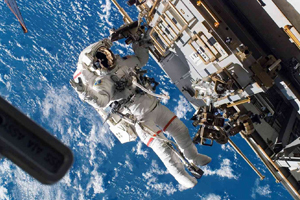
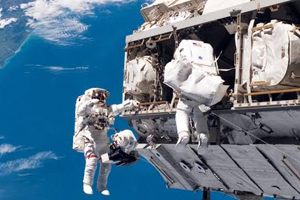
Dragon Crew-11 headed to ISS July 31 with Commander Zena Cardman, Pilot Edward “Mike” Fincke, Cosmonaut Oleg Vladimirovich Platonov and JAXA Astronaut Kimiya Yui. Current astronauts are Anne McClain, Nichole Ayers and Jonny Kim from NASA, Takuya Onishi from JAXA, and Kirill Peskov, Sergey Ryzhikov and Alexey Zubritsky from Roscosmos. ISS is in its 24th year of continuous Human occupation, with 4,000+ science projects completed after proposals from 108+ countries. They are using a 3D bioprinter to mimic human tissue, conducting stem cell studies, researching artificial retinas to help people with retinitis pigmentosa, and manufacturing ZBLAN optical fiber in microgravity as that eliminates imperfections arising in Earth fabrication. ZBLAN fiber improves transmission. Tiangong Space Station (TSS), in its 5th year of continuous Human occupation, is expected to reach at least 10 years. Plans are in the works for international and commercial crew and for expansion of the station. Current taikonauts on the station are Chen Dong, Chen Zhongrui and Wang Jie, and they are studying adaptability of ancient microbes to radiation and weightlessness, as well as testing high-strength steel and tungsten alloys with TSS equipment able to cool atoms to ultra-low temperatures. American Astronautical Society announced they hoped to hold an online-only version of the cancelled ISSRD conference. (Credits: TSS above Earth-CNSA; Kayla Barron with chili peppers-NASA; Mark Vande in ISS cupola-NASA)
MONDAY
☆Jul 28 — International Space Station, ~415-km LEO: Expedition 73 seven members expect to greet 4 Crew-11 astronauts arriving on July 31 who are to study plant cell division, bacteria-killing viruses and human stem cells, and meanwhile are continuing the Bone on ISS study and CIPHER suite of 14 human research experiments; McClain, Ayers, Onishi and Peskov of Crew-10 preparing their return to terra firma.
☆Jul 28 — Tiangong Space Station, ~390-km LEO: Shenzhou 20 three-member crew are using a 130kg core exercise device that arrived on Tianzhou 9 spacecraft along with human-cell biology experiments for heart-cell revitalization and anti-aging, and 2 with stem cells: from bone marrow mesenchyme and pluripotents to build miniature brain-like organoid models.
● Jul 28 — JHU APL, Laurel MD: Mini-conference for Europa ICONS program; pairing Europa Clipper science team members with undergraduate students for 10-week internship (intern stipend US$12,000).
● = Terrestrial and o = International terrestrial events in local time; ☾ = Moon, ★ = Space and ☆ = International space events in Hawai’i time unless noted.
Habitable World Observatory Meeting Plans Next Steps for 2040s Search for Interstellar Planets
Space Telescope Science Institute, Johns Hopkins University and NASA Exoplanet Science Institute are holding “Towards the Habitable Worlds Observatory: Visionary Science and Transformational Technology” meeting on July 28-31 in Washington DC. Habitable Worlds Observatory (HWO) is the next NASA astrophysics flagship mission, drawing upon the legacy of Hubble, Webb and Roman Space Telescopes – potentially launching in early to mid-2040s. HWO will utilize ultraviolet, optical, and infrared technologies, and is planned to have a mirror large enough to find and study atmospheres of at least 25 potentially habitable worlds around other stars. There are over 5,000 confirmed exoplanets to date. Results from multiple HWO working groups will be showcased at this meeting with contributions from global astronomy and engineering communities. A livestream of plenary sessions will be available on the STScI Research YouTube Channel. Giada Arney from Goddard Space Flight Center will open the meeting with a talk on “Are we alone? The search for life with HWO”. Other speakers include Astronaut John Grunsfeld who repaired Hubble, Bruce Macintosh from UC Santa Cruz, Jean-Baptiste Ruffio UC San Diego, Xinfeng Xu from Northwestern University, and Tracy Becker of SwRI. The program also includes in-person and digital posters. HWO has made significant progress in the past year: NASA established a dedicated Technology Maturation Project Office at Goddard, which is collaborating with JPL, Ames and Marshall Centers. (Image credits: NASA, STSci, JHU, UC Santa Cruz)
Ongoing…
● Jun 2 – Aug 10 — University of Hawai’i Institute for Astronomy, Islands of Hawai’i, O’ahu, Maui: Paid research internship for undergraduate students.
o Jun 30 – Aug 22 — International Space University, Korean Federation of Science and Technology Societies (KOFST), Hanyang University ERICA Campus, Seoul, S Korea:37th Space Studies Program (SSP).
o Jul 27 – Aug 1 — Asia Oceania Geosciences Society (AOGS), Singapore: AOGS 2025; with special session on geology, geochemistry and geophysics of the Moon titled Surface Science and Exploration of the Moon and Airless Planetary Bodies with an Impetus to Recent Missions (PS-24).
● Jul 29-31 — American Astronautical Society,Online / Springfield VA: Online-only version of cancelled ISS R&D Conference for presentation of 250+ submitted abstracts.
☆ Jul 29 — Southern Delta-Aquariids Meteor Shower Peak: Shower mostly visible in Southern Hemisphere, meteors appear to radiate from Aquarius constellation; may produce up to 25 meteors per hour with speed of ~41 km/sec.
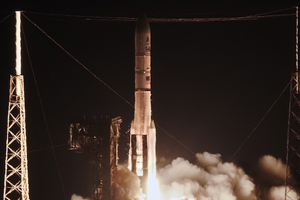
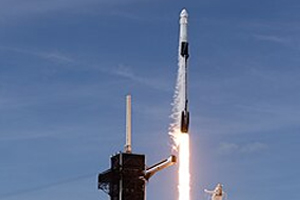
★ Jul 31 — SpaceX,Launch Falcon 9 / Crew-11, LC 39A, Kennedy Space Center FL: Dragon spacecraft headed to ISS with Commander Zena Cardman, Pilot Edward “Mike” Fincke, Cosmonaut Oleg Vladimirovich Platonov, JAXA Astronaut Kimiya Yui.
☆Aug 1 — Deep Space, Jupiter Trajectory: ESA Jupiter Icy Moons Explorer (JUICE) expected to perform flyby of Venus this month, arriving at Jupiter in 2031.
☾ Aug 1 — Moon: At first quarter, 02:40; at apogee (distance 404,183 km), 11:00.
☆ Aug 1 — Apollo Asteroid 35107 (1991 VH): Near-Earth Flyby (0.078 AU)
At the Spokane Convention Center. The meeting will have a broad scope, with a wide-ranging program of science and workforce topics, and celebrating planetary...
Convene, connect, and collaborate at the 19th annual von Braun Space Exploration Symposium! This year’s event will spotlight how bold ideas, emerging technologies, and...
Themes include: Space & the Arctic; Space & AI; Space & International Collaboration. There is a Student Session, a Technical Session, a Frontier Session,...
Oslo Spaceport Norway offers monthly a knowledgeable speaker and opportunity for networking, 17:00-20:00 local time; free entry but registration required. Ground Control is for...
45 satellites to launch for Amazon Leo, formerly named Project Kuiper. This LEO mega constellation will offer broadband internet access with 3,276 satellites.
Occurring 31 October from 09:00-11:00 local time (16:00-18:00 HST, 19:00-21:00 PDT, 22:00-24:00 EDT on 30 October), this Galaxy Forum will be in hybrid format...
Originally planned around this date for Wenchang, China -- TBC (to be confirmed); As the only professional association for astronauts, ASE supports the advancement of...
Coordinating Division Division C Education, Outreach and Heritage The IAU Symposium on Innovative Research and Techniques in Astronomy Communication will take place from November...
Change clocks back 1 hour from Daylight Saving to Standard Time; does not include Hawai’i, Arizona (except the Navajo Nation), American Samoa, Guam, Northern...
ESWW is the main annual event in the European Space Weather and Space Climate calendar. It is an international meeting organised annually within the...
IAU Symposium: IAUS409 - A Journey Towards Effective Astronomy Communication; online and at National Astronomical Observatory of Japan, 2-21-2 Osawa Mitaka, Tokyo. Topics include:...
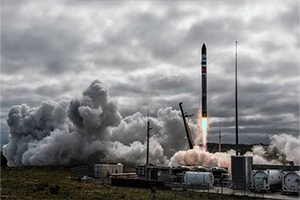
Launch Complex 1, ~39°S, Mahia Peninsula, New Zealand
iQPS Launch 9, an Earth observation satellite with Synthetic aperture radar for Japan-based imaging company iQPS, to launch on "The Sea God Surveys" mission...
Launch window 10:34am - 2:34pm local time for the 15th batch of classified satellites for a reconnaissance constellation built by SpaceX and Northrop Grumman...