USA Moon South Pole Lander Will Energize, Lift All Space Enterprises
Independent, National, International and Global space organizations and activities would be energized and invigorated by a new American mission to a truly new frontier. Moon South Pole, Malapert Mountain in particular, provides advantages for power and communications – areas with near-continuous solar illumination and direct line-of-sight to Earth. These areas also have relatively constant temperatures of -50° ± 10°C, compared to equatorial regions that see variation of as much as 250°C (from -150° night to 100°C day) through the lunar cycle, providing more stable operational environments for robotic and human missions. The South Pole-Aitken Basin (2600-km diameter; 13-km depth) is one of the largest known impact craters in the Solar System and has shown elevated levels of iron, titanium, and thorium, making it a primary target for lunar resource development. Many polar craters show strong evidence for abundant water ice which could be used in situ for life-support and fuel generation. There is widespread Helium-3, ideal fuel for nuclear fusion energy, deposited on the Moon over millennia by the solar wind. Minimal atmosphere, stability and slow rotational speed also make the Moon an excellent place to conduct astronomical observations of Galaxy, Stars, Earth and Solar System. Based on well-informed estimates and experiences of many leading space explorers, US$300-400M could fund a pair of USA Moon South Pole landers for missions as early as January 2016. (Image Credit: ILOA, P. Spudis, NASA)
Arianespace Launches Soyuz and Gaia Galaxy Mapping Mission
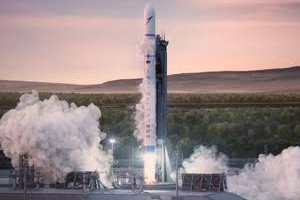
Arianespace is set to launch a Soyuz 2-1b rocket, designated VS06, to deploy the 2,029-kg Gaia spacecraft from the Guiana Space Center in Kourou, French Guiana at 06:12:18 local time for the European Space Agency. Produced by Russia, the Soyuz 2 rockets have been upgraded by European contractors with specific avionics, switching & power feeder units, and coverings on the core & booster stages to reduce icing. The Soyuz 2-1b rocket (also known as ST-B) will use a 999.6K-newton first stage, a 294K-newton second stage and an optional 19.6K-newton Fregat upper stage. Arianespace announced in September that Russia will provide 11 Soyuz rockets for near-term missions and an additional 7-10 rockets may be produced for use in 2016 and beyond. During its expected 5-year lifetime at Lagrange Point 2, Gaia will observe 1 billion stars 100 times in both the Milky Way and throughout the Local Group with 3 main scientific instruments: ASTRO astrometry instrument to determine positions of stars, BP/RP photometric instrument to acquire spectra of stars, and RVS Radial Velocity Spectrometer to determine velocity of celestial objects. Gaia will chart a 3-D structural map of our Galaxy and provide data on its composition, formation and evolution. (Image Credit: ESA, Arianespace, CNES, NASA, RIA/O. Urusov)
= All times for terrestrial events in local time unless noted.
= All times for international terrestrial events in local time unless noted.
= All times for space events, and…
= All times for international space / astro events in Hawaii Standard Time unless noted. Add 10 hours to obtain UT (‘Universal Time;’ Greenwich, England).
Dec 16 — ISS, LEO: Expedition 38 reconfiguring Quest airlock for new Nitrogen Oxygen Recharge System; Mastracchio, Wakata, Hopkins reviewing procedures for Canadarm2 grapple of Cygnus Orb-1 cargo freighter set for Dec 21.
Dec 16 — Hubble Space Telescope,LEO: Observing celestial objects in near ultraviolet, visible, near infrared wavelengths; new data of Jupiter’s moon Europa suggests water geysers erupt from its south pole.
Dec 16 — Chang’e-3 Lander and Yutu Rover, Sinus Iridum – Bay of Rainbows, 44°N 31°W, Moon Surface: If operations successful will begin science objectives including astronomical observation, survey of surface topography, geology, composition, resources.
Dec 16 — Rosetta,Comet 67P / Churyumov-Gerasimenko Trajectory: Science team preparing to wake spacecraft from hibernation in 35 days for systems checkout in preparation for comet rendezvous.
Dec 16 — Mars One, The Hague, The Netherlands: NewSpace company Mars 2018 robotic lander, communications satellite mission concept studies being developed by Lockheed Martin & SSTL.
Dec 16 — Moon Express Inc.,Mountain View CA: Building 600-kg MX-1 lander to launch to Moon in 2015; engineering prototype test flight planned for May / Jun 2014.
Dec 16 — S3 (Swiss Space Systems), Gran Canaria, Spain: Newly establish S3 Spain will play a key role in engineering suborbital flight system, manufacturing of upper stage; considering building spaceport by 2018.
Dec 16 — International Astronautical Federation, UNESCO, ESA, Online / Paris, France:Abstracts Due: Global Space Applications Conference; to be held Jun 2-4, 2014 at United Nations Educational, Scientific and Cultural Organization (UNESCO) HQ.
Dec 16 — The Space Show, Online / Tiburon CA: Host Dr. David Livingston talks with Bruce Pittman about commercial space, NASA Ames.
Dec 3-18 – Kennedy Space Center, NASA, Cape Canaveral AFS FL:Morpheus Moon lander to undergo dry run Dec 3, wet run Dec 4, tethered test Dec 6, followed by 3 free flight operations; potential 1st flight campaign Dec 18.
Dec 17 — Asteroid 2013 VC10: Near-Earth flyby (0.036 AU).
Dec 17 — Asteroid 2013 XG17: Near-Earth flyby (0.061 AU).
WEDNESDAY
Dec 18 — Orbital Sciences Corp., Launch Antares / Orb-1 (CRS-1), Wallops Island VA: OSC Antares rocket to launch 2nd Cygnus cargo freighter on 1st operational flight to ISS; will deliver 550 kg of cargo, 23 experiments for SSEP4; 21:42 – 21:47 EST, live coverage available.
Dec 19 — Arianespace, Launch Soyuz 2-1b / Gaia, Kourou, French Guiana: Arianespace rocket, designated VS06, to launch Gaia to Sun-Earth L2 Lagrange point at 06:12:18 local time; will create 3D chart of Milky Way Galaxy; nominal mission ends after 5 years.
Dec 19-20 — University of Minho Center for Mathematics, Portugal Foundation for Science and Technology, Braga, Portugal:6th Black Holes Workshop.
Dec 19 — Moon: 11.6° S of Pollux, 08:00; at apogee (distance 405,832 km), 14:00.
Dec 19 — Asteroid 2013 XG10: Near-Earth flyby (0.029 AU).
FRIDAY
NET Dec 20 — SpaceX, Launch Falcon 9 / Thaicom 6, Cape Canaveral AFS FL: SpaceX Falcon 9 rocket set to launch Thaicom 6 communications satellite to provide services for Southeast Asia and Africa.
Dec 20 — CNSA, Launch Long March 3B / Tupac Katari, Xichang, Sichuan, China: A Chinese Long March 3B/E rocket will launch the Tupac Katari communications satellite for the government of Bolivia.
Dec 20 — `Imiloa Astronomy Center, University of Hawai`i – Hilo, Hilo HI:Mauna Kea Skies Talk; astronomers from Mauna Kea observatories speak about recent discoveries; this session features Institute for Astronomy Manoa Telescope; 19:00 HST, US$8-10.
Dec 20 — Johnson Space Center, NASA, Houston TX:Lunch with an Astronaut, Ken Cameron; US$49.95 adult.
Dec 20 — Moon: 6.4° SSW of Beehive Cluster, 13:00.
Dec 20 — Asteroid 2012 CL19: Near-Earth flyby (0.098 AU).
SATURDAY
Dec 21 — ISS, Rendezvous & Grapple of Cygnus Orb-1 (CRS-1), LEO: Rendezvous & grapple of Cygnus Orb-1 cargo freighter scheduled at 09:45 UT, live coverage available.
Dec 21 — Oregon L5 Society – National Space Society Chapter, Oregon City OR:Oregon L5 Monthly Meeting; at Singer Hill Cafe.
Dec 21 — Winter Solstice: The Sun, appearing to travel along the ecliptic, reaches the point where it is farthest South of the celestial equator, 07:11.
Includes ~150 meetings covering the fields of COSPAR Scientific Commissions / Panels / Task Groups, such as SC B: The Earth-Moon System, Planets, and...
From 02 to 07 August 2026, a few thousand geoscientists across diverse disciplines will gather at the 23rd annual meeting of the Asia Oceania Geosciences...
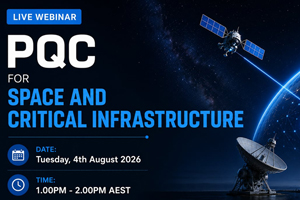
Virtual Series 2026 will offer deeper conversations on why PQC matters and the practical steps businesses should be taking; starts 1:00 pm AEST. Featuring:...
This international lunar science meeting has two objectives: to provide a platform for leading experts to review recent advances across lunar research, from the...
At CSIR International Convention Centre. Key topics are Earth Observation, Developing Space Tourism, Space Supply Manufacturing. Cultural tours are offered.
Participants will receive theoretical and hands-on training in electron imaging and X-ray spectroscopy for application to planetary samples. This training opportunity is targeted at...
"Leading Australia’s Space Future for Our Strategic Advantage". Southern Space 2026 brings together decision-makers who set the direction for Australia’s space sector. It is...
A total solar eclipse with a magnitude of 1.0386 (greatest eclipse 17:47:06 UTC) will be visible in parts of Greenland, Iceland, northern Russia, the Atlantic...
Includes presentation of the Neil Armstrong Award of Excellence, activities for the new class of Astronaut Scholars, 2-day Technical Conference where Scholars present their...
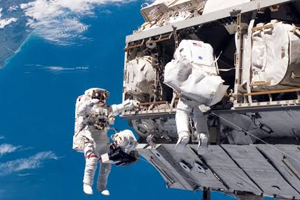
During U.S. spacewalk 97, two astronauts will replace a Space-to-Ground antenna on the orbital complex. The antenna is a critical communication system NASA uses...
Key themes include: Characterizing exoplanet-host solar-like stars; Star-planet interactions; Planet populations around solar-like stars. At University of Liège.
India orbiter surpasses another full year in lunar polar orbit since reaching the Moon in 2019; Chandrayaan-2 lander and rover were unsuccessful in lunar...
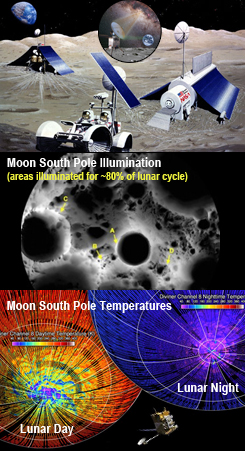 Independent, National, International and Global space organizations and activities would be energized and invigorated by a new American mission to a truly new frontier. Moon South Pole, Malapert Mountain in particular, provides advantages for power and communications – areas with near-continuous solar illumination and direct line-of-sight to Earth. These areas also have relatively constant temperatures of -50° ± 10°C, compared to equatorial regions that see variation of as much as 250°C (from -150° night to 100°C day) through the lunar cycle, providing more stable operational environments for robotic and human missions. The South Pole-Aitken Basin (2600-km diameter; 13-km depth) is one of the largest known impact craters in the Solar System and has shown elevated levels of iron, titanium, and thorium, making it a primary target for lunar resource development. Many polar craters show strong evidence for abundant water ice which could be used in situ for life-support and fuel generation. There is widespread Helium-3, ideal fuel for nuclear fusion energy, deposited on the Moon over millennia by the solar wind. Minimal atmosphere, stability and slow rotational speed also make the Moon an excellent place to conduct astronomical observations of Galaxy, Stars, Earth and Solar System. Based on well-informed estimates and experiences of many leading space explorers, US$300-400M could fund a pair of USA Moon South Pole landers for missions as early as January 2016. (Image Credit: ILOA, P. Spudis, NASA)
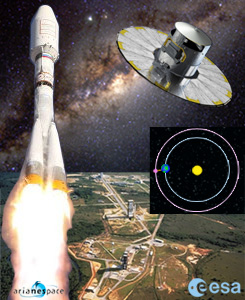 Arianespace is set to launch a Soyuz 2-1b rocket, designated VS06, to deploy the 2,029-kg Gaia spacecraft from the Guiana Space Center in Kourou, French Guiana at 06:12:18 local time for the European Space Agency. Produced by Russia, the Soyuz 2 rockets have been upgraded by European contractors with specific avionics, switching & power feeder units, and coverings on the core & booster stages to reduce icing. The Soyuz 2-1b rocket (also known as ST-B) will use a 999.6K-newton first stage, a 294K-newton second stage and an optional 19.6K-newton Fregat upper stage. Arianespace announced in September that Russia will provide 11 Soyuz rockets for near-term missions and an additional 7-10 rockets may be produced for use in 2016 and beyond. During its expected 5-year lifetime at Lagrange Point 2, Gaia will observe 1 billion stars 100 times in both the Milky Way and throughout the Local Group with 3 main scientific instruments: ASTRO astrometry instrument to determine positions of stars, BP/RP photometric instrument to acquire spectra of stars, and RVS Radial Velocity Spectrometer to determine velocity of celestial objects. Gaia will chart a 3-D structural map of our Galaxy and provide data on its composition, formation and evolution. (Image Credit: ESA, Arianespace, CNES, NASA, RIA/O. Urusov)
 = All times for terrestrial events in local time unless noted.
 = All times for international terrestrial events in local time unless noted.
 = All times for space events, and…
 = All times for international space / astro events in Hawaii Standard Time unless noted. Add 10 hours to obtain UT (‘Universal Time;’ Greenwich, England).