Ahead of GSLV Test India PM Modi Avows Importance of Indigenous Space Program
The Global Satellite Launch Vehicle Mark 3 suborbital test flight is currently set for July 21 from Satish Dhawan Space Center, Sriharikota, India. Success would validate atmospheric performance, provide data for human spaceflight development via the mock up ISRO crew capsule, clear the path for a full test of Mk 3 in 2016, and constitute another step towards increasing India’s share of the global satellite launch market — projected at US$55 billion over the coming decade. The next GSLV flight is in the Mk 2 configuration to orbit GSAT-6 in 2015, a crucial step toward proving reliability. The GSLV series of rockets is designed to lift payloads of as much as 5,000 kg to GTO (compared to the PSLV which can only lift 1,410 kg to GTO), allowing India to launch larger commercial satellites as well as more substantial interplanetary missions such as the greatly anticipated ~3,200-kg Chandrayaan 2 mission to send an orbiter, lander and rover to the Moon. The newly elected Prime Minister of India, Narendra Modi, has been emphasizing the achievements and benefits of the space program, “Our scientists have shown the world a new paradigm of frugal engineering and the power of imagination… India’s space program [is] driven by a vision of service to humanity.” India is well established as one of the 6 major spacefaring powers of the planet, having launched a total of 67 satellites including 40 on commercial or cooperative baseis for 19 other countries. Modi once recounted a discussion with Neil Armstrong in which the legendary explorer summed up his experience in 2 sentences: “When I went to the Moon, I went as an astronaut but when I came back, I came as a human being. This is my realization.” (Image Credit: ISRO, NASA Earth Observatory/NOAA NGDC/SPL, NaMoNamaha.com)
ISU Invites Women Astronauts to Share Space Exploration Experiences with Public
Women Astronauts plan to join the International Space University’s 27th Space Studies Program being hosted in Montreal, Canada for a public all-female Astronaut panel on July 10. Comprising ~10% of the total Astronaut population, only 57 women have flown in space: 44 from USA, 3 from Russia/USSR, 2 each from Canada, China and Japan, and 1 each from India, UK, France and South Korea. The 4 featured panelists, moderated by NASA KSC Deputy Center Director Janet Petro, are (clockwise from TL) Julie Payette (Canada), Soyeon Yi (South Korea), Shannon Walker (USA) and Yaping Wang (China). Payette, currently the Chief Operating Officer of the Montreal Science Centre, was part of the first Shuttle mission to dock with the ISS (STS-96, Discovery) in 1999, flew aboard STS-127 (Endeavour) in 2009, logged more than 25 days in space and served as Chief Astronaut for the Canadian Space Agency. Dr. Yi, retiring from KARI this August, became the first and only Korea Astronaut in 2008 when she flew aboard Soyuz TMA-12 to the ISS for a 10-day mission. Walker was a member of ISS Expedition 24 in 2010 and served as an ‘aquanaut’ commander for the NEEMO 15 undersea exploration mission in 2011. Wang launched aboard Shenzhou 10 to China’s orbiting laboratory Tiangong-1 in 2013, conducted scientific experiments and broadcast live lessons to students over a two-week period. The latest women chosen to undergo training for potential Astronaut status include Anna Kikina of Russia, and Christina Hammock, Nicole Mann, Anne McClain and Jessica Meir of USA. (Image Credit: CSA-ASC, NASA, CNSA, CCTV, ESA)
= All times for terrestrial events in local time unless noted.
= All times for international terrestrial events in local time unless noted.
= All times for space events, and…
= All times for international space / astro events in Hawaii Standard Time unless noted. Add 10 hours to obtain UT (‘Universal Time;’ Greenwich, England).
Jul 7 — ISS, LEO: Expedition 40 preparing for OSC Cygnus resupply craft expected to arrive Jul 14, working on studies to assess human movements in microgravity, how communication delays affect behavioral health & performance.
Jul 7 — Chang’e-3, Sinus Iridum / Mare Imbrium, 44.12°N 19.51°W, Moon Surface: Lander & Rover should wake from Lunar Night 7 hibernation this week, continue to perform science observations and measurements from fixed locations.
Jul 7 — Mars Orbiter Mission (Mangalyaan),Mars Trajectory: India spacecraft ~24M km from Mars, operating nominally with 6.5-minute one-way radio signal to Earth.
Jul 7 — Astrobotic Technology Inc., Pittsburgh PA: NewSpace company advancing successfully validated Astrobotic Autolanding System (AAS) for use with space-rated sensors & avionics to land Griffin lander on Moon.
Jul 7 — Masten Space Systems, Mojave CA: Under US$3M DARPA contract, developing reusable 1st stage launch vehicle capable of deploying upper stage that inserts ~1,300 to 2,300 kg payloads into LEO for less than $5M per launch.
Jul 7 — Moon Express Inc., Moffett Field CA: President Andy Aldrin & CEO Bob Richards to be featured speakers at NewSpace 2014 conference Jul 24-26.
Jul 7-11 — University College London, London, United Kingdom: 6th Alfven Conference; to discuss Rosetta, MAVEN, Mars Orbiter Mission (Mangalyaan), and plasma interactions with comets, Mars, Venus, inner and outer solar system moons.
Jun 18 – Jul 11 — Venus Express, Venus Orbit: ESA spacecraft to perform “experimental aerobraking” maneuvers to reach ~130-km altitude; if survives this phase, will raise orbit for few months before making final plunge into atmosphere.
NET Jul — Chang’e-2, Deep Space: Spacecraft expected to reach 100M km from Earth this month.
Jul 8 — RSA, Launch Soyuz 2 / Multi-Payload,Baikonur Cosmodrome, Kazakhstan: An RSA Soyuz rocket set to launch UKube-1 (1st UK Space Agency CubeSat mission, 1st satellite built in Scotland), Meteor M2 weather satellite, SkySat 2 for Skybox Imaging, TechDemoSat 1, other payloads.
Jul 8-17 — Science Camps of America, Ka`u HI:Air and Space Camp; teens learn about astronomy, climate, alternative energy in unique environments of Hawai`i Island, Mauna Kea, Observatories.
Jul 8 — Asteroid 2013 AG69: Near-Earth flyby (0.007 AU).
Jul 8 — Asteroid 2014 MF19: Near-Earth flyby (0.099 AU).
WEDNESDAY
Jul 9 — Rosetta OCM-6, Comet 67P / Churyumov-Gerasimenko Orbit: Spacecraft conducts Orbital Correction Maneuver #6 today; planned to last ~46 minutes, achieve change in velocity (delta-v) of 25 m/s.
Jul 9 — Southern California Public Radio, Online / Pasadena CA:Crawford Family Forum; Planetary Society CEO Bill Nye talks with Planetary Radio host Mat Kaplan about LightSail-1, 19:00-20:30 PDT.
Jul 9 — Asteroid 2009 BD: Near-Earth flyby (0.023 AU).
THURSDAY
Jul 10 — Orbital Sciences Corp., Launch Antares / Orb-2 (Cygnus 3), Wallops Island VA: OSC Antares rocket to launch 3rd Cygnus cargo freighter on 2nd operational flight to the ISS.
Jul 10 — Arianespace, Launch Soyuz / O3b F2, Kourou, French Guiana: Soyuz rocket, designated VS06, set to launch 4 satellites for O3b Networks.
Jul 10 — CNSA, Launch Chang Zheng-4B / Gaofen 2 & BRITE-PL2, Taiyuan Satellite Launch Center, China: Zheng-4B rocket to launch China Gaofen 2 civilian remote sensing satellites, and Poland / Canada BRITE-PL2 (BRIght-star Target Explorer).
Jul 10 — International Space University, Montreal, Quebec, Canada: International Astronaut Panel; all-female Astronaut panel shares experiences from ISS, Tiangong-1, Space Shuttles, Soyuz, Shenzhou.
Jul 12 — Moon: Full (Buck Moon), 01:26; at perigee (distance 357,859 km), 22:32.
Jul 12 — Asteroid 2014 LX21: Near-Earth flyby (0.067 AU).
SUNDAY
Jul 13 — ISS, Rendezvous & Grapple of Orb-2 (Cygnus 3),LEO: OSC 3rd Cygnus cargo freighter on 2nd operational flight to the ISS to be grappled & berthed to ISS, live coverage available.
Jul 13 — The Space Show, Tiburon CA / Online: Dr. David Livingston talks with Dr. Jim Logan and Dr. John Jurist about EVAs, spacesuits, Mars.
Includes ~150 meetings covering the fields of COSPAR Scientific Commissions / Panels / Task Groups, such as SC B: The Earth-Moon System, Planets, and...
From 02 to 07 August 2026, a few thousand geoscientists across diverse disciplines will gather at the 23rd annual meeting of the Asia Oceania Geosciences...
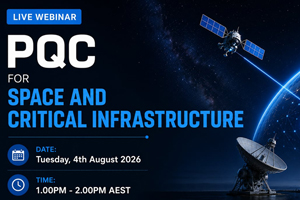
Virtual Series 2026 will offer deeper conversations on why PQC matters and the practical steps businesses should be taking; starts 1:00 pm AEST. Featuring:...
This international lunar science meeting has two objectives: to provide a platform for leading experts to review recent advances across lunar research, from the...
At CSIR International Convention Centre. Key topics are Earth Observation, Developing Space Tourism, Space Supply Manufacturing. Cultural tours are offered.
Participants will receive theoretical and hands-on training in electron imaging and X-ray spectroscopy for application to planetary samples. This training opportunity is targeted at...
"Leading Australia’s Space Future for Our Strategic Advantage". Southern Space 2026 brings together decision-makers who set the direction for Australia’s space sector. It is...
A total solar eclipse with a magnitude of 1.0386 (greatest eclipse 17:47:06 UTC) will be visible in parts of Greenland, Iceland, northern Russia, the Atlantic...
Includes presentation of the Neil Armstrong Award of Excellence, activities for the new class of Astronaut Scholars, 2-day Technical Conference where Scholars present their...
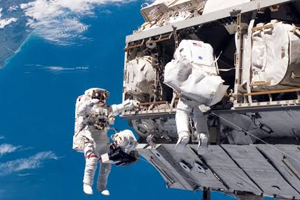
During U.S. spacewalk 97, two astronauts will replace a Space-to-Ground antenna on the orbital complex. The antenna is a critical communication system NASA uses...
Key themes include: Characterizing exoplanet-host solar-like stars; Star-planet interactions; Planet populations around solar-like stars. At University of Liège.
India orbiter surpasses another full year in lunar polar orbit since reaching the Moon in 2019; Chandrayaan-2 lander and rover were unsuccessful in lunar...
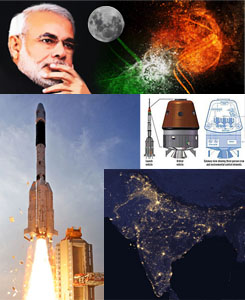 The Global Satellite Launch Vehicle Mark 3 suborbital test flight is currently set for July 21 from Satish Dhawan Space Center, Sriharikota, India. Success would validate atmospheric performance, provide data for human spaceflight development via the mock up ISRO crew capsule, clear the path for a full test of Mk 3 in 2016, and constitute another step towards increasing India’s share of the global satellite launch market — projected at US$55 billion over the coming decade. The next GSLV flight is in the Mk 2 configuration to orbit GSAT-6 in 2015, a crucial step toward proving reliability. The GSLV series of rockets is designed to lift payloads of as much as 5,000 kg to GTO (compared to the PSLV which can only lift 1,410 kg to GTO), allowing India to launch larger commercial satellites as well as more substantial interplanetary missions such as the greatly anticipated ~3,200-kg Chandrayaan 2 mission to send an orbiter, lander and rover to the Moon. The newly elected Prime Minister of India, Narendra Modi, has been emphasizing the achievements and benefits of the space program, “Our scientists have shown the world a new paradigm of frugal engineering and the power of imagination… India’s space program [is] driven by a vision of service to humanity.” India is well established as one of the 6 major spacefaring powers of the planet, having launched a total of 67 satellites including 40 on commercial or cooperative baseis for 19 other countries. Modi once recounted a discussion with Neil Armstrong in which the legendary explorer summed up his experience in 2 sentences: “When I went to the Moon, I went as an astronaut but when I came back, I came as a human being. This is my realization.” (Image Credit: ISRO, NASA Earth Observatory/NOAA NGDC/SPL, NaMoNamaha.com)
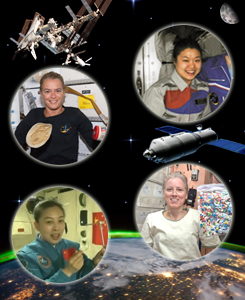 Women Astronauts plan to join the International Space University’s 27th Space Studies Program being hosted in Montreal, Canada for a public all-female Astronaut panel on July 10. Comprising ~10% of the total Astronaut population, only 57 women have flown in space: 44 from USA, 3 from Russia/USSR, 2 each from Canada, China and Japan, and 1 each from India, UK, France and South Korea. The 4 featured panelists, moderated by NASA KSC Deputy Center Director Janet Petro, are (clockwise from TL) Julie Payette (Canada), Soyeon Yi (South Korea), Shannon Walker (USA) and Yaping Wang (China). Payette, currently the Chief Operating Officer of the Montreal Science Centre, was part of the first Shuttle mission to dock with the ISS (STS-96, Discovery) in 1999, flew aboard STS-127 (Endeavour) in 2009, logged more than 25 days in space and served as Chief Astronaut for the Canadian Space Agency. Dr. Yi, retiring from KARI this August, became the first and only Korea Astronaut in 2008 when she flew aboard Soyuz TMA-12 to the ISS for a 10-day mission. Walker was a member of ISS Expedition 24 in 2010 and served as an ‘aquanaut’ commander for the NEEMO 15 undersea exploration mission in 2011. Wang launched aboard Shenzhou 10 to China’s orbiting laboratory Tiangong-1 in 2013, conducted scientific experiments and broadcast live lessons to students over a two-week period. The latest women chosen to undergo training for potential Astronaut status include Anna Kikina of Russia, and Christina Hammock, Nicole Mann, Anne McClain and Jessica Meir of USA. (Image Credit: CSA-ASC, NASA, CNSA, CCTV, ESA)
 = All times for terrestrial events in local time unless noted.
 = All times for international terrestrial events in local time unless noted.
 = All times for space events, and…
 = All times for international space / astro events in Hawaii Standard Time unless noted. Add 10 hours to obtain UT (‘Universal Time;’ Greenwich, England).