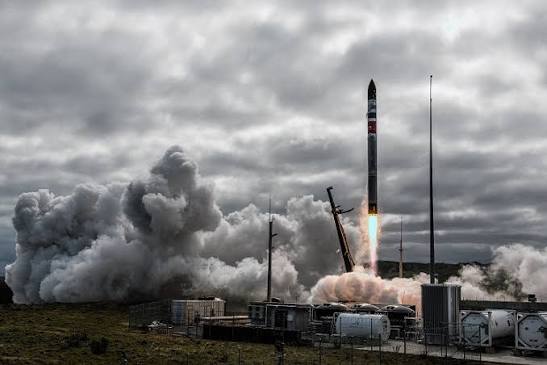
United Launch Alliance Set for 87th Launch, Arianespace on Track for Record Year of Launches
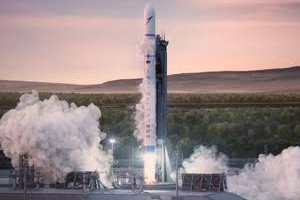
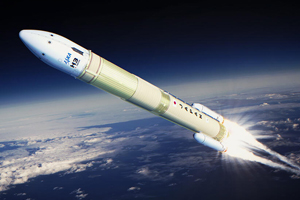
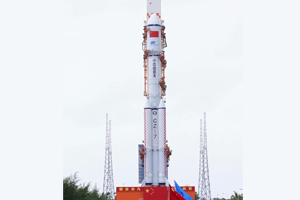
United Launch Alliance (ULA) is ready to launch the WorldView 3 Earth observation satellite on an Atlas V rocket August 13 from Vandenberg Air Force Base in California. ULA operates 2 other expendable launch systems, Delta II (launches up to 6,100 kg to LEO, 2,200 kg to GTO, 1,000 kg to HCO) and Delta IV Heavy (up to 29,000 kg to LEO, 14,500 kg to GTO). Serving as the main U.S. gov contractor, this will be the 10th of 15 launches slated for 2014 and the 87th overall since Lockheed Martin Corp. and Boeing Co. formed ULA in 2006. France-based Arianespace is planning to launch the Galileo satellites for European Space Agency on Soyuz-2 rocket from Guiana Space Centre in French Guiana Aug 21. Arianespace, the first commercial space transportation company, also offers the Ariane 5 family of rockets and Vega. If successful, this will mark its 253rd launch and will keep Arianespace on track to launch a record 12 launches this year. On Aug 25 SpaceX plans to launch the AsiaSat 6 communications satellite on a Falcon 9 rocket from Cape Canaveral AFS in Florida, and 2 more Dragon commercial resupply missions to ISS before 2015. US-Russia venture International Launch Services is planning at least 3 more launches of communications satellites this year from the Baikonur Cosmodrome in Kazakhstan. Recently ILS announced it is planning to reduce the number of launches per year from about 8 to 3-4, and reduce number of staff by one quarter. (Image Credit: ULA, Arianespace, SpaceX, ILS)
Mexico Gaining Space Age Momentum and Proficiency
The United Mexican States, 11th most populous country and 15th largest economy by GDP, has some of the best North American space access geography via low latitude Gulf Coast sites with clear easterly launch paths. Mexico hosts ideal high altitude locations for astronomy, with a number of projects already taking shape — including the High-Altitude Water Cherenkov Observatory at 4,100 meters on Sierra Negra mountain in Puebla state. It is also a leader in the regional market for satellite services — SATMEX the home-built commercial operation recently acquired by France’s Eutelsat provides telecommunications to 37 countries in the Americas, with coverage of up to 90% of the population of the two continents — about 824 million people. In a fluid transition Mexican Space Agency (AEM) announced July 29 that a cooperation agreement has been signed with NEC Corporation of Japan for the development of advanced satellites with the aim of strengthening Earth Observation and climate change monitoring, global navigation and positioning systems; the satellite communications and control systems of the AEM; and other projects and activities of mutual interest. This initiative includes partners at the National Polytechnic Institute (IPN) and National Council for Science and Technology (CONACYT). On October 20-24 the United Nations Office for Outer Space Affairs hosts the UN/Mexico Symposium on Basic Space Technology in Baja California and the International Astronautical Federation will hold the 67th IAC in Guadalajara in 2016. Mexico and AEM, continue to gear up for increased participation in the global space community, according to AEM Director General Dr. Francisco Javier Mendieta Jiménez, the Mexican aerospace sector has surged more than 300% since 2004. (Image Credit: AEM, NEC, MexSat, HAWC)
= All times for terrestrial events in local time unless noted.
= All times for international terrestrial events in local time unless noted.
= All times for space events, and…
= All times for international space / astro events in Hawaii Standard Time unless noted. Add 10 hours to obtain UT (‘Universal Time;’ Greenwich, England).
Aug 11 — ISS, LEO: Expedition 40 preparing for ATV-5 docking on Tuesday, loading waste into Cygnus spacecraft, performing sets of 8 tasks with & without 50-second delays for Comm Delay Assessment study.
Aug 11 — MAVEN,Mars Trajectory: Spacecraft operating nominally, has Mars Orbit Insertion systems turned on; expected to perform TCM #3 on Sep 12 before arriving at Mars Sep 21.
Aug 11 — Juno,Jupiter Trajectory: Now more than 79% complete with journey to Jupiter, traveling at 56,908 kph with one-way radio signal of 36 minutes; Jupiter Orbit Insertion set for July 4, 2016 at 14:30 HST.
Aug 11 — Virgin Galactic,Las Cruces NM: NewSpace company performing glide flight tests of SpaceShipTwo using WhiteKnightTwo aircraft for lift; 32 test free flights of SpaceShipTwo so far; planning for commercial flights 2015.
Aug 11 — Spire, San Francisco CA: Working to build & launch ~50 Earth observation satellites, open new office in Singapore; recently acquired US$25M in funding.
Aug 11 — Firefly Space Systems, Austin TX: Will begin working with Generation Astronautics to expand partnership / business opportunities with federal government & industry for its developing small satellite launch system.
Jun 4 – Aug 10 — Johns Hopkins University Applied Physics Laboratory, NASA, Laurel MD:2014 Internship Program; summer projects for students interested in working on NASA missions or space-related research opportunities at APL.
Aug 12 — Perseid Meteor Shower Peak: Appearing to radiate from constellation Perseus, shower can produce up to 100 meteors per hour, which are fast, bright and frequently leave persistent trains; 14:25.
Aug 12 — Asteroid 398188 (2010 LE15): Near-Earth flyby (0.040 AU).
Aug 12 — Asteroid 277475 (2005 WK4): Near-Earth flyby (0.072 AU).
WEDNESDAY
Aug 13 — United Launch Alliance, Launch Atlas 5 / WorldView 3,Vandenberg AFB CA: United Launch Alliance Atlas 5 rocket to launch WorldView 3 Earth observation satellite for DigitalGlobe, 11:29 PDT.
Aug 13-15 — University of Colorado – Boulder, Laboratory for Atmospheric and Space Physics, Boulder CO:Planetary Rings Workshop.
Aug 13 — Asteroid 2011 EW4: Near-Earth flyby (0.078 AU).
THURSDAY
Aug 14 — Space Center Houston, Houston TX:Rise of Independence; free public event to watch space shuttle replica Independence be lifted to its permanent home atop space shuttle carrier aircraft.
Aug 15 — ISS, Unberthing of Cygnus Orb-2,LEO: Cygnus Orb-2 craft to unberth from ISS, live coverage available; will burn up filled with ISS waste in Earth atmosphere.
Aug 15 — The Space Show, Tiburon CA / Online: Dr. David Livingston talks with Jim Faist of Schafer Corp.
Includes ~150 meetings covering the fields of COSPAR Scientific Commissions / Panels / Task Groups, such as SC B: The Earth-Moon System, Planets, and...
From 02 to 07 August 2026, a few thousand geoscientists across diverse disciplines will gather at the 23rd annual meeting of the Asia Oceania Geosciences...
Virtual Series 2026 will offer deeper conversations on why PQC matters and the practical steps businesses should be taking; starts 1:00 pm AEST. Featuring:...
This international lunar science meeting has two objectives: to provide a platform for leading experts to review recent advances across lunar research, from the...
At CSIR International Convention Centre. Key topics are Earth Observation, Developing Space Tourism, Space Supply Manufacturing. Cultural tours are offered.
Participants will receive theoretical and hands-on training in electron imaging and X-ray spectroscopy for application to planetary samples. This training opportunity is targeted at...
"Leading Australia’s Space Future for Our Strategic Advantage". Southern Space 2026 brings together decision-makers who set the direction for Australia’s space sector. It is...
A total solar eclipse with a magnitude of 1.0386 (greatest eclipse 17:47:06 UTC) will be visible in parts of Greenland, Iceland, northern Russia, the Atlantic...
Includes presentation of the Neil Armstrong Award of Excellence, activities for the new class of Astronaut Scholars, 2-day Technical Conference where Scholars present their...
During U.S. spacewalk 97, two astronauts will replace a Space-to-Ground antenna on the orbital complex. The antenna is a critical communication system NASA uses...
Key themes include: Characterizing exoplanet-host solar-like stars; Star-planet interactions; Planet populations around solar-like stars. At University of Liège.
India orbiter surpasses another full year in lunar polar orbit since reaching the Moon in 2019; Chandrayaan-2 lander and rover were unsuccessful in lunar...
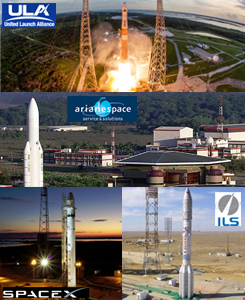 United Launch Alliance (ULA) is ready to launch the WorldView 3 Earth observation satellite on an Atlas V rocket August 13 from Vandenberg Air Force Base in California. ULA operates 2 other expendable launch systems, Delta II (launches up to 6,100 kg to LEO, 2,200 kg to GTO, 1,000 kg to HCO) and Delta IV Heavy (up to 29,000 kg to LEO, 14,500 kg to GTO). Serving as the main U.S. gov contractor, this will be the 10th of 15 launches slated for 2014 and the 87th overall since Lockheed Martin Corp. and Boeing Co. formed ULA in 2006. France-based Arianespace is planning to launch the Galileo satellites for European Space Agency on Soyuz-2 rocket from Guiana Space Centre in French Guiana Aug 21. Arianespace, the first commercial space transportation company, also offers the Ariane 5 family of rockets and Vega. If successful, this will mark its 253rd launch and will keep Arianespace on track to launch a record 12 launches this year. On Aug 25 SpaceX plans to launch the AsiaSat 6 communications satellite on a Falcon 9 rocket from Cape Canaveral AFS in Florida, and 2 more Dragon commercial resupply missions to ISS before 2015. US-Russia venture International Launch Services is planning at least 3 more launches of communications satellites this year from the Baikonur Cosmodrome in Kazakhstan. Recently ILS announced it is planning to reduce the number of launches per year from about 8 to 3-4, and reduce number of staff by one quarter. (Image Credit: ULA, Arianespace, SpaceX, ILS)
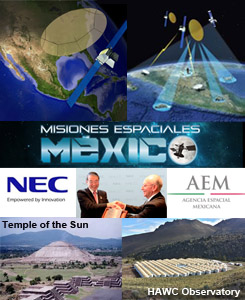 The United Mexican States, 11th most populous country and 15th largest economy by GDP, has some of the best North American space access geography via low latitude Gulf Coast sites with clear easterly launch paths. Mexico hosts ideal high altitude locations for astronomy, with a number of projects already taking shape — including the High-Altitude Water Cherenkov Observatory at 4,100 meters on Sierra Negra mountain in Puebla state. It is also a leader in the regional market for satellite services — SATMEX the home-built commercial operation recently acquired by France’s Eutelsat provides telecommunications to 37 countries in the Americas, with coverage of up to 90% of the population of the two continents — about 824 million people. In a fluid transition Mexican Space Agency (AEM) announced July 29 that a cooperation agreement has been signed with NEC Corporation of Japan for the development of advanced satellites with the aim of strengthening Earth Observation and climate change monitoring, global navigation and positioning systems; the satellite communications and control systems of the AEM; and other projects and activities of mutual interest. This initiative includes partners at the National Polytechnic Institute (IPN) and National Council for Science and Technology (CONACYT). On October 20-24 the United Nations Office for Outer Space Affairs hosts the UN/Mexico Symposium on Basic Space Technology in Baja California and the International Astronautical Federation will hold the 67th IAC in Guadalajara in 2016. Mexico and AEM, continue to gear up for increased participation in the global space community, according to AEM Director General Dr. Francisco Javier Mendieta Jiménez, the Mexican aerospace sector has surged more than 300% since 2004. (Image Credit: AEM, NEC, MexSat, HAWC)
 = All times for terrestrial events in local time unless noted.
 = All times for international terrestrial events in local time unless noted.
 = All times for space events, and…
 = All times for international space / astro events in Hawaii Standard Time unless noted. Add 10 hours to obtain UT (‘Universal Time;’ Greenwich, England).