New Horizons Ready for Historic Pluto / Kuiper Belt Encounters
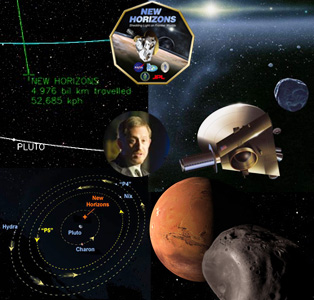
New Horizons spacecraft, nearly 4.8B kilometers from Earth, is preparing for its 6-month encounter with Pluto and moon Charon starting Jan 15, 2015 with distant-encounter operations. About 260M kilometers from Pluto traveling at 52,685 kph, the spacecraft will continue to collect navigation-tracking data, download and analyze the cruise science data, and undergo final tests of science instruments and operating systems. The communications it sends to Earth will take 4 hrs 25 mins to be received. Its long-awaited, unprecedented flyby of Pluto and Charon is set for July 14, 2015 (11:49:59 UTC), about 9.5 years after launch Jan 19, 2006. New Horizons will image Pluto and Charon, map surface composition, collect data on atmosphere and temperature, look closely at moons Kerberos and Styx, and search for more moons and rings around Pluto. The US$700M mission plans an encounter with at least one not-yet selected Trans-Neptunian object in the unexplored Kuiper belt. New Horizons Principal Investigator Alan Stern states “No voyage like this has been conducted since the epic days of Voyager, and nothing like it is planned again.” It is expected to be the 5th spacecraft to leave the Solar System. (Image Credit: NASA, APL, SwRI)
MONDAY
Dec 8 — ISS, LEO: Expedition 42 six-member crew preparing for Dragon CRS-5 arrival, working on ESA Plasma Kristall-4 plasma crystals investigation, conducting in-flight interviews; 3-D printing tests to continue.
Dec 8 — Mars Orbiter Mission, Mars Orbit: Taking color & thermal images of Mars surface, analyzing neutral composition of particles in exosphere, measuring methane, deuterium & hydrogen in atmosphere.
Dec 8 — Juno, Jupiter Trajectory: Now 574 days from Jupiter insertion, spacecraft traveling at 45,962 kph in nominal health; one-way radio signal travel time is ~36 minutes.
Dec 8 — Orion, California USA: Orion crew module & data on heat shield, parachute systems, avionics, launch abort system & attitude control acquired from Exploration Flight Test-1 being analyzed.
Dec 8 — Deep Space Industries, McLean VA: NewSpace company will begin working with Solid Prototype Inc on 3D printed spacecraft prototypes to reduce fabrication costs.
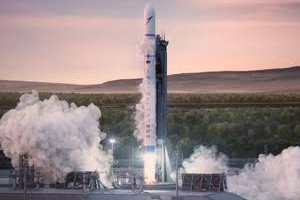
Dec 8 — Moon Express Inc., KSC FL: Hot fire & flight testing of MTV-1X vehicle with MTV EGC (Earth Gravity Cancelling) Main Engine will continue through the end of Dec 2014 & into 2015.
Dec 8 — LiftPort Group, Seattle WA: Working on high-altitude balloon, multi-wheeled climber, Vectran polymer fiber to be used for Space Elevator prototype experiment.
= All times for terrestrial events in local time unless noted.
= All times for international terrestrial events in local time unless noted.
= All times for space events, and…
= All times for international space / astro events in Hawaii Standard Time unless noted. Add 10 hours to obtain UT (‘Universal Time;’ Greenwich, England).
China Chang’e-3 Set to Begin 2nd Year of Operations on Lunar Surface; Anticipating Arrival of Siblings CE4, CE5
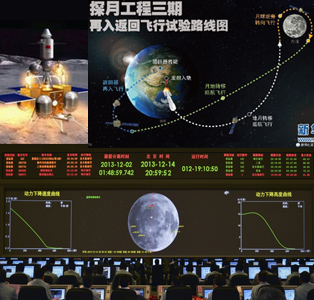
Having become the 3rd nation to land a spacecraft safely on the Moon, China is forging ahead with its extensive Lunar Exploration Program. December 14 marks the 1 year anniversary of the historic landing of Chang’e-3. The craft has now endured twelve dark ~180°C lunar nights and continues to communicate with mission control, transmitting valuable scientific data, including UV astronomy observations of variable stars that would be impossible from Earth. The recent CE5-T1 test flight mission successfully proved the capability of CNSA to return a capsule safely from Lunar orbit back to China. It also deployed a sophisticated Service Module to Earth-Moon Lagrange Point 2. In mid-January 2015 the SM will reposition back into Lunar orbit ahead of long-range guidance tests for lunar orbit rendezvous and docking in February and March, as well as surveys of the CE5 landing site in April. All of this in preparation for the full-up CE5 sample return mission in 2017. There is also the CE4 spacecraft, originally a backup to CE3, which may be reconfigured to fly in 2016 to practice orbital, descent and landing procedures for the as of yet unexplored South Pole region — the location recognized almost unanimously as the prime venue for future Moon exploration and development. (Image Credit: CNSA)
NET Dec 1 — ISRO, Launch GSLV Mk 3 / Atmospheric Test Flight, Satish Dhawan Space Center, Sriharikota, India: Geosynchronous Satellite Launch Vehicle Mk 3 to launch on suborbital test flight, will carry mock-up human crew module.
Dec 10 — Moon: 6.0° SSW of Beehive Cluster, 09:00.
Dec 10 — Asteroid 2014 WU200: Near-Earth flyby (0.003 AU).
THURSDAY
Dec 11 — United Launch Alliance, Launch Atlas 5 / NROL-35, Vandenberg AFB CA: ULA Atlas 5 rocket to launch classified spacecraft payload for U.S. National Reconnaissance Office.
Dec 11 — Moon: 4.9° SSW of Jupiter, 15:00.
Dec 11 — Mars: At perihelion (distance 206,624,579 km) 23:00.
Dec 11 — Asteroid 2012 LA11: Near-Earth flyby (0.058 AU).
FRIDAY
Dec 12 — International Launch Services, Launch Proton / Yamal 401, Baikonur Cosmodrome, Kazakhstan: ILS Proton rocket to launch Yamal 401 communications satellite for Gazprom Space Systems of Russia.
Dec 12 — Royal Astronomical Society, London, United Kingdom:RAS Ordinary Meeting.
Dec 13-14 — Geminids Meteor Shower Peak: Appearing to radiate from constellation Gemini, shower can produce 50-130 meteors per hour; bright, medium-speed meteors, few leave persistent trains.
Dec 13 — Asteroid 2014 UV210: Near-Earth flyby (0.018 AU).
SUNDAY
Dec 14 — Chang’e-3 Lander, Sinus Iridum / Mare Imbrium, 44.12°N 19.51°W, Moon Surface: Lander reaches one year on Moon; expected to exceed one-year planned lifetime and continue operations.
Dec 14 — Moon: At last quarter, 02:53.
Dec 14 — Asteroid 204131 (2003 YL): Near-Earth flyby (0.069 AU).
Includes ~150 meetings covering the fields of COSPAR Scientific Commissions / Panels / Task Groups, such as SC B: The Earth-Moon System, Planets, and...
From 02 to 07 August 2026, a few thousand geoscientists across diverse disciplines will gather at the 23rd annual meeting of the Asia Oceania Geosciences...
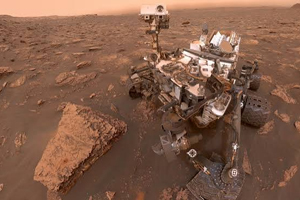
NASA Curiosity (Mars Science Laboratory) rover surpasses another full year of operations on Mars surface today; launched Nov 26, 2011 – landed Aug 5,...
Virtual Series 2026 will offer deeper conversations on why PQC matters and the practical steps businesses should be taking; starts 1:00 pm AEST. Featuring:...
This international lunar science meeting has two objectives: to provide a platform for leading experts to review recent advances across lunar research, from the...
At CSIR International Convention Centre. Key topics are Earth Observation, Developing Space Tourism, Space Supply Manufacturing. Cultural tours are offered.
Participants will receive theoretical and hands-on training in electron imaging and X-ray spectroscopy for application to planetary samples. This training opportunity is targeted at...
"Leading Australia’s Space Future for Our Strategic Advantage". Southern Space 2026 brings together decision-makers who set the direction for Australia’s space sector. It is...
A total solar eclipse with a magnitude of 1.0386 (greatest eclipse 17:47:06 UTC) will be visible in parts of Greenland, Iceland, northern Russia, the Atlantic...
Includes presentation of the Neil Armstrong Award of Excellence, activities for the new class of Astronaut Scholars, 2-day Technical Conference where Scholars present their...
During U.S. spacewalk 97, two astronauts will replace a Space-to-Ground antenna on the orbital complex. The antenna is a critical communication system NASA uses...

 = All times for terrestrial events in local time unless noted.
 = All times for international terrestrial events in local time unless noted.
 = All times for space events, and…
 = All times for international space / astro events in Hawaii Standard Time unless noted. Add 10 hours to obtain UT (‘Universal Time;’ Greenwich, England).