Himalaya Neighbors India and China Advance into 2015 with Clear Goals toward Moon, Mars and Beyond
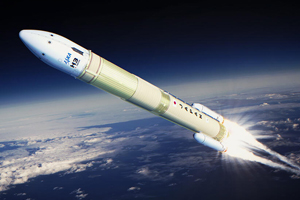
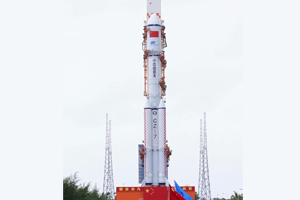
India is currently operating MOM ‘Mangalyaan’ orbiter at Mars and will progress in its development / testing of GSLV Mark III rocket, crew module CARE for future human Moon, Mars and deep space missions, and Chandrayaan-2 Moon mission. ISRO will hold the 102nd Indian Science Congress themed Science and Technology for Human Development on January 3-7 in Mumbai. Space topics will cover GSLV, IRNSS, SKA, TMT and ASTROSAT. The 2nd International Space Conference 2015, held in Noida Jan 8-9, will include talks on touring the inner solar system using launch energy of PSLV-XL, space / Mars settlement, space debris, space education in India, and interplanetary missions. China maintains operations of the Chang’e-3 lander and Yutu rover at Sinus Iridum / Mare Imbrium on the surface of the Moon more than 1 year after landing, collects science and technology data from Tiangong-1 ‘Heavenly Palace’ in LEO, and communicates with / tracks Chang’e-2 orbiter now more than 100M km from Earth. Under construction, Wenchang Satellite Launch Center in Hainan, which may become known as China Moon Port, will be 4th and southernmost China launch facility at 19°N 110°E. China is also developing the heavy-lift Long March 5 rocket, Tiangong-2 space lab to launch 2016, and Chang’e-4 and -5 Moon missions. Plans also consist of a Mars orbiter / rover mission in 2020 and sample return 2030, as well as Venus, NEA and Jupiter missions, and Long March 9 rocket for 2028 intended to launch human Moon missions. (Image Credit: ISRO, CNSA, NAOC, Chinese Academy of Sciences, Chinanews, K. Kremer, M. Di Lorenzo)
MONDAY
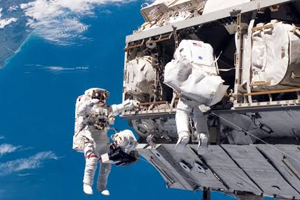
Dec 29 — ISS, LEO: Expedition 42 crew with Commander Wilmore of NASA, and flight engineers Serova, Samokutyaev & Shkaplerov of Roscosmos, Virtis of NASA, Cristoforetti of ESA working with Neuromapping study & skin aging experiment; ATV-5 to perform ISS reboost Jan 22, undock with waste Feb 10.
Dec 29 — Tiangong-1, LEO: Orbiting Earth ~16 times a day verifying technologies & capturing large amount of data with Earth observation instruments including hyperspectral imager; has habitable volume of 15 cubic meters, last visited by humans Jun 2013.
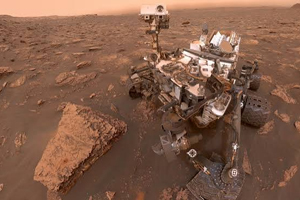
Dec 29 — Curiosity, Mount Sharp, Mars Surface: Investigating ‘Murray formation’ low sedimentary layers ~150-meters high to help determine why layered 5-km tall Mount Sharp sits in a crater; Sample Analysis at Mars instrument shows evidence of organic matter.
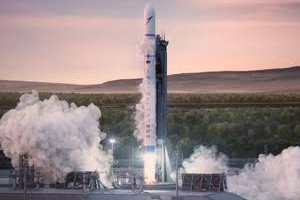
Dec 29 — SpaceX, Hawthorne CA: NewSpace company designing Dragon crew capsule with automated piloting to send humans to LEO for NASA CCP; planning to launch CRS-5 on Jan 6, land Falcon 9 first stage on 90 x 35 meter floating platform.
Dec 29 — Bigleow Aerospace LLC, Las Vegas NV: Developing 3-meter diameter BEAM & 330-cubic meter volume BA 330 modules; planning for commercial space station Alpha Station & Moon habitats.
Dec 29 — Spaceport Colorado, Watkins CO: Working toward securing FAA license to become horizontal launch commercial spaceport; Swiss Space Systems (S3) plans to make location its N America HQ.
= All times for terrestrial events in local time unless noted.
= All times for international terrestrial events in local time unless noted.
= All times for space events, and…
= All times for international space / astro events in Hawaii Standard Time unless noted. Add 10 hours to obtain UT (‘Universal Time;’ Greenwich, England).
The year in preview — ambitious, optimistic, expansive: in January Dawn and New Horizons begin their interplanetary encounters with dwarf Planets Ceres on Jan 13 and Pluto on Jan 15 respectively, preparing to shed light on vastly unexplored regions of our Solar System. Concurrently from Jan 13-15, scientists discuss Technologies to Explore the Interstellar Medium at the Keck Institute for Space Studies in Pasadena CA, USA. Construction of Thirty Meter Telescope, one of the largest and most advanced optical telescopes in the world, starts this year, atop Mauna Kea on Hawai`i. On February 4, ESA will test the Intermediate eXperimental Vehicle system designed to provide Earth atmosphere re-entry capabilities for Europe. On June 9-11, the IAA hosts a Low-Cost Planetary Missions Conference and the stalwart Cassini spacecraft manages flybys of 8 of Saturn’s moons in the space of 2 days from Jun 15-16. In July, Arianespace launches LISA Pathfinder to Sun-Earth L1 to detect gravitation waves of massive objects and deepen our understanding of space-time in the Universe. Russia is developing a new generation of rockets and planning for a full-scale Moon exploration program. Korea completes development of an indigenous first-stage for the Naro rocket, a major step toward independence in space with the goal of a Korean orbital rocket by 2020, possibly establishing Korea as a major space faring power. On July 4, the Juno spacecraft (launched in 2011) marks one year until Jupiter arrival. September 2, SpaceX Falcon 9 carries the futuristic commercially-developed Bigelow Expandable Activity Module to the ISS for evaluation. In November and December Japan shines with the Venus Climate Orbiter (Akatsuki) overcoming major difficulties to arrive at our sister-planet and Hayabusa 2 conducting an Earth flyby en route to Asteroid 1999 JU3. In the companion piece above major space achievements and developments ahead for India and China Himalaya neighbors are highlighted. As the sphere of human awareness stretches ever outward answers to questions of peace, purpose and prosperity shall be found on the frontiers of Galaxy exploration and enterprise. (Image Credit: NASA)
Continued from…
Feb 1 – Dec 31 — Stratospheric Observatory for Infrared Astronomy (SOFIA), Multiple Locations: Cycle 2 of science flights to observe universe consists of 47 science flights grouped into multi-week observing campaigns totaling about 350 research flight hours.
NET 2015 — RSA, Launch Zenit / New Generation Crew Transportation Vehicle, Baikonur Cosmodrome, Kazakhstan: Robotic first flight of 4-person spacecraft that will replace Soyuz.
NET 2015 — SpaceX, Launch Falcon 9 / Dragon Mk 2 (DragonRider), Cape Canaveral AFS FL: Dragon spacecraft to carry humans to space for NASA CCiCap, first piloted test flight expected to occur before the end of this year.
NET 2015 — XCOR Aerospace, Cape Canaveral AFS FL: Company expects to begin suborbital test flights of Lynx spaceplane this year.
NET 2015 — Launch BepiColombo, TBD: Launch of European Space Agency / JAXA Mercury Planetary Orbiter (MPO) and Mercury Magnetospheric Orbiter (MMO); expected to reach Mercury and achieve polar orbit in 2022; will map planet, investigate magnetosphere.
NET 2015 — HISPASAT, Orbital Sciences Corp., Launch Amazonas 4B, South America: Launch of Amazonas 4B satellite to meet growing demand for satellite television platforms in Latin America.
NET 2015 — RSA, Amur Oblast, Russia: RSA Vostochny Cosmodrome in Amur Oblast, Russia to be completed / fully operational this year to launch crews to space.
NET 2015 —Mars One,The Hague, TheNetherlands: First group of astronauts to begin training for one-way mission to Mars planned for 2022.
NET 2015 — University of Hawaii, NASA, TBD:Asteroid Terrestrial-impact Last Alert System (ATLAS) consisting of 8 small telescopes housed at 1 or 2 locations in Hawaiian islands to be fully operational by end of this year; developed with US$5M NASA grant.
NET Jan — Open Space Society, Launch Small Commercial Payload,TBD: Company expects to launch first Small Commercial Payload this month.
NET Jan — Sandia National Laboratories, University of Hawaii Space Flight Laboratory, et al, Launch SPARK / HawaiiSat-1 (ORS-4 Mission), USNPacific Missile Range Facility, Barking Sands, Kauai HI: Space-borne Payload Assist Rocket (SPARK) or ‘Super Strypi’ 3-stage vehicle to launch Earth observation HawaiiSat-1; will take off using rail launch structure.
NET Jan — Thirty Meter Telescope Observatory Corp., Mauna Kea HI: Projected date for construction start of TMT on Mauna Kea; will be second largest telescope after E-ELT; designed for observations from near-ultraviolet to mid-infrared.
Jan 1 — Deep Space, Jupiter Trajectory: Juno spacecraft in excellent health is now 565M km from Earth with a one-way radio signal travel time of ~31.4 minutes, traveling at 44,421 kph relative to Earth; has about 430M km before entering Jupiter orbit in July 2016.
Jan 1 — Moon: 7.6° S of Pleiades, 07:00.
FRIDAY
Jan 2 — Space Center Houston, Houston TX:Lunch with an Astronaut, Jerry Ross; US$49.95 adult.
Jan 2 — Moon: 1.4° N of Aldebaran, 02:00.
Jan 2 — Asteroid 2005 YQ96: Near-Earth flyby (0.026 AU).
Jan 3 — Earth: At perihelion (distance 0.98328 AU / 147,096,594 km from Sun), 21:00.
Jan 3 — Moon: 5.8° S of M35, 19:00.
Jan 3 — Quandrantids Meteor Shower Peak: Appearing to radiate from constellation Quadrans Muralis; can produce up to 60-200 meteors per hour; visibility unfavorable due to Full Moon; peak 16:00.
Jan 3 — Pluto: At conjunction with Sun, 09:00.
SUNDAY
Jan 4 — The Space Show, Online / Tiburon CA: Dr. David Livingston talks with Chris Carberry of Explore Mars, Inc.
Jan 4-8 — American Astronomical Society, Seattle WA:225th Meeting of the AAS; at Washington State Convention Center.
Jan 5 — Asteroid 85990 (1999 JV6): Near-Earth flyby (0.083 AU).
TUESDAY
Jan 6 — SpaceX, Launch Falcon 9 / CRS 5,Cape Canaveral AFS FL: SpaceX Falcon 9 rocket set to launch 7th Dragon spacecraft on 5th operational cargo delivery mission to ISS; will also carry Cloud-Aerosol Transport System, AggieSat4 / Bevo-2, SERPENS; rocket will attempt soft landing on ocean platform.
Jan 7-8 — Ames Research Center, NASA,Moffett Field CA:Cube Quest Challenge Summit; US$5 million to teams that design, build, deliver flight-qualified, small satellites capable of advanced operations near & beyond Moon.
Includes ~150 meetings covering the fields of COSPAR Scientific Commissions / Panels / Task Groups, such as SC B: The Earth-Moon System, Planets, and...
From 02 to 07 August 2026, a few thousand geoscientists across diverse disciplines will gather at the 23rd annual meeting of the Asia Oceania Geosciences...
NASA Curiosity (Mars Science Laboratory) rover surpasses another full year of operations on Mars surface today; launched Nov 26, 2011 – landed Aug 5,...
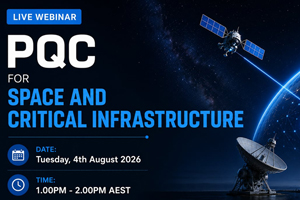
Virtual Series 2026 will offer deeper conversations on why PQC matters and the practical steps businesses should be taking; starts 1:00 pm AEST. Featuring:...
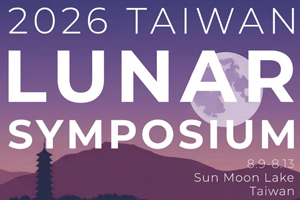
This international lunar science meeting has two objectives: to provide a platform for leading experts to review recent advances across lunar research, from the...
At CSIR International Convention Centre. Key topics are Earth Observation, Developing Space Tourism, Space Supply Manufacturing. Cultural tours are offered.
Participants will receive theoretical and hands-on training in electron imaging and X-ray spectroscopy for application to planetary samples. This training opportunity is targeted at...
"Leading Australia’s Space Future for Our Strategic Advantage". Southern Space 2026 brings together decision-makers who set the direction for Australia’s space sector. It is...
A total solar eclipse with a magnitude of 1.0386 (greatest eclipse 17:47:06 UTC) will be visible in parts of Greenland, Iceland, northern Russia, the Atlantic...
Includes presentation of the Neil Armstrong Award of Excellence, activities for the new class of Astronaut Scholars, 2-day Technical Conference where Scholars present their...
During U.S. spacewalk 97, two astronauts will replace a Space-to-Ground antenna on the orbital complex. The antenna is a critical communication system NASA uses...

 = All times for terrestrial events in local time unless noted.
 = All times for international terrestrial events in local time unless noted.
 = All times for space events, and…
 = All times for international space / astro events in Hawaii Standard Time unless noted. Add 10 hours to obtain UT (‘Universal Time;’ Greenwich, England).