Jupiter / Solar System Human Mission Design Project: 2013-2017
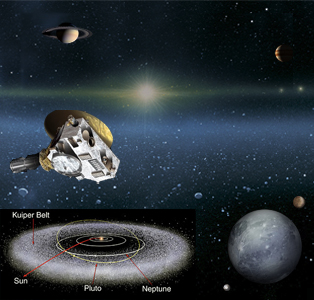
Solar System competence is a primary necessity for the evolution and survival of Humanity in the 21st Century. Along with the inner 4 (rocky worlds Mercury, Venus, Terra and Mars) and the outer 4 planets (gas giants Jupiter and Saturn with so many diverse and interesting satellites and ice giants Uranus and Neptune), is a massive and largely unknown major feature of the Solar System — the Kuiper Belt. Toroidal-shaped and encircling the Sun at about 30-50 AU, it is thought to be 20-200 times more massive than the main asteroid belt, consisting of small bodies, rocks and debris left over from the formation of the Solar System, an estimated 100,000 objects over 100 km in diameter and a trillion or more comets. New Horizons NASA mission will be the first earthly spacecraft to explore this unique area up close. It will fly by Pluto this year with closest approach (~9,600 km altitude) occurring July 14 and is then expected to conduct an extended mission to another KBO about 1.6 billion km beyond Pluto, taking the craft as far as 6.5 billion km from home. Pluto is the vanguard dwarf planet of perhaps hundreds that wait to be discovered, explored and utilized. Robotic craft are steadily zipping their way around the Solar System, Dawn to Ceres, Juno to Jupiter, Hayabusa to asteroid 1999 JU3, Rosetta at comet 67P/Churyumov–Gerasimenko and others, but to truly realize the extent of human potential we need to go ourselves… to expand beyond this pale blue dot. The first step and primary catalyst is permanent human presence on Luna. (Image Credit: NASA, JHUAPL/SwRI )
MONDAY
Jan 19 — ISS, LEO: Expedition 42 unpacking SpaceX Dragon CRS-5 cargo, IMAX camera, tools for future EVAs & materials to support 256 science experiments including Micro-5 microorganisms, Fruit Fly Lab-01 & flatworms; filling ESA final ATV “Georges Lemaitre” with waste for disposal Feb 14.
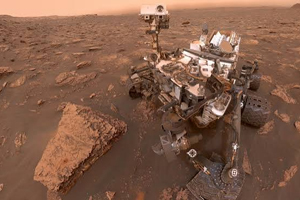
Jan 19 — Curiosity, Mount Sharp, Mars Surface: Preparing to drill into ‘Mojave’ rock for sample analysis; there will be week-long pause in science operations to install 4th new version of rover flight software.
Jan 19 — Dawn, Main Asteroid Belt: Imagining 950-km diameter dwarf planet Ceres from ~630,000 km away, traveling at about 725 kph; set to arrive Mar 6; will characterize body with visible camera, visible & infrared spectrometer, gamma ray & neutron spectrometer.
Jan 19 — Sierra Nevada Corp., Louisville CO: NewSpace company continuing to develop & test Dream Chaser spacecraft, planning for flight test this spring.
Jan 19 — Astrobotic Technology Inc., Pittsburgh PA: Working on Griffin Lander / Polaris Rover to launch to Moon NET 2016, will explore methane, ammonia, water at Moon north pole; offering commercial MoonMail deliveries to surface.
Jan 19 — Planet Labs Inc., San Francisco CA: Two Dove satellites ‘Flock 1d Prime’ to be released from ISS NanoRacks Satellite Deployer; 26 satellites were lost due to OSC launch failure Oct 2014.
Jan 19 — The Space Show, Online / Tiburon CA: Dr. David Livingston talks with Dr. Paul Spudis of Lunar & Planetary Institute.
= All times for terrestrial events in local time unless noted.
= All times for international terrestrial events in local time unless noted.
= All times for space events, and…
= All times for international space / astro events in Hawaii Standard Time unless noted. Add 10 hours to obtain UT (‘Universal Time;’ Greenwich, England).
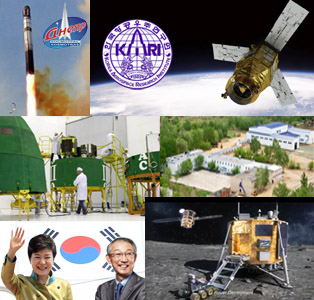
Korea Aerospace Research Institute KOMPSat 3A Launch & Space Program Update
The Korea Aerospace Research Institute (KARI) Korea Multi-Purpose Satellite-3A (Kompsat 3A) Earth observation satellite is set to launch January 22 on an International Space Company (ISC) Kosmotras Dnepr rocket from Yasny Cosmodrome in Dombarovsky, Russia at 50° N, 59° E. Kompsat 3A will be the fourth satellite to obtain infrared and high-resolution electro-optical images for the Geographical Information System. The 800-kg satellite is expected to survive at least 4 years in a 528-km sun-synchronous orbit. Gwang-rae Cho (R) of KARI states “Space technology has a huge potential utilization and far-reaching influence, in addition to its symbolic meaning.” The country is building and testing engines for indigenously made space vehicles, with mixed results. It is aiming to have KSLV-2 launch vehicle with 75-metric-ton thrust capability completed by 2019-20. As outlined by S. Korea President Park Geun-Hye (L), 15 government-funded research institutions led by KARI are working to launch an orbiter to the Moon in 2020, and develop a Moon lander and 10-20 kg rover to look for rare minerals. KARI has also been in talks with NASA about potential space mission collaboration and orbital debris issues. (Image Credit: KARI, Korea Times / Koh Young-kwon, ISC Kosmotras)
Jan 19 — Moon: 2.9° N of Pluto, 01:00.
Jan 19 — Mars: 0.21° SSE of Neptune, 14:00.
Continued from…
Nov 19, 2014 – Jan 31, 2015 — Foundation for Space Development, Online / Cape Town, South Africa:Africa2Moon Mission fundraising campaign.
Jan 20 — United Launch Alliance, Launch Atlas 5 / MUOS 3, Cape Canaveral AFS FL: ULA Atlas 5 rocket to launch third Mobile User Objective System (MUOS) satellite for the U.S. Navy. Built by Lockheed Martin.
Jan 20 — 2015 USA State of the Union Address, Washington DC: President Obama to give 6th speech to Congress at 21:00-23:00 EST; will address wide range of issues, perhaps importance of advancing Americans and others in Space, to Moon, Mars & Beyond.
Jan 21 — MESSENGER OCM-12, Mercury Orbit: Spacecraft to perform Orbital Correction Maneuver #12 today, last OCM before planned end of mission surface impact in March; launched Aug 2004.
Jan 21 — Moon: 3.1° N of Mercury, 08:00; at perigee (distance 359,260 km), 10:10; 5.4° NNW of Venus, 14:00.
Jan 21 — Mercury: At perihelion (distance 0.3075 AU from Sun), 11:00.
THURSDAY
Jan 22 — RSA, Launch Dnepr / KOMPSat 3A, Yasny Cosmodrome, Dombarovsky, Russia: An ISC Kosmotras Dnepr rocket to launch Kompsat 3A Earth observation satellite for Korea Aerospace Research Institute (KARI).
Jan 22 — Canadian Space Commerce Association, Toronto, Ontario, Canada:CSCA Meeting; featuring Chris Sallaberger of Canadensys; at Blake, Cassels & Graydon LLP.
Jan 22 — Atacama Large Millimeter/submillimeter Array (ALMA), Institute for Radio Astronomy of Bologna, Bologna, Italy:Workshop on mm-VLBI with ALMA.
Jan 22 — Stanford University, Stanford CA: Public Conversation with Alyson Shotz, visual artist and former Sterling Visiting Scholar in Stanford’s Department of Chemical and Systems Biology.
Jan 22 — Moon: 3.7° NNW of Neptune, 13:00, 3.7° N of Mars, 17:00.
Jan 24 — Hawaii Space Grant Consortium, Hilo HI: 2015 Astronaut Ellison Onizuka Science Day; day of science & space exploration featuring Astronaut Koichi Wakata and 18 science workshops.
Jan 24 — Asteroid 2014 QJ362: Near-Earth flyby (0.083 AU).
SUNDAY
Jan 25 — Cassini, Saturn Orbit: Spacecraft begins Orbit 212 of Saturn; farthest distance from Saturn 3,500,000 km.
Jan 25-28 — Institute for Research in Fundamental Sciences, Tehran, Iran:Workshop: Galaxies Inside and Out; to discuss latest developments on the study of Galaxies.
Includes ~150 meetings covering the fields of COSPAR Scientific Commissions / Panels / Task Groups, such as SC B: The Earth-Moon System, Planets, and...
From 02 to 07 August 2026, a few thousand geoscientists across diverse disciplines will gather at the 23rd annual meeting of the Asia Oceania Geosciences...
NASA Curiosity (Mars Science Laboratory) rover surpasses another full year of operations on Mars surface today; launched Nov 26, 2011 – landed Aug 5,...
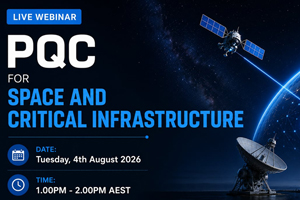
Virtual Series 2026 will offer deeper conversations on why PQC matters and the practical steps businesses should be taking; starts 1:00 pm AEST. Featuring:...
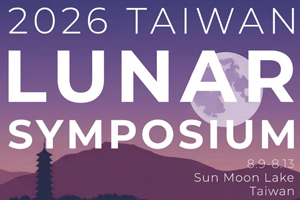
This international lunar science meeting has two objectives: to provide a platform for leading experts to review recent advances across lunar research, from the...
At CSIR International Convention Centre. Key topics are Earth Observation, Developing Space Tourism, Space Supply Manufacturing. Cultural tours are offered.
Participants will receive theoretical and hands-on training in electron imaging and X-ray spectroscopy for application to planetary samples. This training opportunity is targeted at...
"Leading Australia’s Space Future for Our Strategic Advantage". Southern Space 2026 brings together decision-makers who set the direction for Australia’s space sector. It is...
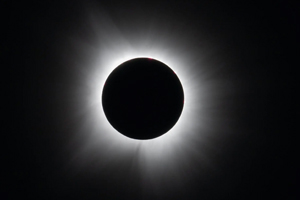
A total solar eclipse with a magnitude of 1.0386 (greatest eclipse 17:47:06 UTC) will be visible in parts of Greenland, Iceland, northern Russia, the Atlantic...
Includes presentation of the Neil Armstrong Award of Excellence, activities for the new class of Astronaut Scholars, 2-day Technical Conference where Scholars present their...
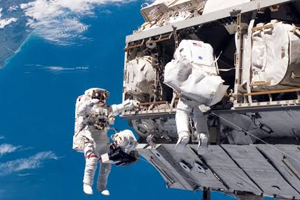
During U.S. spacewalk 97, two astronauts will replace a Space-to-Ground antenna on the orbital complex. The antenna is a critical communication system NASA uses...

 = All times for terrestrial events in local time unless noted.
 = All times for international terrestrial events in local time unless noted.
 = All times for space events, and…
 = All times for international space / astro events in Hawaii Standard Time unless noted. Add 10 hours to obtain UT (‘Universal Time;’ Greenwich, England).