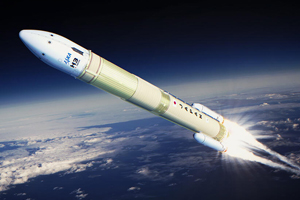
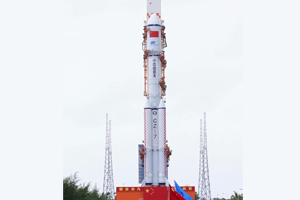
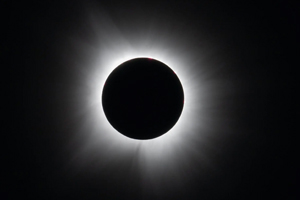
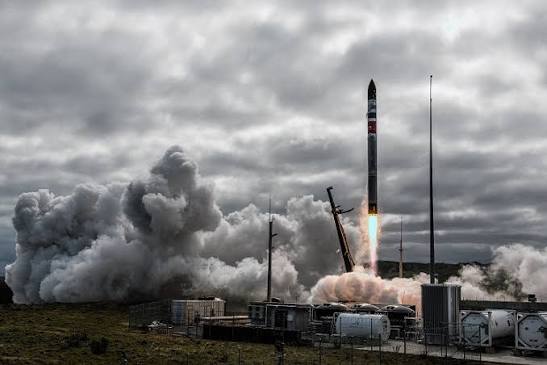
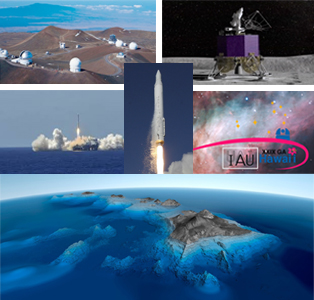
Development of Pacific Space Access is an astronautics goal that has implications for the entire Pacific Rim and all of East Asia. Hawaii is already excelling at the leading edge of astronomy and should strive for the same excellence in astronautics. In 2015 Hawaii hosts the International Astronomical Union triennial General Assembly on August 3-14 at the Hawaii Convention Center in Honolulu, Oahu, HI. More than 4,000 astronomers are expected to come from 76+ counties to explore the latest results and future projects of astronomy. The 50th Aloha State is near the center of the Pacific Hemisphere midway between the two main lands, the southernmost point in the United States, making it ideal as a hub of commercial launch and other space-bound enterprise. It also hosts Mauna Kea the tallest mountain in the world from base to peak, home to one of the major centers of world astronomy, and Kilauea, one of the most active volcanoes in the world. Hawaii is home to the growing State-run aerospace agency Pacific International Space Center for Exploration Systems and the International Lunar Observatory Association, an independent non-profit organization seeking to establish the new frontier of Astronomy by placing an observatory on the surface of the Moon’s South Pole. This region of our nearest celestial neighbor, Luna, particularly Malapert Mountain, is considered to be a keystone location for 21st Century evolution of humanity as a multi-world species. (Image Credit: IAU, NGDC / GLFC / DLRI, IFA, ILOA, SeaLaunch, KARI)
MONDAY
Mar 30 — ISS, LEO: Expedition 43 loading Progress 57P with waste, preparing for arrival of Dragon CRS-6 expected Apr 10, packing various gear / experiments for return to Earth, working with TripleLux-B cellular mechanisms experiment, new crew arrivals undergoing orientation.
Mar 30 — Mars Orbiter Mission (Mangalyaan), Mars Orbit: India ISRO orbiter will continue to investigate Mars climate, seasons, atmosphere, surface mineral composition with 5 instruments for at least 6 more months.
Mar 30 — Rosetta, Comet 67P/Churyumov–Gerasimenko Orbit: Collecting data, measuring molecular nitrogen with 11 science instruments to determine Comet formation / evolution, trying to reestablish connection with Philae lander.
Mar 30 — Sierra Nevada Corp.,Louisville CO: NewSpace company with new Dream Chaser Cargo System variant designed for 2nd round of NASA Commercial Resupply Services contract, will continue to work through Mar 2016 to reach Critical Design Review level of maturity for the vehicle.
Mar 30 — SpaceX,Multiple Locations: Readying for launch of Dragon CRS-6 to ISS, will attempt platform landing on ASDS, testing SuperDraco engines, converting Cape Canaveral AFS Launch Complex 13 to “Landing Complex 1.”
Mar 30 — Moon Express, Moffett Field CA: Planning for tether-free tests of MTV-1X lander, re-purposing Cape Canaveral AFS Launch Complex 36 to make it an operational test & development facility.
= All times for terrestrial events in local time unless noted.
= All times for international terrestrial events in local time unless noted.
= All times for space events, and…
= All times for international space / astro events in Hawaii Standard Time unless noted. Add 10 hours to obtain UT (‘Universal Time;’ Greenwich, England).
The China Lunar Exploration Program / Chang’e (CE) is steadily advancing toward human Moon missions, perhaps launching between 2020-2030. CE-3 Lander and Yutu Rover, at 44.12° N 19.5° W Sinus Iridum / Mare Imbrium, are preparing for the total lunar eclipse occurring 19:54-20:06 Beijing time April 3. The Lander with its only operating science instrument, Lunar Ultraviolet Telescope, and the Rover with 2 panoramic cameras may take optical and ultraviolet images, as well as study dust dynamics and the lunar terminator. CE-4 lander / rover mission and instruments are being reconfigured to maximize science and data collection. Commercial and international enterprises have been invited to propose / supply instruments for CE-4 which will determine the crafts’ overall design and launch date. CE-5T1 service module currently in lunar orbit is set to conduct imaging of possible landing sites in April for the CE-5 sample return mission. The craft is expected to stay in orbit until May. The CE-5 mission is planned to launch 2017 and return at least 2kg of lunar material. Its lander will be fitted with cameras, a mineral spectrometer, a soil gas / composition analytical instrument, a sampling sectional thermodetector and a drill. The potential CE-6 craft may launch before 2020 to a different destination, likely with different and more advanced instruments. China will utilize its developing southernmost Spaceport / “Moon Port”, the Wenchang Satellite Launch Center at 19°N 110°E on Hainan island / province to launch these missions. (Image Credit: CLEP, CNSA, SASTIND/Xinhua, CCTV, CAS, NASA, Science/AAAS/Xiao et al)
Mar 30 – Apr 1 — University of Warwick, Midlands Physics Alliance, Science and Technologies Facilities Council, Warwick, United Kingdom:UK Community Exoplanet Conference 2015.
NET Apr — Chang’e 5-T1 Service Module, Moon Orbit: China service module to take pictures of lunar surface site selected for Chang’e-5 lunar lander / sample return mission launching NET 2017.
Apr 1 — Deep Space, Jupiter Trajectory: Juno spacecraft traveling at ~38,650 kph, now 462 days from Jupiter insertion; instrument checkouts & data acquisition, vehicle maintenance operations continue.
Apr 1 — Moon: At apogee (distance 405,577 km), 03:00.
Apr 1 — Asteroid 2015 FW117: Near-Earth flyby (0.009 AU).
Apr 1 — Asteroid 2014 QD364: Near-Earth flyby (0.068 AU).
THURSDAY
Apr 2 — MESSENGER OCM 14, Mercury Orbit: NASA spacecraft with limited fuel supply to perform Orbital Change Maneuver today to raise minimum altitude, allowing for continued image & data collection before planned impact Apr 30.
FRIDAY
Apr 3 — The Space Show, Online / Tiburon CA: Dr. David Livingston talks with Jim Keravala of Shackleton Energy Company.
Apr 3 — Asteroid 2015 CW13: Near-Earth flyby (0.035 AU).
Includes ~150 meetings covering the fields of COSPAR Scientific Commissions / Panels / Task Groups, such as SC B: The Earth-Moon System, Planets, and...
From 02 to 07 August 2026, a few thousand geoscientists across diverse disciplines will gather at the 23rd annual meeting of the Asia Oceania Geosciences...
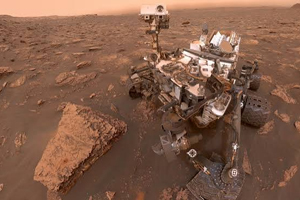
NASA Curiosity (Mars Science Laboratory) rover surpasses another full year of operations on Mars surface today; launched Nov 26, 2011 – landed Aug 5,...
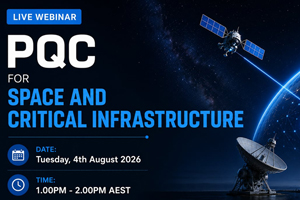
Virtual Series 2026 will offer deeper conversations on why PQC matters and the practical steps businesses should be taking; starts 1:00 pm AEST. Featuring:...
This international lunar science meeting has two objectives: to provide a platform for leading experts to review recent advances across lunar research, from the...
At CSIR International Convention Centre. Key topics are Earth Observation, Developing Space Tourism, Space Supply Manufacturing. Cultural tours are offered.
Participants will receive theoretical and hands-on training in electron imaging and X-ray spectroscopy for application to planetary samples. This training opportunity is targeted at...
"Leading Australia’s Space Future for Our Strategic Advantage". Southern Space 2026 brings together decision-makers who set the direction for Australia’s space sector. It is...
A total solar eclipse with a magnitude of 1.0386 (greatest eclipse 17:47:06 UTC) will be visible in parts of Greenland, Iceland, northern Russia, the Atlantic...
Includes presentation of the Neil Armstrong Award of Excellence, activities for the new class of Astronaut Scholars, 2-day Technical Conference where Scholars present their...
During U.S. spacewalk 97, two astronauts will replace a Space-to-Ground antenna on the orbital complex. The antenna is a critical communication system NASA uses...

 = All times for terrestrial events in local time unless noted.
 = All times for international terrestrial events in local time unless noted.
 = All times for space events, and…
 = All times for international space / astro events in Hawaii Standard Time unless noted. Add 10 hours to obtain UT (‘Universal Time;’ Greenwich, England).
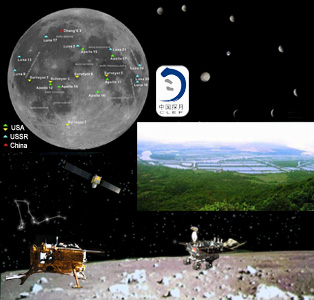 The China Lunar Exploration Program / Chang’e (CE) is steadily advancing toward human Moon missions, perhaps launching between 2020-2030. CE-3 Lander and Yutu Rover, at 44.12° N 19.5° W Sinus Iridum / Mare Imbrium, are preparing for the total lunar eclipse occurring 19:54-20:06 Beijing time April 3. The Lander with its only operating science instrument, Lunar Ultraviolet Telescope, and the Rover with 2 panoramic cameras may take optical and ultraviolet images, as well as study dust dynamics and the lunar terminator. CE-4 lander / rover mission and instruments are being reconfigured to maximize science and data collection. Commercial and international enterprises have been invited to propose / supply instruments for CE-4 which will determine the crafts’ overall design and launch date. CE-5T1 service module currently in lunar orbit is set to conduct imaging of possible landing sites in April for the CE-5 sample return mission. The craft is expected to stay in orbit until May. The CE-5 mission is planned to launch 2017 and return at least 2kg of lunar material. Its lander will be fitted with cameras, a mineral spectrometer, a soil gas / composition analytical instrument, a sampling sectional thermodetector and a drill. The potential CE-6 craft may launch before 2020 to a different destination, likely with different and more advanced instruments. China will utilize its developing southernmost Spaceport / “Moon Port”, the Wenchang Satellite Launch Center at 19°N 110°E on Hainan island / province to launch these missions. (Image Credit: CLEP, CNSA, SASTIND/Xinhua, CCTV, CAS, NASA, Science/AAAS/Xiao et al)