Vol 44, No 37: Lunar Broadcast Precursor: Terrestrial Edition
Busy Space Week in Europe
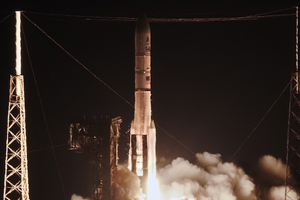
Europe advances space goals this week through a dynamic blend of astronomy and astronautics. At Noordwijk, Netherlands, ESA Lunar Science Office hosts September 15 workshop at ESTEC to discuss Moon regions for a European-led robotic infrastructure supporting international science and human surface activities. Sep 15-17 Binary Asteroids Meeting VI at Nice Observatory delves into Near-Earth Objects, main-belt asteroids and Trans-Neptunian Object systems among others, enhancing insights into solar system dynamics. Concurrently, the second Mercury Laboratory Workshop in Finland Sep 15-17, co-hosted by ESA, University of Helsinki and Europlanet, promotes collaboration on planetary studies, bridging astronomy with robotic missions like BepiColombo. Sep 15-19 World Space Business Week in Paris draws 1,400+ onsite and online from 60+ countries and drives commercialization of space via summits on innovation and logistics. 11th GEGSLA operational meeting Sept 16 of Moon Village Association headquartered in Vienna forwards its mission to offer an international forum for collaboration toward a global community that uses Moon resources sustainably for the benefit of all humanity. Sep 16-18 celebration at the Paris Observatory of the Titan landing on Huygens via Cassini highlights collaboration among ESA, NASA and ASI, inspiring future deep-space probes. (Image Credits: ESA, MVA, WSBW, Eiffel Tower, Nice Observatory, U of Helsinki)
Deep Space: JAXA Osaka Symposium Meets During Juno’s Final Act
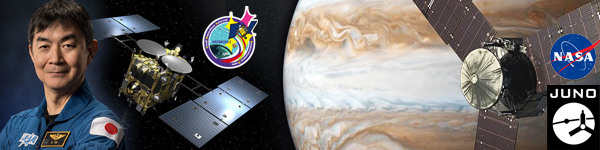
On September 19, the JAXA Symposium 2025: Beyond the Moon to the Infinite Universe convenes at Osaka Industrial University Umeda Campus. Experts from JAXA, including Arita Makoto and Ito Tokumasa, to outline Japan space agenda. The H3 launch rocket supports satellite deployment with its 16,000-kg lift capacity. The HTV-X resupply vehicle, debuting October 21, carries 5,819 kg of cargo—4,069 kg pressurized and 1,750 kg unpressurized—to the ISS. The Martian Moon Exploration (MMX) project, led by Kawagoe Yasuhiro, is set to launch JFY 2026, reach Mars in 2027 and orbit Phobos for three years to collect data and samples, returning to Earth in JFY 2031. Japanese astronauts, guided by Kanasai Nobuo, undergo training to address radiation risks and lunar preparation. The extended mission for Hayabusa2, overseen by Mitsumasu Hiroya, targets asteroid 1998 KY26, arriving in 2031, with a 2026 flyby of 2001 CC21 and Earth fly-bys in 2027 and 2028, using 50% remaining xenon fuel since its 2020 Earth return. Meanwhile, NASA’s Juno spacecraft concludes its 14-year mission. On September 16–20, during Perijove 76 Juno gathers final data before a controlled impact into Jupiter depths, ending its journey since launch in 2011. Recent flybys by Juno mapped 200+ storm systems. The Osaka symposium showcases JAXA deep space strides, while Juno’s impending impact marks a parallel milestone. (Image Credits: JAXA, NASA)
HUMANS IN SPACE
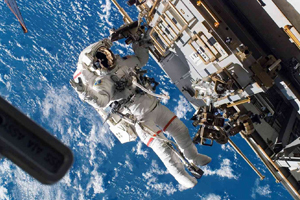
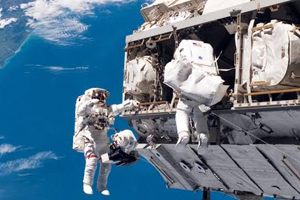
International Space Station, ~415-km LEO: Expedition 73 eleven-member crew are unloading fuel, science supplies and ~3,000 kg of food from Roscosmos Progress 93 craft docked at aft port of Zvezda module, and are unloading ~5,000 kg of new science experiments and station hardware from the Cygnus XL resupply ship, which the Canadarm2 has installed on the Unity module Earth-facing port; Jonny Kim is storing research samples including human cells cryogenically, defined as below 150°C; Mike Fincke is incubating yeast and fermented milk samples, seeking to biomanufacture vitamins / nutrients; Sergey Ryzhikov and Alexey Zubritsky are configuring physics research gear.
Tiangong Space Station, ~390-km LEO: Shenzhou 20 three-member crew are studying the risks of cancer development from space radiation via tests with tumor cells and gene expression, conducting the “Origin of Life Space Experiment to examine how genetic codes may have originated and the role of gravity in that process, and seeing how methanogen bacteria behaves in a simulated Mars environment; they monitor the China Space Station Habitation Area Microbiome Programme (CHAMP) that continuously tracks microbial communities living inside the station.
Lunar News: Weekly lunar advisories [coming soon]
Near-Earth Objects Close Approaches – Thur Sep 18: Apollo Asteroid 2025 SC (0.0003 AU); Tues Sep 19: Apollo Asteroid 2025 RL2 (0.001 AU); Sun Sep 21: Apollo Asteroid 2025 RE6 (0.013 AU).
Discussion of NASA extraterrestrial materials collections, including samples collected by Mars 2020, presentations on geological context and specific science hypotheses testable on these samples. Also, updates from NASA HQ, reports on the collections, sample return activities in progress and planned, advanced curation methods, NASA funding / facilities and data archiving. […]
Expected speakers include: Rep. Suhas Subramanyam, VA-10 – House Cmte on Space, Science, and Technology Monica Gorman, Area Vice President, Goddard Engineers, Scientists and Technicians Association (GESTA) – Union representing Goddard technical civil servants Colette Delwalla, Executive Director, Stand Up For Science Dr. Mollie Manier, National Institutes of Health, signer […]
NASA craft to perform Jupiter flyby during Perijove 76, its 76th close flyby of Jupiter and 75th science flyby with instruments turned on – to be last flyby of planet before controlled impact into Jupiter clouds.
Join the Beyond Earth Institute for a conversation about the critical challenge of food production in space. This webinar will examine the current gaps in space-based food systems, the specific needs of planned missions, and how these fit into the broader Moon to Mars Strategy. We’ll explore: What food production systems […]
Jose Hernandez, a former NASA astronaut with an extraordinary, only-in-America story, will visit UND on Wednesday, Sept. 17. The campus community is invited to join him for a guided conversation that afternoon as part of the Hilyard Center’s celebration of Hispanic Heritage Month. Hernandez will be at the Memorial Union […]
West Texas Suborbital Launch Site / Corn Ranch, Van Horn TX, USA
Launch Site One (LSO), Van Horn, TX, United States
An uncrewed mission using the RSS H.G. Wells capsule, this is the 35th flight for the New Shepard program, taking 40+ scientific and research payloads, including 24 experiments from NASA’s TechRise Student Challenge and payloads for JHU-APL, Oklahoma State U, U of Florida, Carthage College, U of Central Florida, Teledyne, […]
"Enabling Competition in the Commercial Space Industry" and the CLD Directive are more than policy updates—they're potential game-changers for how business gets done in low Earth orbit. But what do they actually mean for companies, investors, and innovators working in this space? Key discussion points will include: How these changes […]
Officials will brief on H3 launch rocket, HTV-X resupply vehicle, Martian Moon Exploration project, Hayabusa2, challenges to Japanese astronauts, and more.
Last of a series of lectures. All members of OSMED (Organization for Space Medicine, Engineering and Design) are welcome to attend. Membership: US$50-250.
NASA Mars Atmosphere and Volatile Evolution (MAVEN) spacecraft surpasses another full year of operations in Mars orbit after insertion on this day 2014; continuing to study upper atmosphere.
At the Spokane Convention Center. The meeting will have a broad scope, with a wide-ranging program of science and workforce topics, and celebrating planetary...
Convene, connect, and collaborate at the 19th annual von Braun Space Exploration Symposium! This year’s event will spotlight how bold ideas, emerging technologies, and...
Themes include: Space & the Arctic; Space & AI; Space & International Collaboration. There is a Student Session, a Technical Session, a Frontier Session,...
Oslo Spaceport Norway offers monthly a knowledgeable speaker and opportunity for networking, 17:00-20:00 local time; free entry but registration required. Ground Control is for...
45 satellites to launch for Amazon Leo, formerly named Project Kuiper. This LEO mega constellation will offer broadband internet access with 3,276 satellites.
Occurring 31 October from 09:00-11:00 local time (16:00-18:00 HST, 19:00-21:00 PDT, 22:00-24:00 EDT on 30 October), this Galaxy Forum will be in hybrid format...
Originally planned around this date for Wenchang, China -- TBC (to be confirmed); As the only professional association for astronauts, ASE supports the advancement of...
Coordinating Division Division C Education, Outreach and Heritage The IAU Symposium on Innovative Research and Techniques in Astronomy Communication will take place from November...
Change clocks back 1 hour from Daylight Saving to Standard Time; does not include Hawai’i, Arizona (except the Navajo Nation), American Samoa, Guam, Northern...
ESWW is the main annual event in the European Space Weather and Space Climate calendar. It is an international meeting organised annually within the...
IAU Symposium: IAUS409 - A Journey Towards Effective Astronomy Communication; online and at National Astronomical Observatory of Japan, 2-21-2 Osawa Mitaka, Tokyo. Topics include:...
Launch Complex 1, ~39°S, Mahia Peninsula, New Zealand
iQPS Launch 9, an Earth observation satellite with Synthetic aperture radar for Japan-based imaging company iQPS, to launch on "The Sea God Surveys" mission...
Launch window 10:34am - 2:34pm local time for the 15th batch of classified satellites for a reconnaissance constellation built by SpaceX and Northrop Grumman...

 International Space Station, ~415-km LEO: Expedition 73 eleven-member crew are unloading fuel, science supplies and ~3,000 kg of food from Roscosmos Progress 93 craft docked at aft port of Zvezda module, and are unloading ~5,000 kg of new science experiments and station hardware from the Cygnus XL resupply ship, which the Canadarm2 has installed on the Unity module Earth-facing port; Jonny Kim is storing research samples including human cells cryogenically, defined as below 150°C; Mike Fincke is incubating yeast and fermented milk samples, seeking to biomanufacture vitamins / nutrients; Sergey Ryzhikov and Alexey Zubritsky are configuring physics research gear.
 Lunar News: Weekly lunar advisories [coming soon]
 Near-Earth Objects Close Approaches – Thur Sep 18: Apollo Asteroid 2025 SC (0.0003 AU); Tues Sep 19: Apollo Asteroid 2025 RL2 (0.001 AU); Sun Sep 21: Apollo Asteroid 2025 RE6 (0.013 AU).