Antarctica as Proving Ground for Space Exploration Technologies
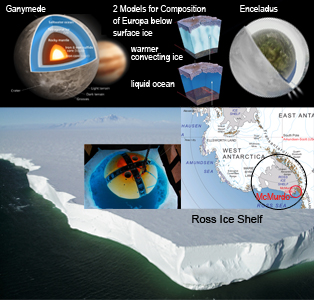
Stone Aerospace advance team for the Autonomous Rover/airborne-radar Transects of the Environment beneath the McMurdo Ice Shelf (ARTEMIS) is schedule to reach Antarctica August 22 to set up a test lab. The main team will arrive with ARTEMIS at the end of September, just ahead of the southern hemisphere Spring season. It is designed to evaluate technologies and techniques for independent exploration of vast underground water systems. ARTEMIS will be consolidated into a project called Sub-glacial Polar Ice Navigation, Descent, and Lake Exploration (SPINDLE), along with other elements including a cryobot transport system to tunnel through thick surface ice and a number of small, disposable “marsupial robots”, designed to collect samples from hazardous areas and bring them back to the main AUV. Bill Stone, of Stone Aerospace, indicates that SPINDLE development and field-testing in Antarctic subglacial lakes is done in preparation for exploration at locations of highest interest in the search for life across the Solar System, such as Europa, Enceladus and Ganymede. The International Council for Science division known as the Scientific Committee on Antarctic Research (SCAR) just held the 3rd workshop of the Astronomy and Astrophysics from Antarctica research program in Volcano National Park, Hawai’i, USA. The extreme environments, physical isolation and regime for international science cooperation characteristic of Antarctica make it a very interesting analog and inspiration for future large-scale and long-term space science, exploration and development endeavors. (Image Credit: Kevin Hand (JPL/Caltech), Jack Cook (Woods Hole Oceanographic Institution), Howard Perlman (USGS) via NASA; NASA/JPL; NASA’s Planetary Photojournal, PIA01669)
MONDAY
Aug 17 — ISS, LEO: Expedition 44 six-member crew reviewing procedures for Kounotori HTV-5 arrival, analyzing samples & photographs taken from outside ISS during recent Russia EVA; Veggie experiment yielding edible / healthy plants – more advanced system being developed for various vegetables & flowers (to test pollination in space).
Aug 17 — X-37B Space Plane, 312 x 325 km Earth Orbit: Fourth undisclosed mission (OTV-4, Orbital Test Vehicle-4) of U.S. Air Force continues to conduct experiments & test technologies; launched May 20.
Aug 17 — Chang’e-5T1, Circular 200-km Altitude Moon Orbit: Performing various maneuvers / exercises to verify guidance techniques for future Chang’e-5 sample return mission, imagining surface at low altitude.
Aug 17 — New Horizons,Kuiper Belt Trajectory: Traveling at 52,240 kph, continuing to collect data on Pluto system / send information to Earth; will take about 500 days to downlink 50 gigabytes of data from flyby already in storage.
Aug 17 — Cassini, Saturn Orbit: Dione flyby scheduled at 474-km altitude, Tethys at 42,000 km, Enceladus at 53,000 km, Methone at 90,000 km, Titan at 960,000 km.
Aug 17 — New Worlds Institute, Austin TX: NewSpace company with Rick Tumlinson as Chairman, holding conference for Oct 16-17, advocating for space exploration, human spaceflight and education, working to connect all sectors of people interested in Space.
Aug 17 — Innovative Solutions In Space (ISIS), Delft, The Netherlands: Partnering with space-mining Deep Space Industries to integrate its hardware & avionics with DSI technologies for high-quality, low-cost, 1-20 kg turnkey nanosatellites.
Aug 17 — Starburst Accelerator, Paris, France: Helping aerospace start-ups receive funding, office space, mentorship; planning to open new location in El Segundo CA; more than 40+ space start-ups received average of $893K.
Aug 17 — United Nations, CANEUS (Canada-Europe-USA-Asia),Worldwide / Montreal, Canada: Global satellite to be named UN Kalam GlobalSat to celebrate Dr. APJ Abdul Kalam, former President / rocket man of India; satellite is UN-driven initiative for sharing technology & ideas to prepare / control risk of natural disasters.
Aug 17 — Silicon Valley Space Center, Mountain View CA: Lecture: Quantum Key Distribution by CubeSat; presented by Robert Bedington, Research Fellow at Center for Quantum Technologies & post-doc at National University of Singapore.
= All times
for terrestrial events in local time unless noted.
= All times for international terrestrial events in local time unless noted.
= All times for space events, and…
= All times for international space / astro events in Hawaii Standard Time unless noted. Add 10 hours to obtain UT (‘Universal Time;’ Greenwich, England).
ISEC 2015 and IAA Space Elevator Study Group Convene in Seattle
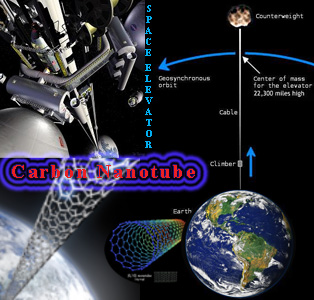
The 2015 International Space Elevator Consortium (ISEC) at the Museum of Flight in Seattle, Washington August 21-23 features keynote speaker PhD. student Mark Haase of University of Cincinnati and David Horn conducting the welcoming statement and wrap-up remarks. The conference this year, with the twin themes Carbon Nanotube Tensile Strength Progress and Marine Node Design Characteristics, offers mini-workshops, “Elevator Speech” competition, Family Science Fest, youth robotics competition and science sessions. The revolutionary Space Elevator (SE) concept will be an undertaking of epic proportions, testing the limits of engineering ingenuity. SE construction would connect long cables tethered from a base site near the equator to a tower at 35,786-km altitude (geostationary orbit). While developing materials and resources to construct the cables have been challenging, laboratory produced carbon nanotubes are identified as a possibility. The SE will be designed for electromagnetic vehicles to travel up high-speed tracks to various platform levels. Preceding the conference, an IAA study group meeting is scheduled for Aug 20 as a follow-up to the “Assessment of the Technological Feasibility and Challenges of the Space Elevator Concept” with members: Chair, Akira Tsuchida, Co-Chair(s) David Raitt and Peter Swan, and Secretary Sakurako Takahashi. (Image Credit: NASA, ESA, ISEC)
Aug 17 — The Space Show, Online / Tiburon CA: Dr. David Livingston talks with Professor Madhu Thangavelu from Department Of Astronautical Engineering within the Viterbi School of Engineering at University of Southern California.
Aug 17-28 — ICTP South American Institute for Fundamental Research (ICTP-SAIFR), Fermilab, American Physical Society,Sao Paulo, Brazil:International Neutrino Summer School 2015.
Aug 18 — Cassini, Saturn Orbit: Helene flyby scheduled at 113,000-km altitude.
Aug 18 — The Space Show, Online / Tiburon CA: Dr. David Livingston talks with Dennis Wingo; Space Show running an Indiegogo crowdfunding campaign to modernize current technologies & database from 15 years of programming.
Aug 19 — Apollo Asteroid 2015 OF26: Near-Earth flyby (0.099 AU).
THURSDAY
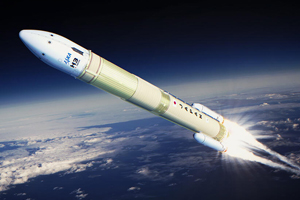
Aug 20 — ISS, Kounotori HTV-5 Rendezvous & Berthing,LEO: Japan 5th H-2 transfer vehicle (Kounotori 5) to rendezvous, be captured & berthed to ISS; activities begin 09:30 UT, live coverage available.
Aug 20 — Voyager 2, Heliosheath: NASA spacecraft enters 39th year in space today, launched Aug 20, 1977 – seventeen days before Voyager 1; expected to send data to Earth until ~2025 when power may run out.
Aug 20 — Arianespace, Launch Ariane 5 / Eutelsat 8 West B & Intelsat 34,Kourou, French Guiana: Arianespace Ariane 5 ECA rocket, designated VA225, to launch Eutelsat 8 West B & Intelsat 34 satellites.
Aug 20 — International Academy of Astronautics, Seattle WA: Study Group: Road to Space Elevator Era; with Akira Tsuchida, David Raitt, Peter Swan, Sakurako Takahashi, and others.
Includes ~150 meetings covering the fields of COSPAR Scientific Commissions / Panels / Task Groups, such as SC B: The Earth-Moon System, Planets, and...
From 02 to 07 August 2026, a few thousand geoscientists across diverse disciplines will gather at the 23rd annual meeting of the Asia Oceania Geosciences...
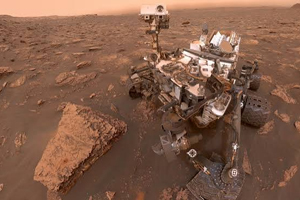
NASA Curiosity (Mars Science Laboratory) rover surpasses another full year of operations on Mars surface today; launched Nov 26, 2011 – landed Aug 5,...
Virtual Series 2026 will offer deeper conversations on why PQC matters and the practical steps businesses should be taking; starts 1:00 pm AEST. Featuring:...
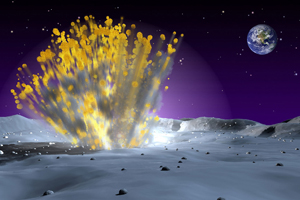
This international lunar science meeting has two objectives: to provide a platform for leading experts to review recent advances across lunar research, from the...
At CSIR International Convention Centre. Key topics are Earth Observation, Developing Space Tourism, Space Supply Manufacturing. Cultural tours are offered.
Participants will receive theoretical and hands-on training in electron imaging and X-ray spectroscopy for application to planetary samples. This training opportunity is targeted at...
"Leading Australia’s Space Future for Our Strategic Advantage". Southern Space 2026 brings together decision-makers who set the direction for Australia’s space sector. It is...
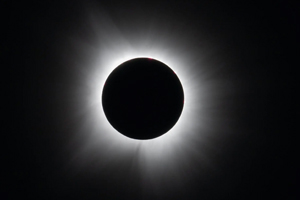
A total solar eclipse with a magnitude of 1.0386 (greatest eclipse 17:47:06 UTC) will be visible in parts of Greenland, Iceland, northern Russia, the Atlantic...
Includes presentation of the Neil Armstrong Award of Excellence, activities for the new class of Astronaut Scholars, 2-day Technical Conference where Scholars present their...
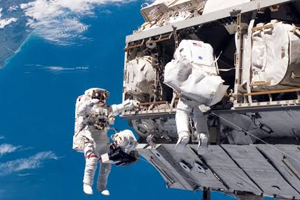
During U.S. spacewalk 97, two astronauts will replace a Space-to-Ground antenna on the orbital complex. The antenna is a critical communication system NASA uses...

 = All times
 = All times for international terrestrial events in local time unless noted.
 = All times for space events, and…
 = All times for international space / astro events in Hawaii Standard Time unless noted. Add 10 hours to obtain UT (‘Universal Time;’ Greenwich, England).