Launch of Astrosat Multi Wavelength Observatory Furthering Ambitious India Space Goals
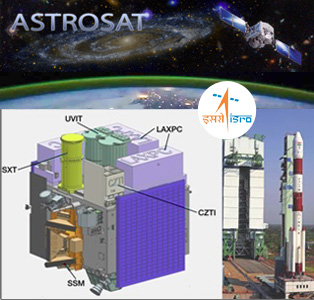
Pioneering indigenous Astrosat mission to lift-off September 28 from Satish Dhawan Space Center, Sriharikota, India on Polar Satellite Launch Vehicle (PSLV) C30, which will also host 6 small satellites – 4 from USA, 1 Indonesia and 1 Canada. The ability of Astrosat to make simultaneous multi wavelength observations in ultraviolet, visible light, and high / low energy x-rays should advance India space science and technology to new heights. The optical mirror is ~30 cm and encompasses 5 major components: Ultraviolet Imaging Telescope (UVIT), Soft X-ray Telescope (SXT), Scanning Sky Monitor (SSM), Cadmium Zinc Telluride Imager (CZTI), and 3 Large Area Xenon Proportional Counters (LAXPC). At just under 15% of the mass of Hubble, the 1,513-kg miniature craft is expected to perform observations from a planned 650-km altitude near-equatorial orbit for 5 years, gathering data on black holes, pulsars, quasars and in particular the supermassive black hole thought to be at the center of the Milky Way Galaxy. With an impetus to progress national space objectives, India Space Research Organization (ISRO) chairman A. S. Kiran Kumar states ISRO plans for “up to 30 launches, including ten GSLV-Mark III, in the next three years” as well as a possible trial of the Reusable Launch Vehicle-Technology Demonstrator this October and the Chandrayaan-2 Moon Lander mission projected for 2017. ISRO will likely also continue to pursue Human spaceflight capability following the Crew Module Atmospheric Re-entry Experiment success of late 2014. (Image Credit: NASA, ISRO)
MONDAY
Sep 28 — ISS,LEO: Expedition 45 six-person crew preparing for Progress-61P cargo ship arrival & docking, reviewing procedures for emergency medical & evacuation situations, collecting data on ocular health, microorganisms, cardiovascular and respiratory systems, liquid crystals; Kelly & Kornienko participating in ~400 experiments during their 1-year mission.
Sep 28 — ISS, HTV-5 Robotic Release,LEO: Japan HTV-5 cargo ship scheduled to be released from ISS at 15:00 UT, live coverage available, will burn up in Earth Atmosphere with waste.
Sep 28 — Lunar Reconnaissance Orbiter,MoonPolar Orbit: Data from lunar eclipse to be transmitted to Earth, science instruments will be turned back on & tested, release 23 of LRO data recently published, imaging thousands of lobate scarps / faults on surface.
Sep 28 — Cassini,Saturn Orbit: Titan flyby at 1,036-km altitude planned for today.
Sep 28 — ISRO, Launch PSLV / Astrosat, Satish Dhawan Space Center, Sriharikota, India: India Polar Satellite Launch Vehicle, flying on PSLV-C30 mission, to launch the Astrosat astronomical satellite to observe the universe in visible, ultraviolet & X-ray wavelengths, study black holes, neutron stars, pulsars, quasars, white dwarfs, active galactic nuclei.
Sep 28 — Earth2Orbit,Bengaluru, India: NewSpace company with Dr. Susmita Mohanty as CEO offering
launch procurement services & campaign management, hardware via Firefly Aerospace; has offices in Osaka, San Francisco & Vienna as well.
Sep 28 — Commercial Spaceflight Federation,Washington DC: Continues advocacy & publicity for NewSpace companies worldwide; CSF membership now includes more than 60 companies, Eric Stallmer serving as president, Frank DiBello as chairman, Alan Stern & Jeff Greason elected to serve as officers of the board.
Sep 28 — NorStar Space Data Inc.,Montreal, Québec, Canada: Developing 40 LEO satellite constellation with IBM & Boeing Co. to manage Earth resources and track space objects; Ciel Satellite Group, Telesat & Kepler Communications of Ontario also focus on space satellite technologies.
= All times
for terrestrial events in local time unless noted.
= All times for international terrestrial events in local time unless noted.
= All times for space events, and…
= All times for international space / astro events in Hawaii Standard Time unless noted. Add 10 hours to obtain UT (‘Universal Time;’ Greenwich, England).
European Planetary Science Congress to Reveal New Data from Current Missions
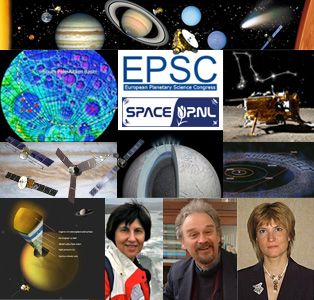
The 2015 European Planetary Congress, now in its 9th year, is set to take place September 27 – October 2 in Nantes, France. About 700 attendees will participate in presentations, posters, workshops and panel discussions focused on planetary science and missions. The EPSC Executive Board is chaired by (L-R) Manuel Grande of University of Wales Aberystwyth, Maria Teresa Capria of Institute of Astrophysics and Space Planetology (IAPS) / National Institute of Astrophysics (INAF), Athena Coustenis of National Centre for Scientific Research (CNRS), as well as Felipe Gomez, Michel Blanc, Ralf Srama, Helmut Rucker and Jean-Pierre Lebreton. The Lunar Science and Exploration session will feature presentations on LRO Diviner, Chang’e-3 Moon-based Extreme Ultraviolet Camera, Kaguya/Spectral Profiler and New Views of the Moon II 2008-2018. The Outer Planets Systems session will cover Jupiter, Ganymede, Europa, Io, Saturn, Titan, Enceladus, JUICE mission, Europa Clipper and Cassini. Other topics include KBOs and Centaurs, planetary protection requirements for returning samples of icy moons, asteroids, astrobiology, planetary space weather service, and missions, techniques and industry. SpaceUp Netherlands is being held in Noordwijk with 108 registered people planning to attend the unconference on Oct 3. (Image Credit: EPSC, SpaceUp, NASA, ESA, JAXA, CNSA, Aberystwyth, A. Coustenis, M. Capria)
Sep 28 — Jet Propulsion Laboratory, Caltech/NASA,Online / Pasadena CA: NASA to Announce Mars Mystery Solved; NASA will detail a major science finding from the agency’s ongoing exploration of Mars, 08:30 PDT.
Sep 1-30 — Flexure Engineering LLC, LunarCubes, Online / Pasadena CA: Flash Art Competition; writing and 2D art contest which focuses on lunar and space exploration; US$3,500 grand prize.
Sep 27 – Oct 2 — Federation of Analytical Chemistry and Spectroscopy Societies (FACSS), Providence RI:SCIX2015: Scientific Exchange; at Rhode Island Convention Center.
Sep 27 – Oct 2 — European Planetary Science Congress, University of Nantes,Nantes, France:European Planetary Science Congress 2015; at La Cité Nantes Events Center.
TUESDAY
Sep 29 — Mauna Kea Education and Awareness, KAHEA (Hawaiian Environmental Alliance), Waimea HI: Mauna Kea Sacred Mountain; at Kuhio Hale Hawaiian Homes Hall, 18:00 HST.
Sep 30 — Cassini, Saturn Orbit: Flyby of Dione planned at 41,000 km, Calypso at 44,000 km, Rhea at 58,000 km, Mimas at 65,000 km, Aegaeon at 80,000 km, Tethys at 117,000 km, Telesto at 118,000 km.
Sep 30 — Arianespace, Launch Ariane 5 / NBN Co 1A & Arsat 2, Kourou, French Guiana: Ariane 5 ECA rocket, designated VA226, to launch NBN Co 1A and Arsat 2 satellites.
Oct 1 — Deep Space,Kuiper Belt Trajectory: New Horizons sending images and data from Pluto system flyby to Earth, images showing near-surface fog / haze in atmosphere could indicate a nitrogen-based glacial cycle.
Oct 1 — RSA, Launch Soyuz / Progress 61P, Baikonur Cosmodrome, Kazakhstan: An RSA Soyuz rocket set to launch 61st Progress cargo ship to ISS, set to dock ~6 hours later.
Oct 2 — Apollo Asteroid 2000 SM10: Near-Earth flyby (0.030 AU).
SATURDAY
Oct 3 — SpaceUp, Vis Viva, Netherlands Space Society, Delft University of Technology, Noordwijk, The Netherlands:SpaceUp – The Netherlands; at Space Expo.
Oct 3 — Comet 22P Kopff: 0.13° N of Saturn, 18:00.
Oct 3 — Apollo Asteroid 2015 SR: Near-Earth flyby (0.038 AU).
Oct 3 — Apollo Asteroid 2012 CL19: Near-Earth flyby (0.045 AU).
Oct 3 — Apollo Asteroid 2009 DB43: Near-Earth flyby (0.070 AU).
SUNDAY
Oct 4-10 — World Space Week Association, Global:World Space Week 2015: Discovery; to celebrate each year international contributions of space science and technology to the betterment of the human condition; Oct 4 is 58th observation of 1st Space mission Sputnik One launched by Soviet Union 1957; Oct 10 is 48th observation of Outer Space Treaty going into effect 1967.
Oct 4 — Moon: At last quarter, 11:06.
Oct 4 — Apollo Asteroid 2015 FS332: Near-Earth flyby (0.048 AU).
Includes ~150 meetings covering the fields of COSPAR Scientific Commissions / Panels / Task Groups, such as SC B: The Earth-Moon System, Planets, and...
From 02 to 07 August 2026, a few thousand geoscientists across diverse disciplines will gather at the 23rd annual meeting of the Asia Oceania Geosciences...
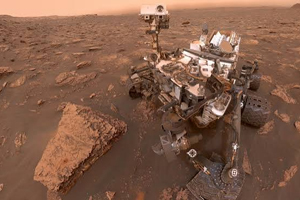
NASA Curiosity (Mars Science Laboratory) rover surpasses another full year of operations on Mars surface today; launched Nov 26, 2011 – landed Aug 5,...
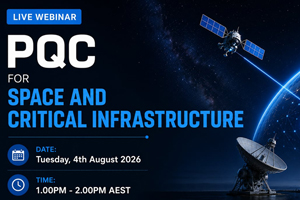
Virtual Series 2026 will offer deeper conversations on why PQC matters and the practical steps businesses should be taking; starts 1:00 pm AEST. Featuring:...
This international lunar science meeting has two objectives: to provide a platform for leading experts to review recent advances across lunar research, from the...
At CSIR International Convention Centre. Key topics are Earth Observation, Developing Space Tourism, Space Supply Manufacturing. Cultural tours are offered.
Participants will receive theoretical and hands-on training in electron imaging and X-ray spectroscopy for application to planetary samples. This training opportunity is targeted at...
"Leading Australia’s Space Future for Our Strategic Advantage". Southern Space 2026 brings together decision-makers who set the direction for Australia’s space sector. It is...
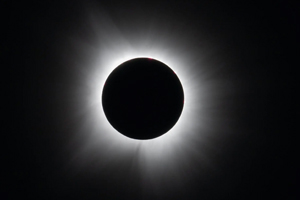
A total solar eclipse with a magnitude of 1.0386 (greatest eclipse 17:47:06 UTC) will be visible in parts of Greenland, Iceland, northern Russia, the Atlantic...
Includes presentation of the Neil Armstrong Award of Excellence, activities for the new class of Astronaut Scholars, 2-day Technical Conference where Scholars present their...
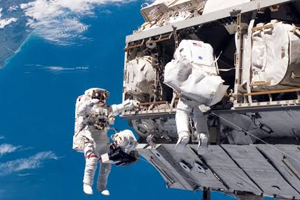
During U.S. spacewalk 97, two astronauts will replace a Space-to-Ground antenna on the orbital complex. The antenna is a critical communication system NASA uses...
 Pioneering indigenous Astrosat mission to lift-off September 28 from Satish Dhawan Space Center, Sriharikota, India on Polar Satellite Launch Vehicle (PSLV) C30, which will also host 6 small satellites – 4 from USA, 1 Indonesia and 1 Canada. The ability of Astrosat to make simultaneous multi wavelength observations in ultraviolet, visible light, and high / low energy x-rays should advance India space science and technology to new heights. The optical mirror is ~30 cm and encompasses 5 major components: Ultraviolet Imaging Telescope (UVIT), Soft X-ray Telescope (SXT), Scanning Sky Monitor (SSM), Cadmium Zinc Telluride Imager (CZTI), and 3 Large Area Xenon Proportional Counters (LAXPC). At just under 15% of the mass of Hubble, the 1,513-kg miniature craft is expected to perform observations from a planned 650-km altitude near-equatorial orbit for 5 years, gathering data on black holes, pulsars, quasars and in particular the supermassive black hole thought to be at the center of the Milky Way Galaxy. With an impetus to progress national space objectives, India Space Research Organization (ISRO) chairman A. S. Kiran Kumar states ISRO plans for “up to 30 launches, including ten GSLV-Mark III, in the next three years” as well as a possible trial of the Reusable Launch Vehicle-Technology Demonstrator this October and the Chandrayaan-2 Moon Lander mission projected for 2017. ISRO will likely also continue to pursue Human spaceflight capability following the Crew Module Atmospheric Re-entry Experiment success of late 2014. (Image Credit: NASA, ISRO)
 = All times
 = All times for international terrestrial events in local time unless noted.
 = All times for space events, and…
 = All times for international space / astro events in Hawaii Standard Time unless noted. Add 10 hours to obtain UT (‘Universal Time;’ Greenwich, England).
 The 2015 European Planetary Congress, now in its 9th year, is set to take place September 27 – October 2 in Nantes, France. About 700 attendees will participate in presentations, posters, workshops and panel discussions focused on planetary science and missions. The EPSC Executive Board is chaired by (L-R) Manuel Grande of University of Wales Aberystwyth, Maria Teresa Capria of Institute of Astrophysics and Space Planetology (IAPS) / National Institute of Astrophysics (INAF), Athena Coustenis of National Centre for Scientific Research (CNRS), as well as Felipe Gomez, Michel Blanc, Ralf Srama, Helmut Rucker and Jean-Pierre Lebreton. The Lunar Science and Exploration session will feature presentations on LRO Diviner, Chang’e-3 Moon-based Extreme Ultraviolet Camera, Kaguya/Spectral Profiler and New Views of the Moon II 2008-2018. The Outer Planets Systems session will cover Jupiter, Ganymede, Europa, Io, Saturn, Titan, Enceladus, JUICE mission, Europa Clipper and Cassini. Other topics include KBOs and Centaurs, planetary protection requirements for returning samples of icy moons, asteroids, astrobiology, planetary space weather service, and missions, techniques and industry. SpaceUp Netherlands is being held in Noordwijk with 108 registered people planning to attend the unconference on Oct 3. (Image Credit: EPSC, SpaceUp, NASA, ESA, JAXA, CNSA, Aberystwyth, A. Coustenis, M. Capria)