International Astronautical Federation Advancing a Spacefaring World, IAC Abstracts Due
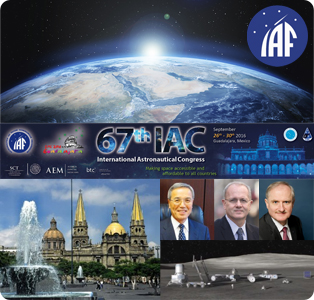
The IAF is a leading space advocacy body with over 300 members across 66 countries representing key space agencies, companies, societies, associations and institutes. More than 40 administrative and technical committees support the Federation in advancing knowledge about space and fostering development of space assets by facilitating global cooperation. The primary event of IAF is the annual International Astronautical Congress, a global, multidisciplinary conference covering all space sectors and topics that changes country, theme and local organizer each year, enabling all to learn more about, and be a part of the world space scene. The Federation consists of multiple levels of governance from the General Assembly consisting of delegates of all member organizations, to the Bureau with President Kiyoshi Higuchi, Incoming President Jean-Yves Le Gall and Executive Director Christian Feichtinger among others, and the Secretariat which is responsible for day-to-day administration. The 67th IAC will be held with the Mexican Space Agency (AEM) in Guadalajara, Mexico September 26-30. Paper abstract submissions are due by Monday Feb 29. The IAF Spring Meetings are held in March in Paris and consist of 3 days of Committee meetings, including selection of abstracts for presentation at the IAC by the International Program Committee. One of the recent and ongoing innovations in the organization is the 2015-2018 creation of IAF Regional Groups aimed at improving the exchange of information on space activities and facilitating the development of regional cooperation in space venture and space applications. (Image Credit: IAF, ESA)
MONDAY
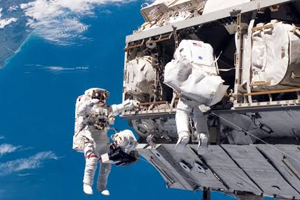
Feb 29 — ISS, LEO: Expedition 46/47 Change of Command Ceremony will make Kopra ISS Commander, 3-member crew departing on Tuesday, setting up hardware for airway inflammation experiment, working with new Space Automated Bioproduct Laboratory which supports research on microorganisms, small organisms, animal cells, tissue cultures & small plants; ISS now more than 6,310 days in orbit.
Feb 29 — Chang’e-3, Guang Han Gong, Sinus Iridum / Mare Imbrium, 44.12°N 19.51°W, Moon Surface: In Lunar Day 28, has been operating on Moon surface since Dec 2013, continuing to scan sky in ultraviolet wavelengths, engineering & science data will benefit Chang’e-5 mission, future lunar landings.
Feb 29 — Cassini, Saturn Orbit: Orbiting Saturn with a period of 23.9 days, craft capturing data on Titan surface / liquid reflections and Saturn storms, F ring particles moving at ~60,000 kph, observing blue star Gamma Orionis (Bellatrix), downlinking data to Earth at rates as high as 124,426 bits per second; Cassini 69th Project Science Group meeting planned for June.
Feb 29 — Virgin Galactic, Mojave CA: NewSpace company developing expendable rubber/nitrous oxide hybrid engine for SpaceShipTwo (Unity) to fly 6-passengers to Space (100-km altitude) for US$250,000; will continue ground tests with goal of captive carry, glide & powered flights to follow; CEO George Whitesides.
Feb 29 — Agile Aero Inc.,Midlands TX: Jeff Greason, Dan DeLon and Aleta Jackson formerly of XCOR Aerospace consulting with other companies to improve long development cycles of vehicles & vehicle integration.
Feb 29 — World View Enterprises Inc., Tucson AZ: Planning to begin crewed flights in pressurized helium balloon to 30-km altitude by end of 2017, 8 passengers at US$75K each for ~4.5-hour journey; Astronaut Ron Garan to become Chief Pilot.
for terrestrial events in local time unless noted.
= All times for international terrestrial events in local time unless noted.
= All times for space events, and…
= All times for international space / astro events in Hawaii Standard Time unless noted. Add 10 hours to obtain UT (‘Universal Time;’ Greenwich, England).
Europa 2020s Mission Payloads and Instruments Being Planned
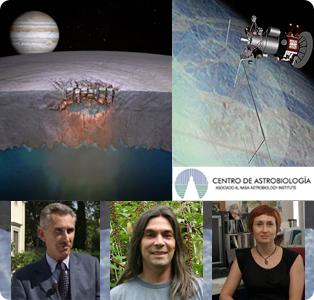
The Spain National Institute of Aerospace Technology (INTA) Center for Astrobiology, associated with the NASA Astrobiology Institute, is hosting the 3rd Europa M5 Initiative Meeting on February 29 – March 1. Attendees from France, UK, USA, Switzerland, Italy, Germany and Belgium include (L-R) Luigi Colangeli (ESA), Robert Pappalardo (JPL/NASA) and Olga Prieto-Ballesteros (INTA). They will overview the potential contribution of an ESA 250-kg payload for the 2020s NASA Europa mission intended to make 40+ flybys at 25-100 km. Under consideration are 5 vehicle options (free flyer, minisat orbiter, penetrator, soft lander, augmented payload) and 6 science themes (magnetospheric interactions, exosphere, geochemistry, geology, geophysics, astrobiology). The first 2 workshops were held January 21 at Royal Astronomical Society, London; and Feb 22-24 at IRAP, France. Europa is thought to have a water ice crust with global ocean of liquid water and thermally-active tidal forces, making the 2,000-km wide moon potentially suitable for extraterrestrial life. Juno spacecraft will be arriving at Jupiter July 4 and the JUICE mission is planned to launch 2022. Closer to home, but still focusing on Deep Space, the 31st Mars Exploration Program Analysis Group meeting Mar 2-3 at Silver Spring MD will highlight Curiosity discoveries, landing site selection workshop findings and overall status of Mars exploration. (Image Credit: ESA, NASA, NAI, Britney Schmidt/Dead Pixel VFX/Univ. of Texas at Austin, CAB/INTA)
Feb 29 – Mar 1 — Aerojet Rocketdyne, Boeing Co., Northrop Grumman, AIAA, et al, Sacramento CA:5th Annual California Aerospace Week; at State Capitol Building.
Mar 1 — Deep Space, Main Asteroid Belt, Ceres Orbit: The 1st craft to orbit 2 extraterrestrial bodies, Dawn to stay in orbit around Ceres until end of mission, mapping dwarf planet with color camera, visible & infrared spectrometer, measuring abundance of elements; mission technologies & research providing knowledge for NEO protection, science, mining opportunities.
Mar 1 — PBS, Broadcast / Worldwide: American Experience: Space Men premieres; program on U.S. Air Force scientists & pilots whose Project Manhigh, which collected data about biological & technical factors required to support human activity in Space, laid the groundwork for U.S. space program.
Mar 1 — Moon: 9.8° N of Antares, 09:00; at last quarter, 13:11; 3.6° N of Saturn, 21:00.
Mar 1 — Aten Asteroid 2011 EH17: Near-Earth flyby (0.028 AU).
WEDNESDAY
Mar 2 — ISS, Undocking of Soyuz TMA-18M / ISS 44S, LEO: Exp 45/46 Sergey Volkov, and one-year crew members Mikhail Kornienko & Scott Kelly scheduled to return to Earth.
Mar 6 — Dawn, Main Asteroid Belt, Ceres Orbit: Spacecraft enters 2nd year at Ceres today; launched Sep 2007 and arrived March 2015 after orbiting Vesta in 2011.
Includes ~150 meetings covering the fields of COSPAR Scientific Commissions / Panels / Task Groups, such as SC B: The Earth-Moon System, Planets, and...
From 02 to 07 August 2026, a few thousand geoscientists across diverse disciplines will gather at the 23rd annual meeting of the Asia Oceania Geosciences...
2:45 pm EDT from Johnson Space Center, NASA astronaut Chris Williams will recap his recent eight-month mission aboard the International Space Station. Williams returned to...
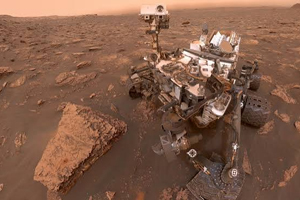
NASA Curiosity (Mars Science Laboratory) rover surpasses another full year of operations on Mars surface today; launched Nov 26, 2011 – landed Aug 5,...
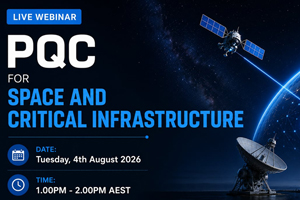
Virtual Series 2026 will offer deeper conversations on why PQC matters and the practical steps businesses should be taking; starts 1:00 pm AEST. Featuring:...
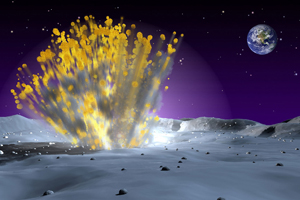
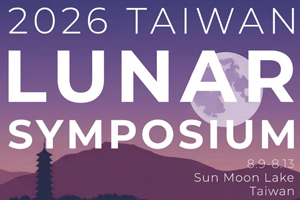
This international lunar science meeting has two objectives: to provide a platform for leading experts to review recent advances across lunar research, from the...
At CSIR International Convention Centre. Key topics are Earth Observation, Developing Space Tourism, Space Supply Manufacturing. Cultural tours are offered.
Participants will receive theoretical and hands-on training in electron imaging and X-ray spectroscopy for application to planetary samples. This training opportunity is targeted at...
"Leading Australia’s Space Future for Our Strategic Advantage". Southern Space 2026 brings together decision-makers who set the direction for Australia’s space sector. It is...

 = All times
 = All times for international terrestrial events in local time unless noted.
 = All times for space events, and…
 = All times for international space / astro events in Hawaii Standard Time unless noted. Add 10 hours to obtain UT (‘Universal Time;’ Greenwich, England).