International Space Station: Most Significant Endeavor of the 21st Century to Date
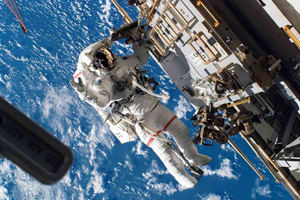
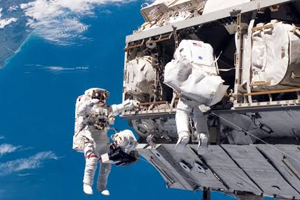
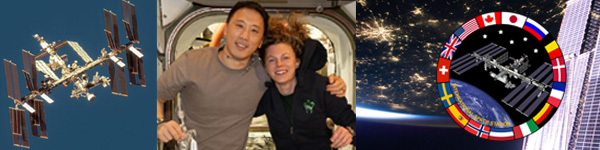
International Space Station (ISS) marks quarter of a century, begins 26th year of humans living in space, 292 unique individuals from 26 countries, some people with multiple visits. ISS enables 3,000+ experiments / innovations in microgravity, testing technologies for Artemis / other missions to the Moon and beyond, including water recycling, oxygen generation, hydroponic gardening, radiation protection and 3D printing. Health studies on bone loss, vision impairment and mental function inform countermeasures for Artemis crews. ESM of Artemis Orion spacecraft draws from ESA vehicle used for ISS resupply, and proposed Lunar Gateway incorporates Canadarm. ISS pioneers international collaboration and fosters diplomacy, modeling global partnerships in fields like asteroid mining and space tourism. ISS research improves medical treatments on Earth for osteoporosis and cancer, advances water purification / sustainable technologies, inspires STEM education worldwide and symbolizes unity. A widely cited figure for ISS total cost is US$150B, with NASA share at $100B+. ISS approaches 2030 retirement but promotes a multi-world era. Axiom draws on its 3 crewed missions to ISS, works with Thales Alenia (developer / builder of ISS Harmony, Tranquility and Columbus units) to develop modules that attach to ISS and then become independent – providing a unique bridge to new space stations. Starlab is a joint development among Voyager, Airbus, Mitsubishi and MDA. Vast is building Haven. Blue Origin, partnering with Sierra Space, is building Orbital Reef. (Image Credits: NASA, pictured: Jonny Kim, Zena Cardman)
Space Industry Acceleration: Nihonbashi and Silicon Valley Space Weeks
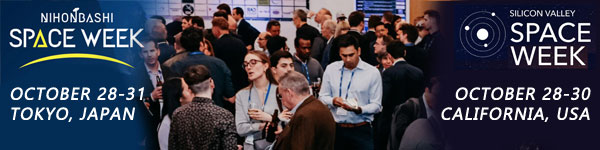
Space startups, corporations and government agencies unite this October to boost the global space industry through collaboration. Nihonbashi Space Week 2025 (October 27-31, Tokyo) leads a major event in Asia, attracting 8,000 participants, 90 exhibitors and 150 speakers across 28 sessions. Organized by Cross U with Mitsui Fudosan, it features exhibitions at Nihonbashi Mitsui Hall and X-Nihonbashi Tower, showcasing key industry leaders including Obayashi Corporation, startups ispace and Axelspace, JAXA and academic institutes. Business conferences and pitch stages drive innovation in satellite tech and lunar exploration, with an ESA-led European-Japanese startup competition enhancing public-private ties. Local governments and investors strengthen Nihonbashi as a space hub in Japan. Concurrently, Silicon Valley Space Week 2025 (October 27-30) convenes leaders at the Satellite Innovation Symposium. Startups partner with NASA Ames, SpaceX and Blue Origin on advanced satellite tech, with MilSat sessions highlighting DoD-commercial links. Strategically located between these hubs at 19°N latitude, Hawaii boosts equatorial launches by 1.8% per degree. Space Age Publishing and International Lunar Observatory Association revive the 1993 Hawaii Offshore Spaceport vision, seeking collaborators. Join the Strategic Hawaii Pacific Space Access Workshop, mid-July 2026, Hawaii Island. Contact Space Age Publishing to shape Trans-Pacific multicultural lunar access. (Image Credits: Nihonbashi and Silicon Valley Space Week Organizers)
Humans in Space
International Space Station, ~415-km LEO: Expedition 73 seven-member crew deploy from the ISS Kibo module 3 CubeSats—YOTSUBA-KULOVER, e-kagaku-1, and BOTAN—shoebox-sized satellites built by Japanese universities and students to study auroral activity and space weather; crew are speaking with children in Terre Haute IN, USA via Amateur Radio, and 20 youth have been selected to ask questions.
Tiangong Space Station, ~390-km LEO: Shenzhou 20 three-member crew, Commander Chen Dong, Chen Zhongrui and Wang Jie, are doing in-orbit emergency rescue training, working with new germplasm resources for rice and expecting the launch aboard a Long March 2F rocket of Shenzhou 21 with its 3 Taikonaut members on October 31, bringing the next Commander, Operator and Flight Engineer for an approximate 6-month mission, the 10th flight to TSS; after a handover period of a few days to a week, the Shenzhou 20 crew will depart, with Earth return possibly November 5.
Lunar News: Weekly lunar advisories [coming soon]
Near-Earth Objects Close Approaches – Tue Oct 28: Apollo Asteroid 2025 UQ1 (0.026 AU); Wed Oct 29: Apollo Asteroid 2022 UT14 (0.052 AU); Sun Nov 2: Apollo Asteroid 2025 TP11 (0.030 AU)
Organized Sessions Aerospace Propulsion Low-Carbon Aviation Futures: Innovations in Dynamics, Control, and Optimization Fuel and combustion technology for propulsion Smart Structures Aerodynamics and Multidisciplinary Optimization of Low-Altitude Vehicles Innovative Cooling Technologies and Thermal Management Solutions in Aerospace Aircraft composite structure design and test verification Aerospace servo transmission、control and actuation Dynamics […]
For the first time in Autumn Conference history, the Conference will convene at the Vienna Rathaus. Space is an arena of power politics and so, increasingly, a tool of international power projection. The place of Europe in space as a strong actor and trusted global partner is having growing pains. […]
Exploring breakthroughs in satellite tech and market dynamics. At the Computer Science Museum, 1401 Shoreline Blvd, Mountain View CA, and in conjunction with MilSat Symposium on October 29-30.
Described as largest space business event in Asia, 8,000+ participants, 90+ exhibitors and 150+ speakers are expected at 28 events, inviting participants to expand their network and explore new business ventures. At Nihonbashi Mitsui Hall and Miruomachi Mitsui Hall & Conference.
United Nations Office for Outer Space Affairs coordinates presentations / discussion of Commercial Lunar Operators' Perspectives on the Safety and Sustainability of Lunar Activities; conference includes sessions: Update on UN Lunar Activities; Lunar Traffic Coordination; Surface Operations & Site Management; at Vienna International Centre, online participation available.
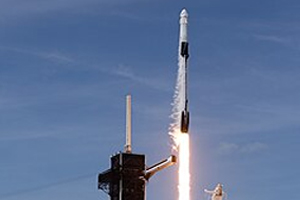
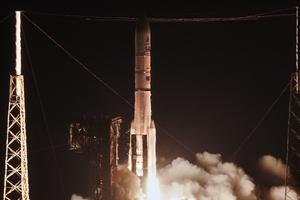
29 Starlink satellites to LEO for space-based internet 1st stage, called Booster B1083, is scheduled to land on autonomous spaceport drone ship (ASDS) named Just Read The Instructions (JRTI) and has had 14 previous successful launches and landings.
Canadian Space Agency (CSA) will hold a virtual media briefing to present four new Canadian scientific studies that are being conducted aboard the International Space Station (ISS). CSA astronaut Joshua Kutryk, who will be the next Canadian to go to the ISS, will talk about the concrete benefits of these studies […]
Sharing insights into space defense strategies and government-commercial collaboration. At the Computer Science Museum, 1401 Shoreline Blvd, Mountain View CA, and in conjunction with Satellite Innovation on October 28-29.
Presentation by Lingzhi Sun of University of Hawaii: Remotely exploring the interior of the Moon. Join with link here, scroll to today's seminar: https://sservi.nasa.gov/casa-moon-seminar-series Hosted by CASA Moon, SSERVI, Institute of Meteoritics at UNM, University of New Mexico Grand Challenge, Lunar and Planetary Institute (LPI) and RASSLE (Research Activities Supporting […]
The "Women and Space" International Symposium is a series of conferences organized by the Chinese Society of Astronautics. It aims to build a dialogue platform for women in aerospace, deepen international scientific and technological cooperation, and give full play to the key role of female scientific and technological talents in […]
4:30 pm - Guests start driving to Hale Pohaku; 4:45 - 5:45 pm - Lecture; 5:58 pm - Sunset; 6:30 - 8:00 pm - Lunar Viewing Directors from the International Lunar Observatory Association (ILOA) will give a presentation on the series of Astronomy Moon Missions they are advancing - from […]
Awards include those named in honor of Neil Armstrong, Sally Ride, Carl Sagan, Patti Grace Smith, Dick Brouwer and John F. Kennedy, awards for space entrepreneurship, life sciences, technology and flight, and for advancement of international cooperation, et al. Nominations are also accepted for AAS Fellows.
For event to be held Dec 3-4, 2025 in Turin, Italy. Moon Village Association (MVA) is a non-governmental organization that promotes international collaboration for the development of lunar exploration and utilization. The 9th Global Moon Village Workshop & Symposium will be hosted by the Italian Association of Aeronautics and Astronautics (AIDAA), alongside the 28th AIDAA […]
2025 LSIC Fall Meeting will focus on mission-driven technology guiding us to the Moon. Through the years, our community has planned and executed, and now it's time to thrive! This Fall will be valuable to learn directly from core infrastructure technology providers, technologies in the pipeline for future missions, risk […]
Shenzhou-21 crew member names likely to be announced the day prior to launch. After Shenzhou-21 three members arrive at Tiangong Space Station on this 10th crewed flight, Shenzhou-20 three-member crew will take 3-7 days to orient to the new arrivals before returning to Earth, possibly on November 5. China has […]
Nominations for individuals or teams to receive the inaugural prize will be accepted beginning in August through Nov 1, 2025; Prize recipients to be announced on or before July 20, 2026.
Today marks 25 full years / start to 26th year of continuous Human occupation of ISS; first component Zarya launched Nov 20, 1998, occupation began Nov 2, 2000.
Standard Time (USA): Change clocks back 1 hour from Daylight Saving to Standard Time; does not include Hawai’i, Arizona (except the Navajo Nation), American Samoa, Guam, Northern Mariana Islands, Puerto Rico or U.S. Virgin Islands.
In conjunction with University of Central Florida Inaugural Space Week: November 5-6 — The Economist's 3rd Space Economy Summit; November 7 — UCF 2nd Space Symposium
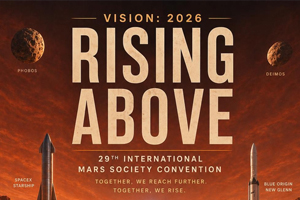
At the University of Southern California, the world's largest gathering dedicated to human Mars exploration. For nearly three decades, the International Mars Society Convention...
NASA spacecraft surpasses another full year in orbit around Mars today, holds record for longest-surviving continually active spacecraft in orbit around a planet other...
At the Spokane Convention Center. The meeting will have a broad scope, with a wide-ranging program of science and workforce topics, and celebrating planetary...
Convene, connect, and collaborate at the 19th annual von Braun Space Exploration Symposium! This year’s event will spotlight how bold ideas, emerging technologies, and...
Themes include: Space & the Arctic; Space & AI; Space & International Collaboration. There is a Student Session, a Technical Session, a Frontier Session,...
Oslo Spaceport Norway offers monthly a knowledgeable speaker and opportunity for networking, 17:00-20:00 local time; free entry but registration required. Ground Control is for...
45 satellites to launch for Amazon Leo, formerly named Project Kuiper. This LEO mega constellation will offer broadband internet access with 3,276 satellites.
Occurring 31 October from 09:00-11:00 local time (16:00-18:00 HST, 19:00-21:00 PDT, 22:00-24:00 EDT on 30 October), this Galaxy Forum will be in hybrid format...
Originally planned around this date for Wenchang, China -- TBC (to be confirmed); As the only professional association for astronauts, ASE supports the advancement of...
Coordinating Division Division C Education, Outreach and Heritage The IAU Symposium on Innovative Research and Techniques in Astronomy Communication will take place from November...
Change clocks back 1 hour from Daylight Saving to Standard Time; does not include Hawai’i, Arizona (except the Navajo Nation), American Samoa, Guam, Northern...
ESWW is the main annual event in the European Space Weather and Space Climate calendar. It is an international meeting organised annually within the...
IAU Symposium: IAUS409 - A Journey Towards Effective Astronomy Communication; online and at National Astronomical Observatory of Japan, 2-21-2 Osawa Mitaka, Tokyo. Topics include:...
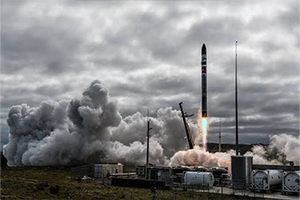
Launch Complex 1, ~39°S, Mahia Peninsula, New Zealand
iQPS Launch 9, an Earth observation satellite with Synthetic aperture radar for Japan-based imaging company iQPS, to launch on "The Sea God Surveys" mission...
 International Space Station, ~415-km LEO: Expedition 73 seven-member crew deploy from the ISS Kibo module 3 CubeSats—YOTSUBA-KULOVER, e-kagaku-1, and BOTAN—shoebox-sized satellites built by Japanese universities and students to study auroral activity and space weather; crew are speaking with children in Terre Haute IN, USA via Amateur Radio, and 20 youth have been selected to ask questions.
 Lunar News: Weekly lunar advisories [coming soon]
 Near-Earth Objects Close Approaches – Tue Oct 28: Apollo Asteroid 2025 UQ1 (0.026 AU); Wed Oct 29: Apollo Asteroid 2022 UT14 (0.052 AU); Sun Nov 2: Apollo Asteroid 2025 TP11 (0.030 AU)