2017 USA Space Program and the Moon, Apollo@50, Juno@Jupiter – Galaxy Forum USA Inaugurates Spacemonth July 2016
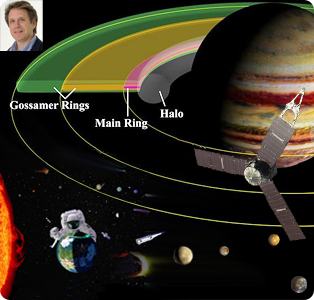
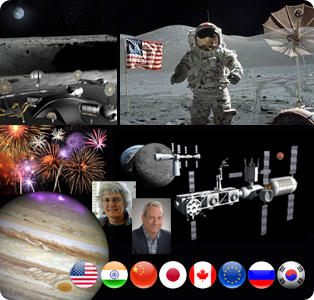
Space Age Publishing Company and International Lunar Observatory Association host Galaxy Forum USA in Santa Clara, California on Saturday July 2, to start the July 4th weekend and Spacemonth 2016. Bruce Pittman, Chief Systems Engineer, NASA Ames will talk about USA Space Program direction in 2017 and future goals in light of 2019 Apollo 11 50th Observation. A Jupiter presentation by Professor Imke de Pater of UC Berkeley Astronomy Department celebrates NASA Juno spacecraft arrival. Steve Durst of SPC / ILOA will provide introductions and welcoming remarks, and make the case for putting human Moon missions and Jupiter back into the American space program with consideration for 21st Century Solar System Complete. The incremental, low-cost and low-risk Evolvable Lunar Architecture (ELA) study partly funded by NASA and published July 2015 by Charles Miller of NexGen Space, is designed to leverage commercial space capabilities and public-private-partnerships. It projects America could lead a return of humans to the Moon surface within 5-7 years at an estimated total cost of US$10B (+/-30%) via development of 2 independent competing commercial service providers. This range of projections parallels similarly abbreviated ELA (Early Lunar Access) study by General Dynamics in 1992-93 which projected $5-10B for a 2-3 week human sojourn, additional expeditions about $2B each, further cost savings if ESA were partner. It is clear now, as ever, that a new American initiated program to return humans to the Moon should be both international and commercial, open to participation of India, China, Japan, Canada, Europe, Russia, Korea and others. (Image Credit: NASA, NexGen Space LLC, A. Nesterova, UC Berkeley, FreeFlagIcons.com)
MONDAY
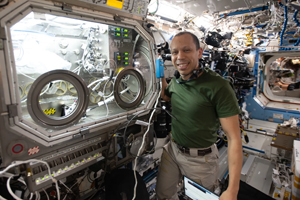
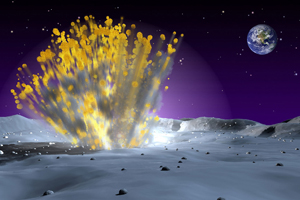
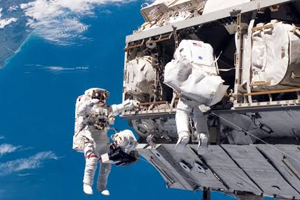
Jul 4 — ISS, LEO: Expedition 48 preparing for upcoming U.S. EVA-36, monitoring micrometeoroid impacts on Station, maintaining Ultrasonic Background Noise Test hardware which will help identify sources of noise to aid in development of leak locating system, working with 3D Printer, to welcome 3 new crew members Ivanishin, Rubins, Onishi.
Jul 4 — Chang’e-3 Lander & Yutu Rover, Guang Han Gong, Sinus Iridum / Mare Imbrium, 44.12°N 19.51°W, Moon Surface: Spacecraft in Lunar Night 32, expected to wake July 15, has funding to continue science observations until at least Dec 2016, will encounter penumbral Lunar eclipse Sep 16.
Jul 4 — Mars Express, Mars Orbit: ESA Spacecraft to fly by Phobos today at ~350 km.
Jul 4 — Juno, Jupiter System: Spacecraft scheduled to arrive at Jupiter & complete Orbital Insertion phase; spacecraft will have traveled about 18.7 AU (2.8B km); estimated arrival at 17:18 PDT; NASA media live coverage available; craft to orbit Jupiter 37 times, come within 4,300 km of cloud tops, one-way transmission signal to Earth is 48 minutes.
Jul 4 — Blue Origin, Kent WA: NewSpace company 69,677 square-meter facility at Exploration Park, KSC Florida under construction – to be completed Dec 2017, will be site at which orbital rocket will be developed, tested & launched; BE-4 rocket engine first flight expected NET 2019.
Jul 4 — Axiom Space LLC, Houston TX: Planning to develop private space station in LEO, discussing potential study with NASA to add commercial module to ISS around 2020 – unlikely to use inflatable technologies, Michael Suffrendini is company President, Kam Ghaffarian Chief Executive.
Jul 4 — Interstellar Technologies Inc.,Taiki, Hokkaido, Japan: Working on building the world’s smallest rockets for sending smallsats into orbit, company 1st sounding rocket launch planned for this summer; CEO Takahiro Inagawa
for terrestrial events in local time unless noted.
= All times for international terrestrial events in local time unless noted.
= All times for space events, and…
= All times for international space / astro events in Hawaii Standard Time unless noted. Add 10 hours to obtain UT (‘Universal Time;’ Greenwich, England).
Juno July 4 Jupiter Arrival May Spark 21st Century Human Jupiter, Solar System Missions
Juno will reach record-breaking speeds of more than 250,000 kph relative to Earth as it approaches the North Pole of Jupiter July 4 at 14:18 HST, after a 2.8-billion km journey. The second spacecraft to orbit Jupiter, US$1.1 billion Juno mission with 9 science instruments will conduct a 35-minute speed-reduction engine burn and relay a 3-second beep back to Earth. It is scheduled to conduct 37 passes, coming within 4,300 km over the poles and as far as 1,880,000 km, over the next 20 months. Two 53-day orbits will bring Juno to a period reduction maneuver on October 19, refining its trajectory over 23 days to a 14-day orbit for science operations, ground-breaking discoveries until February 20, 2018, when it will make a dramatic deorbit burn. Jupiter is central to complete Solar System exploration and understanding with its extreme gravity 2.5 times that of Earth (254%), radiation belts extending 7M km toward the Sun and almost to Saturn orbit, Solar wind speeds up to 400 km/s, 4 main ring structures and a shrinking Great Red Spot. Of the 67 known moons, the 4 Galilean moons would be considered Planets if in direct orbit of Sun. The SPC Jupiter, Solar System Human Mission Design Project 2013-2017 calls on the 2017 U.S. Administration to emphasize 21st Century planning Ad Astra with the arrival of Juno at Jupiter, and Humans to the Jupiter system in the 2030-2050 timeframe. (Pictured: Scott Bolton Juno PI, SwRI; Image Credit: NASA, JPL, Cornell, Jane Schwadron)
Jul 4-16 — Nordic Network of Astrobiology, European Astrobiology Campus, Reykjavik, Iceland:Biosignatures and the Search for Life on Mars; summer school covering search for life on early Earth, below Earth surface & on Mars.
Jul 4— Earth: At aphelion (distance 1.01675 AU / 152,104,082 km from Sun), 06:00.
Jul 4 — Moon: New Moon, 01:11; 14.2° S of Castor, 15:00; 5.1° S of Venus, 17:00; 10.6° S of Pollux, 20:00.
Jul 1-7 — ESA,Sardinia, Italy: 2016 CAVES (Cooperative Adventure for Valuing and Exercising); astronaut training 800 meters underground in rocky caves, six member crew consists of Astronauts Pedro Duque (ESA), Jessica Meir & Richard Arnold (NASA), Aki Hoshide (JAXA), Ye Guangfu (CNSA), Sergei Korsakov (Roscosmos).
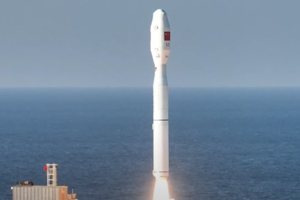
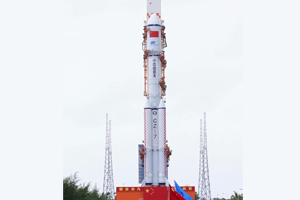
NET Jul 5 — CNSA, Launch Long March 2D / Quantum Science Satellite, Jiuquan, China: Long March 2D to launch Quantum Science Satellite, the first mission to test ultra-secure quantum communications in orbit; Physicist Pan Jian-Wei from University of Science and Technology is leading project.
Jul 5 — Juno, Jupiter Orbit: Capture Orbit phase to begin today, will last 106 days.
Jul 6/7 — RSA, Launch Soyuz TMA-20M (Soyuz-MS) / ISS 47S, Baikonur Cosmodrome, Kazakhstan: Expedition 48/49 members Anatoli Ivanishin of RSA, Takuya Onishi of JAXA, Kathleen Rubins of NASA to launch to ISS; 21:36 EDT July 6, 07:36 local time July 7.
Jul 9 — Asteroid 4923 Clarke: Near-Earth flyby (0.719 AU).
Jul 9 — Mercury: 8.5° S of Castor, 04:00.
SUNDAY
Jul 10 — Department of Science and Technology of the Philippines, Ministry of Education, Culture, Sports, Science and Technology of Japan (MEXT), JAXA, Online / Manila, Philippines:Applications Due for APRSAF-23 Side Events; to be held Nov 15-18.
Jul 10-12 — Commonwealth Scientific and Industrial Research Organisation (CSIRO), Curtin University, Perth, Australia: 2016 Australasian Astrobiology Meeting.
Includes ~150 meetings covering the fields of COSPAR Scientific Commissions / Panels / Task Groups, such as SC B: The Earth-Moon System, Planets, and...
From 02 to 07 August 2026, a few thousand geoscientists across diverse disciplines will gather at the 23rd annual meeting of the Asia Oceania Geosciences...
2:45 pm EDT from Johnson Space Center, NASA astronaut Chris Williams will recap his recent eight-month mission aboard the International Space Station. Williams returned to...
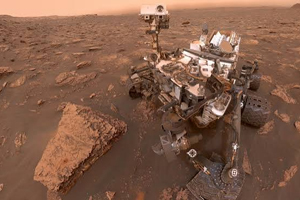
NASA Curiosity (Mars Science Laboratory) rover surpasses another full year of operations on Mars surface today; launched Nov 26, 2011 – landed Aug 5,...
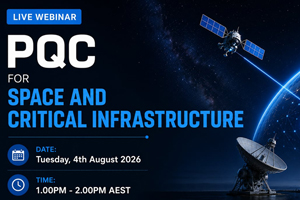
Virtual Series 2026 will offer deeper conversations on why PQC matters and the practical steps businesses should be taking; starts 1:00 pm AEST. Featuring:...
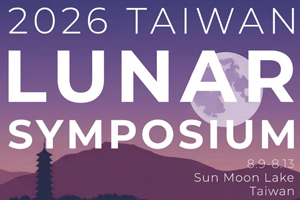
This international lunar science meeting has two objectives: to provide a platform for leading experts to review recent advances across lunar research, from the...
At CSIR International Convention Centre. Key topics are Earth Observation, Developing Space Tourism, Space Supply Manufacturing. Cultural tours are offered.
Participants will receive theoretical and hands-on training in electron imaging and X-ray spectroscopy for application to planetary samples. This training opportunity is targeted at...
"Leading Australia’s Space Future for Our Strategic Advantage". Southern Space 2026 brings together decision-makers who set the direction for Australia’s space sector. It is...

 = All times
 = All times for international terrestrial events in local time unless noted.
 = All times for space events, and…
 = All times for international space / astro events in Hawaii Standard Time unless noted. Add 10 hours to obtain UT (‘Universal Time;’ Greenwich, England).