Reclaiming Human Presence on Moon; The Greatest Advance in USA / Human History
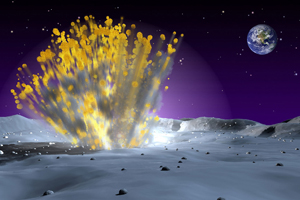
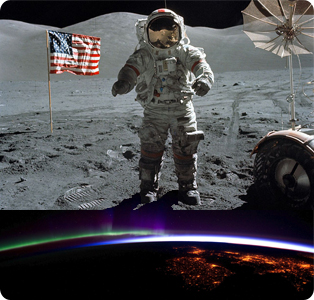
Human missions to the Moon for a sustainable, international and commercial presence on our closest celestial neighbor should be of high priority for the new 2017 USA administration. The technology and resources to achieve a permanently crewed lunar research station exist today. The justifications are valid, from science and education to innovation and economics, to the very survival of our civilization. Various experts have consistently projected that 2-4 astronauts could be on the Moon’s surface within 5-7 years for about US$10B. Spaceweek 2016 marks 47th observation of Apollo 11 and 1st Humans on Moon, as well as 40th observation of Viking 1 and 1st robotic landing on another planet. NASA Solar System Exploration Research Virtual Institute at Ames Research Center in Moffett Field CA is hosting the 3rd International Conference on the Exploration of Phobos and Deimos July 18-19 and the 8th Lunar & Small Bodies Graduate Conference Jul 19 ahead of the Exploration Science Forum (ESF 2016) Jul 20-22. Another ESF-adjacent event is the Lunar Commercialization Workshop (Moon Village) at Rainbow Mansion in Cupertino Jul 19. WayPaver Foundation is launching their 2017 granting program to foster sustainable Lunar Development at an event in nearby Palo Alto Jul 20. Kennedy Space Center Apollo 11 Anniversary Gala on Jul 23 features legendary Moon-walker Buzz Aldrin and other special guests. (Image Credit: NASA)
MONDAY
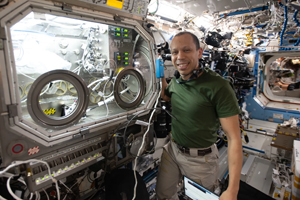
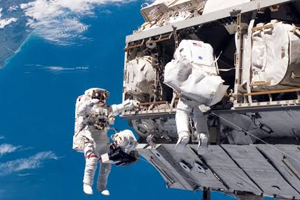
Jul 18 — ISS, LEO: Expedition 48 six-member crew scheduled to facilitate docking of 2 cargo ships, transfer cargo & take inventory, Astronaut Takuya Onishi working with JAXA on Tanabata ‘Star Festival’ Redesign Project, Kate Rubins to perform DNA sequencing of genes; researchers developing radio monitor to track thousands of radio-equipped animals in real time from ISS in 2017.
Jul 18 — Astrosat, 650-km Equatorial LEO: India 5-instrument multi-wavelength observatory studying X-ray binaries, Milky Way center in visible (320–550 nanometer), near UV (200–300 nm), far UV (130–180 nm), soft X-ray (0.3–8 keV & 2–10 keV), hard X-ray (3–80 keV & 10–150 keV); 10 out 14 orbits per day are visible to ground station in Bengaluru allowing for full data download.
Jul 18 — Cassini, Saturn Orbit: Traveling at ~35,400 kph relative to Saturn in a period of 23.9 days inclined 43° from planet’s equatorial plane, recent telemetry data downlinked & captured at rates up to 124,426 bits per second; Titan Winged Aerobot drone in early-stages of technology study; Saturn comprises 21% of Solar System planetary mass.
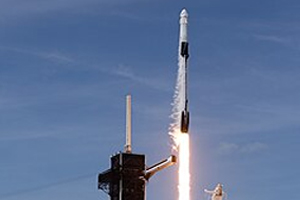
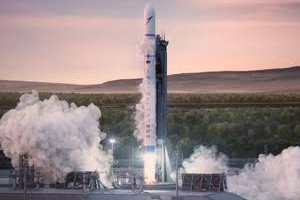
Jul 18 — SpaceX, Launch Falcon 9 / Dragon CRS 9,Cape Canaveral AFS FL: Falcon 9 rocket to launch 11th Dragon spacecraft on 9th operational cargo delivery mission to ISS 00:45 EDT; carrying JAXA animal experiments & IDA-2 docking adapter; rendezvous planned for Jul 20, will attempt to land 1st-stage at Cape Canaveral Landing Zone 1, second 1st-stage landing attempted on solid ground.
Jul 18 — Moon Express, Moffett Field CA: NewSpace company investing ~US$2M to upgrade KSC facilities to support low-altitude lander flight tests, expanding to Launch Complexes 17 & 18 (already operating at Complex 36), testing MX-1E micro-lander; FAA Lunar Mission Approval still pending.
Jul 18 — Goonhilly Earth Station Ltd, Cornwall, United Kingdom: Partnering with Surrey Satellite Technology to build Lunar Pathfinder craft with payload capacity of 80 kg to carry customer CubeSats to Lunar orbit and set up relay link back to Earth via Goonhilly radiocommunication station; founder Ian Jones.
= All times
for terrestrial events in local time unless noted.
= All times for international terrestrial events in local time unless noted.
= All times for space events, and…
= All times for international space / astro events in Hawaii Standard Time unless noted. Add 10 hours to obtain UT (‘Universal Time;’ Greenwich, England).
Jupiter, Saturn, Solar System Complete: Human Exploration Missions in the 21st Century
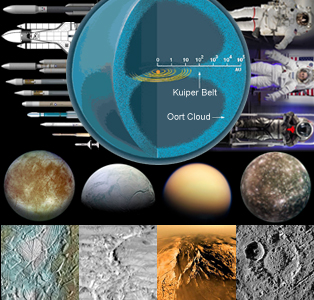
Robotic exploration, research and preparation are necessary steps for exploring a celestial body, but the greatest progress and most exciting opportunities are led by Human missions with in-situ critical thinking, flexibility and problem-solving abilities. The technologies and engineering crucial to successful and safe crewed missions beyond the Inner Solar System / Main Asteroid Belt (2.2-3.2 AU) will rocket humans toward 21st Century scientific and social achievements on Earth and Beyond. Many international space programs are focusing on Mars (1.38 AU) for the 2030s, perhaps with Lunar missions and outposts in the 2020s. More catalytic might be a prioritized path to Jupiter (5.2 AU) around the 2040s, Saturn (9.6 AU) and the Kuiper Belt (30-50 AU) before the end of this Century. Jupiter constitutes more than 70% of the SS planetary mass and is orbited by moon Io, the most geologically active object in the SS (400 active volcanoes). Europa, Ganymede, Callisto, Enceladus and Titan are teeming with potential for unique chemistry and insights into SS and biological evolution. Callisto is one of the oldest and most heavily cratered surfaces in the SS, tidally locked and orbits outside of Jupiter’s main radiation belt (~1,883,000 km). Nine missions are contributing to the data for Jupiter, 4 for Saturn, 2 for interstellar space, and only 1 for Uranus, Neptune, Pluto and Kuiper Belt. Two additional missions JUICE and Europa Clipper are planning to launch in 2022 with possible nanosats / impactors / landers. (Image Credit: NASA, JPL, Caltech, SSI, J. Major, University of Arizona, kosmoved.ru, Kapteyn Astronomical Institute, Westerkamp & Loenen, Tim Trott)
Jul 18 — Breakthrough Initiatives,International Locations: Breakthrough Starshot US$100M project developing micro-memory chip sized craft with sensors, data transmission laser & camera to fly to Alpha Centauri at 20% of the speed of light (215M kph); Breakthrough Listen $100M project aims to identify ET communications; founded by Yuri Milner & Stephen Hawking.
Jul 12-19 — NASA, Kilauea Volcano & Mauna Loa HI: 2016 NASA Planetary Volcanology Workshop; to study volcanic features analogous to those on Mars recently imaged by Mars orbiters, landers, instruments.
Jul 19 — Members of International Lunar Exploration Working Group, Deep Space Industries, Stanford Sustainable Banking Initiative, Cupertino CA: Lunar Commercialization Workshop (Moon Village); at Rainbow Mansion.
Jul 19, 20 — Langley Research Center, NASA, Hampton VA: Viking 40th anniversary media events: Viking 1 history discussion 14:00 EDT Jul 19 (live coverage available), and Viking Symposium “NASA’s First Soft Landing to Humans on Mars” with 20 speakers including Andy Weir & Steve Jurczyk, 08:00-17:00 Jul 20 at Langley.
Jul 19 — Moon: Full (Buck / Thunder Moon), 12:57.
WEDNESDAY
Jul 20 — ISS, Dragon CRS 9 Rendezvous & Docking,LEO: SpaceX Dragon spacecraft to arrive at ISS at 11:00 UT, live coverage available.
Jul 20 — Apollo 11 47th Observation, Nationwide USA / Global: First Human mission to land on Moon in 1969; 1st steps by humans on another world taken by Commander Neil Armstrong and Lunar Module Pilot Buzz Aldrin.
Jul 20 — Viking 1 Mars Lander 40th Observation, Nationwide USA / Global: First spacecraft to successfully land on another planet; originally scheduled for July 4, landing was delayed until this day in 1976 due to rough landing site.
Jul 20-22 — Solar System Exploration Research Virtual Institute (SSERVI), NASA, Moffett Field CA: 3rd Exploration Science Forum (ESF 2016); at Ames Research Center.
Jul 21 — Canadian Space Commerce Association, Toronto, Ontario, Canada: CSCA Bi-monthly Meeting; Postponed to Jul 28.
Jul 21-23 — British Interplanetary Society, Reaction Engines, Commercial Technologies, Airborne Engineering, Surrey Satellite Technology,Godalming, United Kingdom: British Interplanetary Society Conference; with more than 30 speakers including Richard Varvill, Mark Sims, Ian Wright, Kelvin Long.
Jul 22 — Cassini OTM-454,Saturn Orbit: Spacecraft conducts Orbital Trim Maneuver #454 today.
Jul 22 — Technion Israel Institute of Technology, International Space University, SpaceUp,Haifa, Israel: SpaceUp Haifa; space unconference, where participants decide the topics, schedule, and structure of the event; held during ISU SSP 2016.
Jul 22 — The Space Show, Online / Tiburon CA: Dr. David Livingston talks with Richard Rocket of NewSpace Global.
Jul 22-24 — Institute for Modeling Plasma, Atmospheres and Cosmic Dust, Boulder CO: 2016 Dusty Visions Workshop; focusing on current and future cosmic dust research.
Includes ~150 meetings covering the fields of COSPAR Scientific Commissions / Panels / Task Groups, such as SC B: The Earth-Moon System, Planets, and...
From 02 to 07 August 2026, a few thousand geoscientists across diverse disciplines will gather at the 23rd annual meeting of the Asia Oceania Geosciences...
2:45 pm EDT from Johnson Space Center, NASA astronaut Chris Williams will recap his recent eight-month mission aboard the International Space Station. Williams returned to...
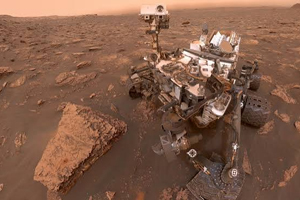
NASA Curiosity (Mars Science Laboratory) rover surpasses another full year of operations on Mars surface today; launched Nov 26, 2011 – landed Aug 5,...
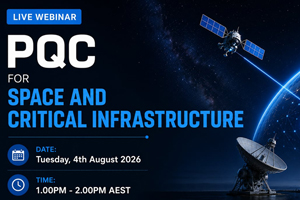
Virtual Series 2026 will offer deeper conversations on why PQC matters and the practical steps businesses should be taking; starts 1:00 pm AEST. Featuring:...
This international lunar science meeting has two objectives: to provide a platform for leading experts to review recent advances across lunar research, from the...
At CSIR International Convention Centre. Key topics are Earth Observation, Developing Space Tourism, Space Supply Manufacturing. Cultural tours are offered.
Participants will receive theoretical and hands-on training in electron imaging and X-ray spectroscopy for application to planetary samples. This training opportunity is targeted at...
"Leading Australia’s Space Future for Our Strategic Advantage". Southern Space 2026 brings together decision-makers who set the direction for Australia’s space sector. It is...
 = All times
 = All times for international terrestrial events in local time unless noted.
 = All times for space events, and…
 = All times for international space / astro events in Hawaii Standard Time unless noted. Add 10 hours to obtain UT (‘Universal Time;’ Greenwich, England).