India GSLV Launch of Insat 3DR Satellite to See Rocket Enter Full-Service
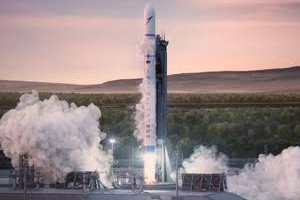
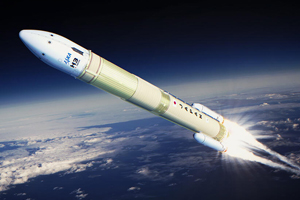
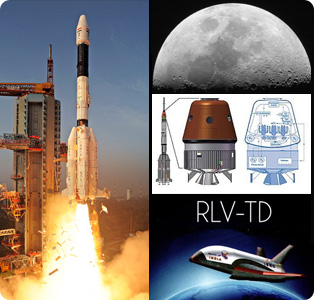
The India Space Research Organization is set to launch a GSLV Mark II on the F05 mission from Satish Dhawan Space Center carrying the India National Satellite 3D Repeat geostationary weather satellite on September 10 (reset from Aug 28). It is hoped to be the 3rd straight success for the medium-lift Geostationary Satellite Launch System, with its indigenously-built cryogenic 3rd stage engine representing a considerable technological achievement and culminating 20 years of rocketry development for one of the six major spacefaring powers. The GSLV Mark II system is essential for a number of primary aspirations of ISRO, including the 2017 Chandrayaan-2 Moon landing mission and future Human Spaceflight development. If it can match the reliability and commercial success of the smaller PSLV rocket series that has proven to be a workhorse of the India space age it could significantly broaden the market for affordable access to space worldwide. Insat 3DR is the 6th flight unit of the Insat-3 series of meteorological satellites and is intended for 35,786-km Geostationary orbit at longitude 74° E to provide data from a 6-channel imager and 19-channel sounder. It will be operated by the Indian National Satellite System. Additional functions include search and rescue operation support and relay services for terrestrial data collection platforms. (Image Credit: ISRO)
MONDAY
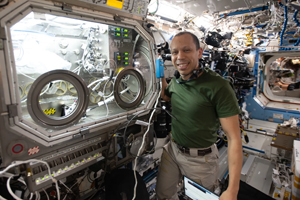
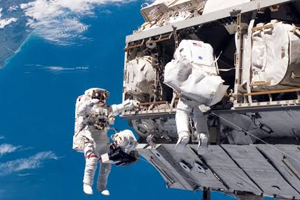
Aug 29 — ISS, LEO: Expedition 48 crew preparing for U.S. EVA 37 planned for Thursday, working with heart function, plant growth, mouse epigenetics & student experiments; Williams, Ovchinin, Skripochka performing Lower Body Negative Pressure exercises to prepare for return to Earth Sep 6, Williams will have a record breaking total of 534 cumulative days in space.
Aug 29 — Chang’e-3 Lander & Yutu Rover,Guang Han Gong, Sinus Iridum / Mare Imbrium, 44.12°N 19.51°W, Moon Surface: China spacecraft in Lunar Night 34 approaching 3rd full year on Moon; Chang’e-5T1 in circular Moon orbit continues conducting remote sensing & imaging of surface for future lunar missions.
Aug 29 — Juno, Jupiter Orbit: NASA craft more than half-way through 1st orbit of Jupiter, will be heading into Period Reduction Phase to enter planned 14-day period Science Orbit starting Nov 16; has traveled more than 2.903 billion km.
Aug 29 — SpaceX, Hawthorne CA: NewSpace company displaying its first successfully recovered booster outside of HQ, planning to construct new building at Cape Canaveral, recovering / unloading ISS gear & experiments from Dragon CRS-9 landing, CEO Elon Musk plans to reveal Mars settlement plans at 67th IAC Sep 27.
Aug 29 — Breakthrough Initiatives, International Locations: Founded by Yuri Milner & Stephen Hawking, project Breakthrough Starshot US$100M proposal to develop spacecraft fleet able to fly to Alpha Centauri at 20% the speed of light (215 million km/h) may gain additional support as ESO & other observatories find clear evidence during Pale Red Dot Campaign of potentially habitable planet ‘Proxima b’ orbiting Proxima Centauri.
Aug 29 — Team Indus, Bengaluru, India: GLXP Team with 85 engineers & 15 former ISRO scientists sponsoring Lab2Moon competition for young adults to fly 250-gram experiment to ‘catalyze humankind’s evolution into a sustainable Multi World Species’ on developing lunar lander; hoping to use PSLV for launch for 30-day journey to Moon, 15-day surface operations.
= All times
for terrestrial events in local time unless noted.
= All times for international terrestrial events in local time unless noted.
= All times for space events, and…
= All times for international space / astro events in Hawaii Standard Time unless noted. Add 10 hours to obtain UT (‘Universal Time;’ Greenwich, England).
Barringer Meteor Crater Impacting Lunar, Planetary Students
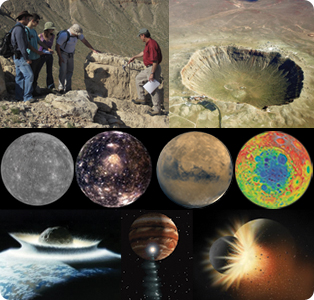
The Barringer Meteor Crater Field Training and Research Program is being held September 3-11 in Arizona, 71 km east of Flagstaff / Lowell Observatory. David Kring, Senior Staff Scientist for the Lunar Exploration Initiative, will be the instructor for graduate college students in geology and planetary science programs to learn about impact cratering processes, work on research projects and explore the rugged, rocky terrain at Barringer crater which is 1.186 km in diameter, 170 meters deep and surrounded by a rim that rises 45 meters. The crater is thought to have been formed by a 50-meter diameter, nickel-iron meteorite striking with an impact energy of ~10 megatons over 50,000 years ago. It is the first officially recognized crater formed from a natural celestial body. Daniel Barringer argued the crater was formed by an impact and spent 27 years starting in 1903 looking for a large deposit of meteoric iron. Eugene Shoemaker confirmed Barringer’s hypothesis in 1960, co-discovered Comet Shoemaker–Levy 9 which impacted Jupiter in 1994, and provided support to Lunar Ranger and Apollo Missions. Impact events are linked to the formation of the Solar System and exosolar systems, changes in atmospheres, and delivery of minerals, chemicals and the building blocks of life. This training program hosted by the Center for Lunar Science and Exploration of Lunar and Planetary Institute alternates between Barringer Crater, Sudbury Impact Structure in Canada and Zuni-Bandera Volcanic Field in New Mexico to train new generations of explorers for the Moon and beyond. (Image Credit: S. Torgerson, LPI Center for Lunar Science and Exploration, J. Garber, NASA, Viking, USGS, D. Davis, JPL)
Aug 29 — Hawaii Space Exploration Analog and Simulation (HI-SEAS), Kailua-Kona HI: HI-SEAS 4 six-member ‘Lavanaut’ crew to discuss mission, individual research and experience living on Mauna Loa for 1 year; at Kona Science Cafe, Natural Energy Laboratory, 18:00-20:00.
Aug 29 — Apollo Asteroid 2016 PA40: Near-Earth flyby (0.037 AU).
Continued from…
Aug 7 – Sep 30 — Airbus, Perlan Project, Teachers in Space,El Calafate, Argentina: Teachers in Space Ground Crew Education Program; team members will fly experiments at 27,500-meter altitudes in air as thin as Mars atmosphere, verify operations and retrieve data for posting to internet.
Aug 27 – Sep 4 — IGC Foundation, UNESCO, Exxaro, et al, Cape Town, South Africa: 35th International Geological Congress; at Cape Town International Convention Centre.
Aug 30 — Van Allen Probes,LEO: Spacecraft begin 5th year in space today, launched 2012; adding to the understanding of Earth radiation belt environment and its variability.
Aug 31 — Australia Telescope National Facility, CSIRO, Cape Town, South Africa: Stuart Ryder Colloquium: A Night on SOFIA; Juan Madrid of Australian Astronomical Observatory, at Marsfield Lecture Theatre, 15:00.
Aug 31 – Sep 2 — National Science Foundation, Northwestern University Center for Interdisciplinary Exploration & Research in Astrophysics, Evanston IL: Fellows at the Frontiers 2016; top postdoctoral researchers speaking on astronomy topics and beyond.
Aug 31 — Aurigid Meteor Shower Peak: Favorable due to New Moon, 6 or more meteors per hour expected traveling at 66 km/s and many very bright.
Aug 31 — Moon: 1.6° SSW of Regulus, 06:00; New Moon, 23:03.
Aug 31 – Sep 1 — Annular Eclipse of Sun: Annular solar eclipses have a “ring of fire” as Moon moves in front of Sun but does not cover Sun’s discs completely; partial eclipse begins 20:13, annular eclipse begins 21:19, greatest eclipse at 23:07; ends 02:01 Sep 1.
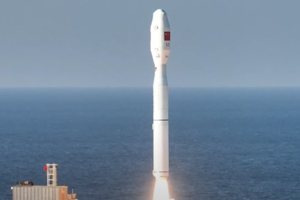
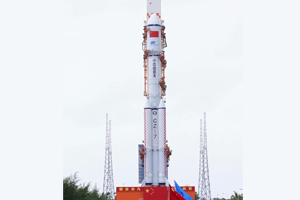
NET Sep — CNSA, Launch Long March 5, Wenchang Satellite Launch Center, Hainan Island, China (19° N): China Long March 5 rocket maiden flight planned between Sep-Oct.
Sep 1 — ISS, U.S. EVA 37, LEO: Williams and Rubins to perform spacewalk starting 12:05 pm UT to retract a Thermal Radiator and Install External Cameras, live coverage available.
Sep 1 — Deep Space, KBO 2014 MU69 Trajectory: Diverse terrain of dwarf planet Pluto and new views of moons Hydra and Nix being studied from New Horizons Pluto flyby data of which more than 80% has been collected.
Sep 1-12 — Rencontres du Vietnam, Quy Nhon University, French National Center for Scientific Research (CNRS), Quy Nhon, Vietnam:22nd Vietnam School of Physics (VSOP-22).
Sep 1 — Apollo Asteroid 357024 (1999 YR14): Near-Earth flyby (0.056 AU).
Sep 1 — Apollo Asteroid 2016 PT38: Near-Earth flyby (0.080 AU).
FRIDAY
Sep 2-4 — The Observatory Science Centre, Hailsham, United Kingdom:Herstmonceux Astronomy Festival; featuring a NASA Scientist, rocket launches, telescope observing, lectures, planetarium shows.
Sep 2— Moon: 5.7° NNE of Mercury, 11:00; 0.36° NNE of Jupiter, 12:00.
Sep 2 — Neptune: At opposition, 07:00.
SATURDAY
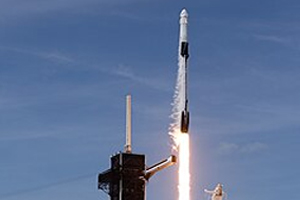
Sep 3 — SpaceX, Launch Falcon 9 / Amos 6, Cape Canaveral AFS FL: Falcon 9 rocket to launch Amos 6 communications / broadcast satellite for Spacecom of Israel.
Sep 3 — Apollo Asteroid 2016 PT8: Near-Earth flyby (0.067 AU).
SUNDAY
Sep 4 — Smithsonian Network, Broadcast / Washington DC: Building Star Trek; celebrating 50th anniversary of Star Trek with a two-hour special discussing lasting influence original series has had on science & technology, 20:00.
Sep 4-5 — G20 Summit, Hangzhou, China:G20 Summit for heads of state or heads of government to discuss international economic cooperation; International Lunar Decade Working Group urges Germany Chancellor Angela Merkel to include space development at G20 Summit in Hamburg, Germany July 2017 as innovative, global strategy for building sustainable, long-term future for humanity.
Sep 4-9 — Solar Physics and Space Plasma Research Centre, The University of Sheffield, Sheffield, United Kingdom:Advanced Summer School in Solar System Physics; advanced introduction to Sun-Earth system, solar interior and atmosphere structures, Space Weather, planetary and exoplanet magnetospheres, physics of particle acceleration.
Includes ~150 meetings covering the fields of COSPAR Scientific Commissions / Panels / Task Groups, such as SC B: The Earth-Moon System, Planets, and...
From 02 to 07 August 2026, a few thousand geoscientists across diverse disciplines will gather at the 23rd annual meeting of the Asia Oceania Geosciences...
2:45 pm EDT from Johnson Space Center, NASA astronaut Chris Williams will recap his recent eight-month mission aboard the International Space Station. Williams returned to...
NASA Curiosity (Mars Science Laboratory) rover surpasses another full year of operations on Mars surface today; launched Nov 26, 2011 – landed Aug 5,...
Virtual Series 2026 will offer deeper conversations on why PQC matters and the practical steps businesses should be taking; starts 1:00 pm AEST. Featuring:...
This international lunar science meeting has two objectives: to provide a platform for leading experts to review recent advances across lunar research, from the...
At CSIR International Convention Centre. Key topics are Earth Observation, Developing Space Tourism, Space Supply Manufacturing. Cultural tours are offered.
Participants will receive theoretical and hands-on training in electron imaging and X-ray spectroscopy for application to planetary samples. This training opportunity is targeted at...
"Leading Australia’s Space Future for Our Strategic Advantage". Southern Space 2026 brings together decision-makers who set the direction for Australia’s space sector. It is...

 = All times
 = All times for international terrestrial events in local time unless noted.
 = All times for space events, and…
 = All times for international space / astro events in Hawaii Standard Time unless noted. Add 10 hours to obtain UT (‘Universal Time;’ Greenwich, England).