67th IAC to Strengthen International Partnerships, Feature Technology Breakthroughs, Trends, Developments
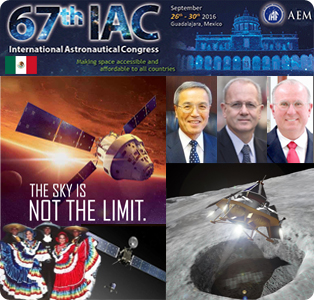
The International Astronautical Federation, IAA, IISL and Mexican Space Agency (AEM) are hosting the 67th International Astronautical Congress with theme ‘Making Space Accessible and Affordable to All Countries’ September 26-30 in Guadalajara, Mexico. Guadalajara is the 2nd most populous metropolitan area in Mexico, after Mexico City. Expecting more than 3,000 participants, there will be 1,753 oral presentations and 377 interactive presentations from representatives of 74 countries, as well as 7 plenary sessions including Heads of Agency, various social events and four 1-hour-long highlight presentations: “Making Humans a Multiplanetary Species” (Elon Musk, SpaceX), “Mars Base Camp” (Wanda Sigur, Dominic Antonelli, Rob Chambers of Lockheed Martin), “The Exploration of Pluto by the New Horizons Mission” (Stamatios Krimigis, Ralph McNutt, Harold Weaver of JHU/APL) and “The Saturn System as a Natural Laboratory to Investigate the Emergence of Biology” (Brent Sherwood of JPL, Jonathan Lunine of Cornell). For the first time, all plenary events and the opening and closing ceremonies are planned to be broadcast live. Events held in conjunction with 67th IAC are the 2nd Mexican Congress in Space Medicine, UN/IAF Workshop, International Programme Committee General Meeting, IAA Academy Day, Educators Professional Development Workshop, IAC Hosts Summit, International Meetings for Members of Parliament, Cross-Cultural Workshop, YP IPMC Workshop and IAF-SUAC International Student Workshop. The 68th IAC will be held in Adelaide, Australia September 25-29, 2017. (Pictured: IAF President Kiyoshi Higuchi, IAF Incoming Director Jean-Yves Le Gall, AEM Director General Francisco Javier Mendieta-Jimenez; Image Credit: IAF, IAC, AEM, ESA, Astrobotic, Max Markwell)
MONDAY
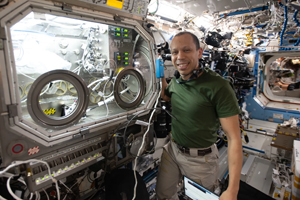
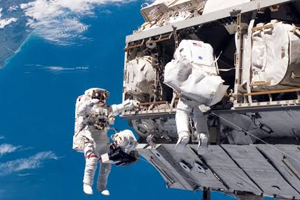
Ongoing… Sep 26 — ISS, LEO: Expedition 49 three-member crew stay at station likely extended until after November 1 when Soyuz MS-02 electrical systems checks finalized and next crew can launch; transferring cargo from Progress 63P & 64P, monitoring BEAM habitat, will work on Group Combustion experiment to explore how flames fed by fuel droplets spread in microgravity.
Sep 26 — Cassini,Saturn System: Will perform 4 more near flybys of Titan and focus on lakes and seas in north before end of mission less than 1 year away; has discovered 10 moons, collected more than 600 GB of data, executed 2.4M commands, taken 379,300 images.
Sep 26 — Ripple Aerospace,Kristiansand, Norway: NewSpace company Sea Serpent booster with aerospike engine to be developed for Sea Launching satellites to LEO, GTO with potential 1st stage reusability in future; startup receiving funds from Innovation Norway, hoping to begin test flights Q1 2017.
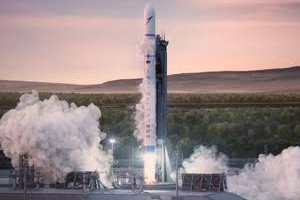
Sep 26 — Rocket Lab,Auckland, New Zealand: Receives approval from NZ government to start commercial space launches with Electron Rocket from Mahia Peninsula, bill to be proposed to parliament covering permanent regulations for launches; company planned to launch MX-1E Lunar lander in 2017 for Moon Express which received U.S. FAA approval for its private Moon mission.
Sep 26 — Planet,San Francisco CA: Working to have 100 Dove satellites in orbit by end of year (currently at 62) to acquire medium-resolution images of entire Earth every day, has offices in USA, Canada, Germany; in past 5 years, the number of operational satellites has risen 40%, current operating number of satellites is 1,419 (UCS Satellite Database).
Sep 26 — ISRO, Launch PSLV / ScatSat 1, Satish Dhawan Space Center, Sriharikota, India: Polar Satellite Launch Vehicle, flying on the PSLV-C35 mission, to launch India 377-kg Scatsat-1 ocean and weather observation satellite with 7 secondary payloads into 2 different orbits: polar/sun-synchronous and polar orbit.
for terrestrial events in local time unless noted.
= All times for international terrestrial events in local time unless noted.
= All times for space events, and…
= All times for international space / astro events in Hawaii Standard Time unless noted. Add 10 hours to obtain UT (‘Universal Time;’ Greenwich, England).
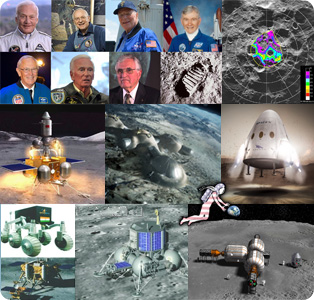
As Earth’s closest neighbor, the Moon is and will continue to be the first stop on our expansion into the Solar System complete, sustaining humanity as a Multi World Species. It is the 5th largest major-planet satellite in the Solar System, and the largest relative to its primary. Luna with gravitational influence, steady cycles and visual prominence in the sky has always been a central theme in human culture. It is also almost 600 times closer to Earth than Mars on average. The next generation of sustainable Human Moon Missions will establish a critical permanent toehold on the ‘8th Continent’ from which to reach further out, to Mars, Jupiter, Saturn systems and beyond. Projections indicate astronauts could be on the lunar surface within 5-7 years for a cost of about US$10B, leading to a permanent industrial base of 4 private-sector astronauts providing 200 metric tons of propellant per year into lunar orbit within another 10-12 years for about $40B. The asset rich Moon South Pole new frontier is the most logical location for future development on the Moon and is already a priority destination for most serious Moon exploration and development initiatives. (Image Credit: Space Age Publishing Company / ILOA, NASA, CNSA, ESA, SpaceX, ISRO, Bigelow)
Sep 15-28 — Mars City Foundation, Mars City Design LLC, University of Southern California, Los Angeles CA: Mars City PowerLab Workshop 2016; two-week Science Retreat for participants to begin tangibly building technology and tools for living on Mars; with Apollo 11 Buzz Aldrin, James Erickson, Madhu Thangavelu, more.
Sep 27 — Dawn, Ceres Orbit: NASA spacecraft enters 10th year in space today, launched Sep 27, 2007; entered orbit around 4 Vesta Jul 16, 2011, reached Ceres orbit March 6, 2015.
Sep 27 — SpaceX, Guadalajara, Mexico: Elon Musk to discuss reveal Mars settlement plans during a keynote entitled “Making Humans a Multiplanetary Species” at 67th IAC, 13:30-14:30.
Sep 28 — Astrosat, 650-km LEO: ISRO first dedicated multi-wavelength space observatory enters 2nd year in space today.
Sep 28-29 — Aethon, Fetch Robotics, Harmonic Drive, Nanotec, et al, San Jose CA: RoboBusiness 2016; including Johnson Space Center Robotics Engineer Kimberly Hambuchen speaking about NASA Space Robotics Challenge.
Sep 28-30 —ESA, Romanian Space Agency (ROSA), National Institute for Marine Research and Development “Grigore Antipa”,Constanta, Romania:Black Sea from Space Workshop.
Sep 28 — Mercury: At perihelion (distance 0.3075 AU from Sun), 05:00; at greatest elongation west, 17.9° from Sun, 09:00.
Sep 29 — Galactic Tick Day, Global / San Francisco CA & Ottawa, Canada: Galactic Tick Day; to acknowledge the Sun’s motion, our progress around the Galaxy, and to celebrate humanity’s knowledge of this motion; Galactic Tick happens every 633.7 days.
Sep 30 — Rosetta, Comet 67P / Churyumov-Gerasimenko Orbit: Mission extension ends today, craft will orbit closer to Comet surface and crash land into Ma’at region containing active pits on the smaller of 67P’s 2 lobes.
Sep 30 — Cassini OTM-461, Saturn Orbit: Spacecraft conducts Orbital Trim Maneuver #461 today.
Sep 30 — Apollo Asteroid 2015 SO2: Near-Earth flyby (0.045 AU).
Sep 30 — Apollo Asteroid 2016 RQ1: Near-Earth flyby (0.065 AU).
SATURDAY
Oct 1 — Deep Space, Interstellar Space& Heliosheath: Farthest spacecraft from Earth, Voyager 1 (136 AU) and Voyager 2 (112 AU) continue 40th year in space, are healthy and collecting / sending data; new Kickstarter campaign aiming to Release NASA Voyager Golden Record for the First Time.
NET Q4 — Interorbital Systems Corp., Launch Neptune 5 (5 CPM) vehicle / 30 Nanosats, Mojave CA: Planning to launch Neptune 5 Common Propulsion Module (CPM) to loft 30 nanosats to LEO, including payloads for GLXP teams Team Synergy Moon, Part-Time Scientists, Plan B & EuroLuna.
Oct 1 — Baylor College of Medicine, NASA, Houston TX: NASA Transitional Research Institute to launch today; NASA awarded Baylor College of Medicine up to US$246M for discovering new approaches to astronaut health for long-duration space flight.
Oct 2-7 — State of Hawai`i,Hawaii Office of Aerospace Development (OAD),Honolulu HI: 2016 Aerospace in Hawaii Week; at Hawaii State Capitol Auditorium and Walkway.
Includes ~150 meetings covering the fields of COSPAR Scientific Commissions / Panels / Task Groups, such as SC B: The Earth-Moon System, Planets, and...
From 02 to 07 August 2026, a few thousand geoscientists across diverse disciplines will gather at the 23rd annual meeting of the Asia Oceania Geosciences...
2:45 pm EDT from Johnson Space Center, NASA astronaut Chris Williams will recap his recent eight-month mission aboard the International Space Station. Williams returned to...
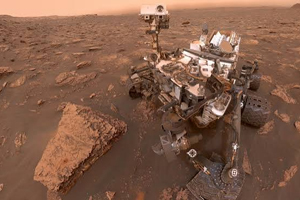
NASA Curiosity (Mars Science Laboratory) rover surpasses another full year of operations on Mars surface today; launched Nov 26, 2011 – landed Aug 5,...
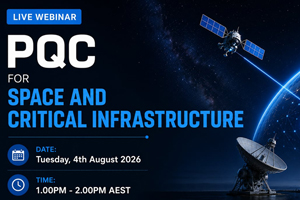
Virtual Series 2026 will offer deeper conversations on why PQC matters and the practical steps businesses should be taking; starts 1:00 pm AEST. Featuring:...
This international lunar science meeting has two objectives: to provide a platform for leading experts to review recent advances across lunar research, from the...
At CSIR International Convention Centre. Key topics are Earth Observation, Developing Space Tourism, Space Supply Manufacturing. Cultural tours are offered.
Participants will receive theoretical and hands-on training in electron imaging and X-ray spectroscopy for application to planetary samples. This training opportunity is targeted at...
"Leading Australia’s Space Future for Our Strategic Advantage". Southern Space 2026 brings together decision-makers who set the direction for Australia’s space sector. It is...
 Sep 26 —
  Sep 26 —
  Sep 26 —
 = All times
 = All times for international terrestrial events in local time unless noted.
 = All times for space events, and…
 = All times for international space / astro events in Hawaii Standard Time unless noted. Add 10 hours to obtain UT (‘Universal Time;’ Greenwich, England).