ISS Crew Launch and Antares Resupply: Maintaining a Human Presence in Space
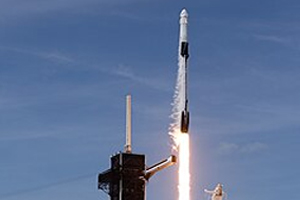
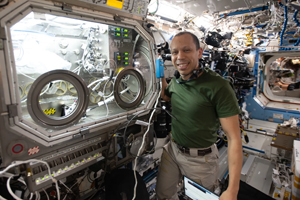
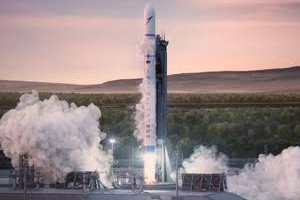
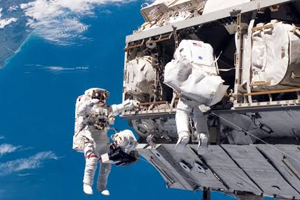
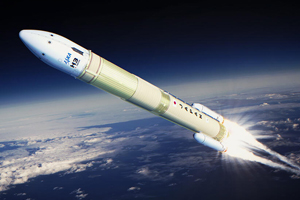
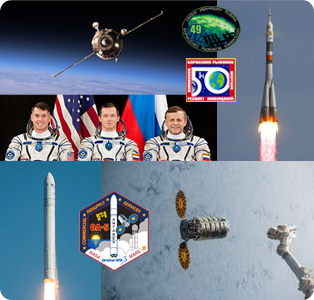
The Soyuz MS-02 mission is set to launch ISS Expedition 49/50, Sergey Ryzhikov, Andrei Borisenko, and Robert Kimbrough toward the International Space Station on 19 October at 2:05pm from Baikonur Cosmodrome in Kazakhstan. It is the 131st crewed flight of Soyuz. The capsule is scheduled to remain on station for about 6 months as an escape pod in case of evacuation. NASA’s recent inquiry to the commercial space sector on how it might use an available docking port on the ISS has been met with enthusiastic responses from various private space companies. John Holdren and Charles Bolden noted strong desire among USA firms to attach fully fledged commercial modules to the ISS, expanding on what Bigelow accomplished with BEAM. Commercial cargo and resupply is already being provided to ISS by the un-crewed SpaceX Dragon and Orbital ATK Cygnus. An Antares rocket in 230 configuration is scheduled to launch Cygnus OA-5 with about 2,400 kg of provisions and research gear to the ISS NET Oct 16. The return to flight comes almost 2 years after the failure on Oct 28, 2014 of the Orb-3 launch. Building on commercial access to the ISS supports the continuing transition of human LEO spaceflight operations to the commercial sector so national programs across the planet can focus on pushing frontiers further out into the Solar System. (Image Credit: RSA, NASA, Orbital ATK)
MONDAY
Ongoing… Oct 17 — ISS, 330-435-km LEO: Expedition 49 expecting OA-5 arrival with 2,400 kg of cargo and Soyuz with three Expedition 49-50 crew members after a 2-day flight; originally planned to leave mid-Oct Ivanishin, Onishi, Rubins expected to return to Earth Oct 30 after training new crew Ryzhikov, Borisenko, Kimbrough.
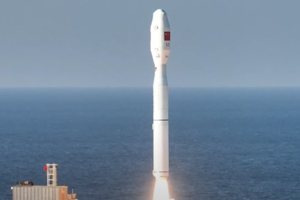
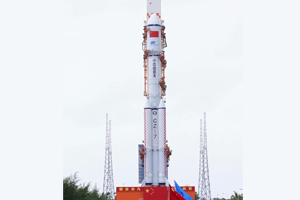
Oct 17 — CNSA, Launch Long March 2F / Shenzhou 11, Jiuquan Satellite Launch Center, Inner Mongolia: Two Astronauts to launch to new Tiangong-2 space lab to test space docking and rendezvous, re-entry of the crew space module and flight support technologies for future astronauts; crew to perform longest mission for China (30-days).
Oct 17 — ISRO,Bengaluru, India: Steadily advancing GSLV Mk 3 toward Human launch capabilities, India launch vehicles with indigenous technologies are displaying reliability with 23 successful PSLV launches, 5 successful GSLV (+1 partial success) and 1 successful RLV-TD so far.
Oct 17 — NASA,Washington DC: US President Obama discusses NASA efforts toward planned Human missions to Mars in 2030s via SLS / Orion, starting with Humans in Lunar orbit; “Mars Generation” would likely also be inspired to see 1st Woman on the Moon, Humans Returning to the Moon, Lunar Outposts – all in 2020s, and plans for Jupiter / Saturn Human Missions in 2040s and Beyond.
Oct 17 — Independence X,Kuala Lumpur, Malaysia: GLXP team hoping to secure funding to launch its rover to Moon August 2017 on ISRO PSLV, estimates it needs €23 million (RM106.6 million) total = €20 million (RM92.7 million) for launch, €3 million (RM13.9 million) for logistics and spacecraft, team led by Izmir Yamin.
= All times
for terrestrial events in local time unless noted.
= All times for international terrestrial events in local time unless noted.
= All times for space events, and…
= All times for international space / astro events in Hawaii Standard Time unless noted. Add 10 hours to obtain UT (‘Universal Time;’ Greenwich, England).
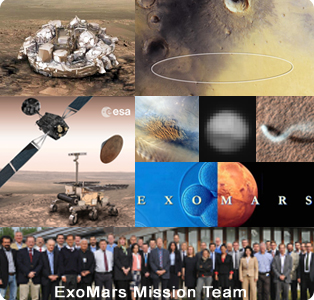
The European Space Agency ExoMars 2016 Trace Gas Orbiter (TGO) is set to enter Mars orbit October 19, after a 7-month / 500-million km journey, while the Schiaparelli craft makes its way to the surface to collect data for 2-8 Martian days (each Sol is 24h 39m 35.244s). They will join 5 international orbiters and 2 rovers. This is the 2nd ESA Mars orbiter and 1st Mars landing attempt. The 600-kg Schiaparelli Entry, Descent and Landing Demonstrator Module (EDM) is planned to enter atmosphere at 21,000 kph, and land using a heat shield, parachute, propulsion system and crushable structure in a 100×15 km area in Meridiani Planum region – close to equator in southern highlands of Mars. The 3,732-kg TGO will undergo several months of aerobraking to achieve 400-km circular orbit. Its 5-year lifetime should allow for atmospheric / science data collection starting Dec 2017, support data relay for NASA craft on Mars, and provide communications for ExoMars 2020 Lander & Rover scheduled to land 2021. Roscosmos contributions to ExoMars missions are two heavy-lift Proton launch vehicles and an entry, descent and landing system for 2020 rover mission. ESA has conducted robotic missions to the Moon, Comet Halley, Sun, Venus, Saturn moon Titan and will aim for Mercury with JAXA on BepiColombo mission 2018. (Image Credit: ESA, ATG medialab, Roscosmos, CaSSIS, UniBE, NASA, JPL, Caltech, MSSS, University of AZ)
Oct 17 — Asgardia Project Team,Multiple Locations: Global multi-disciplinary effort to create 1st Independent Nation in Space called ‘Asgardia’ to open access to Space, foster peace, protect Earth; welcomes over 100,000 citizen applications in 48 hours, setting 1 million citizen goal; 1st satellite launch planned fall 2017; the satellite will comprise nation itself, having its own legal framework, flag, symbols of nationhood; Project Lead Igor Ashurbeyli.
Oct 17 — Terra Bella,Mountain View CA: Previously known as Skybox Imaging, company is operating 7 satellites, plans to launch a fleet of 24 satellites for commercial high-resolution Earth imagery and video, will be customer on SSO-A launch late 2017 with ~20 other payloads brokered by Spaceflight Industries.
Oct 17 — Canadian Space Agency, Iqaluit, Nunavut, Canada: CSA Astronaut David Saint-Jacques to visit Inuksuk High School to present educational tool designed to help students better understand the role space and satellites play in their daily lives.
Oct 17 — University of Arizona Department of Astronomy, Steward Observatory, Tucson AZ: Focusing the Universe; film on the history of Steward Observatory followed by panel discussion.
Oct 17-20 — National Radio Astronomy Observatory, Commonwealth Scientific and Industrial Research Organisation, Netherlands Institute for Radio Astronomy, European Association for Signal Processing, International Union of Radio Science, et al, Socorro NM: Coexisting with Radio Frequency Interference.
Oct 17 — Amor Asteroid 2016 SO2: Near-Earth flyby (0.057 AU).
Continued from…
NET Q4 — Interorbital Systems Corp., Launch Neptune 5 (5 CPM) vehicle / 30 Nanosats, Mojave CA: Planning to launch Neptune 5 Common Propulsion Module (CPM) to loft 30 nanosats to LEO, including payloads for GLXP teams Synergy Moon, Part-Time Scientists, Plan B & EuroLuna.
Oct 15 – Sep 4, 2017 — Peabody Essex Museum, Salem MA: Lunar Attraction Exhibit; featuring 60 Apollo memorabilia, paintings, sculptures, photographs, books, movies, jewelry that illustrate our profound connection to the Moon.
Oct 18-22 — Astrobiology Institute of Colombia, Municipality of Manizales, University of Manizales, NASA, Manizales, Colombia:3rd International Astrobiology Congress.
Oct 18 — Mercury: 9.1° S of Pleiades, 05:00; 0.34° NNW of Aldebaran, 20:00.
Oct 18 — Apollo Asteroid 2016 TY55: Near-Earth flyby (0.007 AU).
Oct 18 — Amor Asteroid 2016 TW85: Near-Earth flyby (0.019 AU).
Oct 18 — Aten Asteroid 2014 UR: Near-Earth flyby (0.031 AU).
Oct 18 — Apollo Asteroid 2016 TE55: Near-Earth flyby (0.034 AU).
WEDNESDAY
Oct 19 — Roscosmos State Corporation, Launch Soyuz MS-02 / ISS 48S, Baikonur Cosmodrome, Kazakhstan: Expedition 49/50 members Robert Kimbrough of NASA, Andrei Borisenko and Sergey Ryzhikov of Roscosmos to launch to ISS.
Oct 19 — ExoMars 2016 Orbiter & Schiaparelli, Mars Orbit & Surface: ESA Trace Gas Orbiter expected to enter Mars orbit today, and Entry, Descent & Landing Demonstrator Module (Schiaparelli) to land on surface & collect data for 2-8 Martian days.
Oct 19 — Juno, Jupiter Orbit: Spacecraft to conduct Period Reduction Maneuver today, with engine burn of 22 minutes.
Oct 19 — Goddard Space Flight Center, NASA, Greenbelt MD: Colloquium: Light to Life; Paul Falkowski of Rutgers University, 15:30.
Oct 19 — British Interplanetary Society,London, United Kingdom: Lecture: OS Maps Go Out of this World; Nigel Clifford, Chief Executive of the Ordnance Survey (OS), 19:00.
Oct 19 — Mars: 3.3° S of Pluto, 04:00.
Oct 19 — Amor Asteroid 2016 TP: Near-Earth flyby (0.080 AU).
THURSDAY
NET Oct 20 — RSA, Launch Soyuz / Progress 65P,Baikonur Cosmodrome, Kazakhstan: Russia Soyuz rocket to launch Progress 65P resupply ship to ISS.
Oct 20 — Juno, Jupiter Orbit: Spacecraft begins Orbits 2-3 today, will last 23 days.
Oct 23 — Chang’e-5T1 Service Module, Lunar Orbit: China module collecting data on Lunar surface for future Moon missions reaches 2 full years in Space today, launched 2014.
Oct 23 — Moon: 4.2° S of Beehive Cluster, 00:00.
Oct 23 — Asteroid 18 Melpomene: At opposition, 03:00.
Oct 23 — Apollo Asteroid 2015 HE10: Near-Earth flyby (0.076 AU).
Oct 23 — Apollo Asteroid 2013 UD1: Near-Earth flyby (0.090 AU).
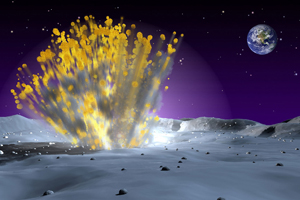
Includes ~150 meetings covering the fields of COSPAR Scientific Commissions / Panels / Task Groups, such as SC B: The Earth-Moon System, Planets, and...
From 02 to 07 August 2026, a few thousand geoscientists across diverse disciplines will gather at the 23rd annual meeting of the Asia Oceania Geosciences...
2:45 pm EDT from Johnson Space Center, NASA astronaut Chris Williams will recap his recent eight-month mission aboard the International Space Station. Williams returned to...
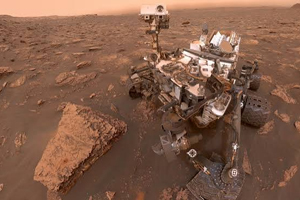
NASA Curiosity (Mars Science Laboratory) rover surpasses another full year of operations on Mars surface today; launched Nov 26, 2011 – landed Aug 5,...
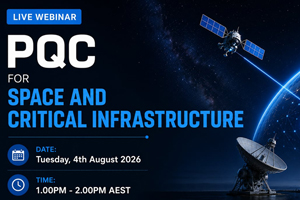
Virtual Series 2026 will offer deeper conversations on why PQC matters and the practical steps businesses should be taking; starts 1:00 pm AEST. Featuring:...
This international lunar science meeting has two objectives: to provide a platform for leading experts to review recent advances across lunar research, from the...
At CSIR International Convention Centre. Key topics are Earth Observation, Developing Space Tourism, Space Supply Manufacturing. Cultural tours are offered.
Participants will receive theoretical and hands-on training in electron imaging and X-ray spectroscopy for application to planetary samples. This training opportunity is targeted at...
"Leading Australia’s Space Future for Our Strategic Advantage". Southern Space 2026 brings together decision-makers who set the direction for Australia’s space sector. It is...
 Oct 17 —
  Oct 17 —
  Oct 17 —
 = All times
 = All times for international terrestrial events in local time unless noted.
 = All times for space events, and…
 = All times for international space / astro events in Hawaii Standard Time unless noted. Add 10 hours to obtain UT (‘Universal Time;’ Greenwich, England).