India to Launch Single PSLV Rocket Carrying World Record 104 Payloads, Also Advancing Public and Private Missions to the Moon
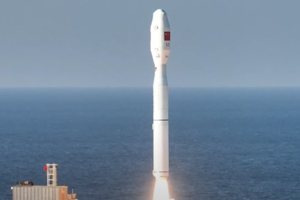
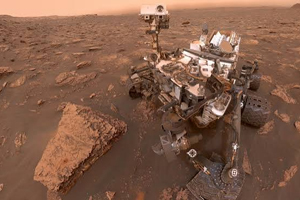
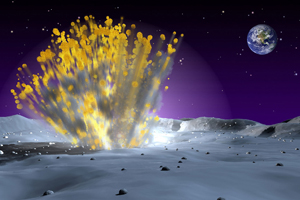
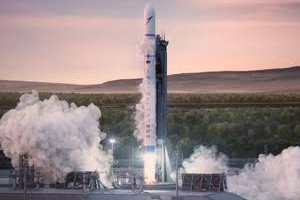
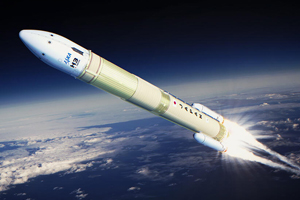
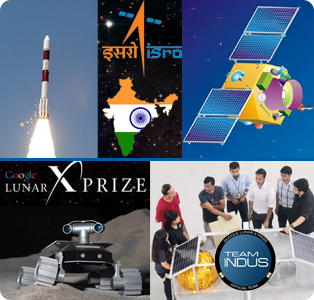
India Space Research Organization (ISRO) is set to launch PSLV-C37 with primary passenger Cartosat 2D on February 14 from Satish Dhawan Space Center at Sriharikota, a barrier island off the Bay of Bengal in the southeastern state of Andhra Pradesh. Mainstay of India national and commercial launch sectors, PSLV is 44 meters tall with 2.8-m diameter and mass of 320,000 kg. ISRO Chairman A. S. Kiran Kumar announced it was recovering from the foreign payload customers on this 37th launch of PSLV half the cost of launching the latest in its own CartoSat series of Earth-imaging satellites for national cartographic and other geographical information system applications. The USA contingent of secondary payloads is represented by 88 Dove CubeSats being launched for Planet. There are also payloads from Germany, Israel, Kazakhstan, the Netherlands, Switzerland, and the UAE. The government’s Union Cabinet has declared an average cost of US$31M for production, program management and launch of the 15 PSLV rockets it plans to fly 2017-2020. Hoping to break another record altogether India GLXP competitor Team Indus is vying to become the first company to independently land on the Moon. The Bangalore-based operation is advancing the winning experiment of its Lab2Moon competition and has announced a new Moonshot Wheels initiative in cooperation with Ratan Tata to take science to rural India. The ISRO Chandrayaan-2 lunar lander is being prepared for launch aboard the heavy-lift GSLV in 2017-18. (Image Credit: ISRO, Team Indus, GLXP)
MONDAY
Ongoing… Feb 13 — ISS, 330-435-km LEO: Expedition 50 reviewing procedures for Dragon CRS-10 arrival and Progress 66P next week, working with NueroMapping experiment (ongoing since 2014), practicing safety drills including emergency evacuation / Soyuz descent; an HDTV camera to be robotically installed on external Exposed Facility platform for Earth observations.
Feb 13 — Fermi Gamma-ray Space Telescope,LEO: Identifying the farthest gamma-ray blazars (galaxies whose intense emissions are powered by supersized black holes) from light sources 1.4 billion years old, 2 blazars studied have black holes equaling a billion solar masses or more.
Feb 13 —Dawn, Ceres Orbit, Main Asteroid Belt: Orbiting 965-km wide dwarf planet, studying what is assumed to be the only cryovolcanic mountain on Ceres – Ahuna Mons 4-5 km tall, 200 million years old; collecting data on surface composition including iron, hydrogen, potassium, carbon, salts and ice.
Feb 13 —BlackSky Global,Seattle WA: NewSpace company prototype Earth observation satellite Pathfinder-1 yielding good results, plans commercial operations this year with fleet of 60 satellites in orbit by 2020 to provide real-time images; BlackSky platform currently provides access to imagery from more than 10 satellites, including Korea KOMPSAT & UrtheCast Deimos-2.
Feb 13 —Access to Space,Equatorial / Pacific Sites: Alaska Aerospace looking for an equatorial launch site, China completing 19° N Moonport on Hainan Island and Russia building Vostochny Cosmodrome at 51.8° N – clear flight paths and optimal latitudes needed for low-cost, effective access to space; USA Hawai`i offshore / Sea Launching capabilities proposed.
Feb 13 — Singularity University, Moffett Field CA: Gulf chapter of SU to open in Dubai – led by Paul Epping; SU Global Solutions Program 9-week student program to begin Jun 17, Global Summit 2017 to take place Aug 13-15; SU founders Ray Kurzweil, Bob Richards, Peter Diamandis.
for terrestrial events in local time unless noted.
= All times for international terrestrial events in local time unless noted.
= All times for space events, and…
= All times for international space / astro events in Hawaii Standard Time unless noted. Add 10 hours to obtain UT (‘Universal Time;’ Greenwich, England).
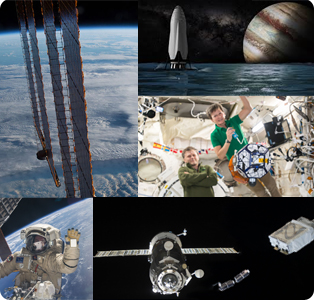
ISS Expedition 50 Looks Forward to Dragon CRS-10, EVAs, CubeSat Deployments
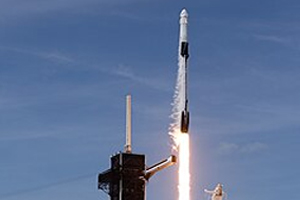
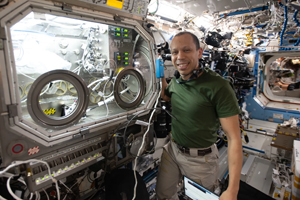
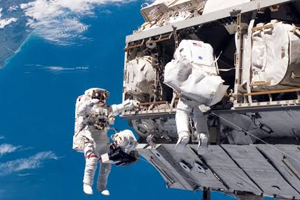
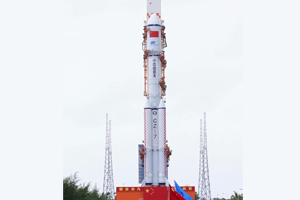
Six-member Expedition 50 crew of Commander Shane Kimbrough and Flight Engineers Andrey Borisenko, Sergey Ryzhikov, Thomas Pesquet, Peggy Whitson and Oleg Novitskiy are circling the Earth 16 times a day at 8 km per second with ~200 experiments ongoing at any given time. During their mission, they are scheduled to perform U.S. EVAs 40 & 41, deploy CubeSats and oversee the rendezvous / departures of Progress 66P, Cygnus OA-7 and Dragon CRS-10. SpaceX CRS-10 resupply is set to take off February 18 from the newly modified Launch Complex 39A at NASA Kennedy Space Center in Florida. LC-39 is also intended to support future SLS and Human missions. SpaceX is working to launch every 2-3 weeks, finish repairs on Cape Canaveral launch pad, complete construction of 4th launch site in Texas, debut Falcon Heavy this year, start carrying Astronauts to ISS late 2018 and build the Interplanetary Transport System for Solar System settlement. The other Human-rated Space Lab in LEO, Tiangong-2, may see its second crew before the end of the year, and is planned to receive Tianzhou-1 cargo ship in April for 305-day mission to test technologies related to cargo transport system, propellant re-supply, rapid rendezvous and docking. (Image Credit: NASA, SpaceX)
Feb 13 — Apollo Asteroid 2017 BT93: Near-Earth Flyby (0.076 AU).
Continued from…
Oct 15 – Sep 4, 2017 — Peabody Essex Museum, Salem MA: Lunar Attraction Exhibit; featuring 60 Apollo memorabilia, paintings, sculptures, photographs, books, movies, jewelry that illustrate our profound connection to the Moon.
Feb 12-18 — University of KwaZulu-Natal, Astrophysics and Cosmology Research Unit, National Institute for Theoretical Physics, National Research Foundation, KwaZulu-Natal, South Africa:Cosmology on Safari 2017.
TUESDAY
Feb 14 — ISRO, Launch PSLV-C37 / Cartosat 2D & Multi-payload, Satish Dhawan Space Center, Sriharikota, India: ISRO 37th Polar Satellite Launch Vehicle to launch 104 satellites setting world record; 101 payloads for international customers from Israel, Kazakhstan, Netherlands, Switzerland, USA; and 3 from India – Cartosat 2D, INS-IA and INS-1B.
Feb 14 — Arianespace, Launch Ariane 5 / Intelsat 32e / Sky Brasil 1 & Telkom 3S, Kourou, French Guiana: Arianespace Ariane 5 ECA rocket, designated VA235, to launch Intelsat 32e / Sky Brasil 1 and Telkom 3S communications satellites.
Feb 14 — Team Indus, Bengaluru, India:Winner Announced for Lab2Moon experiment allowing selected project to fly on GLXP Team Indus craft to Moon surface 2017; project should fit inside 330-ml can, weigh less than 250 grams & ‘catalyze the evolution of Humankind as a sustainable Multi-Planetary Species.’
Feb 15 — Apollo Asteroid 2016 CN248: Near-Earth Flyby (0.096 AU).
THURSDAY
Feb 16 — International Astronautical Federation, Online / Paris, France:Call for Nominations Due – IAF World Space Award; recognizing people with exceptional merit in space science, space technology, space medicine, space law or space management.
Feb 18-19 — Space Generation Advisory Council (SGAC), si-Cluster, Athens, Greece:Space Generation – Greece; students & young professionals work in groups with space experts to propose innovative ideas on how to improve / advance space sector; Europe Astronaut talk included.
Feb 18 — Moon: At last quarter, 09:33; at apogee (distance 404,376 km), 11:14.
Feb 18 — Jupiter: At aphelion, 11:00.
Feb 18 — Apollo Asteroid 2016 CA138: Near-Earth Flyby (0.059 AU).
Feb 18 — Amor Asteroid 2017 BL123: Near-Earth Flyby (0.095 AU).
Includes ~150 meetings covering the fields of COSPAR Scientific Commissions / Panels / Task Groups, such as SC B: The Earth-Moon System, Planets, and...
From 02 to 07 August 2026, a few thousand geoscientists across diverse disciplines will gather at the 23rd annual meeting of the Asia Oceania Geosciences...
2:45 pm EDT from Johnson Space Center, NASA astronaut Chris Williams will recap his recent eight-month mission aboard the International Space Station. Williams returned to...
NASA Curiosity (Mars Science Laboratory) rover surpasses another full year of operations on Mars surface today; launched Nov 26, 2011 – landed Aug 5,...
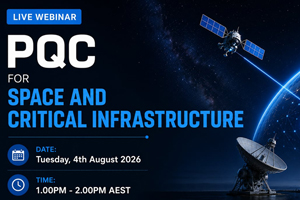
Virtual Series 2026 will offer deeper conversations on why PQC matters and the practical steps businesses should be taking; starts 1:00 pm AEST. Featuring:...
This international lunar science meeting has two objectives: to provide a platform for leading experts to review recent advances across lunar research, from the...
At CSIR International Convention Centre. Key topics are Earth Observation, Developing Space Tourism, Space Supply Manufacturing. Cultural tours are offered.
Participants will receive theoretical and hands-on training in electron imaging and X-ray spectroscopy for application to planetary samples. This training opportunity is targeted at...
"Leading Australia’s Space Future for Our Strategic Advantage". Southern Space 2026 brings together decision-makers who set the direction for Australia’s space sector. It is...
 Feb 13 —
  Feb 13 —
  Feb 13 —
 = All times
 = All times for international terrestrial events in local time unless noted.
 = All times for space events, and…
 = All times for international space / astro events in Hawaii Standard Time unless noted. Add 10 hours to obtain UT (‘Universal Time;’ Greenwich, England).