IAF GLEX 2017 in Beijing Focuses on Global Space Exploration and Connecting All Space People
The International Astronautical Federation and Chinese Society of Astronautics are hosting 2017 Global Space Exploration Conference (GLEX) at Beijing International Convention Center June 6-8. It features 329 papers from 22 different countries, 25 technical sessions and 100 posters presentations. Some of the 13 tracks are lunar exploration, NEAs, Mars, propulsion technology, life support systems, space law, international cooperation, small sats and space stations. Scientists, entrepreneurs, educators and agency representatives will discuss space exploration recent results, current challenges and innovative solutions including ExoMars missions, ESA Moon Village, UN UNISPACE+50, SLS / Orion, NASA NextSTEP program for cislunar orbital habitats, Tiangong-2, Chang’e-5, Buzz Aldrin’s Cycling Pathways to Mars concept, and China plans for Mars, asteroids, Jupiter and Human Lunar exploration before 2030. There is a plenary session on the 15 Space Agencies participating in International Space Exploration Coordination Group: ASI, CNES, CNSA, CSA, CSIRO, DLR, ESA, ISRO, JAXA, KARI, NASA, NSAU, Roscosmos, UAESA, UKSA. International Programme Committee co-chairs are Christian Sallaberger of Canadensys and Li Ming of China Academy of Space Technology. IPC members include Bernard Foing, Khaled Al Hashmi, Sandy Magnus, Masazumi Miyake, Gwynne Shotwell, Stephan Ulamec, Pete Worden, and Victor Vorontsov. On the eve of GLEX, the ILOA of Hawai`i is hosting Galaxy Forum Beijing with theme Astronomy from the Moon and International Human Moon Missions June 5 cosponsored by CSA and IAF. It will feature Wang Jing (NAOC), Hakim Malasan (ITB), Christian Lange (Canadian Space Agency), Andrew Aldrin (ShareSpace Foundation), and others. (Image Credit: IAF, IPC, ILOA, CAST, CAS, NAOC, ESA, DLR, Roscosmos)
MONDAY
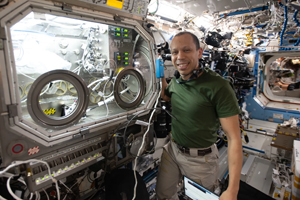
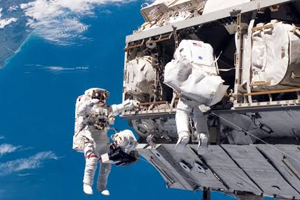
Ongoing… Jun 5 — ISS, 330-435-km LEO: Expedition 52 three member crew Commander Fyodor Yurchikhin, Peggy Whitson and Jack Fischer transferring 2,708 kg of cargo and experiments from Dragon CRS-11 including Roll-Out Solar Array, Neutron Star Interior Composition Explorer to be externally-mounted, Multiple User System for Earth Sensing, and 5 CubeSats for Japan Birds constellation initiative (3 are the first satellites for Bangladesh, Ghana & Mongolia).
Jun 5 — ISRO, Launch GSLV Mk. 3 D1 / GSAT 19,Satish Dhawan Space Center, Sriharikota, India: India Geosynchronous Satellite Launch Vehicle Mk. 3 D1 to launch on first orbital test flight with GSAT 19E experimental communications satellite.
Jun 5 — International Astronautical Federation (IAF), SpaceUp, Beijing, China: SpaceUp IFA-GLEX; space unconference, where participants decide the format, subject, presentations.
= All times
for terrestrial events in local time unless noted.
= All times for international terrestrial events in local time unless noted.
= All times for space events, and…
= All times for international space / astro events in Hawaii Standard Time unless noted. Add 10 hours to obtain UT (‘Universal Time;’ Greenwich, England).
India Launching GSLV / GSAT 19, Working Towards Human Spaceflight
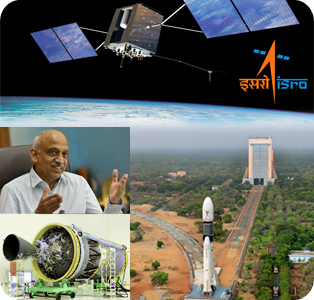
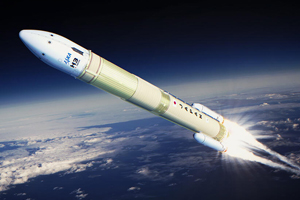
Indian Space Research Organization led by A. S. Kiran Kumar is set to launch the GSLV Mk 3 – D1 rocket carrying GSAT 19 communications and broadcast satellite on June 5 at 01:58 to Geosynchronous Transfer Orbit from launch pad 2 at the Satish Dhawan Space Center in Sriharikota, Andhra Pradesh. Weighing 640,000 kg the 3-stage Geosynchronous Satellite Launch Vehicle-Mark III with 2 solid rocket strap-ons (S200), a liquid fueled core stage (L110) and the indigenous cryogenic upper stage (C25), is the heaviest rocket launched by India. It is capable of lifting 4,000 kg to GTO and as much as 8,000 kg to LEO, enough capacity for a crewed module. This first developmental flight represents realization of a program spanning 25 years, 11 flights, over 200 tests on different components — and carries the hopes of future India human spaceflight. GSAT 19 is a 3,136-kg experimental mission designed to test several new technologies, such as the I-6K unified modular bus, deployable thermal radiators, electrical propulsion, fiber optic gyro, Micro Electro-Mechanical Systems (MEMS) accelerometer, and indigenous Li-Ion batteries. It also hosts the Geostationary Radiation Spectrometer (GRASP) payload to study charged particles and the interaction of space radiation with satellites and their electronic components. (Image Credit: ISRO)
Jun 6-9 — ESA, XMM-Newton Science Operations Centre, Astronomical Observatory of Rome, INAF-IAPS, ASI,Rome, Italy: Symposium: The X-ray Universe 2017.
Jun 6 — Mercury: 5.3° S of Pleiades, 17:19.
Jun 6 — Apollo Asteroid 2017 KQ27: Near-Earth Flyby (0.003 AU).
Jun 6 — Apollo Asteroid 2017 KR27: Near-Earth Flyby (0.018 AU).
Jun 6 — Apollo Asteroid 2012 HN13: Near-Earth Flyby (0.073 AU).
WEDNESDAY
Jun 7 — Johnson Space Center, NASA, Houston TX: Acting NASA Administrator Robert Lightfoot, Ellen Ochoa and Brian Kelly to announce new Astronaut candidates chosen from more than 18,300 people; live coverage available, 14:00 EDT.
Jun 8 — International Launch Services, Launch Proton / EchoStar 21,Baikonur Cosmodrome, Kazakhstan: Proton rocket with a Breeze M upper stage to launch EchoStar 21 communications satellite, formerly known as TerreStar 2.
Jun 9 — Moon: Full (Strawberry Moon), 03:10; 3.1° N of Saturn, 15:25.
SATURDAY
Jun 10 — Cassini, Saturn Orbit: Flyby of Pan scheduled at 84,000-km altitude; Janus at 104,000-km.
Jun 10 —PsiStar – Queen Mary University of London, The Planetary Society, SpaceUp, London, United Kingdom: SpaceUp London 2017; space unconference, where participants decide the format, subject, presentations.
Jun 10 — Amor Asteroid 2017 HV4: Near-Earth Flyby (0.050 AU).
SUNDAY
Jun 11 — Fermi Gamma-ray Telescope, LEO: Spacecraft with Large Area Telescope & Gamma-ray Burst Monitor instruments begins 10th year of operations in Space; launched 2008.
Includes ~150 meetings covering the fields of COSPAR Scientific Commissions / Panels / Task Groups, such as SC B: The Earth-Moon System, Planets, and...
From 02 to 07 August 2026, a few thousand geoscientists across diverse disciplines will gather at the 23rd annual meeting of the Asia Oceania Geosciences...
2:45 pm EDT from Johnson Space Center, NASA astronaut Chris Williams will recap his recent eight-month mission aboard the International Space Station. Williams returned to...
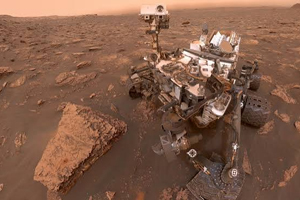
NASA Curiosity (Mars Science Laboratory) rover surpasses another full year of operations on Mars surface today; launched Nov 26, 2011 – landed Aug 5,...
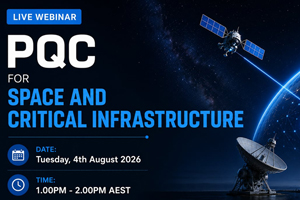
Virtual Series 2026 will offer deeper conversations on why PQC matters and the practical steps businesses should be taking; starts 1:00 pm AEST. Featuring:...
This international lunar science meeting has two objectives: to provide a platform for leading experts to review recent advances across lunar research, from the...
At CSIR International Convention Centre. Key topics are Earth Observation, Developing Space Tourism, Space Supply Manufacturing. Cultural tours are offered.
Participants will receive theoretical and hands-on training in electron imaging and X-ray spectroscopy for application to planetary samples. This training opportunity is targeted at...
"Leading Australia’s Space Future for Our Strategic Advantage". Southern Space 2026 brings together decision-makers who set the direction for Australia’s space sector. It is...
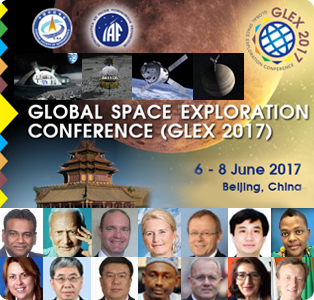 The International Astronautical Federation and Chinese Society of Astronautics are hosting 2017 Global Space Exploration Conference (GLEX) at Beijing International Convention Center June 6-8. It features 329 papers from 22 different countries, 25 technical sessions and 100 posters presentations. Some of the 13 tracks are lunar exploration, NEAs, Mars, propulsion technology, life support systems, space law, international cooperation, small sats and space stations. Scientists, entrepreneurs, educators and agency representatives will discuss space exploration recent results, current challenges and innovative solutions including ExoMars missions, ESA Moon Village, UN UNISPACE+50, SLS / Orion, NASA NextSTEP program for cislunar orbital habitats, Tiangong-2, Chang’e-5, Buzz Aldrin’s Cycling Pathways to Mars concept, and China plans for Mars, asteroids, Jupiter and Human Lunar exploration before 2030. There is a plenary session on the 15 Space Agencies participating in International Space Exploration Coordination Group: ASI, CNES, CNSA, CSA, CSIRO, DLR, ESA, ISRO, JAXA, KARI, NASA, NSAU, Roscosmos, UAESA, UKSA. International Programme Committee co-chairs are Christian Sallaberger of Canadensys and Li Ming of China Academy of Space Technology. IPC members include Bernard Foing, Khaled Al Hashmi, Sandy Magnus, Masazumi Miyake, Gwynne Shotwell, Stephan Ulamec, Pete Worden, and Victor Vorontsov. On the eve of GLEX, the ILOA of Hawai`i is hosting Galaxy Forum Beijing with theme Astronomy from the Moon and International Human Moon Missions June 5 cosponsored by CSA and IAF. It will feature Wang Jing (NAOC), Hakim Malasan (ITB), Christian Lange (Canadian Space Agency), Andrew Aldrin (ShareSpace Foundation), and others. (Image Credit: IAF, IPC, ILOA, CAST, CAS, NAOC, ESA, DLR, Roscosmos)
 Jun 5 —
  Jun 5 — Global: Alberta first satellite
 = All times
 = All times for international terrestrial events in local time unless noted.
 = All times for space events, and…
 = All times for international space / astro events in Hawaii Standard Time unless noted. Add 10 hours to obtain UT (‘Universal Time;’ Greenwich, England).