China and Europe Host Lunar and Deep Space Exploration, Science Meetings
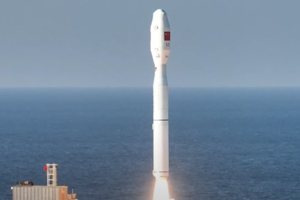
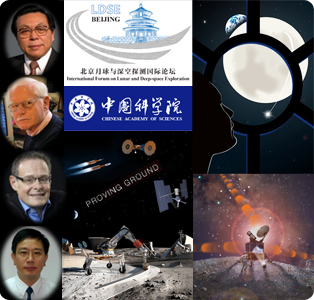
The 3rd Beijing International Forum on Lunar and Deep-space Exploration (LDSE 2017) organized by Chinese Academy of Sciences is being held September 19-22. Conference Chair Ouyang Ziyuan (T-B) will welcome scientists, industry leaders and Space Agency representatives for intensive discussions about planned international public / private exploration programs on the Moon, Mars, Jupiter and asteroids before 2030; new progress in planetary science research and hot topics for the next 5-10 years; sample return missions; new deep space exploration methods and payload technologies. Featured speakers are James Head III from Brown University – Investigator for Apollo, Messenger, LRO, ESA Mars Express; Sylvestre Maurice from IRAP of France – Designer of Mars Science Laboratory ChemCam Instrument; and Zhang Rongqiao from CNSA – Chief Designer of China Mars Mission, Engineer for Lunar Exploration. Other representatives come from USA, Japan, Australia, Russia, Germany, Canada, UK and Finland. On Sep 18-19 ESA ESTEC is holding the business to business ‘Deep Space Gateway and Lunar Exploration Industry Days’ with focus on Human-Enabled Robotic Architecture and Capability for Lunar Exploration and Science (HERACLES). Multiple international space agency members of International Space Exploration Coordination Group are participating in HERACLES, one of the proposed missions which would take advantage of a Deep Space Gateway. The goal is to establish sustainable Human exploration of the Moon through ascent-descent vehicles, landers, rovers, sample return and ISRU missions to Moon South Pole while providing high-priority science opportunities to support future Mars, Deep-Space exploration. (Image Credit: LDSE, CNSA, CAS, ESA, NASA)
MONDAY
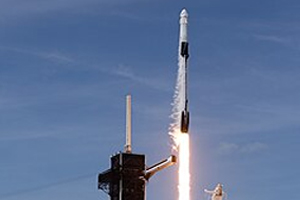
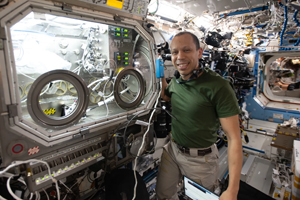
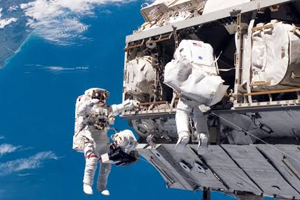
Ongoing… Sep 18 — ISS, 330-435-km LEO: Expedition 53 six-member crew transferring cargo from Dragon CRS-12 and Progress MS-05, supporting more than 250 experiments in biology, biotechnology, physical science, Earth science, and posting activities on social media sites.
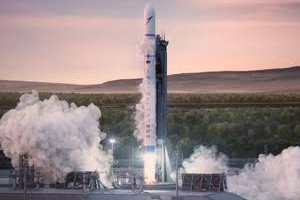
Sep 18 — NewSpace:UK Starchaser Industries working toward human suborbital flights, testing 8-meter long Skybolt 2 rocket, plans tests of 12-m rocket within 18 months; Astrobotic and Elysium Space aiming for lunar memorial landing 2019; Planetary Resources planning 2020 launch of 1st prospector craft.
Sep 18-19 — ESA, Noordwijk, The Netherlands: Deep Space Gateway and Lunar Exploration Industry Days; to engage industrial partners in study activities related to lunar surface missions, in particular the Human-Enabled Robotic Architecture and Capability for Lunar Exploration and Science (HERACLES).
= All times
for terrestrial events in local time unless noted.
= All times for international terrestrial events in local time unless noted.
= All times for space events, and…
= All times for international space / astro events in Hawaii Standard Time unless noted. Add 10 hours to obtain UT (‘Universal Time;’ Greenwich, England).
OSIRIS-REx Asteroid Mission Performing Earth Flyby Gravity Assist
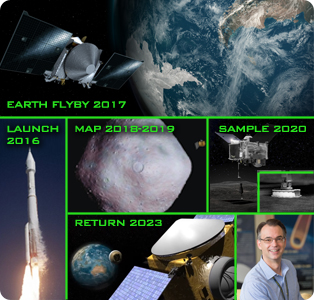
On September 22 the NASA Origins-Spectral Interpretation-Resource Identification-Security-Regolith Explorer spacecraft will be in a dive from Solar orbit to within 17,000 km of Earth gathering energy and increasing orbital inclination to set course for Asteroid 101955 Bennu (1999 RQ36). Led by Principal Investigator Dante Lauretta of University of Arizona, Tucson, the ambitious mission’s objectives are to visit the 500-m diameter asteroid, survey the surface, collect samples and return safely back to Earth. During the flyby OSIRIS-REx will be traveling at over 30,000 kph relative to Earth, with closest approach above Antarctica out of range of the Deep Space Network communications link. Roughly 50 minutes later NASA should regain the connection and another 3 hours later the spacecraft will begin science observations of Earth and Moon to calibrate instruments. A deep space course adjustment is expected in late June 2018. The craft will approach and then match velocities to essentially fly in formation with the asteroid as it orbits the Sun at an average speed in excess of 100,000 kph. Survey activities starting in October 2018 will last over a year. On July 4 2020 OSIRIS-REx will move in to deploy the Touch-And-Go Sample Acquisition Mechanism on an extended robotic arm to collect up to 2 kg of material. Return landing on Earth expected Sept 24, 2023 in Utah. (Image Credit: NASA, GSFC, U. of Arizona)
Sep 18-22 — Green Bank Observatory, National Science Foundation, Green Bank WV: Green Bank Observatory’s Observer training school; an introduction to general radio astronomical techniques as well as onsite training for GBT observers.
Sep 18 — Moon: 0.17° NE of Mars, 10:00; with Mercury and Mars within circle of diameter 1.83° and 17° W of Sun, 11:00; 0.05° SE of Mercury, 13:00.
Sep 19 — Fresco Capital, Singapore: DataSat: New Space Data, Economy, and Ecosystem; featuring Lynette Tan – Executive Director of SSTA, Xiaoqing Dong – Head of Asia Pacific of Spire Global, Tytus Michalski – Managing Partner of Fresco Capital.
Sep 19-22 — Chinese Academy of Sciences, General Office of Lunar and Deep Space Exploration – CAS, Beijing, China: 3rd Beijing International Forum on Lunar and Deep Space Exploration; focusing on lunar & planetary sciences, new technologies in Moon, Mars, asteroids, comets, other planetary exploration, and future scientific missions; chaired by Ouyang Ziyuan.
Sep 20 — Apollo Asteroid 2008 CK70: Near-Earth Flyby (0.058 AU).
THURSDAY
Sep 21 — MAVEN, Mars Orbit: Mars Atmosphere and Volatile Evolution (MAVEN) spacecraft begins 4th year of operations in Mars orbit; continuing to study upper atmosphere; launched Nov 18, 2013.
Sep 21 — Singapore Space and Technology Association, Singapore: SSTA Space Experts Workshop; at NTUC Auditorium.
Sep 21 — U.S. National Space Council,Washington DC: NSC expected to hold event, perhaps with public announcement of future space policy plans.
Sep 21 — Muslim New Year 1439 AH, Worldwide: Islamic New Year 1 Muharram (1st day) to begin at sunset; if young New Moon is not visible the beginning of the month and year may be delayed.
Sep 22 — Fall / Autumn Equinox: The Sun rises exactly in east traveling through sky for 12 hours, sets exactly in west; day and night are approximately equal duration every place on Earth; 10:02.
Sep 22 — Moon: 3.5° NNE of Jupiter, 00:00.
Sep 22 — Apollo Asteroid 2015 TC24: Near-Earth Flyby (0.070 AU).
Includes ~150 meetings covering the fields of COSPAR Scientific Commissions / Panels / Task Groups, such as SC B: The Earth-Moon System, Planets, and...
From 02 to 07 August 2026, a few thousand geoscientists across diverse disciplines will gather at the 23rd annual meeting of the Asia Oceania Geosciences...
2:45 pm EDT from Johnson Space Center, NASA astronaut Chris Williams will recap his recent eight-month mission aboard the International Space Station. Williams returned to...
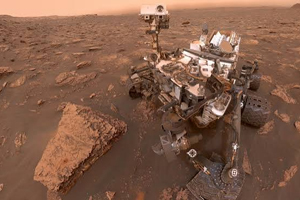
NASA Curiosity (Mars Science Laboratory) rover surpasses another full year of operations on Mars surface today; launched Nov 26, 2011 – landed Aug 5,...
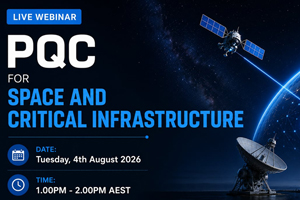
Virtual Series 2026 will offer deeper conversations on why PQC matters and the practical steps businesses should be taking; starts 1:00 pm AEST. Featuring:...
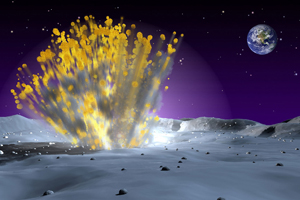
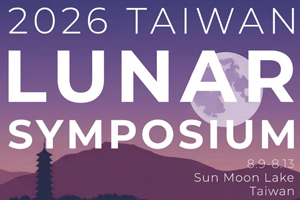
This international lunar science meeting has two objectives: to provide a platform for leading experts to review recent advances across lunar research, from the...
At CSIR International Convention Centre. Key topics are Earth Observation, Developing Space Tourism, Space Supply Manufacturing. Cultural tours are offered.
Participants will receive theoretical and hands-on training in electron imaging and X-ray spectroscopy for application to planetary samples. This training opportunity is targeted at...
"Leading Australia’s Space Future for Our Strategic Advantage". Southern Space 2026 brings together decision-makers who set the direction for Australia’s space sector. It is...
 Sep 18 —
  Sep 18 — NewSpace:
  Sep 18 — USA:
 = All times
 = All times for international terrestrial events in local time unless noted.
 = All times for space events, and…
 = All times for international space / astro events in Hawaii Standard Time unless noted. Add 10 hours to obtain UT (‘Universal Time;’ Greenwich, England).