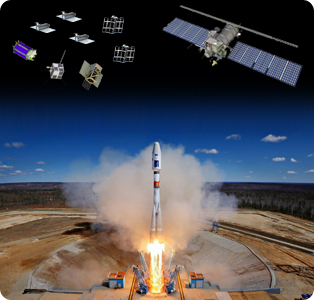
Soyuz Launch of Meteor M2-1 from Vostochny Cosmodrome, Pacific Russia
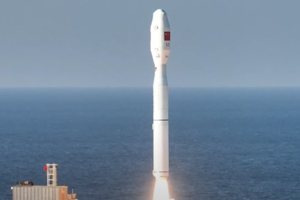
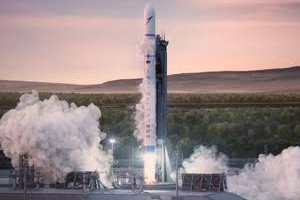
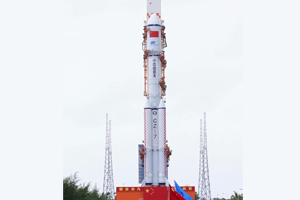
Roscosmos Soyuz 2-1B rocket with Fregat upper stage to lift the Meteor M2-1 weather monitoring satellite into polar orbit November 28 at 14:41:46 local time. Meteor-M 2-1 is a 2,778-kg global weather research platform for monitoring the ozone layer, ocean surface temperatures, ice conditions in polar regions on Earth and the radiation environment in near-Earth space — part of a series of satellites developed around the Resurs-UKP bus by Moscow-based VNIIEM. Also on the manifest are 18 secondary payloads including Baumanets-2, Scout, SEAM, AISSat-3, CubeBel-1, multiple Dove Flock-2, Lemur-2 and Lemur-3 satellites. This is only the second launch from Russia’s newly redeveloped Pacific region Spaceport 600-800 km inland in the far east of the country. Vostochny Cosmodrome is designed as the deep space exploration hub of the future for Russia, easing reliance on access to former Soviet facilities at Baikonur Cosmodrome in Kazakhstan. There are plans to upgrade infrastructure at Vostochny to accommodate super-heavy class rockets for interplanetary spacecraft and Vladimir Putin has expressed interest in international cooperation on various activities, as well as efforts to jointly explore Moon and Mars. The second phase of construction is projected to require US$636M, while the first liftoff of the Angara-A5M Heavy rocket from the PU1 launch pad is scheduled for 2021. (Images Credit: Roscosmos, VNIIEM, Planet, UTIAS, Spire, BMSTU)
MONDAY
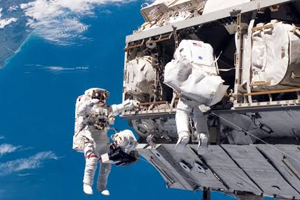
Ongoing… Nov 27 — ISS, 330-435-km LEO: Expedition 53 six-member crew with Commander Randy Bresnik transferring cargo from Cygnus OA-8, inspecting Bigelow Expandable Activity Module & replacing old BEAM hardware with new electronics and stowage gear, deploying more smallsats from Japan Kibo module.
Nov 27 — NewSpace:Sea Launch proposes Roscosmos cooperation to revive launches; Final Frontier Design to perform 4th round of testing of 3G IVA suit for suborbital missions; Japan ALE making progress toward 1st satellite creating artificial meteor shower planned over Hiroshima 2019.
for terrestrial events in local time unless noted.
= All times for international terrestrial events in local time unless noted.
= All times for space events, and…
= All times for international space / astro events in Hawaii Standard Time unless noted. Add 10 hours to obtain UT (‘Universal Time;’ Greenwich, England).
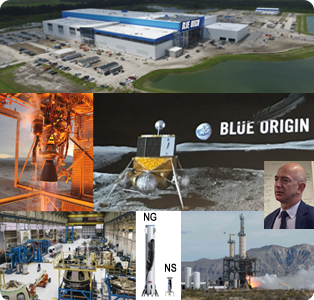
Blue Origin Rocket Facility Readying for December Opening at Kennedy Space Center
Cutting-edge upgrades to Kennedy Space Center and the 299-acre Exploration Park include the 750,000-sq ft. Blue Origin facility on Space Commerce Way aiming for a grand opening before December 20. The new facility will be responsible for manufacturing and testing 2-stage and 3-stage New Glenn rockets prior to launching from Complex 36 with plans to reach orbit NET 2020. New Glenn reusable first stage utilizes 7 BE-4 methane / oxygen engines providing 17.1 Meganewton thrust. Six orbital launches have been contracted so far: five for OneWeb and one for Eutelsat. Founded in 2000 by Jeff Bezos, Blue Origin 260,000-sq ft. Headquarters on 26 acres is also expanding its office, manufacturing and warehouse space. It intends to build an engine manufacturing facility in ‘Rocket City’ Huntsville AL to support BE-4 production needed to supply ULA Vulcan rockets. The New Shepard reusable suborbital systems are tested and flown at the Culberson County, Texas site. The third propulsion module New Shepard (NS3) capsule is the first to contain real windows and an initial flight test is expected before end of 2017. NS4 will carry the first test pilots in 2018. The next project is New Armstrong, an even larger booster capable of lunar missions. Bezos has also proposed Blue Moon lunar lander to deliver cargo to Moon South Pole to support human settlement. (Image Credit: Blue Origin)
Nov 27-30 — International Academy of Astronautics,Shenzhen, China:21st IAA Humans in Space Symposium; at Shenzhen Convention & Exhibition Center.
Nov 27 – Dec 1 — ESA, Belgian Solar-Terrestrial Centre of Excellence, Space Weather Working Team, Brussels, Belgium:14th European Space Weather Week.
Nov 28 — Roscosmos State Corporation, Launch Soyuz / Meteor M2-1 (MS-08),Vostochny Cosmodrome, Russia: Russia Soyuz rocket to launch Meteor M2-1 polar-orbiting weather satellite and secondary payloads including Earth observation CubeSats for Planet and Spire at 14:41:46 local time.
Nov 28 — British Interplanetary Society, London, United Kingdom:Lecture: The Fermi Paradox; featuring Alistair Scott, Gerry Webb, Dave Gifford, Alan Bond, many others; 10:00-16:30.
Nov 28 — 50th Observation of First Pulsar Discovery: To date, over 2,000 pulsars have been discovered, and various sources provide maps; on this day in 1967, Jocelyn Bell & Antony Hewish observed pulses separated by 1.33 seconds that originated from pulsar PSR 1919+21.
Nov 29-30 — International Space Exploration Coordination Group, Solar System Exploration Research Virtual Institute, Ames Research Center, NASA, Moffett Field CA:Global Exploration Road Map Workshop.
Nov 30 — 6th International Cosmic Day: Students, teachers and scientists come together to talk and learn about Cosmic Rays at multiple locations around the World.
Nov 30 —Moon: 4.1° SSE of Uranus, 02:00.
FRIDAY
NET Dec — ExoMars 2016 Orbiter, Mars Orbit: Science operations to begin this month after entering orbit 14 months ago – ESA science mission to continue until at least Dec 2019, will also support data relay operations for NASA landers on Mars; in 2021 expected to support communications for ExoMars 2020 rover & lander, and operate until Dec 2022.
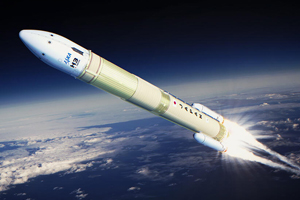
NET Dec — JAXA, Launch Epsilon / ASNARO 2,Uchinoura Space Center, Japan: Epsilon rocket to launch Advanced Satellite with New system ARchitecture for Observation (ASNARO) 2 radar Earth observation satellite developed by Japan Space Systems and NEC Corp.
Dec 1 — Phoenicid Meteor Shower Peak: Meteor shower may produce 2-5 per hour, slow moving (18 km/sec) meteors from debris of comet 289P Blanpain; peak 20:00.
SATURDAY
Dec 2 —Solar and Heliospheric Observatory (SOHO),LEO: ESA / NASA craft studying sun, begins 23rd year of operations today, launched 1995; has discovered more than 3,000 comets.
Dec 2-4 — University Space Engineering Consortium (UNISEC), University of Rome, International Academy of Astronautics, Canon Electronics, Mitsubishi Electric, Rome, Italy:5th UNISEC-Global Meeting.
Dec 3 — Hayabusa 2,Asteroid 162173 Ryugu Trajectory: JAXA Hayabusa 2 begins 4th full year in space today, launched Dec 3, 2014; expected to reach asteroid June / July 2018.
Includes ~150 meetings covering the fields of COSPAR Scientific Commissions / Panels / Task Groups, such as SC B: The Earth-Moon System, Planets, and...
From 02 to 07 August 2026, a few thousand geoscientists across diverse disciplines will gather at the 23rd annual meeting of the Asia Oceania Geosciences...
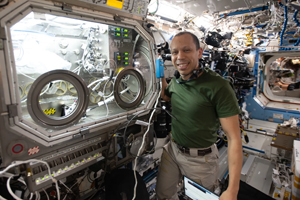
2:45 pm EDT from Johnson Space Center, NASA astronaut Chris Williams will recap his recent eight-month mission aboard the International Space Station. Williams returned to...
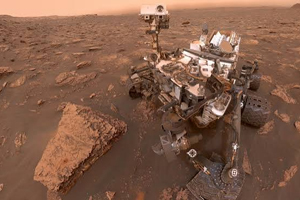
NASA Curiosity (Mars Science Laboratory) rover surpasses another full year of operations on Mars surface today; launched Nov 26, 2011 – landed Aug 5,...
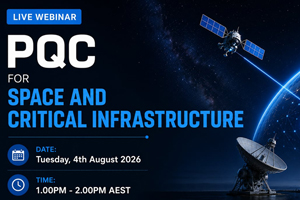
Virtual Series 2026 will offer deeper conversations on why PQC matters and the practical steps businesses should be taking; starts 1:00 pm AEST. Featuring:...
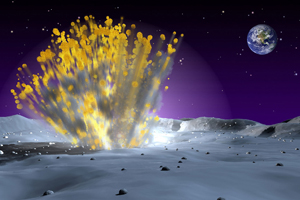
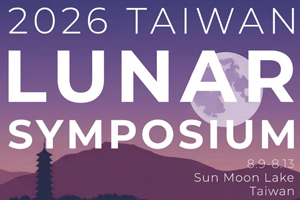
This international lunar science meeting has two objectives: to provide a platform for leading experts to review recent advances across lunar research, from the...
At CSIR International Convention Centre. Key topics are Earth Observation, Developing Space Tourism, Space Supply Manufacturing. Cultural tours are offered.
Participants will receive theoretical and hands-on training in electron imaging and X-ray spectroscopy for application to planetary samples. This training opportunity is targeted at...
"Leading Australia’s Space Future for Our Strategic Advantage". Southern Space 2026 brings together decision-makers who set the direction for Australia’s space sector. It is...
 Roscosmos Soyuz 2-1B rocket with Fregat upper stage to lift the Meteor M2-1 weather monitoring satellite into polar orbit November 28 at 14:41:46 local time. Meteor-M 2-1 is a 2,778-kg global weather research platform for monitoring the ozone layer, ocean surface temperatures, ice conditions in polar regions on Earth and the radiation environment in near-Earth space — part of a series of satellites developed around the Resurs-UKP bus by Moscow-based VNIIEM. Also on the manifest are 18 secondary payloads including Baumanets-2, Scout, SEAM, AISSat-3, CubeBel-1, multiple Dove Flock-2, Lemur-2 and Lemur-3 satellites. This is only the second launch from Russia’s newly redeveloped Pacific region Spaceport 600-800 km inland in the far east of the country. Vostochny Cosmodrome is designed as the deep space exploration hub of the future for Russia, easing reliance on access to former Soviet facilities at Baikonur Cosmodrome in Kazakhstan. There are plans to upgrade infrastructure at Vostochny to accommodate super-heavy class rockets for interplanetary spacecraft and Vladimir Putin has expressed interest in international cooperation on various activities, as well as efforts to jointly explore Moon and Mars. The second phase of construction is projected to require US$636M, while the first liftoff of the Angara-A5M Heavy rocket from the PU1 launch pad is scheduled for 2021. (Images Credit: Roscosmos, VNIIEM, Planet, UTIAS, Spire, BMSTU)
 Nov 27 —
  Nov 27 — NewSpace:
  Nov 27 — USA: NASA Administrator nominee
 = All times
 = All times for international terrestrial events in local time unless noted.
 = All times for space events, and…
 = All times for international space / astro events in Hawaii Standard Time unless noted. Add 10 hours to obtain UT (‘Universal Time;’ Greenwich, England).
 Cutting-edge upgrades to Kennedy Space Center and the 299-acre Exploration Park include the 750,000-