SpaceX Falcon Heavy Debut and a Multi World Civilization
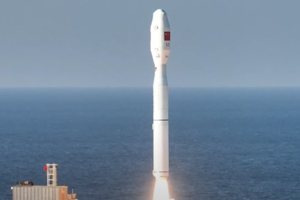
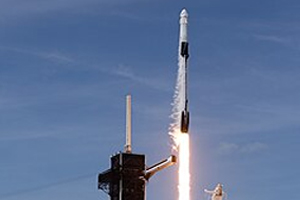
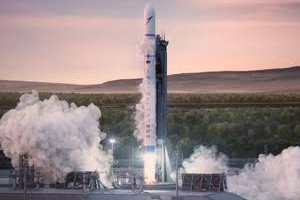
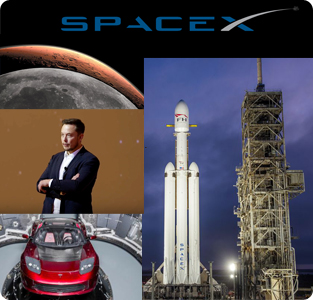
Falcon Heavy maiden launch is set for February 6 at Kennedy Space Center Launch Pad 39A, Cape Canaveral FL, which hosted Neil Armstrong and Buzz Aldrin Apollo 11 mission to the Moon. With 3 cores, 27 Merlin engines in the first stage generating 22,819 kilonewtons thrust, Falcon Heavy is considered the most powerful rocket since NASA Saturn V. It will be capable of carrying 63,900 kg for ~US$90M, twice as much mass as its nearest competitor, Delta IV Heavy, which launches for $400M. SpaceX plans to land the center core on “Of Course I Still Love You” drone ship in Atlantic Ocean. The other 2 cores will attempt to simultaneously touch down on ground in a first-of-its-kind engineering feat. Falcon Heavy will endeavor to loft a dummy payload, one of founder and CEO Elon Musk personal Tesla Roadsters, to a Hohmann transfer orbit that could take it near Mars. Falcon Heavy could potentially send NASA Europa Clipper mission to Jupiter or launch James Webb Space Telescope compared to SLS at ~$1B per launch. Falcon Heavy could also launch 16 metric-ton payloads to Mars and smaller payloads to Pluto. Future plans include commercial launch in mid 2018, U.S. government payload in June, a trip for 2 around the Moon possibly 2019 with the capability of seating of 7 humans, and other commercial launches as well as cargo and crew ships to Mars in 2024. (Image Credit: SpaceX, NASA)
MONDAY
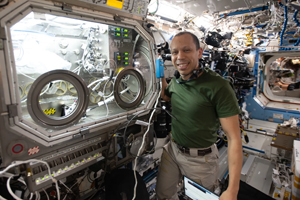
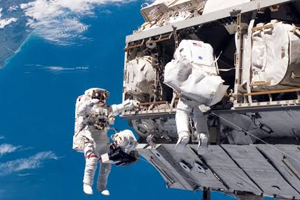
Ongoing… Feb 5 — ISS, 405-km LEO: Expedition 54 six-member crew cleaning and stowing gear after recent Russia EVA, expecting arrival of Progress 69P cargo ship; on top of 2.5 hours of daily exercise, crew could perform 70+ activities on task and maintenance list in a given day.
Feb 5 —NewSpace: Planetary Resources Arkyd-6 spacecraft working toward capturing first mid-wave infrared image; startup Airvantis plans to send Brazil 1st lunar CubeSat to Moon ~2021; SpaceWorks Enterprises posts 2018 Small Satellite Report Trends and Market Observations.
Feb 5 — Solar System:LRO deputy project scientist Noah Petro discusses recent lunar eclipse and Moon spacecraft operations; Mars Reconnaissance Orbiter shares more images supporting evidence of past water.
Feb 5 — Global:Roscosmos CEO Igor Komarov states Russia plans to launch 150 times by 2025; ESA and CNSA continue to develop collaboration for future lunar science / sample return via Chang’e-5; technical discussions regarding Deep Space Gateway (DSG) occur in Japan with international ISS partners.
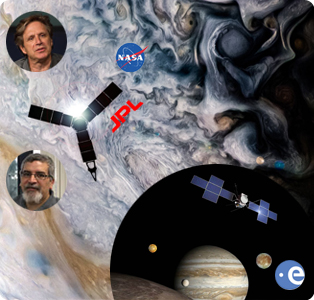
Juno to Perform 11th Jupiter Flyby; ESA Advancing JUICE Mission for 2022
The most massive planet in the Solar System, Jupiter, is set to have NASA Juno craft speed by at 209,000 km/h during its 11th perijove and 10th science flyby February 7. It will pass within 3,500 km of swirling cloud tops with all 9 of its instruments collecting data and images. The US$1.1B mission aims to determine the mass of the unseen core of Jupiter, measure the abundance of water, study auroras, and map gravity and magnetic fields, as well as variations in atmospheric composition. Scott Bolton is the Principal Investigator for Juno and Ed Hirst recently took over as Project Manager. Juno 53-day orbit and science investigation is set to continue at least until 2020. In May of 2022 European Space Agency is planning to launch Jupiter Icy moons Explorer (JUICE) with 10 science instruments and an experimental payload, reaching Jupiter October 2029 for at least 3.5 years of study on Jupiter atmosphere and magnetosphere, and Galilean moons Io, Europa, Ganymede and Callisto. The JUICE Industrial Consortium Workshop is being held Feb 8 at ESTEC featuring prime contractor Airbus Defence and Space. With multiple core teams, subgroups, equipment and services to develop JUICE, this meeting will present current mission status, near and far future critical activities and allow participants to learn how they fit into the large-scale JUICE development while producing high-quality, fast-paced work. to maintain the launch date on 20th of May 2022. (Image Credit: NASA, ESA, JPL-Caltech, SwRI, MSSS, Kevin Gill, Aubrey Gemignani)
Feb 5-8 — SSL, AIAA, Virgin Orbit, SSPI, Space Foundation, Boeing, Ball Aerospace, et al, Mountain View CA: 2018 SmallSat Symposium.
Feb 5-8 — Applied Technology Institute, Albuquerque NM: ATI Course: Space Systems Fundamentals; instructor Mike Gruntman, Professor of Astronautics at University of Southern California.
Feb 5 — Apollo Asteroid 2018 BP6: Near-Earth Flyby (0.009 AU).
Continued from…
Jan 15 – Feb 16 — International Space University, University of South Australia,Adelaide, Australia:2018 Southern Hemisphere Space Studies Program; intensive, five week, live-in experience built around an international, intercultural and interdisciplinary educational philosophy.
Jan 16 – Feb 16 — NASA, Online / Chico CA: Kickstarter Campaign: First to the Moon – The Journey of Apollo 8; to create a feature documentary film about Apollo 8 mission that brought back ‘Earthrise’ photo and the three astronauts that crewed it – Commander Frank Borman, Jim Lovell, and Bill Anders.
Feb 6 — SpaceX, Launch Falcon Heavy Demo,Cape Canaveral AFS FL: SpaceX maiden falcon heavy planned to launch today, launch window 13:30-16:00; will attempt to place Tesla Roadster on an Earth escape trajectory into Hohmann transfer orbit; rocket consists of standard Falcon 9 rocket core with 2 additional strap-on boosters (total of 27 Merlin engines).
Feb 6 — Aten Asteroid 2017 YS8: Near-Earth Flyby (0.077 AU).
Feb 6 — Aten Asteroid 2018 BB5: Near-Earth Flyby (0.090 AU).
WEDNESDAY
Feb 7 — Juno, Perijove 11 / 10th Science Close Flyby,Jupiter Orbit: NASA craft in 53-day orbit to come within ~3,500 km of Jupiter cloud tops during Perijove 11, its 11th close flyby of Jupiter and 10th science flyby with instruments turned on.
Feb 8 —Institute of Physics in Ireland, Dublin Institute for Advanced Studies, British Council, Northern Ireland Science Festival, Dublin, Ireland: Standing Up For Science Workshop; at Dublin City University.
Feb 10 — Aten Asteroid 2015 FV118: Near-Earth Flyby (0.093 AU).
SUNDAY
Feb 11 — Roscosmos State Corporation, Launch Soyuz / Progress 69P (MS-08),Baikonur Cosmodrome, Kazakhstan: Russia Soyuz rocket to launch Progress 69P resupply ship to ISS.
Includes ~150 meetings covering the fields of COSPAR Scientific Commissions / Panels / Task Groups, such as SC B: The Earth-Moon System, Planets, and...
From 02 to 07 August 2026, a few thousand geoscientists across diverse disciplines will gather at the 23rd annual meeting of the Asia Oceania Geosciences...
2:45 pm EDT from Johnson Space Center, NASA astronaut Chris Williams will recap his recent eight-month mission aboard the International Space Station. Williams returned to...
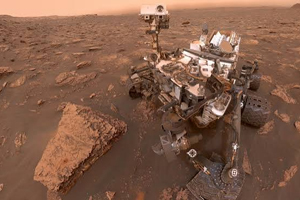
NASA Curiosity (Mars Science Laboratory) rover surpasses another full year of operations on Mars surface today; launched Nov 26, 2011 – landed Aug 5,...
Virtual Series 2026 will offer deeper conversations on why PQC matters and the practical steps businesses should be taking; starts 1:00 pm AEST. Featuring:...
This international lunar science meeting has two objectives: to provide a platform for leading experts to review recent advances across lunar research, from the...
At CSIR International Convention Centre. Key topics are Earth Observation, Developing Space Tourism, Space Supply Manufacturing. Cultural tours are offered.
Participants will receive theoretical and hands-on training in electron imaging and X-ray spectroscopy for application to planetary samples. This training opportunity is targeted at...
"Leading Australia’s Space Future for Our Strategic Advantage". Southern Space 2026 brings together decision-makers who set the direction for Australia’s space sector. It is...
 Feb 5 —
  Feb 5 — NewSpace:
  Feb 5 — USA: Reactions to President
 = All times
 = All times for international terrestrial events in local time unless noted.
 = All times for space events, and…
 = All times for international space / astro events in Hawaii Standard Time unless noted. Add 10 hours to obtain UT (‘Universal Time’).
 The most massive planet in the Solar System, Jupiter, is set to have NASA Juno craft speed by at 209,000 km/h during its 11th perijove and 10th science flyby February 7. It will pass within 3,500 km of swirling cloud tops with all 9 of its instruments collecting data and images. The US$1.1B mission aims to determine the mass of the unseen core of Jupiter, measure the abundance of water, study auroras, and map gravity and magnetic fields, as well as variations in atmospheric composition. Scott Bolton is the Principal Investigator for Juno and Ed Hirst recently took over as Project Manager. Juno 53-day orbit and science investigation is set to continue at least until 2020. In May of 2022 European Space Agency is planning to launch Jupiter Icy moons Explorer (JUICE) with 10 science instruments and an experimental payload, reaching Jupiter October 2029 for at least 3.5 years of study on Jupiter atmosphere and magnetosphere, and Galilean moons Io, Europa, Ganymede and Callisto. The JUICE Industrial Consortium Workshop is being held Feb 8 at ESTEC featuring prime contractor Airbus Defence and Space. With multiple core teams, subgroups, equipment and services to develop JUICE, this meeting will present current mission status, near and far future critical activities and allow participants to learn how they fit into the large-scale JUICE development while producing high-quality, fast-paced work. to maintain the launch date on 20th of May 2022. (Image Credit: NASA, ESA, JPL-Caltech, SwRI, MSSS, Kevin Gill, Aubrey Gemignani)