China to Launch Chang’e-4 Satellites, Precursor to Lunar South Pole Landing
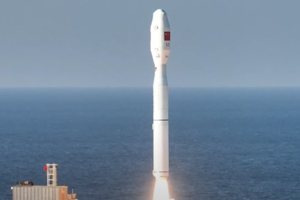
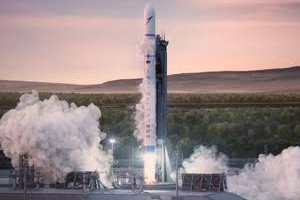
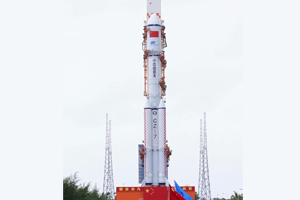
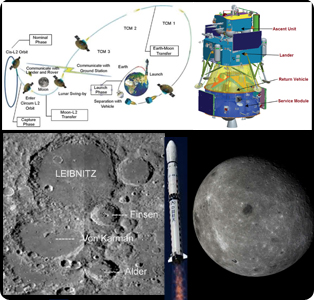
China plans to launch the 1st of 2-phase Chang’e-4 mission via Long March 4C rocket to Earth-Moon Lagrange from Xichang Satellite Launch Center during a 3-day launch window starting May 21. A relay satellite named Queqiao (bridge of magpies) is to be lofted to L2, and two microsatellites, Longjiang-1 and Longjiang-2 (dragon river), are intended for Lunar orbit. Science and Technology Commission Director of CAST Bao Weimin mentions the relay satellite will be placed ~64,000 km above the Lunar far side ~450,000 km from Earth. The primary function of the 425-kg satellite with a 130 N hydrazine propulsion system and 4.2-m dish antenna relay will be to transmit communications from the lunar far side to support a lander and rover scheduled to launch on a Long March 3B in November to Von Kármán crater in Aitken Basin. Queqiao is equipped with Netherlands-China Low-Frequency Explorer (NCLE) to detect unexplored radio signals from deep space, measure emissions from the Sun and Jupiter, and solar winds behind the Moon. The two 50x50x50 cm3, 45-kg microsatellites with micro optical cameras will be used for low-frequency astronomy and interferometry experiments. This will be the 5th Lunar mission for China with plans for Chang’e-5 Lunar probe in 2019 to return samples to Earth. CNSA Deputy Director Pei Zhaoyu states Chang’e-5 mission will contain an orbiter, lander, ascender and returner. (Image Credit: CNSA, Planetary Society, CAST, Spaceflight101, NASA)
MONDAY
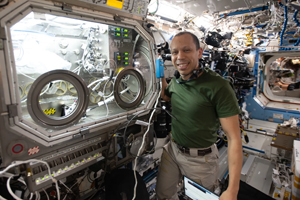
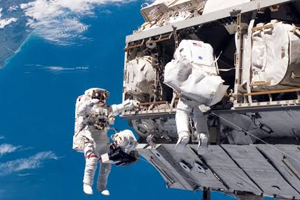
Ongoing… May 21 — ISS, 405-km LEO: Expedition 55 with Commander Anton Shkaplerov preparing for Cygnus OA-9 rendezvous, capture and installation; logging data from Organic Carbon Analyzer, water samples, food acceptability questionnaire, radiation dosimeter; 3 crew members performing lower body exercises and readying for return to Earth next week
May 21 — Solar System:Juno studying Jupiter could potentially utilize gravity science instrument & magnetometer to study Europa which shows further evidence of liquid ocean; recent data from Hayabusa2 Star Tracker being used for optical navigation and to determine orbits of spacecraft & target asteroid Ryugu.
May 21 — Galaxy: Fastest growing black hole in Universe could be studied for formation of elements in early galaxies, and with future instruments – measure the expansion of Universe; Herschel telescope observations of rare laser emission helping to refine models of Star evolution.
May 21 — Global: Yip Chuang Syn planning to become First Singapore person in Space using GoSpace capsule / helium balloon launching from Alice Springs, Australia; Dmitry Rogozin may be elected to head Roscosmos State Corporation; Humans to Mars Summit panel confirms ability to reach Mars by 2030s.
May 21 — Hawai’i: Keck Observatory donation drive for those affected by Kilauea volcano; CFHT spectrometer SITELLE being used to detail thin intricate filaments around galaxies; JCM Telescope on Maunakea undergoing vital secondary mirror unit removal and maintenance, to be re-installed by end of month
= All times
for terrestrial events in local time unless noted.
= All times for international terrestrial events in local time unless noted.
= All times for space events, and…
= All times for international space / astro events in Hawaii Standard Time unless noted. Add 10 hours to obtain UT (‘Universal Time’).
NSS ISDC 2018 and Related Events Focus on Major Advances in Human Spaceflight, Commercial Space, Tech
The National Space Society 37th Annual International Space Development Conference is being held May 24-27 in Los Angeles, California with theme Space Travel: Putting People into Space. In 20 sessions and 4 Plenaries, about 45 speakers will cover topics on Moon and Mars settlement, interstellar matters, space business, ISRU, transportation, power and Aerospace Legacy. Speakers include (L-R) Jeff Bezos, Freeman Dyson, Kathryn Sullivan, Linda Spilker, Li Wang, Robert Zubrin, Jim Keravala, John Mankins, Madhu Thangavelu and Michael Laine. This year there may be significant developments with the first missions landing near Lunar South Pole by India and China, International Lunar Orbital Platform-Gateway planning, and commercial human spaceflights by USA-based Blue Origin New Shepard, Boeing CST-100 Starliner, SpaceX Dragon 2, and Virgin Galactic. As part of ISDC, the Los Angeles Regional NewSpace Business Plan Competition will be May 26 and feature 6 qualifying business startups pitching ideas to a panel – cash prize US$2,500 for the winner. The next Competition will be in Austin, Texas during New Worlds Conference. On May 22-24 in Pasadena, Space Tech Expo USA will feature 250 exhibitors, 35 free sessions and over 3,500 people including representatives from Moon Express, Astrobotic, PTScientists, Team Indus, OffWorld, NanoRacks, Vector, SpaceX, Blue Origin, Reaction Engines, Rocket Lab, Orbital ATK, ULA, SNC, Boeing, ESA, JAXA, NASA, DLR, JPL and International Institute of Space Commerce. (Image Credit: NSS, NSI-MI, Blue Origin, Moon Express, Reaction Engines, et al)
May 21 — CNSA, Launch Long March 4C / Chang’e-4 Relay, Xichang Satellite Launch Center, China: Chang’e-4 relay “Queqiao” (bridge of magpies) to launch 05:00 local time to Earth-Moon Lagrange Point L2 to support lander / rover mission launching NET Nov to Moon South Pole / Aitken Basin; will carry Longjiang-1 and -2 microsatellites (50x50x40 cm3, mass of ~45 kg) intended for 200 x 9,000 km lunar orbit for low frequency radio astronomical observation.
May 21-24 — Lunar and Planetary Institute, Universities Space Research Association, Houston TX:Ocean Worlds 3.
May 21-24 — Applied Technology Institute, Columbia MD: ATI Course: Exoplanets; instructor Michael Summers, Professor of Planetary Science and Astronomy at George Mason University.
May 21 — Moon: 1.4° NNE of Regulus, 16:00; at first quarter, 17:50.
May 21 — Venus: 0.73° N of M35 cluster, 00:00.
May 21 — Mars: Autumn equinox, 17:00.
May 21 — Amor Asteroid 2018 JY1: Near-Earth Flyby (0.074 AU)
Continued from…
Dec 21, 2017 – Jun 4 — New Horizons, KBO Ultima Thule (2014 MU69) Trajectory: Spacecraft in hibernation mode until Jun 4; will awaken and prepare for KBO flyby 1 Jan 2019; approach phase officially begins in August.
NET May 18-30 — Rocket Lab, Launch Electron / “It’s Business Time” Multi-Payload, Launch Complex 1, Mahia Peninsula, New Zealand: Planning first fully commercial launch dubbed ‘It’s Business Time’ with two Spire Lemur 2 CubeSats and one GeoOptics CICERO satellite.
May 20-24 — American Geophysical Union Space Physics and Aeronomy Section, American Astronomical Society Solar Physics Division, Leesburg VA:Triennial Earth-Sun Summit; second summit to host over 400 presentations.
TUESDAY
May 22 — SpaceX, Launch Falcon 9 / Iridium Next 51-55 & GRACE Follow-On,Vandenberg AFB CA: SpaceX Falcon 9 rocket to launch 5 satellites at 12:47:58 PDT for Iridium next mobile communications fleet and 2 Gravity Recovery and Climate Experiment Follow-On satellites for NASA and German Research Centre for Geosciences.
May 22-24 — .SPACE, Orbital ATK, MDA,Ascent Aerospace, SmarterShows, Pasadena CA: Space Tech Expo.
May 22-26 — Canadian Astronomical Society / Societe Canadienne d’Astronomie (CASCA), University of Victoria, NRC Herzberg Astronomy and Astrophysics Research Centre,Victoria, British Columbia, Canada: 49th annual meeting of the CASCA.
May 22 — Apollo Asteroid 2018 JK: Near-Earth Flyby (0.042 AU)
May 23 — Center for the Advancement of Science in Space (CASIS), Sunnyvale CA: CASIS Salon: Expanding Horizons; with Dan Lopez, founder and CEO of Orbitmuse; at Plug and Play Tech Center, 18:00-21:00.
May 23 — Apollo Asteroid 2016 WL7: Near-Earth Flyby (0.080 AU)
THURSDAY
May 24 — ISS, Cygnus OA-9 Rendezvous and Capture, 405-km LEO: Expedition 55 to facilitate capture and installation of Orbital ATK Cygnus cargo ship; 03:30 EDT, live coverage available.
May 24 — Juno, Perijove 13 / 12th Science Close Flyby,Jupiter Orbit: NASA craft in 53-day orbit to come within ~3,500 km of Jupiter cloud tops during Perijove 13, its 13th close flyby of Jupiter and 12th science flyby with instruments turned on.
May 25 — `Imiloa Astronomy Center, Onizuka Center for International Astronomy Visitor Information Station,Kamuela, HI:Stargazing Live; staff guided tour of the night sky at Maunakea visitor center; 19:30.
May 25-26 — Singapore Space and Technology Association (SSTA),Singapore: ActInSpace 2018 (#AIS2018); an International Hackathon that involves finding answers to tomorrows needs by inventing new uses and services derived from Space Technology.
May 25 — Moon: 7.0° NNE of Spica, 16:00.
May 25 — Apollo Asteroid 2018 JG2: Near-Earth Flyby (0.047 AU)
May 25 — Apollo Asteroid 2018 FS3: Near-Earth Flyby (0.074 AU)
SATURDAY
May 26 — Center for Space Commerce and Finance, Los Angeles CA: NewSpace Business Plan Competition 2018; winner to receive US$2,500 cash prize, courtesy of Heinlein Prize Trust.
May 26 — Mauna Kea Astronomy Outreach Committee, Mauna Kea HI, 2,800-meter level: Malalo o ka Po Lani; presentation featuring Leilehua Yuen, covering ‘Language of the Lei’ and cultural components that surround Mauna O Wakea, 18:00 followed by stargazing program, at Mauna Kea Visitor Information Center.
May 26 — Apollo Asteroid 2017 LF: Near-Earth Flyby (0.085 AU)
Includes ~150 meetings covering the fields of COSPAR Scientific Commissions / Panels / Task Groups, such as SC B: The Earth-Moon System, Planets, and...
From 02 to 07 August 2026, a few thousand geoscientists across diverse disciplines will gather at the 23rd annual meeting of the Asia Oceania Geosciences...
2:45 pm EDT from Johnson Space Center, NASA astronaut Chris Williams will recap his recent eight-month mission aboard the International Space Station. Williams returned to...
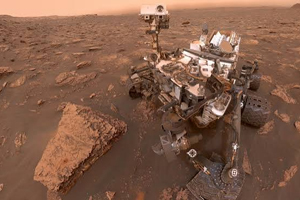
NASA Curiosity (Mars Science Laboratory) rover surpasses another full year of operations on Mars surface today; launched Nov 26, 2011 – landed Aug 5,...
Virtual Series 2026 will offer deeper conversations on why PQC matters and the practical steps businesses should be taking; starts 1:00 pm AEST. Featuring:...
This international lunar science meeting has two objectives: to provide a platform for leading experts to review recent advances across lunar research, from the...
At CSIR International Convention Centre. Key topics are Earth Observation, Developing Space Tourism, Space Supply Manufacturing. Cultural tours are offered.
Participants will receive theoretical and hands-on training in electron imaging and X-ray spectroscopy for application to planetary samples. This training opportunity is targeted at...
"Leading Australia’s Space Future for Our Strategic Advantage". Southern Space 2026 brings together decision-makers who set the direction for Australia’s space sector. It is...
 May 21 —
  May 21 — NewSpace: Astrobotic adds
  May 21 — USA: NASA continues
 = All times
 = All times for international terrestrial events in local time unless noted.
 = All times for space events, and…
 = All times for international space / astro events in Hawaii Standard Time unless noted. Add 10 hours to obtain UT (‘Universal Time’).
 The National Space Society 37th Annual International Space Development Conference is being held May 24-27 in Los Angeles, California with theme Space Travel: Putting People into Space. In 20 sessions and 4 Plenaries, about 45 speakers will cover topics on Moon and Mars settlement, interstellar matters, space business, ISRU, transportation, power and Aerospace Legacy. Speakers include (L-R) Jeff Bezos, Freeman Dyson, Kathryn Sullivan, Linda Spilker, Li Wang, Robert Zubrin, Jim Keravala, John Mankins, Madhu Thangavelu and Michael Laine. This year there may be significant developments with the first missions landing near Lunar South Pole by India and China, International Lunar Orbital Platform-Gateway planning, and commercial human spaceflights by USA-based Blue Origin New Shepard, Boeing CST-100 Starliner, SpaceX Dragon 2, and Virgin Galactic. As part of ISDC, the Los Angeles Regional NewSpace Business Plan Competition will be May 26 and feature 6 qualifying business startups pitching ideas to a panel – cash prize US$2,500 for the winner. The next Competition will be in Austin, Texas during New Worlds Conference. On May 22-24 in Pasadena, Space Tech Expo USA will feature 250 exhibitors, 35 free sessions and over 3,500 people including representatives from Moon Express, Astrobotic, PTScientists, Team Indus, OffWorld, NanoRacks, Vector, SpaceX, Blue Origin, Reaction Engines, Rocket Lab, Orbital ATK, ULA, SNC, Boeing, ESA, JAXA, NASA, DLR, JPL and