Parker Solar Probe Set to Launch Aug 11 to Investigate Sun Outer Corona
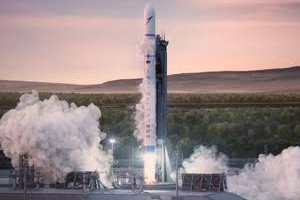
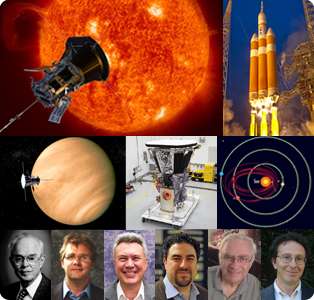
The NASA Parker Solar Probe (PSP) is scheduled to launch during an 8-day window opening August 11 on United Launch Alliance Delta 4 Heavy from SLC 37 Cape Canaveral AFS, Florida ~03:48 EDT. The 555-kg craft is equipped with a 11.4-cm thick reinforced carbon–carbon composite solar shield designed to withstand external temperatures reaching 1,377° C. It will come within 8.5 solar radii (6 million km) of the ‘surface’ of the Sun with its 5 major experiments to collect data on coronal magnetic field, dusty plasma, flow and acceleration of solar wind, and determine transport and acceleration of energetic particles – to potentially improve space-weather event forecasting. The US$1.5B mission plans 7 gravity assists at Venus over 7 years to incrementally decrease its orbital perihelion to achieve at least 26 passes of the Sun. PSP will achieve a velocity of up to 200 km/s as it passes around the Sun, which will temporarily make it the fastest human-made object. PSP is named after (L-R) Astrophysicist Eugene Parker for his theories on supersonic solar wind and the shape of the outer solar system solar magnetic field. The 5 Instrument Principal Investigators are Stuart Bale (UC Berkeley), David McComas (Princeton), Justin Kasper (Univ. of Michigan), Russell Howard (Naval Research Laboratory), and Marco Velli (UCLA). A memory card aboard the craft carries 1,137,202 names, photos of Eugene Parker and his 1958 solar-wind paper. (Image Credits: NASA, JHU-APL, ULA, Univ. of Chicago, Berkeley, Princeton, A. Kingsbury / WBUR, NRL, UCLA)
MONDAY
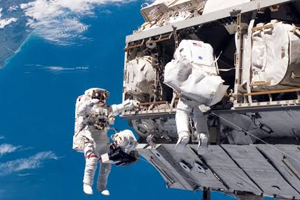
Highlights… Aug 6 — ISS, 405-km LEO: Expedition 56 six-member crew preparing for Russia EVA #45, participating in in-flight activities with Challenger Center in D.C., McAuliffe-Shepard Discovery Center, and Microsoft Youth Spark Live Event in Houston; working with SPHERES Zero Robotics hardware and Chemical Gardens experiment, using Robotics Onboard Trainer for HTV-7 rendezvous September.
Aug 6 — NewSpace: Blue Origin planning 2023 Blue Moon lander, ~2 additional New Shepard tests before crewed flights; Firefly Aserospace working on Alpha & Beta launchers to reach LEO and Moon, forms Advisory Board with Robert Lightfoot, others; Virgin Galactic Unity reaches 52-km altitude, crewed flight engineer test planned for end of 2018.
Aug 6 — Solar System: Mars potential South Pole lake 1.5 km below surface will be targeted with radar instruments on orbiters, future landers / rovers; Akatsuki in extended operation phase hoping to detect lightning on Venus, monitoring atmospheric waves and planet spin rate; detailed Ceres images help create Earth analog comparisons for rocky body evolution theories.
Aug 6 — Galaxy: Cold Atom Laboratory on ISS creates what could be coldest spot in Universe at 100 nanoKelvin (10 billionths of a degree above Absolute Zero) – may enter science experiment readiness phase in Sep; ISRO updating Astrosat findings, craft performing multiwavelength observations of Universe in 3rd observing cycle, 4th to begin in Oct.
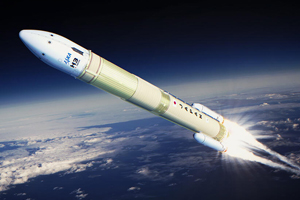
Aug 6 — Global: JAXA planning first test flight to 100-m of reusable rocket Mar 2019, and H3 Launch Vehicle in FY 2020; three-weeks of tests at Roscosmos training center will result in 2 UAE Astronauts to be selected for Apr 2019 flight to ISS; former chair of Space Industry Association of Australia discusses views on current, future needs for Australia Space Agency.
Aug 6 — Hawai’i: Series of papers being published on CFHT surveys of Milky Way dwarf galaxies, starting with Draco II satellite; EnVision Maunakea facilitators continue publicity and discussion on future of Mountain, public opinions requested; TMT future science and precise astrometry preparations underway as telescope building site on Mauna Kea still in question.
= All times
for terrestrial events in local time unless noted.
= All times for international terrestrial events in local time unless noted.
= All times for space events, and…
= All times for international space / astro events in Hawaii Standard Time unless noted. Add 10 hours to obtain UT (‘Universal Time’).
Geologists Meet to Discuss Lunar Polar Volatiles and Planetary Craters
Two meetings related to water and craters on the Moon are happening this week in USA. Lunar Polar Volatiles meeting is scheduled August 7-9 at Johns Hopkins University Applied Physics Laboratory (APL) in Maryland. About 50 oral and poster presentations by experts from NASA SSERVI and Lunar Reconnaissance Orbiter communities and elsewhere will discuss the state of knowledge on volatiles in the polar regions of the Moon. The meeting is organized by (L-R) Kathleen Mandt and Rachel Klima of APL, Will Farrell of NASA Goddard, and 3 others from various universities. Hawai’i Institute of Geophysics & Planetology (HIGP) professor Jeffrey Taylor is presenting on “The Lunar Interior as a Source of Polar Water”. Another University of Hawaii HIGP professor Paul Lucey and his students, including Casey Honniball and Emily Costello, will present on water ice at lunar poles and future steps for further measurements. On Aug 8-10, the Planetary Crater Consortium Meeting is being held at Southwest Research Institute in Boulder, Colorado. This international consortium formed in 2010 from a merger of the Lunar, Mars, and Outer Solar System Crater Consortia, respectively. About 15-20 members have participated in the past annual meetings. This 9th meeting is organized by astrophysics professor Nadine Barlow of Northern Arizona University who studies impact craters and their relations to possible subsurface water ice reservoirs. (Image Credits: JHU APL, AAS, NASA, SSERVI, LRO, GSFC)
Aug 6 — Kepler, Heliocentric Orbit: Kepler spacecraft to begin observational Campaign 19 after attempting Campaign 18 data download.
Aug 6 — Apollo Asteroid 2018 OZ: Near-Earth Flyby (0.018 AU)
Aug 6 — Aten Asteroid 2011 FQ6: Near-Earth Flyby (0.094 AU)
Continued from…
Jul 8 – Oct 9 — NAOC, National Aquatic Center “Water Cube”, Beijing, China: Lunar Exploration Technology Exhibition featuring 10-meter diameter Moon, lunar imagery, ‘moonlight’ and surround sound composition.
Jul 15 – Aug 23 — Mohammed bin Rashid Space Centre, NASA, Dubai, UAE: NASA Space and Rocketry Summer Camp; at Lapita Hotel Ballroom, Dubai Parks and Resorts.
Jun 25 – Aug 17 — Frontier Development Lab (FDL), NASA,Online: FDL 2018 Challenges; an AI R&D accelerator that tackles knowledge gaps useful to NASA: 2018 topics are space resources, orbital debris, NEOs, Earth observation, space weather, astrobiology.
Jun 25 – Aug 24 — International Space University, ESA, Netherlands Space Office, Delft University of Technology, Leiden University, Noordwijk, The Netherlands: ISU 31st Space Studies Program (SSP 2018).
Aug 4-9 — AIAA, Utah State University, Logan UT: 32nd Annual Small Satellite Conference; to explore new technologies, design methods, processes, operational constructs, and activities that inform and secure the success of small satellite missions.
Aug 7 — SpaceX, Launch Falcon 9 / Merah Putih,Cape Canaveral AFS FL: SpaceX to launch Merah Putih communications satellite for Telkom Indonesia from SLC-40 pad.
Aug 7-9 — Johns Hopkins University, Applied Physics Laboratory, SSERVI, NASA, LRO,Laurel MD:Lunar Polar Volatiles 2018; bringing together experts in areas of data analysis, modeling, instrumentation, laboratory research from SSERVI and LRO community as well as outside experts to discuss volatiles in lunar polar regions.
Aug 7 — Aten Asteroid 2018 MD7: Near-Earth Flyby (0.059 AU)
WEDNESDAY
Aug 8-10 — Southwest Research Institute,Boulder CO: 9th Planetary Crater Consortium; discussing observational, theoretical, experimental, and numerical modeling studies for impact cratering on solar system bodies (planets, dwarf planets, moons, Luna asteroids and / or comets).
Aug 8 — Mercury: At inferior conjunction with Sun, 0.604 AU from Earth and 4.8° S of Sun, 16:00.
Aug 8 — Apollo Asteroid 2018 OG: Near-Earth Flyby (0.059 AU)
Aug 9 — Moon: 11.5° S of Castor, 05:00; 7.8° S of Pollux, 09:00.
FRIDAY
Aug 10 — Mauna Kea Visitor Information Station, Mauna Kea HI (2,800 meters): Star Gazing program, 18:00-22:00, weather permitting, free.
Aug 10-13 — Smileys Provincial Park, Newport, Nova Scotia, Canada: Nova East Star Party.
Aug 10 — Moon: 1.1° S of Beehive Cluster, 07:00; at perigee (distance 357,667 km), 08:10; 5.4° NNE of Mercury, 17:00; New Moon, 23:58.
SATURDAY
Aug 11 — United Launch Alliance, Launch Delta 4 Heavy / Parker Solar Probe,Cape Canaveral AFS FL: Eight-day launch windows opens for ULA Delta 4 Heavy rocket with an upper stage based on STAR-48B solid rocket motor at Space Launch Complex 37 to launch NASA Parker Solar Probe, the first-ever mission to travel directly into Sun atmosphere about 4 million miles from its surface; daily launch window 03:48-04:33.
Aug 11 — Ad Astra Kansas Foundation, Space Age Publishing Company, Kansas Cosmosphere and Space Center, Hutchinson KS: Galaxy Forum Kansas: Eyes on Juno, Jupiter and the Sun; featuring Dr. Thomas Cravens, Stephen Houston and Caleb Gimar.
Aug 12-17 — NASA, Laboratory for Atmospheric and Space Physics, University of Colorado – Boulder,Boulder CO:The Final Cassini Science Symposium; invited and contributed talks will include latest Cassini findings on Saturn system, including interpretation and synthesis of results.
Aug 12-17 — Geochemical Society and the European Association of Geochemistry,Boston MA:Goldschmidt 2018; annual, international conference on geochemistry and related subjects.
Includes ~150 meetings covering the fields of COSPAR Scientific Commissions / Panels / Task Groups, such as SC B: The Earth-Moon System, Planets, and...
From 02 to 07 August 2026, a few thousand geoscientists across diverse disciplines will gather at the 23rd annual meeting of the Asia Oceania Geosciences...
2:45 pm EDT from Johnson Space Center, NASA astronaut Chris Williams will recap his recent eight-month mission aboard the International Space Station. Williams returned to...
NASA Curiosity (Mars Science Laboratory) rover surpasses another full year of operations on Mars surface today; launched Nov 26, 2011 – landed Aug 5,...
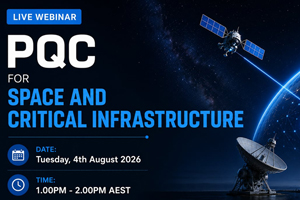
Virtual Series 2026 will offer deeper conversations on why PQC matters and the practical steps businesses should be taking; starts 1:00 pm AEST. Featuring:...
This international lunar science meeting has two objectives: to provide a platform for leading experts to review recent advances across lunar research, from the...
At CSIR International Convention Centre. Key topics are Earth Observation, Developing Space Tourism, Space Supply Manufacturing. Cultural tours are offered.
Participants will receive theoretical and hands-on training in electron imaging and X-ray spectroscopy for application to planetary samples. This training opportunity is targeted at...
"Leading Australia’s Space Future for Our Strategic Advantage". Southern Space 2026 brings together decision-makers who set the direction for Australia’s space sector. It is...
 Aug 6 —
  Aug 6 — NewSpace:
  Aug 6 — USA:
 = All times
 = All times for international terrestrial events in local time unless noted.
 = All times for space events, and…
 = All times for international space / astro events in Hawaii Standard Time unless noted. Add 10 hours to obtain UT (‘Universal Time’).