Russia to Launch Soyuz MS-10 with ISS Exp 57, Host Jim Bridenstine, and Solar System, Astrophysics Conferences
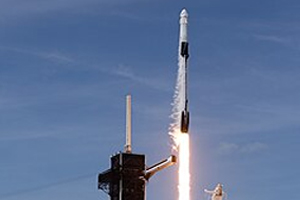
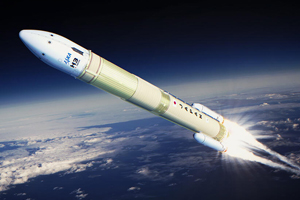
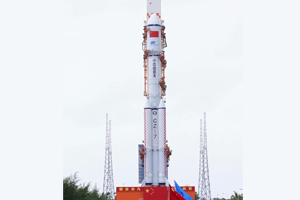
Roscosmos is planning the 139th launch of a Soyuz rocket with MS-10 scheduled October 10 carrying Expedition 57/58 members Aleksey Ovchinin and Nick Hague to International Space Station from Baikonur Cosmodrome in Kazakhstan. Russia and China are still the only 2 countries launching people into space. One day prior at Baikonur, the head of Roscosmos Dmitry Rogozin and NASA Administrator Jim Bridenstine will meet to discuss the unusual hole found in Soyuz MS-09 – which is intended to return 3 Astronauts to Earth on December 13. Bridenstine makes note of the positive strong relationship with Russia in space, stating “We’ve been able to make sure that space has been set apart from all of these sometimes terrestrial challenges.” The 9th International Solar System Symposium hosted by Russia Space Research Institute in Moscow on Oct 8-12 will cover formation, evolution and exploration of Solar and exosolar systems with a special emphasis on Moon, Mars and Venus. Specific missions Mars Express, Venus Express, Luna-Glob, Luna-Resurs, ExoMars 2016 and ExoMars 2020 will be detailed by speakers from IKI, CNRS, SwRI, Brown University, ESTEC, and China. On Oct 7-14 the SAO of Russian Academy of Science and BNO of Institute for Nuclear Research is hosting the 3rd Astrophysical Conference on Multimessenger, neutrino, gamma and gravitation astronomy. Speakers include representatives from Russia, India, China, Italy, Spain, Albania, Poland, Finland, Ukraine, and Czech Republic. (Image Credits: NASA, RT, S. Volkman)
MONDAY
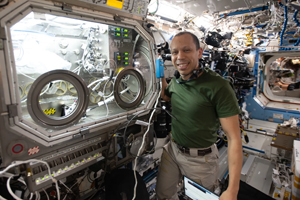
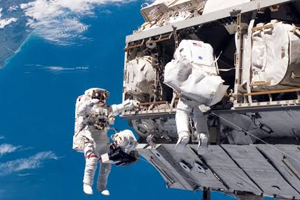
Highlights… Oct 8 — ISS, 405-km LEO: Expedition 57 three-member crew to welcome 2 additional Flight Engineers this week, preparing gear for USA EVA next week, transferring cargo from HTV-7 and Soyuz MS-10, Sally Ride EarthKAM to be stowed until next use, mission 63 photos will be available to students online.
Oct 8 — NewSpace: Moon Express MoU with Canadian Space Agency to explore options for payload deliveries to Moon; Blue Origin to work with OHB and MT Aerospace on Blue Moon mission(s); Copenhagen Suborbitals dismantling and studying Nexø II – 6th successfully launched rocket.
Oct 8 — Solar System: MASCOT probe on Asteroid Ryugu sending data to Hayabusa2, will use camera, radiometer, infrared spectrometer, magnetometer, and swing arm to hop; mission planners working toward Jan 2019 report on future Venus mission science goals, technology requirements.
Oct 8 — Global: UAE and NASA agreement reaffirms cooperation for Astronaut training, future lunar missions; CNSA allotting up to 10 kg for international partners to propose payloads for Chang’e-6 lunar sample return spacecraft; KARI gearing up for potential Launch Vehicle Test end of month.
Oct 8 — Hawai’i: UH Astronomer David Tholen, part of Subaru team which discovered minor planet 2015 TG387, states its orbit supports the presence of Planet X; ‘Imiloa Astronomy Center features planetarium show GLXP ‘Back to the Moon for Good’ through October.
Oct 8 — Perth USAsia Centre, The University of Western Australia,Perth, Australia: The Zone Above: the Indo-Pacific Era in Space; featuring Dr. Megan Clarke, head of the Australian Space Agency, NASA Astronaut Pamela A. Melroy, UWA graduate Enrico Palermo, ~30 other speakers.
Deep Space Meetings Across USA Focus on Jupiter and Saturn Systems
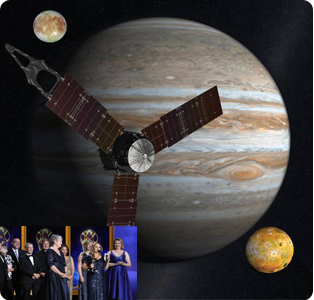
The Lunar & Planetary Institute in Houston is hosting the Europa Deep Dive 2 conference October 9-11 in Houston TX. Recent discoveries from NASA Juno probe include a mysterious “cold spot” on Europa surface, a previously undetected volcano on Io, and a “brown barge” – a short-lived storm in Jupiter southern hemisphere upper atmosphere. Juno will continue to image the Great Red Spot, a larger storm that astronomers on Earth have observed for centuries. Another paper finds an enormous amount of water in the Great Red Spot. Jupiter is estimated to contain many times more water than exists on Earth. Oct 15-19 Keck Institute hosts workshop on Io, Jovian System and Tidal Heating in Pasadena CA. Jupiter interior presents many mysteries, such as why it emits more radiation than it receives from the Sun. Jupiter has a powerful and complex magnetic field, which creates a “great blue spot” in the northern hemisphere. Cassini’s death-dive into Saturn leads to a flurry of research papers. Oct 11 at the Library of Congress in Washington DC, NASA Scientist Melissa Trainer will be speaking on Saturn’s moon Titan. Data from Cassini, published in Nature Geoscience, shows that Titan has dust storms like Earth and Mars. Similar to Jupiter, Saturn generates internal heat and a magnetic field. The Cassini team (pictured) are recipients of an Emmy Award for Outstanding Interactive Program. (Image Credits: NASA)
Oct 8 — Draconids Meteor Shower Peak: Appearing to radiate from constellation Draco, Draconids offer slow moving (20 km/s) meteors which are faint and fragment easily, about 10-20 per hour; very favorable this year.
Continued from…
Jul 8 – Oct 9 — NAOC, National Aquatic Center “Water Cube”, Beijing, China: Lunar Exploration Technology Exhibition; featuring 10-meter diameter Moon, lunar imagery, ‘moonlight’ and surround sound composition.
Oct 4-10 — World Space Week Association, Global:World Space Week 2018; to celebrate international contributions of space science and technology to the betterment of the human condition; Oct 4 is 61st observation of 1st Space mission Sputnik One launched by Soviet Union 1957; Oct 10 is 51st observation of Outer Space Treaty going into effect 1967.
Oct 11 — Roscosmos State Corporation, Launch Soyuz MS-10 / ISS 56S, Baikonur Cosmodrome, Kazakhstan: An RSA Soyuz rocket set to launch members of Expedition 57/58 to ISS, Aleksey Ovchinin of Roscosmos and Nick Hague of NASA.
Oct 11 — Apollo 7 50th Observation, Nationwide USA: First crewed Apollo mission to Space with Astronauts Walter M. Schirra, Donn F. Eisele, and R. Walter Cunningham celebrated today as USA works to implement 2018 Space Policy Directives and Return to Moon.
Oct 13 — The Astronomical League,Global: Fall Astronomy Day 2018; astronomical societies, planetariums, museums, observatories sponsoring public viewing sessions, presentations, workshops.
Oct 13 — Mauna Kea Visitor Information Station, Mauna Kea HI (2,800 meters): Star Gazing program, 19:00-22:00, weather permitting, free.
Includes ~150 meetings covering the fields of COSPAR Scientific Commissions / Panels / Task Groups, such as SC B: The Earth-Moon System, Planets, and...
From 02 to 07 August 2026, a few thousand geoscientists across diverse disciplines will gather at the 23rd annual meeting of the Asia Oceania Geosciences...
2:45 pm EDT from Johnson Space Center, NASA astronaut Chris Williams will recap his recent eight-month mission aboard the International Space Station. Williams returned to...
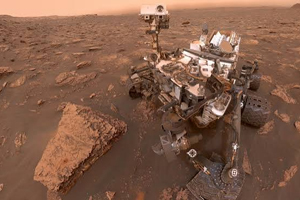
NASA Curiosity (Mars Science Laboratory) rover surpasses another full year of operations on Mars surface today; launched Nov 26, 2011 – landed Aug 5,...
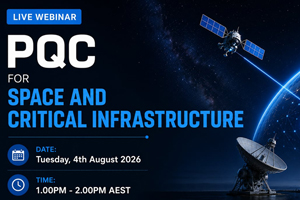
Virtual Series 2026 will offer deeper conversations on why PQC matters and the practical steps businesses should be taking; starts 1:00 pm AEST. Featuring:...
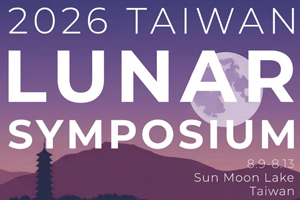
This international lunar science meeting has two objectives: to provide a platform for leading experts to review recent advances across lunar research, from the...
At CSIR International Convention Centre. Key topics are Earth Observation, Developing Space Tourism, Space Supply Manufacturing. Cultural tours are offered.
Participants will receive theoretical and hands-on training in electron imaging and X-ray spectroscopy for application to planetary samples. This training opportunity is targeted at...
"Leading Australia’s Space Future for Our Strategic Advantage". Southern Space 2026 brings together decision-makers who set the direction for Australia’s space sector. It is...

 Oct 8 —
  Oct 8 — NewSpace:
  Oct 8 — USA: National plans continue to indicate
 = All times
 = All times for international terrestrial events in local time unless noted.
 = All times for space events, and…
 = All times for international space / astro events in Hawaii Standard Time unless noted. Add 10 hours to obtain UT (‘Universal Time’).