New Horizons Pioneers New Exploration of Solar System 3rd Zone in New Year
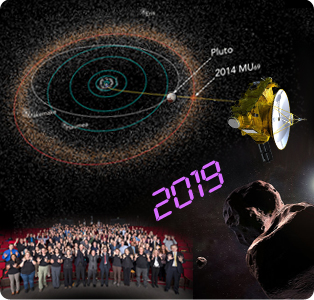
Kuiper Belt explorer New Horizons is set to perform the farthest ever encounter, and its second flyby of a KBO, 2014 MU69 nicknamed Ultima Thule, ~4B miles (6.4B km) from the Sun on January 1, 2019 at 05:33 UT. This trans-Neptunian Object flyby will bring the craft within 3,500 km of Ultima; it neared Pluto at 12,500 km on 14 July 2015. Signal confirmation from New Horizons will take 6 hours, 7 minutes and 58 seconds to reach NASA Deep Space Network on Earth. Ultima is thought to be a contact binary or close binary system, 30 km in diameter with an orbital period of about 295 years. Science objectives of the flyby include characterizing its geology, morphology, composition, atmosphere and searching for water ice, satellites and a coma. It will take months for all the data to be recovered while New Horizons continues to speed through the unexplored Kuiper Belt, likely for another decade – as noted by PI Alan Stern. The team will look for and request funding to fly by a 3rd target within the ‘3rd Zone’ of the Solar System, which may extend to 50 AU from the Sun, be 20-200 times more massive than the Main Asteroid Belt, and contain millions of objects including 35,000+ objects larger than 100 km. New Horizons is set to become the 5th interstellar-destined craft after the 2 Pioneers and 2 Voyagers. (Image Credits: JHU/APL, NASA, SwRI, S. Gribben)
MONDAY
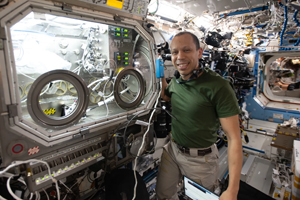
Highlights… Dec 24 — ISS, 405-km LEO: Expedition 58 Commander Oleg Kononenko, Anne McClain & David Saint-Jacques remain a three-member crew until Feb 2019, working on experiments involving circadian rhythms, molecular muscle mass, stem cells, hydrogel, fiber optics, and disease progression; transferring cargo from Dragon CRS-16, NG-10 and Progress 71P.
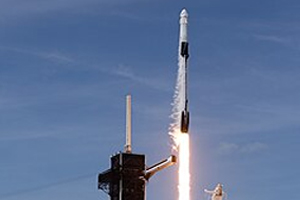
Dec 24 — NewSpace: SpaceX preparing Crew Dragon for uncrewed orbital flight in Jan 2019; Sierra Nevada will begin production of Dream Chaser spaceplane for carrying cargo to ISS; mu Space Corp of Thailand working on 2020 communication satellite, spacesuit designs, and advocating for Southeast Asia launch pad.
Dec 24 — Solar System: OSIRIS-REx discovers water on asteroid Bennu, prepares for orbital insertion; Juno spacecraft enters second half of mission in Jupiter orbit; data shows Saturn rings are losing mass and may disappear in 100M years if they are not naturally replenished.
Dec 24 — Galaxy: Research on Gaia 17bpi, a young star discovered by Gaia, being analyzed with observation sets from NEOWISE and Spitzer; nine new variable stars revealed in globular cluster NGC 6652 aid in potential understanding of stellar structure and evolution.
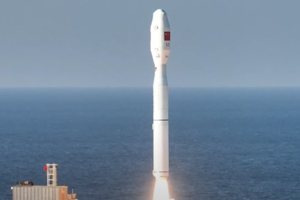
Dec 24 — Global: China heads into 2019 with 36 launches complete in 2018 – more than any other nation – and has 3 potential launches on manifest; JAXA opens Project Research Associate Recruitment 2019; Roscosmos Angara super-heavy rocket design plans to be proposed to government early 2019.
Dec 24 — Hawai’i: Keck Observatory discovery of relic cloud of gas between galaxies may date from a time near Big Bang; Subaru Telescope on Mauna Kea locates 2018 VG18 – the most distant object yet found in Solar System at 120 AU.
= All times
for terrestrial events in local time unless noted.
= All times for international terrestrial events in local time unless noted.
= All times for space events, and…
= All times for international space / astro events in Hawaii Standard Time unless noted. Add 10 hours to obtain UT (‘Universal Time’).
China CE-4, India Chandrayaan-2, and SpaceIL Landing Early In 2019
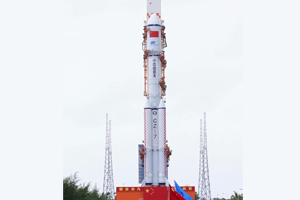
The 50th Year since Apollo 9-12, 2019 will see Moon landings from multiple nations. China Chang’e-4, the first mission to the lunar far side, will land at Von Karman Crater in the South Pole-Aitken Basin at about 47° south latitude in the first few days of January. The Queqiao orbiter carries a Netherlands-China Low-Frequency Explorer (NCLE) experiment. Chang’e-3, the first soft lander since Luna-24 in 1976, is observing 5 years on the surface and powering down to avoid radio interference. The Lunar Ultraviolet Telescope (LUT) aboard Chang’e-3 is still operational and imaging galaxies. The Chang’e-5 sample return is planned for late 2019 launch on the Long March 5 booster. India Chandrayaan-2 is scheduled for launch January 31 carrying a 2,400-kg orbiter, a 1,500-kg lander and a 27-kg rover. The first mission to the south polar region will land between craters Manzinus C and Simpelius N at 70° south latitude. India has completed a critical pad-abort test and announced a human orbital launch on a spacecraft called Gaganyaan in 2022 or earlier. TeamIndus, competitor for the Lunar XPrize, is part of the NASA Commercial Lunar Payload Services (CLPS) program due to its association with OrbitBeyond of New Jersey. Israel SpaceIL plans launch of Beresheet, first independent, privately developed lunar lander, aboard a SpaceX Falcon 9 during an exciting year 2019. (Image Credits: CNSA, NASA, ISRO)
NET Dec 24 — CNSA, Launch Long March 3C / TJS 3, Xichang Satellite Launch Center, China: China Long March 3C to launch geostationary communications technology test satellite Tongxin Jishu Shiyan (TJS) 3.
Dec 24 — Moon: 0.33° SSW of Beehive Cluster, 19:00.
Continued from…
Dec 8 – Jan 3, 2019 — Chang’e-4 Lander & Rover, Moon Trajectory: China CE-4 lander and rover on journey to Moon far side, will attempt touchdown at northwestern South Pole – Aitken basin 180-km diameter Von Kármán crater (45-46° S, 176.4-178.8° E).
TUESDAY
Dec 25 — Mars Express, Mars Orbit: ESA spacecraft reaches 15 full years / enters 16th year in Mars orbit today; will continue to study Mars atmosphere & climate, planet structure, mineralogy, geology, and to search for traces of water; launched June 2, 2003.
Dec 25 — Apollo Asteroid 2018 XZ2: Near-Earth Flyby (0.100 AU)
WEDNESDAY
Dec 26 — Venus: At perihelion, 0.7185 AU from Sun, Magnitude -4.5, 06:00.
Dec 26 — Moon: 2.4° NNE of Regulus, 08:00.
THURSDAY
Dec 27 — Roscosmos State Corporation, Launch Soyuz / Kanopus-V 5 and 6, Vostochny Cosmodrome, Russia: Roscosmos Soyuz to launch Kanopus-V 5 and 6 Earth observation satellites, and multiple secondary payloads from international companies and institutions.
Dec 27 — Venus: 3.0° SSW of asteroid 1 Ceres, 00:30.
Dec 27 — Aten Asteroid 2018 XD5: Near-Earth Flyby (0.074 AU)
Dec 27 — Apollo Asteroid 488789 (2004 XK50): Near-Earth Flyby (0.089 AU)
FRIDAY
Dec 28 — The Space Show,Online / Tiburon CA: Dr. David Livingston talks with Dr. Alan Stern about New Horizons, 15:00 PST (18:00 EST).
Dec 29 — Space Center Houston,Houston TX:Lunch with an Astronaut, Brian Duffy, adult US$69.95.
SUNDAY
NET Dec 30 – Jan 3 — Chang’e-4 Lander & Rover, Von Kármán crater, NW South Pole – Aitken Basin, Moon Surface: Projected date to attempt first-ever landing on Moon far side at 180-km diameter Von Kármán crater (45-46° S, 176.4-178.8° E) with lander and rover, international payloads from Sweden, Germany, Netherlands and Saudi Arabia.
Dec 30 — ULA, Launch Delta 4-Heavy / NROL-71,Vandenberg AFB CA: ULA Delta 4-Heavy rocket to launch classified U.S. NRO payload.
Dec 30 — The Space Show,Online / Tiburon CA: Dr. David Livingston talks with Tom Olson for space year in review.
Dec 30 — Moon: 7.3° NNE of Spica, 05:00.
MONDAY
Dec 31 — OSIRIS-REx, Asteroid 101955 Bennu (1999 RQ36): Origins-Spectral Interpretation-Resource Identification-Security-Regolith Explorer (OSIRIS-REx) spacecraft to attempt maneuver to achieve orbit around Bennu for the first time today.
Dec 31 — NASA, Johns Hopkins University Applied Physics Laboratory,Online: New Horizons Flyby Press Conference, 14:00 EST, live coverage available; also at 1 Jan 11:30, 2 Jan 14:00, 3 Jan 14:00.
NET Jan — Hayabusa2, Asteroid 1999 JU3: JAXA Hayabusa2 to make observations of 1-km diameter Ryugu from 5-km distance this month in preparation for first of 2 sample-return touchdowns next month.
NET Jan — ISRO, Launch PSLV / EMIsat, Satish Dhawan Space Center, Sriharikota, India: Polar Satellite Launch Vehicle on PSLV-C44 mission to launch India microsatellite EMIsat and potentially use 3rd stage as an experiment platform for 6 months in space before orbit decay / craft disintegration.
Jan 1 — Interstellar Space: Voyager 1 and 2 now 41+ years into missions, collecting data with 4 or more instruments, able to communicate with Earth on 20- and 16-hour communication delays about 145 and 120 AU from Earth, respectively; Breakthrough Starshot testing StarChip “Sprites” for Alpha Centauri mission; NASA proposes 2069 probe to Alpha Centauri.
Jan 1 — New Horizons, KBO Ultima Thule (2014 MU69) Flyby: Craft expected to fly by KBO 2014 MU69 at 00:33 EST, 05:33 UT (19:33 HST on 31 Dec 2018), distance of 3,500 km or closer; KBO is 4.1B miles (~6.6B km) from Earth; will be farthest spacecraft encounter ever performed; will take 6 hrs 7 mins 58 secs for signal to travel back to Earth / confirm status.
Jan 1 — Tiangong-2 Visible Pass,LEO: China Tiangong-2 Space Lab visible pass to occur over North side of Hawai`i Island at 19:28:10 HST from NW crossing to NNW, magnitude of 3.3.
Jan 1 — Moon: 1.25° NNE of Venus, 13:00.
Jan 1 — Apollo Asteroid 2007 YQ56: Near-Earth Flyby (0.076 AU)
WEDNESDAY
Jan 2 — Earth: At perihelion, 0.9833 AU from Sun, 17:00.
Jan 3-25 — International Centre for Theoretical Sciences (ICTS), Tata Institute of Fundamental Research,Bengaluru, India: Workshop: Cosmology – The Next Decade.
Jan 3 — Quadrantids Meteor Shower Peak: Appearing to radiate from constellation Quadrans Muralis; can produce up to 50-100 meteors per hour; peak 10:00, good viewing due to upcoming New Moon.
Jan 3 — Moon: 8.4° NNE of Antares, 00:00.
FRIDAY
Jan 4 — Moon: 2.76° N of Mercury, 09:00.
Jan 4 — Apollo Asteroid 2014 AD16: Near-Earth Flyby (0.033 AU)
Jan 4 — Apollo Asteroid 2004 XP14: Near-Earth Flyby (0.073 AU)
SATURDAY
Jan 5 — Space Center Houston,Houston TX:Lunch with an Astronaut, Ken Cameron, adult US$69.95.
Jan 5 — Moon: 0.88° N of Saturn, 09:00; New Moon, 15:29.
Jan 5-6 — Partial Eclipse of Sun: Visible from northeast Asia and North Pacific; begins 23:34:08 UTC near Beijing, maximum 01:41:26 on Jan 6.
SUNDAY
Jan 6-10 — American Astronomical Society, Seattle WA:233rd Meeting of the AAS; at Washington State Convention & Trade Center.
Includes ~150 meetings covering the fields of COSPAR Scientific Commissions / Panels / Task Groups, such as SC B: The Earth-Moon System, Planets, and...
From 02 to 07 August 2026, a few thousand geoscientists across diverse disciplines will gather at the 23rd annual meeting of the Asia Oceania Geosciences...
2:45 pm EDT from Johnson Space Center, NASA astronaut Chris Williams will recap his recent eight-month mission aboard the International Space Station. Williams returned to...
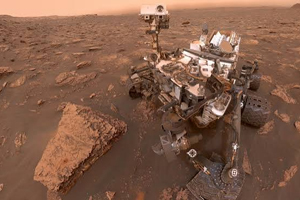
NASA Curiosity (Mars Science Laboratory) rover surpasses another full year of operations on Mars surface today; launched Nov 26, 2011 – landed Aug 5,...
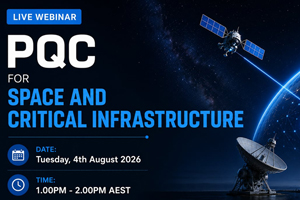
Virtual Series 2026 will offer deeper conversations on why PQC matters and the practical steps businesses should be taking; starts 1:00 pm AEST. Featuring:...
This international lunar science meeting has two objectives: to provide a platform for leading experts to review recent advances across lunar research, from the...
At CSIR International Convention Centre. Key topics are Earth Observation, Developing Space Tourism, Space Supply Manufacturing. Cultural tours are offered.
Participants will receive theoretical and hands-on training in electron imaging and X-ray spectroscopy for application to planetary samples. This training opportunity is targeted at...
"Leading Australia’s Space Future for Our Strategic Advantage". Southern Space 2026 brings together decision-makers who set the direction for Australia’s space sector. It is...
 Dec 24 —
  Dec 24 — NewSpace: SpaceX preparing
  Dec 24 — USA: Return to Moon program advances with awards to be given for
 = All times
 = All times for international terrestrial events in local time unless noted.
 = All times for space events, and…
 = All times for international space / astro events in Hawaii Standard Time unless noted. Add 10 hours to obtain UT (‘Universal Time’).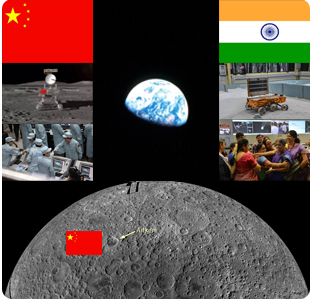
 Dec 30 — ULA, Launch Delta 4-Heavy / NROL-71, Vandenberg AFB CA: ULA Delta 4-Heavy rocket to launch classified U.S. NRO payload.