IAA Holds 6th Planetary Defense Conference in Washington DC Area
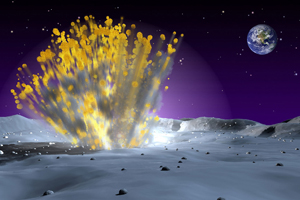
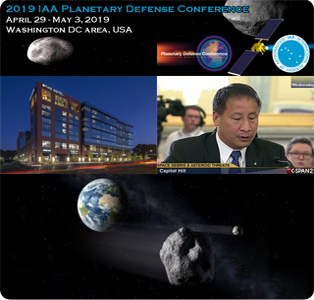
International Academy of Astronautics convenes its biannual Planetary Defense Conference April 29 – May 3 at The Hotel at University of Maryland in College Park. International experts will gather to analyze dangers from and contingencies to avoid asteroid and comet collisions with Earth – including keynote speakers NASA Administrator James Bridenstine, Romana Kofler of UNOOSA, Rüdiger Jehn of ESA, and Hary Harel Ben-Ami of Israel Space Agency, as well as representatives of ISRO and Russian Academy of Sciences. A detailed impact scenario designed by Jet Propulsion Laboratory will be conducted, allowing participants to practice engaging with their peers in such a hypothetical event, attempting to answer questions such as “[Despite being] able to deflect the object… could our leaders provide funding and make other decisions at critical points?”. The imagined object (dubbed ‘2019 PDC’ by Minor Planet Center) would be a 100- to 300-meter asteroid that has a 1% chance of impacting on April 29, 2027, about 0.38 au (57 million kilometers or 35 million miles) away when discovered, approaching Earth at about 14 km/s (8.5 mi/s or 31,000 mph). According to the Center for Near Earth Object Studies, 19,985 known Near Earth Objects exist – 987 of which are 1 km in diameter or larger. Asteroid Day, a UN sanctioned global event dedicated to raising awareness of asteroids supported by the B612 Foundation, occurs on June 30. (Image Credits: NASA, IAA, B612 Foundation)
MONDAY
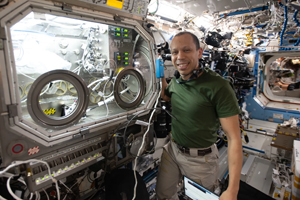
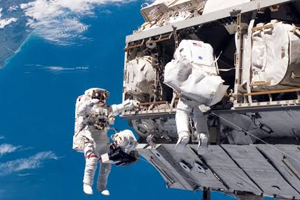
Highlights… Apr 29 — ISS, 405-km LEO: Expedition 59 six-member crew with Commander Oleg Kononenko working on cargo transfers, Rodent-Research 12 experiment, space fiber optic cable manufacturing, microbe mutation study, treadmill 2 remove and replacement; planning for SpaceX Dragon CRS-17 arrival.
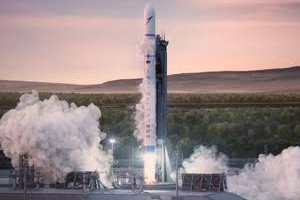
Apr 29 — NewSpace: Momentus Space announces Vigoride Extended space transportation service for Earth or lunar orbit, seeks new funding; Relativity Space partners with Thailand mu Space to launch satellites on Terran 1 booster; OrbitBeyond of NJ planning Z-01 mission to Mare Imbrium in 2020.
Apr 29 — Solar System: InSight lander detects its first likely Mars quake; scientists using GRAIL data claim Moon crust may have network of deep cracks; NASA establishes Planetary Protection Review Board to avoid life contaminating other planets.
Apr 29 — Galaxy: GAIA mission data used to find stream of stars from globular cluster Omega Centauri; ATLAS experiment at CERN limits the amount of hypothetical supersymmetric particles in Galaxy; Trappist-1 studies show high-energy particles and gravitational influences might make its planets less habitable than originally thought.
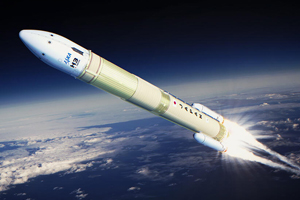
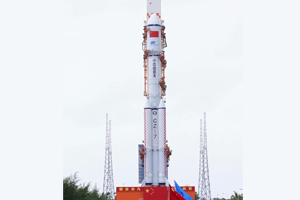
Apr 29 — Global: Tiangong space station planned for 2022 launch on Long March 5B to contain hundreds of international experiments, including two atomic clocks; UAE Mars Hope probe is 85 percent complete, planned for 2020 launch window; ESA agrees to 14 Ariane 6 missions 2021-2023 with inaugural flight July 2020.
Apr 29 — USA: Human Return to Moon “within 5 years” stressed by Administrator Bridenstine, public awaits details for committed funding, planning, strategies; SpaceX Crew Dragon explosion causing delay in crewed test flight; Boeing Starliner being tested for water escape near Cape Canaveral.
Apr 29 — Hawai’i: PISCES Women’s STAR Program collecting applications until May 17; DLNR Chair Suzanne Case gives update on TMT / Mauna Kea; University of Hawaii at Manoa researchers continue to work with lunar samples from Apollo mission.
= All times
for terrestrial events in local time unless noted.
= All times for international terrestrial events in local time unless noted.
= All times for space events, and…
= All times for international space / astro events in Hawaii Standard Time unless noted. Add 10 hours to obtain UT (‘Universal Time’).
5th Kalpana Chawla Space Policy Dialogue Conference in New Delhi to Promote Space Enterprise, International Cooperation
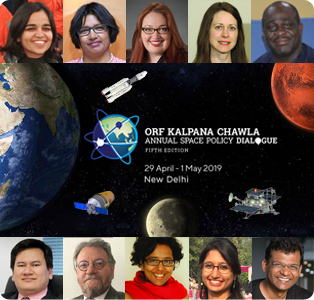
The 5th Kalpana Chawla Annual Space Policy Dialogue Conference is being held April 29 – May 1 by Observer Research Foundation, Secure World Foundation and Jawaharlal Nehru University at Taj Mahal Hotel, New Delhi, India. The conference emphasizes the need for a national space policy in India to promote entrepreneurship and innovation in security, civil and commercial space. In memory of (TL-BR) Dr. Chawla, overarching themes reflect international cooperation, importance of research for betterment of humankind, and transcending barriers of nationality and gender. Multiple talks and 9 Panel discussions include topics on established space powers strengthening emerging space growth, India major space partners, women in space, India-Europe in space, smallsats, space industry and propulsion, NewSpace, and debating a space policy for India. Speakers are Rajeswari Pillai Rajagopalan (ORF), Victoria Samson (Secure World Foundation), Jessica West Ploughshares (UNCOPUOS), Francis Chizea (National Space Research and Development Agency, Nigeria), Roger Mari Sese (Philippines Dept.of Science and Technology), Jean-Jacques Tortora (ESTI), Susmita Mohanty (Earth2Orbit), Surbhi Baghotia (Vikram Sarabhai Space Centre, ISRO), and Rahul Narayan (Team Indus). India is advancing its human-rated Gaganyaan capsule, and hopes to launch Astronauts to space aboard GSLV Mk 3 starting 2022. Its Chandryaan-2 launch to Moon South Pole NET July, carrying a NASA retroreflector, may catalyze ambitious planning for India Human Moon Missions. (Image Credits: ORF, SWF, ISRO, et al)
Jan 2019 – Sep 2020 — New Horizons, Kuiper Belt: Full data from spacecraft 7 instruments during KBO Ultima Thule flyby to be transmitted to Earth over this time period.
Apr 30 — Moon: 3.3° SSE of Neptune, 52° from Sun in morning sky, 01:00.
WEDNESDAY
NET May – Jun — Hayabusa2, Asteroid 1999 JU3: JAXA craft planning for 2nd / last sample collection touchdown within this period.
May 1 — Deep Space, Kuiper Belt: New Horizons sending data from Ultima Thule flyby back to Earth, initial imagery indicates no atmosphere or moons; craft has enough fuel for at least one more KBO mission.
May 1 — Commerce-Justice-Science (CJS) Subcommittee of the Senate Appropriations Committee, Washington DC: Senate Appropriations Subcommittee will hold a hearing on NASA FY2020 budget request, webcast available.
May 1 —May Day, Northern Hemisphere, Earth: Spring festival commonly held on this day (or about halfway between the spring equinox and the summer solstice) to celebrate fertility, fire, and abundance.
May 3 — International Space Day 2019, Worldwide: Events and presentations to promote STEM education and inspire people to continue the work of Space explorers; originally began as ‘National Space Day’ in 1997 by Lockheed Martin Corp.
May 3 — Moon: 2.73° SSE of Mercury, 00:00.
SATURDAY
May 4 — Rocket Lab, Launch Electron / STP-27RD,Launch Complex 1, Mahia Peninsula, New Zealand: Rocket Lab launch window for Electron sixth flight carrying 3 satellites for US Air Force.
May 4 — March for Science, Global: March for Science 2019; advocates join together for a day of action in support of science.
May 4 — MaunaKea Observatories,Hilo HI: 2019 AstroDay; 10:00-16:00, at Prince Kuhio Plaza, with demonstrations, solar viewing, science, starlab, prizes and giveaways, preview of Apollo@50.
May 4 — Moon: 4.4° SSE of Uranus, 17:00; New Moon, 12:46.
SUNDAY
May 5 — InSight, Elysium Planitia,Mars Surface: Interior Exploration using Seismic Investigations, Geodesy and Heat Transport (InSight) lander reaches 1 full year / enters 2nd year in Space today, launched in May 2018, landed on Mars Nov 26, 2018.
May 5 — Uniphi Space Agency, Federation of Galaxy Explorers, Space Foundation, Challenger Center, et al, Nationwide USA: National Astronaut Day 2019; inspiring people to reach for the Stars and celebrate Astronauts; on this date in 1961 Astronaut Alan Bartlett Shepard Jr. became the 1st American in Space (15 minute suborbital flight to 186-km altitude).
May 5 — Eta Aquarids Meteor Shower Peak: The 1st of 2 annual showers that occur as a result of Earth passing through dust released by Halley’s Comet; Eta Aquarid meteors appear to radiate from Constellation Aquarius, Northern Hemisphere observers may to see 10+ meteors per hour, Southern Hemisphere 20-40 per hour; peak 19:00.
May 5 — Moon: 7.9° SSE of Pleiades, 19:00.
May 5 — Amor Asteroid 2016 GF216: Near-Earth Flyby (0.092 AU)
Includes ~150 meetings covering the fields of COSPAR Scientific Commissions / Panels / Task Groups, such as SC B: The Earth-Moon System, Planets, and...
From 02 to 07 August 2026, a few thousand geoscientists across diverse disciplines will gather at the 23rd annual meeting of the Asia Oceania Geosciences...
2:45 pm EDT from Johnson Space Center, NASA astronaut Chris Williams will recap his recent eight-month mission aboard the International Space Station. Williams returned to...
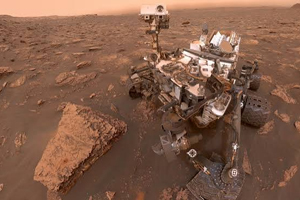
NASA Curiosity (Mars Science Laboratory) rover surpasses another full year of operations on Mars surface today; launched Nov 26, 2011 – landed Aug 5,...
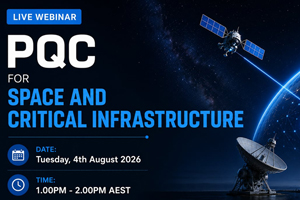
Virtual Series 2026 will offer deeper conversations on why PQC matters and the practical steps businesses should be taking; starts 1:00 pm AEST. Featuring:...
This international lunar science meeting has two objectives: to provide a platform for leading experts to review recent advances across lunar research, from the...
At CSIR International Convention Centre. Key topics are Earth Observation, Developing Space Tourism, Space Supply Manufacturing. Cultural tours are offered.
Participants will receive theoretical and hands-on training in electron imaging and X-ray spectroscopy for application to planetary samples. This training opportunity is targeted at...
"Leading Australia’s Space Future for Our Strategic Advantage". Southern Space 2026 brings together decision-makers who set the direction for Australia’s space sector. It is...
 Apr 29 —
  Apr 29 — NewSpace: Momentus Space announces
  Apr 29 — USA: Human Return to Moon “within 5 years” stressed by Administrator Bridenstine, public awaits details for committed funding, planning, strategies;
 = All times
 = All times for international terrestrial events in local time unless noted.
 = All times for space events, and…
 = All times for international space / astro events in Hawaii Standard Time unless noted. Add 10 hours to obtain UT (‘Universal Time’).