IAA, MVA and SCAR Meet in Italy for Antarctica, Moon, Mars and Beyond
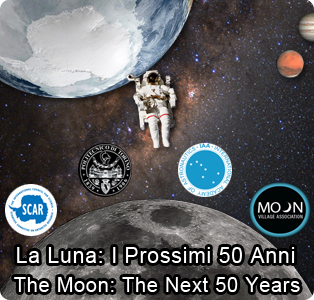
The 11th International Academy of Astronautics Symposium ‘The Future of Space Exploration – Moon, Mars and Beyond: Becoming an Interplanetary Civilization’ is being held in Torino, Italy on June 17-19. Co-chaired by Les Johnson (MSFC and TVIW advisor) and Giuseppe Reibaldi (Moon Village Association), the Symposium has sessions titled Technology, Science, Programmatics, Motivations, Economics, Cultural, and Ethics. Gongling Sun of ISU will talk on “Deep space exploration in China”; Jean-Marc Salotti from University of Bordeaux on “Minimum number of settlers for survival on another planet”; and Remo Rapetti with Michelle Hanlon on “From spirituality to preservation – Is there a chance of peaceful exploration of the Moon?” In conjunction, MVA General Assembly will be June 18, followed by ‘Italian Network Outreach Event: The Moon – The Next 50 Years’ June 19. Of the 7 speakers, Maria Antonietta Perino will talk about “A Cislunar Space Station Supporting Moon Exploration”. Also occurring June 17-19 is 5th Workshop of Scientific Committee on Antarctic Research (SCAR) Astronomy and Astrophysics from Antarctica (AAA) in Courmayeur, Italy with ~40 presenters. SCAR AAA works to coordinate all astronomical activities in Antarctica to maximize investment in Antarctic astronomy and broaden interactions with other disciplines. More than a century after Earth South Pole was reached in 1912, Moon South Pole is projected for the first women and men landing in 2024, a vital step toward establishing a sustainable Human Multi World Civilization. (Image Credits: NASA, IAA, MVA, SCAR, Politecnico di Torino)
MONDAY
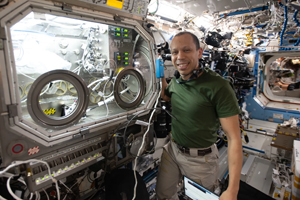
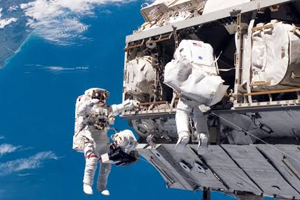
Highlights… Jun 17 — ISS, 405-km LEO: Expedition 59 crew to help facilitate release of Nepal 1st satellite, NepaliSat-1 today; Anne McClain and Christina Koch working with Veg-04 botany experiment in Columbus module; Nick Hague and McClain installing Electrostatic Levitation Furnace in Kibo Laboratory Module; Soyuz MS-11 spacecraft being prepared for return to Earth with Oleg Kononenko, David Saint-Jacques, McClain.
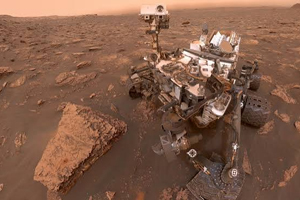
Jun 17 — Solar System: Data from GRAIL 2011-12 mission discovers mass concentration of material (possibly metal) 5x the size of Hawai’i Island, potentially from meteorite that created South Pole-Aitken Basin; Curiosity rover observes cloud patterns in Mars atmosphere; JUNO orbiter images dark vortex in Jupiter atmosphere.
Jun 17 — Galaxy: Hubble Space Telescope images spiral galaxy NGC 4051; Euclid mission scheduled for 2022 launch selects dark patches of sky to search for hypothetical ‘dark’ energy; while confirmed exoplanet count totals 3972, IAU invites countries to name exoplanets through national campaigns.
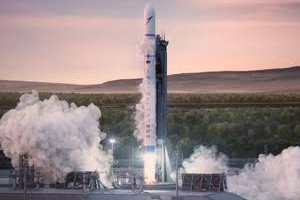
Jun 17 — Global: ISRO confirms Chandrayaan-2 for July 15; Space in Africa reports African space industry generating US$7B annually, may generate $10B per year by 2024; Changan Auto to sponsor next China iSpace launch in July; ESA moves forward with reusable Space Rider transport system.
Jun 17 — Hawai’i: Gemini North observations indicate that black hole at center of galaxy NGC 4395 is about 40x less massive than previously thought; CFHT will closely observe Taurid swarm of asteroids, one of which may have struck Siberia in 1908; PanSTARRS may face observing challenges due to SpaceX Starlink satellite constellation.
= All times
for terrestrial events in local time unless noted.
= All times for international terrestrial events in local time unless noted.
= All times for space events, and…
= All times for international space / astro events in Hawaii Standard Time unless noted. Add 10 hours to obtain UT (‘Universal Time’).
Russia, Germany Spektr-RG X-Ray Astrophysics Space Observatory to Launch June 21
Spectrum-Roentgen-Gamma (Spektr-RG), collaborative mission between Roscosmos and German Aerospace Center (DLR) with origins in the 1980s, is scheduled to launch June 21 from Baikonur Cosmodrome, Kazakhstan. Proton-M Blok-DM-03 will deliver Spektr-RG to Lagrange point L2, approximately 1.5M km from Earth, where it will operate for 4 years followed by ~2.5-year sojourn to other points of interest determined by ‘request of the world scientific community’. The 2647-kg Spektr-RG will carry 2 X-ray detection instruments: 810-kg eROSITA (extended ROentgen Survey with an Imaging Telescope Array), developed by Max Planck Institute for Extraterrestrial Physics in Munich, Germany, and 350-kg Astronomical Roentgen Telescope X-ray Concentrator (ART-XC), developed by All-Russian Scientific Research Institute for Experimental Physics (VNIIEF) in Sarov, Russia. The Spektr-RG satellite was designed by Lavochkin Scientific and Production Association, based on its Navigator spacecraft bus. eROSITA is the primary payload, continuing the work of ROSAT (decommissioned in 1999) with 20x the sensor data. It is to conduct 8 scans of the entire sky in medium X-ray range (0.3 – 10 KeV), which are hoped to map up to 100k galaxy clusters and 3M supermassive black holes and offer insight into problematic theories of dark energy and origin of the universe. ART-XC is to focus on higher energy detection between 5 – 80 KeV. Both instruments utilize Wolter grazing incidence mirrors – those on ART-XC were constructed at Marshall Space Flight Center in Alabama. (Image Credits: Roscosmos, Planetary Society, MPE)
Jun 17 — Cornell University,Ithaca NY: Lecture: Saturnian Dynamics; by Matthew Hedman, Assistant Professor of Physics at the University of Idaho.
Jan 2019 – Sep 2020 — New Horizons, Kuiper Belt: Full data from spacecraft 7 instruments during KBO Ultima Thule flyby to be transmitted to Earth over this time period.
Jun 18 — 36th Observation of the 1st American Woman in Space, Nationwide USA / Global: Celebrating the first American woman to fly in Space, Sally Ride on Space Shuttle Challenger STS-7 mission in 1983, while USA plans First Woman to the Moon South Pole 2024 via developing Artemis program.
Jun 18 — Moon Village Association, Politecnico di Torino, Torino, Italy: MVA General Assembly.
Jun 19 — John F. Kennedy Library,Boston MA: JFK Space Summit; featuring Caroline Kennedy, Apollo 11 astronaut Michael Collins, Jeff Bezos, scientists and NASA experts, 10:30 AM-19:30.
Jun 20 — Apollo Asteroid 2019 LB2: Near-Earth Flyby (0.017 AU)
FRIDAY
Jun 21 — Roscosmos State Corporation, Launch Proton / Spektr-RG,Baikonur Cosmodrome, Kazakhstan: Proton booster and Block DM upper stage to launch Spektr-RG X-ray observatory, a joint project between Roscosmos and Germany DLR.
Jun 21 — June Solstice: Longest day of the year (opposite in Southern Hemisphere) as Sun reaches a point farthest north of celestial equator, 05:56.
Jun 21 — Moon: Moon at perigee (distance 357,368 km), 10:00.
Jun 21 — Aten Asteroid 2010 RX30: Near-Earth Flyby (0.094 AU)
SATURDAY
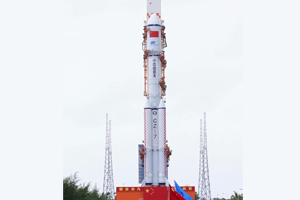
Jun 22 — CASC, Launch CZ-4B / Tianyi MV-1,Taiyuan Satellite Launch Center, China: Long March 4B to launch ZY-2D, BNU-1, and Tianyi MV-1 satellites.
Jun 22 — Moon: 2.46° NNE of Regulus, 18:00; at apogee (distance 404,566 km), 22:00.
Jun 22 — Apollo Asteroid 2016 WQ3: Near-Earth Flyby (0.079 AU)
SUNDAY
Jun 23 — Lunar Reconnaissance Orbiter, Moon Orbit: NASA spacecraft reaches 10 full years / enters 11th year in Moon orbit today; launched Jun 18, 2009, arrived at Moon 5 days later.
Jun 23 — CASC, Launch Jielong-1 / Tianqui-2,Jiuquan Satellite Launch Center, China: First flight of Smart Dragon J-1 orbital booster to launch Tianqui-2 comsat among payloads of 4 private companies.
Includes ~150 meetings covering the fields of COSPAR Scientific Commissions / Panels / Task Groups, such as SC B: The Earth-Moon System, Planets, and...
From 02 to 07 August 2026, a few thousand geoscientists across diverse disciplines will gather at the 23rd annual meeting of the Asia Oceania Geosciences...
2:45 pm EDT from Johnson Space Center, NASA astronaut Chris Williams will recap his recent eight-month mission aboard the International Space Station. Williams returned to...
NASA Curiosity (Mars Science Laboratory) rover surpasses another full year of operations on Mars surface today; launched Nov 26, 2011 – landed Aug 5,...
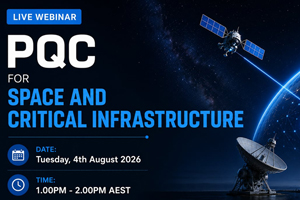
Virtual Series 2026 will offer deeper conversations on why PQC matters and the practical steps businesses should be taking; starts 1:00 pm AEST. Featuring:...
This international lunar science meeting has two objectives: to provide a platform for leading experts to review recent advances across lunar research, from the...
At CSIR International Convention Centre. Key topics are Earth Observation, Developing Space Tourism, Space Supply Manufacturing. Cultural tours are offered.
Participants will receive theoretical and hands-on training in electron imaging and X-ray spectroscopy for application to planetary samples. This training opportunity is targeted at...
"Leading Australia’s Space Future for Our Strategic Advantage". Southern Space 2026 brings together decision-makers who set the direction for Australia’s space sector. It is...
 Jun 17 —
  Jun 17 — NewSpace:
  Jun 17 — USA:
 = All times
 = All times for international terrestrial events in local time unless noted.
 = All times for space events, and…
 = All times for international space / astro events in Hawaii Standard Time unless noted. Add 10 hours to obtain UT (‘Universal Time’).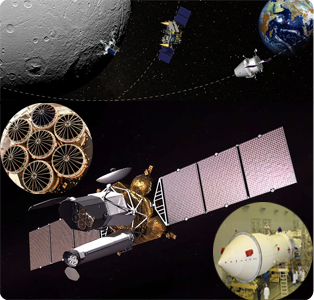
 Jan 2019 – Sep 2020 —
  Jun 10-19 — NASA, NOAA, Aquarius Underwater Laboratory, Key Largo FL: