July Space Month 2019 Begins with ARTEMIS Craft Observation, Orion Test, Galaxy Forum USA
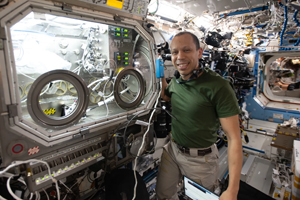
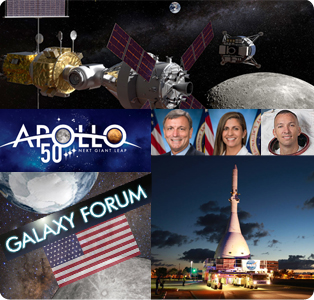
Apollo 11 semicentennial observations are accelerating at the start of July ‘Space Month’ with hundreds of events and billions of people looking to the next 50 years of human accomplishment in Space, on the Moon and toward the Stars. NASA twin ARTEMIS spacecraft will begin their 9th year in lunar orbit on July 2 and July 17, having launched as part of THEMIS constellation in 2007. USA is now planning its Artemis program science payloads, robotic missions, cislunar gateway and landing women and men at the Moon South Pole ~2024. Vital for the development of Artemis, the Orion capsule Critical Ascent Abort AA-2 test is scheduled for July 2 at Cape Canaveral SLC 46. Participants include (L-R) Orion program manager Mark Kirasich, test conductor Jenny Devolites, and Astronaut Randy Bresnik. The 3-minute test will boost ~10,000 kg test version of Orion craft to 9.6 km at which point the abort sequence will be triggered to carry it away from the Northrop Grumman rocket. On July 4, Galaxy Forum USA 2019 in Silicon Valley CA themed “The 7th and 8th Continents: Antarctica, the Moon and Beyond” will host Michelle Hanlon of For All Moonkind, NASA Scientist Chris McKay, KIPAC Researcher Edward Young and ILOA Director Steve Durst. Kennedy Space Center is hosting events throughout the month, including July 20 ‘One Giant Leap Celebration’ with Astronauts Rusty Schweickart, Jim Lovell, and a surprise guest. (Image Credits: NASA, ILOA, Galaxy Forum)
MONDAY
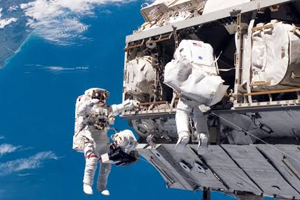
Highlights… Jul 1 — ISS, 405-km LEO: Expedition 60 crew of three to be joined by NASA, Russia, ESA Astronauts on July 20; nearly 300 experiments conducted at any given time; Sierra Nevada Dream Chaser may be ready for Sep 2021 ISS cargo flights.
Jul 1 — NewSpace: Houston spaceport development underway as 1st tenant Intuitive Machines builds Nova-C lunar lander; SpaceX achieves 1st nose fairing recovery success with vessel now named ‘GO Ms. Tree’; Israel SpaceIL building Beresheet 2 for next ‘challenging objective’; asteroid mining market projected to reach US$3.8B by 2025.
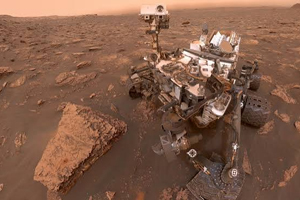
Jul 1 — Solar System: Chang’e-4 lander and Yutu-2 rover awaken for 7th lunar day, continuing science operations from Milky Way Base on far side; Curiosity rover finds signs of methane on Mars; Uranus rings observed glowing from heat; proposed Dragonfly mission could study Titan.
Jul 1 — USA:First Woman on the Moon might be 1 of the active veteran NASA Astronauts; Final Frontier Design to receive SBIR award worth up to US$125K for lunar space suit boot; Boeing planning Starliner uncrewed test Sep 17, crewed flight Nov 30; SpaceX Crew Dragon aiming for Nov 15 crewed flight.
Upcoming Russia Launch from Vostochny Cosmodrome to Carry Polar Orbiting Meteorological Satellite
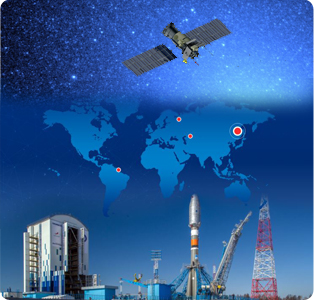
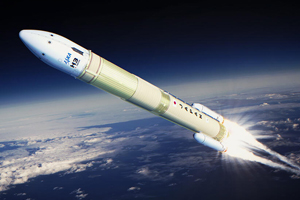
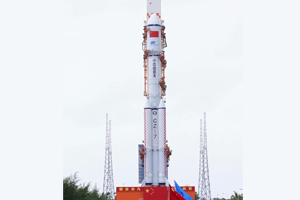
Meteor-M 2-2 is scheduled to launch via Soyuz-2-1b Fregat-M rocket from the recently constructed Vostochny Cosmodrome on July 5. Strategically located in Russia’s expansive Far East region along 51°N, Vostochny and the adjacent servicing community of Tsiolkovsky, Amur Oblast are touted by Roscomos as ‘spaceport of the 21st century’ and ‘technocenter of the future space cluster’, respectively. Just 110 km from Russia / China border, spacecraft need only traverse a sparsely populated 600–800 km (dependent on trajectory) to reach open ocean, as opposed to the landlocked Baikonur Cosmodrome, historic launch site of Soviet and Russian rockets currently leased from Kazakhstan for ~ US$115M annually. Of the first 4 launches from Vostochny, 3 have been successful – the exception being Meteor-M 2-1, the second launch ever from the new Cosmodrome and the first mission in the Meteor-M series, which failed due to a programming oversight (Baikonur coordinates were inadvertently entered). GK Launch Services, a commercial arm of Roscosmos, organized over 40 international payloads on a rideshare basis. Russia intends to migrate the majority of its commercial launches away from Baikonur in favor of Vostochny’s Site 1A, planned launchpad for the anticipated Angara rocket. Four additional Meteor satellites are scheduled for launch annually. Co-payloads consist of collaborative missions including Finland, Germany, USA, Israel, Czech Republic, Sweden, France, Estonia and Ecuador. (Image Credits: Roscosmos)
Jul 1 — Deep Space: New Horizons Kuiper Belt explorer, 6.6B km away, sending data back to Earth until at least Sep 2020 from 1st KBO flyby, mission team planning next science target(s).
Jul 2 — Air and Space Academy, Académie Royale de Belgique (Royal Academy of Belgium),Brussels, Belgium: The European Union: A Key Player in Space; lecture by Dr. Paul Weissenberg, Former Deputy General Director of the European Commission, Correspondent of Air & Space Academy.
Jul 3 — Moon: 6.1° S of Pollux, 08:00; 0.19° ENE of Mars, 20:00.
THURSDAY
Jul 4 — 1065th Anniversary of Crab Nebula Supernova: This year marks the 1065th Anniversary of July 4, 1054 supernova explosion observation witnessed across Northern Hemisphere, and possibly Australia.
Jul 4 — Juno, Jupiter Orbit: Spacecraft reaches 3 full years / enters 4th year at Jupiter today, planned to continue operations at least until July 2021 before controlled impact to ensure Juno does not impact Jovian moons Europa, Ganymede and Callisto; one-way transmission signal to Earth is 48 minutes.
Jul 4 — Moon: 3.3° NNE of Mercury, 00:00; at perigee (distance 363,746 km), 18:60.
FRIDAY
Jul 5 — Roscosmos, Launch Soyuz / Meteor M2-2,Vostochny Cosmodrome, Russia: Soyuz booster to launch Meteor M2-2 polar orbiting weather satellite and more than 40 rideshare satellites.
Jul 5 — Arianespace, Launch Vega / Falcon Eye 1, Kourou, French Guiana: Arianespace Vega rocket, designated VV15, will launch with the Falcon Eye 1 high-resolution Earth-imaging satellite for the United Arab Emirates; launch 21:53:03.
Jul 5-7 — South Dakota National Park Service, Badlands National Park SD: 2019 Badlands Astronomy Festival; activities, nightly telescope viewing and presentations with space science professionals, amateur astronomers, educators, youth groups.
Jul 6 — Apollo Asteroid 10145 (1994 CK1): Near-Earth Flyby (0.099 AU)
SUNDAY
Jul 7 — ‘Imiloa Astronomy Center, Subaru Telescope, Hilo HI: Tanabata Festival of the Stars; observing Subaru Telescope 20 years in Hawai’i with astronomy presentations, Kimono fashion show and other activities, 10:00-15:00, free.
Jul 7-12 — Hokkaido University, National Institute of Polar Research, Institute of Space and Astronautical Science of JAXA., Sapporo, Japan: 82nd Annual Meeting of the Meteoritical Society.
Jul 7 — Apollo Asteroid 2016 NO56: Near-Earth Flyby (0.009 AU)
Jul 7 — Apollo Asteroid 2016 OF: Near-Earth Flyby (0.033 AU)
Includes ~150 meetings covering the fields of COSPAR Scientific Commissions / Panels / Task Groups, such as SC B: The Earth-Moon System, Planets, and...
From 02 to 07 August 2026, a few thousand geoscientists across diverse disciplines will gather at the 23rd annual meeting of the Asia Oceania Geosciences...
2:45 pm EDT from Johnson Space Center, NASA astronaut Chris Williams will recap his recent eight-month mission aboard the International Space Station. Williams returned to...
NASA Curiosity (Mars Science Laboratory) rover surpasses another full year of operations on Mars surface today; launched Nov 26, 2011 – landed Aug 5,...
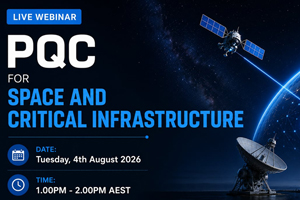
Virtual Series 2026 will offer deeper conversations on why PQC matters and the practical steps businesses should be taking; starts 1:00 pm AEST. Featuring:...
This international lunar science meeting has two objectives: to provide a platform for leading experts to review recent advances across lunar research, from the...
At CSIR International Convention Centre. Key topics are Earth Observation, Developing Space Tourism, Space Supply Manufacturing. Cultural tours are offered.
Participants will receive theoretical and hands-on training in electron imaging and X-ray spectroscopy for application to planetary samples. This training opportunity is targeted at...
"Leading Australia’s Space Future for Our Strategic Advantage". Southern Space 2026 brings together decision-makers who set the direction for Australia’s space sector. It is...
 Jul 1 —
  Jul 1 — NewSpace: Houston spaceport development underway as 1st tenant
  Jul 1 — USA:
 = All times
 = All times for international terrestrial events in local time unless noted.
 = All times for space events, and…
 = All times for international space / astro events in Hawaii Standard Time unless noted. Add 10 hours to obtain UT (‘Universal Time’).