MIT Conference Explores Interstellar Observations with TESS Exoplanet Telescope and Future Mission Prospects
The 1st TESS Science Conference being held the last week of SpaceMonth July 29 – August 2 at MIT in Cambridge MA. It will focus on data dedicated to exoplanets, stellar binaries, variable stars, Solar System asteroids and comets, extragalactic astronomy, and astroseismology (study of star interiors). The Scientific Organizing Committee includes (T-B) Jessie Christiansen from NExScI, Sara Seager from MIT, Suzanne Aigrain from University of Oxford, and Andrew Howard from Caltech. The MIT-led, NASA Transiting Exoplanet Survey Satellite (TESS) in highly elliptical HEO is beginning its 2nd year in space and transitioning from surveying southern ecliptic hemisphere to northern ecliptic hemisphere. It searches for exoplanets using the transit method in an area 400x larger than that covered by Kepler, and is expected to find more than 20,000 exoplanets. So far it has found nearly 900 potential exoplanets. While 200-400B are estimated to exist in Milky Way Galaxy, 4,016 exoplanets total have been confirmed from various missions to date. Some potentially habitable exoplanets have been found around stars Teegarden (12 LY away in Aries), K2-72 (227 LY in Aquarius) and Trappist-1 (39.6 LY in Aquarius). Trappist-1 is an ultra-cool red dwarf star, slightly larger and much more massive than Jupiter, and has a 7-planet system which is the most detected in any system. (Image Credits: NASA, JPL, Caltech, IPAC, MIT, Univ. of Oxford, Planetary Habitability Laboratory at UPR Arecibo)
MONDAY
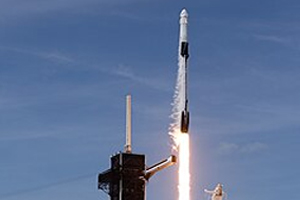
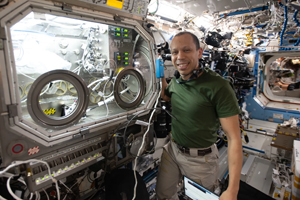
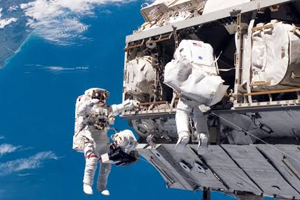
Highlights… Jul 29 — ISS, 405-km LEO: Expedition 60 crew composed of 1 ESA, 3 NASA and 2 Roscosmos members are transferring 2,268 kg of resupply and science payloads delivered by Dragon CRS-18, including experiments designed to investigate moss growth, tissue bioprinting, silica manufacturing, bone healing, microbe biomining, stem cells in microgravity.
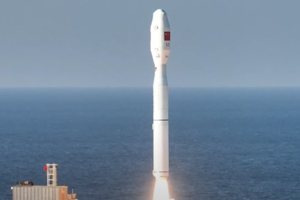
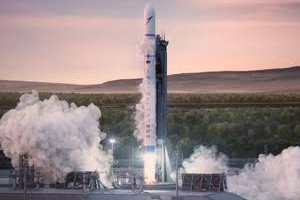
Jul 29 — NewSpace: iSpace, using Hyperbola-1 booster, becomes 1st China private company to place satellite in orbit; Blue Origin BE-7 engine test results being analyzed after successful 6-minute fire, the duration needed to land on Moon; ABL Space Systems, builder of RS1 small launcher, receives investment from Lockheed Martin.
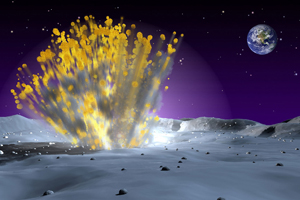
Jul 29 — Solar System: Chang’e-4 begins 8th lunar day; study using Lunar Reconnaissance Orbiter data indicates thick ice deposits in shallow lunar craters; Mars 2020 rover begins fueling Radioisotope Thermoelectric Generator.
Jul 29 — Galaxy: Gaia spacecraft finds evidence of Milky Way merging with a smaller galaxy 10B years ago; China and Japan astronomers discover highest energy cosmic rays at Tibet observatory; JPL engineers deliver sensor-chip electronics hardware for ESA Euclid cosmology mission.
Jul 29 — Global: China Foreign Ministry congratulates Chandrayaan-2 and expresses desire to work with India on Moon, space exploration; Toyota and JAXA researching pressurized lunar rover; Thailand preparing for August Space Week.
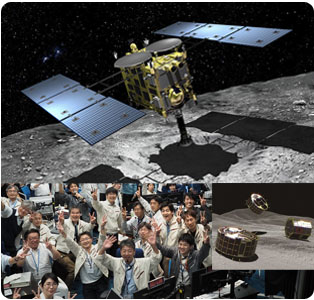
Hayabusa2 Retrieves 2nd Sample from Interior of Ryugu, Advances Asteroid Science
Hayabusa2 successfully retrieves second sample from asteroid 162173 Ryugu, the first from the 900-meter asteroid interior. Previous Hayabusa mission from 2010 returned a tiny sample of less than 1 milligram. Hayabusa-2 could return at least 100 mg of fine-grained material, and several millimeter-sized chunks. The spacecraft has mass of 610 kg, four solar-electric ion thrusters which convert xenon propellant into plasma, and solar arrays which generate ~1.4 kilowatts. The newest sample is from a crater Hayabusa2 made using Small Carry-On Impactor (SCI), a 2-kg copper round launched at 2,000 meters per second. Operations are monitored by Deployable Camera DCAM3. Hayabusa2 has also deployed two hopping rovers MINERVA-II 1A and MINERVA-II 1B along with 10-kg MASCOT lander, which has operated for 17 hours on the surface. MINERVA-II 2, another hopping rover, is scheduled for launch later in Summer. Until the start of November, Hayabusa2 is planned to stay at Ryugu making further observations of its properties and changes. The Hayabusa2 samples are scheduled for Earth return in a special capsule by December 2020. 162173 Ryugu is a potentially hazardous Apollo-type asteroid, meaning an orbit that crosses Earth orbit. Study of a carbonaceous asteroid like Ryugu gives clues to the formation of planets, and can also help international efforts to protect Earth from future impacts. (Image Credits: JAXA)
Jul 29 – Aug 2 — MIT, NASA, Harvard-Smithsonian Center for Astrophysics,Cambridge MA:TESS Science Conference I.
Continued from…
Jan 2019 – Sep 2020 — New Horizons, Kuiper Belt: Full data from spacecraft 7 instruments during KBO Ultima Thule flyby to be transmitted to Earth over this time period.
Apr 13 – Sep 2 — Smithsonian Institution,Museum of Flight,Multiple Locations: Destination Moon, traveling exhibition of historic Apollo 11 artifacts.
Jul 31 — Longjiang-2 Lunar Impact,Moon Orbit: China 47-kg spacecraft planned to deorbit on / around this day, possibly crashing into far side of Moon, after successful mission in lunar orbit since its launch with Chang’e-4 relay satellite 21 May 2018.
Jul 31 — Roscosmos State Corporation, Launch Soyuz / Progress 73P (MS-12), Baikonur Cosmodrome, Kazakhstan: Russia Soyuz rocket to launch Progress 73P resupply ship to ISS.
Jul 31 — Moon: 0.7° NE of Venus, 12:00.
THURSDAY
NET Aug – Nov — Hayabusa2, Asteroid 162173 Ryugu: JAXA Hayabusa2 with 2 sample returns planned to remain at Asteroid for observations during this time period, then return to Earth.
Aug 1 — Deep Space, Jupiter Orbit: Collecting data on Jupiter auroras, gravity and other phenomena, Juno spacecraft planned to perform 13 more science flybys and operate until at least June 2021, after which mission extension could be granted.
Aug 1 — Aten Asteroid 2019 ON: Near-Earth Flyby (0.017 AU)
Aug 1 — Apollo Asteroid 2012 DT32: Near-Earth Flyby (0.084 AU)
FRIDAY
NET Aug 2 — Arianespace, Launch Ariane 5 / Intelsat 39 & EDRS-C, Kourou, French Guiana: Arianespace to launch Ariane 5 ECA rocket, designated VA249 with Intelsat 39 and EDRS-C communications satellites.
Aug 2-3 — Lassen Volcanic National Park, Manzanita Lake CA: Dark Sky Festival; astronomy activities, constellation tours and stargazing.
Aug 2 — Moon: 3.1° NNE of Regulus, 04:00.
SATURDAY
Aug 3 — SpaceX, Launch Falcon 9 / Amos 17, Cape Canaveral, FL: Falcon 9 to launch Amos 17 communications satellite to provide broadband connectivity over Africa, Middle East and Europe; 18:50.
Aug 4 — Space Station Museum, Novato CA: 2019 Novato Space Festival; featuring Astronauts Al Worden, Millie Hughes-Fulford, Dan Bursch, Steve Smith, Greg “Box” Johnson, Yvonne Cagle; 10:00-16:00, free.
Includes ~150 meetings covering the fields of COSPAR Scientific Commissions / Panels / Task Groups, such as SC B: The Earth-Moon System, Planets, and...
From 02 to 07 August 2026, a few thousand geoscientists across diverse disciplines will gather at the 23rd annual meeting of the Asia Oceania Geosciences...
2:45 pm EDT from Johnson Space Center, NASA astronaut Chris Williams will recap his recent eight-month mission aboard the International Space Station. Williams returned to...
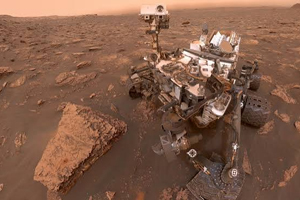
NASA Curiosity (Mars Science Laboratory) rover surpasses another full year of operations on Mars surface today; launched Nov 26, 2011 – landed Aug 5,...
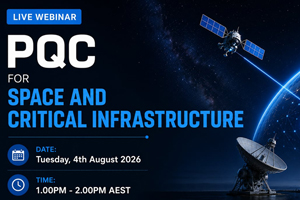
Virtual Series 2026 will offer deeper conversations on why PQC matters and the practical steps businesses should be taking; starts 1:00 pm AEST. Featuring:...
This international lunar science meeting has two objectives: to provide a platform for leading experts to review recent advances across lunar research, from the...
At CSIR International Convention Centre. Key topics are Earth Observation, Developing Space Tourism, Space Supply Manufacturing. Cultural tours are offered.
Participants will receive theoretical and hands-on training in electron imaging and X-ray spectroscopy for application to planetary samples. This training opportunity is targeted at...
"Leading Australia’s Space Future for Our Strategic Advantage". Southern Space 2026 brings together decision-makers who set the direction for Australia’s space sector. It is...
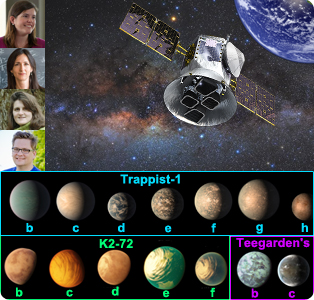 The 1st TESS Science Conference being held the last week of SpaceMonth July 29 – August 2 at MIT in Cambridge MA. It will focus on data dedicated to exoplanets, stellar binaries, variable stars, Solar System asteroids and comets, extragalactic astronomy, and astroseismology (study of star interiors). The Scientific Organizing Committee includes (T-B) Jessie Christiansen from NExScI, Sara Seager from MIT, Suzanne Aigrain from University of Oxford, and Andrew Howard from Caltech. The MIT-led, NASA Transiting Exoplanet Survey Satellite (TESS) in highly elliptical HEO is beginning its 2nd year in space and transitioning from surveying southern ecliptic hemisphere to northern ecliptic hemisphere. It searches for exoplanets using the transit method in an area 400x larger than that covered by Kepler, and is expected to find more than 20,000 exoplanets. So far it has found nearly 900 potential exoplanets. While 200-400B are estimated to exist in Milky Way Galaxy, 4,016 exoplanets total have been confirmed from various missions to date. Some potentially habitable exoplanets have been found around stars Teegarden (12 LY away in Aries), K2-72 (227 LY in Aquarius) and Trappist-1 (39.6 LY in Aquarius). Trappist-1 is an ultra-cool red dwarf star, slightly larger and much more massive than Jupiter, and has a 7-planet system which is the most detected in any system. (Image Credits: NASA, JPL, Caltech, IPAC, MIT, Univ. of Oxford, Planetary Habitability Laboratory at UPR Arecibo)
 Jul 29 —
  Jul 29 — NewSpace:
  Jul 29 — USA: Orion spacecraft for
 = All times
 = All times for international terrestrial events in local time unless noted.
 = All times for space events, and…
 = All times for international space / astro events in Hawaii Standard Time unless noted. Add 10 hours to obtain UT (‘Universal Time’).