Chandrayaan-2 Mission to Lunar South Pole Area Continues, ETA Sep 7
The Indian Space Research Organization (ISRO) lunar exploration mission Chandrayaan-2, Hindi for ‘Moon-Craft’, is prepared to leave Earth orbit. The launch on a GSLV Mk-III from the Satish Dhawan Space Center on July 22 has created much interest and 7,500 members of the public have registered online with ISRO for a spot in the viewing gallery. Now a series of 5 propulsion-firing, orbit-raising maneuvers, the latest lasting 1,041 seconds, have brought the spacecraft to a highly elliptical Earth orbit with a perigee of 276 km and an apogee of 142,975 km. Stunning images of the Earth, taken by onboard L14 camera, have been returned from 5,000 km. The next phase of the Chandrayaan-2 mission is Trans-Lunar Injection, which will set the spacecraft on its way to orbit the Moon August 14 – the Eve of India’s Independence Day (1947) and anniversary of ISRO founding (1969). A week-long, curved trajectory is intended to lower fuel requirements in comparison to a more direct route. Landing of the 1,471-kg Vikram, containing 4 payloads, is expected September 7 at approximately 70° South on a near side plateau between the craters Simpelius N and Manzinus C. A successful lunar soft landing would make India the 4th nation to achieve this milestone, and would be the closest ever exploration of the Lunar South Pole – a destination long championed by leaders in Moon thought such as David Schrunk (L) and organizations such as the International Lunar Observatory Association, and suggested to former ISRO chairman Udupi Ramachandra Rao (C). Current Chairman Sivan (R) has stated that Chandrayaan-3 is planned; JAXA collaboration is possible. (Image Credits:ISRO )
MONDAY
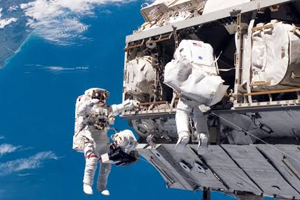
Highlights… Aug 12 — ISS, 405-km LEO: Expedition 60 six-member crew preparing for Aug 21 EVA by Nick Hague and Andrew Morgan to install International Docking Adapter-3. Christina Koch and Hague preparing 20 live astro-mice brought on SpaceX Dragon for return to Earth.
Aug 12 — NewSpace: SpaceX Starhopper prototype after August test hops will contribute parts to Starship Mark I for orbital flights to follow Aug 24 announcement.
Aug 12 — Solar System: Data from Keck Telescope and Gemini North Observatory on Mauna Kea indicate that volcano Loki Patera on Io erupts with 500-day regular cycle.
Aug 12 — Hawai’i: Mauna Kea telescope employees face challenges maintaining telescopes while all observations are suspended; big telescope project handicapped by lack of Hawaiian name.
Aug 12 — Parker Solar Probe,Heliocentric Orbit: NASA craft to come within 6.16M km of the Sun, well within the orbit of Mercury and ~7 times closer than any spacecraft has before – reaches 1st full year in Space today; launched Aug 12, 2018.
Aug 12 — Institute for Science and Engineer Educators, UC Santa Cruz, Kahului HI: Akamai Workforce Initiative 2019 Internship Symposium Maui; featuring presentations by interns from Daniel K. Inouye Solar Telescope, IfA, Maui High Performance Computing Center, others; 09:00-12:00.
International Space Elevator Consortium Meeting in Seattle Museum of Flight
International Space Elevator Consortium meets August 16-18 at Seattle Museum of Flight, where the Apollo 11 Columbia spacecraft is currently on display. An elevator to geosynchronous orbit is a subject of discussion since Konstantin Tsiolkovsky in 1895, Yuri Artsutanov in 1959, and Arthur Clarke in 1979. ISEC, a global organization headed by Peter Swan (L) and affiliated with National Space Society, has been in operation since it’s first meeting in Redmond, Washington in 2008. With a mission to promote the development and construction of a space elevator, ISEC coordinates with the Japanese Space Elevator Association and the EuroSpaceward organization founded by Brad Edwards (R). ISEC organizes research presentations at the International Academy of Astronautics and International Astronautical Federation Congress, while stimulating STEM activities like a Family Science Fest. Elevators are seen as a revolutionary and efficient way to space for humanity. The tower will have to extend beyond the 35,786-km geostationary orbit to provide a counterweight. Construction of an elevator to Earth orbit awaits development and mass production of high-tensile strength materials like carbon nanotubes. A 56,000-km elevator to the Moon’s L1 Lagrangian point could be built with existing materials in the low lunar gravity. A Mars elevator would be only 13,634 km high, but would coincide with the 9,376 km orbit of Phobos. In future decades several space elevators could be connected by a Ringworld, coincidentally linking Earth’s most populous nations in a giant peace symbol. (Image Credits: Obayashi Corporation, ISEC, IAF, Seattle Space Needle, EuroSpaceward, Museum of Flight)
Aug 12-15 — Chiba Institute of Technology, Osaka Sangyo University, Nagoya University, Narashino, Japan: 12th Meeting on Cosmic Dust.
Aug 12 — Moon: 0.31° E of Saturn, 01:00.
Aug 12 — Jupiter: 6.9° NE of Antares; 05:00.
Aug 12 — Perseid Meteor Shower Peak: Appearing to radiate from constellation Perseus, shower can produce up to 110 meteors per hour, which are fast, bright and frequently leave persistent trains.
Aug 12 — Apollo Asteroid 454094 (2013 BZ45): Near-Earth Flyby (0.044 AU)
Continued from…
Jan 2019 – Sep 2020 — New Horizons, Kuiper Belt: Full data from spacecraft 7 instruments during KBO Ultima Thule flyby to be transmitted to Earth over this time period.
Apr 13 – Sep 2 — Smithsonian Institution,Museum of Flight,Multiple Locations: Destination Moon, traveling exhibition of historic Apollo 11 artifacts.
NET Aug – Nov — Hayabusa2, Asteroid 162173 Ryugu: JAXA Hayabusa2 with 2 sample returns planned to remain at Asteroid for observations during this time period, then return to Earth.
Aug 11-17 — Recontres du Vietnam, Quy Nhon University, International Center for Interdisciplinary Science and Education (ICISE), Quy Nhon, Vietnam:15th Recontres du Vietnam: Cosmology.
Aug 14 — Institute for Science and Engineer Educators, UC Santa Cruz, Hilo HI: Akamai Workforce Initiative 2019 Internship Symposium Hilo; featuring presentations by interns from PISCES, IfA, Gemini, Subaru, SMKA, HELCO; 09:00-12:00 at Hilo Hawaiian Hotel.
THURSDAY
Aug 15 — Marshall Space Flight Center, Michoud Assembly Facility,New Orleans LA: Status of Rocket For First Artemis Lunar Mission; NASA Administrator Jim Bridenstine will meet with members of the Space Launch System program and media guests in front of the first SLS core stage, 11:30.
Aug 15 — Keck Observatory, Event Horizon Telescope Group,Waimea HI: Powehi, Hawaii and the Event Horizon Telescope, talk story on the groundbreaking image of black hole Powehi and the role of Mauna Kea observatories with Geoffrey Bower from Event Horizon Telescope Group, Jessica Dempsey from East Asia Observatory, Larry Kimura of UH Hilo, and Doug Simons of CFHT, free, 18:30.
Aug 15 — Venus: At brightest magnitude -3.92°, 02:00.
Aug 15 — Moon: Full (Sturgeon Moon), 02:30.
FRIDAY
Aug 16 — Institute for Science and Engineer Educators, UC Santa Cruz, Waimea HI: Akamai Workforce Initiative 2019 Internship Symposium Waimea-Kona; featuring presentations by interns from CFHT, W. M. Keck Observatory, Cyanotech, Liquid Robotics; 09:00-12:00 at Keck.
Aug 17 — International Lunar Observatory Association, Hilo HI: Galaxy Forum Hawai’i 2019 Hilo: Astronomy from the Moonand onHawaii 21st Century Business and Education Communities; free, 10:00am – 12:00pm, at ‘Imiloa Astronomy Center.
Aug 17 — Maunakea Observatories, ‘Imiloa Astronomy Center,Mauna Kea HI: Kamaʻāina Observatory Experience; Hawai’i Cultural Practitioner Leilehua Yuen to give Hawaiian cultural perspective on Mauna Kea and opportunity to ride to the summit and tour 2 observatories; may be Postponed.
Aug 17 — Moon: At apogee (distance 405,650 km), 01:00; 3.5° SSE of Neptune, 07:00.
Aug 17 — Mars: 0.66° NNE of Regulus, 13:00.
Aug 17 — Apollo Asteroid 141593 (2002 HK12): Near-Earth Flyby (0.062 AU)
SUNDAY
Aug 18-25 — CosmoCruise, Venice, Italy: CosmoCruise 2019; program aboard Costa Delizioza in Adriatic Sea “From the Early to Late Universe” with speakers including Joseph Silk of Oxford and Stacy McGaugh of Case Western Reserve University to talk about cosmology and origins of the universe.
Aug 18 — Kappa Cygnids Meteor Shower Peak: Shower appears to line up in sky by Cygnus and star Kappa Cygni, typically produces slow (25 km/sec) mostly faint meteors 3-5 per hour with a few very bright meteors.
Includes ~150 meetings covering the fields of COSPAR Scientific Commissions / Panels / Task Groups, such as SC B: The Earth-Moon System, Planets, and...
From 02 to 07 August 2026, a few thousand geoscientists across diverse disciplines will gather at the 23rd annual meeting of the Asia Oceania Geosciences...
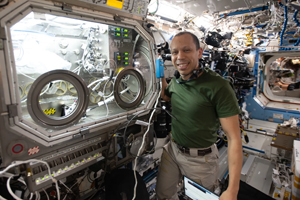
2:45 pm EDT from Johnson Space Center, NASA astronaut Chris Williams will recap his recent eight-month mission aboard the International Space Station. Williams returned to...
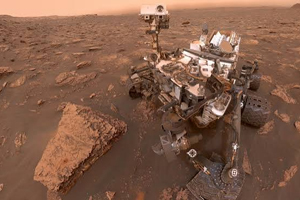
NASA Curiosity (Mars Science Laboratory) rover surpasses another full year of operations on Mars surface today; launched Nov 26, 2011 – landed Aug 5,...
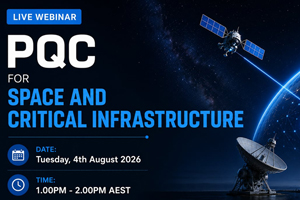
Virtual Series 2026 will offer deeper conversations on why PQC matters and the practical steps businesses should be taking; starts 1:00 pm AEST. Featuring:...
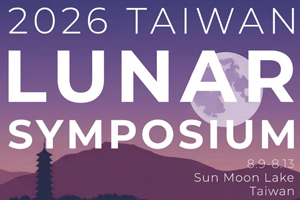
This international lunar science meeting has two objectives: to provide a platform for leading experts to review recent advances across lunar research, from the...
At CSIR International Convention Centre. Key topics are Earth Observation, Developing Space Tourism, Space Supply Manufacturing. Cultural tours are offered.
Participants will receive theoretical and hands-on training in electron imaging and X-ray spectroscopy for application to planetary samples. This training opportunity is targeted at...
"Leading Australia’s Space Future for Our Strategic Advantage". Southern Space 2026 brings together decision-makers who set the direction for Australia’s space sector. It is...

 Aug 12 —
  Aug 12 — NewSpace:
  Aug 12 — USA:
 = All times
 = All times for international terrestrial events in local time unless noted.
 = All times for space events, and…
 = All times for international space / astro events in Hawaii Standard Time unless noted. Add 10 hours to obtain UT (‘Universal Time’).