ISS HTV-8 Launch to Carry New Batteries and Experiments in Anticipation of Lunar-Capable HTV-X
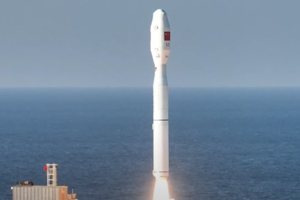
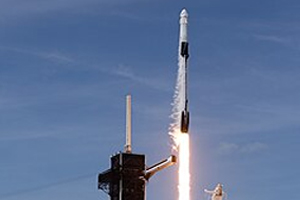
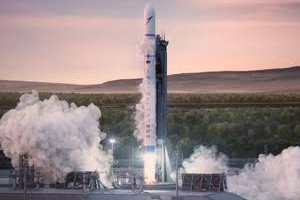
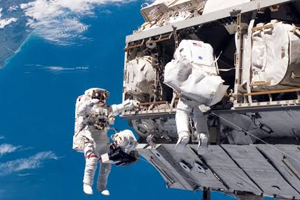
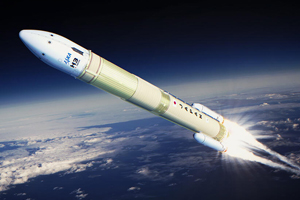
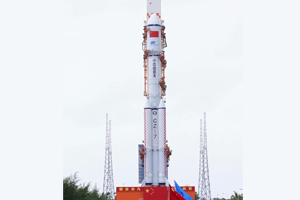
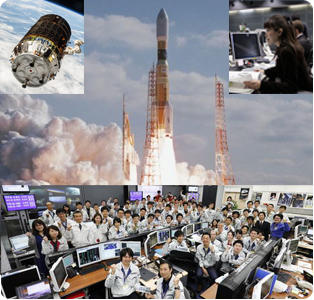
The 8th Japan ‘Kounotori’ (Stork) H-2 Transfer Vehicle (HTV-8) launch is scheduled for September 10 atop H-2B booster from Tanegashima Space Center to ISS. HTV-8 carries 3,400 kg payload in a pressurized compartment and 1,900 kg of unpressurized payload. It will deliver 6 new 200-kg lithium-ion batteries to replace older nickel-hydrogen batteries for ISS power during times of low sunlight. Among the JAXA experiments aboard Kounotori is Hourglass, which will investigate the behavior of small dust particles in reduced gravity. To prepare for docking, ISS crew have completed checkout of the Proximity Communication System (PROX) to be used for contact with HTV-8. On October 21 Northrop Grumman Cygnus NG-12 will be launched to ISS aboard an Antares launcher. The Cygnus module is selected by NASA in a sole-source contract as the basis for a lunar orbital habitat. In Oct Boeing plans an uncrewed launch of Starliner on an Atlas V to ISS, vying with SpaceX to be first to return astronauts to space in an American spacecraft. HTV-9, planned for Feb 2020, will carry 6 more lithium-ion batteries and the Australia CUAVA-1 satellite. The new HTV-X, planned to fly in Feb 2022, will be able to carry 5,800 kg of payload. With a larger electrical capacity, HTV-X is also designed to transport goods to lunar orbit in support of Moon exploration. (Image Credits: JAXA)
MONDAY
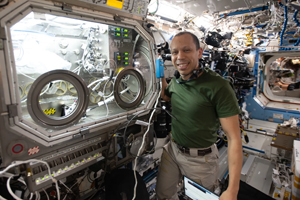
Highlights… Sep 9 — ISS, 405-km LEO: Expedition 60 six-member crew working with space moss experiment and setting up next vegetable growth study; performing ‘ISS Experience’ recordings including Artemis / lunar orbital rendezvous focus; Christina Koch scheduled for 328 days, will set record for longest spaceflight by a woman.
Sep 9 — USA: NASA NextSTEP H Human Lunar Lander solicitation revised to land on Moon in 2024; Space Launch System engine section moved for final integration to core stage; White House includes space exploration as one of top 5 R&D priorities; KSC reopens after Hurricane Dorian.
Sep 9 — Hawai’i: Gemini ‘Alopeke instrument tracks orbit of exoplanet Kepler-13b; CFHT makes observations of Haumea family of Kuiper Belt objects; NASA Infrared Telescope Facility finds active asteroid 6478 Gault in act of changing color.
Revitalized American Space Movement on Display as Space Studies Institute and American Astronautical Society Convene
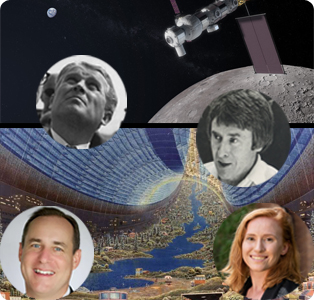
Space Studies Institute holds its two-day annual conference – ‘SSI 50: The Space Settlement Enterprise’, September 9-10 at Seattle Museum of Flight. The conference this year will focus on 6 topics: Habitat Design, Construction, Extraterrestrial Resources, Transportation, Life in Space and Economic Prosperity. SSI is ‘preparing for dramatic reboot’ of research started by visionary founder Gerard K O’Neill, given newfound prominence by public figures such as Jeff Bezos, CEO of Blue Origin, who used SSI illustrations at a press conference in May to communicate his plans for exploration and enterprise. Notable speakers include management astronaut Yvonne Cagle, former NASA Human Research Program chief scientist John Charles, and Morgan Irons (R) of Cornell’s College of Agriculture. Concurrently, the 12th annual AAS sponsored Wernher von Braun Memorial Symposium will be held Sep 10-12 at University of Alabama in Huntsville, with theme ‘Exploration is the Work of Generations’. Von Braun’s idea of a permanent space ‘Gateway’ has likewise gained much currency in the contemporary space exploration sphere, with both NASA and the Gateway Foundation, a private enterprise, declaring plans to construct permanent outpost structures in orbit of the Moon and in cis-lunar space, respectively. Steve Altemus (L), CEO of CLPS-winning Intuitive Machines and Marshall Smith, Director of NASA Human Lunar Exploration Programs are among the distinguished participants. (Image Credits: NASA, SSI, Twitter)
Sep 9 — Epsilon Perseid Meteor Shower Peak: Appearing to radiate from the constellation Perseid the September Epsilon Perseids can reach up to 5 per hour traveling at ~65 km per second; 06:00.
Sep 9 — Apollo Asteroid 2019 QZ3: Near-Earth Flyby (0.025 AU)
Continued from…
Jan 2019 – Sep 2020 — New Horizons, Kuiper Belt: Full data from spacecraft 7 instruments during KBO Ultima Thule flyby to be transmitted to Earth over this time period.
NET Aug – Nov — Hayabusa2, Asteroid 162173 Ryugu: JAXA Hayabusa2 with 2 sample returns planned to remain at Asteroid for observations during this time period, then return to Earth.
Sep 10 — JAXA, Launch H-2B / HTV-8,Tanegashima Space Center, Japan: An uncrewed Japan H-2B rocket set to launch 8th H-2 transfer vehicle (Kounotori 8) to deliver supplies to ISS.
Sep 11-13 — Luxembourg Space Agency, University of Luxembourg, von Karman Institute for Fluid Dynamics, et al, Luxembourg City, Luxembourg: 11th European CubeSat Symposium.
Sep 12 — 57th Observation John F. Kennedy Moon Speech & 27th Observation 1st African-American Woman in Space,USA / Worldwide: As the World looks forward to the First Woman on the Moon and a Human Return to Moon, observations made today for 57th anniversary of Kennedy Moon speech (1962) and to celebrate the 27th anniversary of Astronaut Mae Jemison becoming first African-American Woman in Space (1992).
Sep 12 — Department of Commerce Boulder Laboratories, DOC Office of Space Commerce, University of Colorado Boulder,Boulder CO: Space Commerce Workshop.
Sep 13 — Juno, Perijove 22 / 21st Science Flyby,Jupiter Orbit: NASA craft in 53-day orbit to come within ~3,500 km of Jupiter cloud tops during Perijove 22, its 22nd close flyby of Jupiter and 21st science flyby with instruments turned on.
Sep 13-15 — Icarus Interstellar,San Diego CA: Starship Congress 2019: Bend Metal; 4th annual conference, at San Diego Air & Space Museum.
Sep 13-15 — European Space Foundation, Mars Society Polska, Kielce University of Technology, et al, Kielce, Poland: European Rover Challenge.
Sep 13 — Moon: At apogee (distance 406,352 km), 03:00; 3.4° SSE of Neptune, 11:00; Full (Harvest Moon), 18:34.
Sep 13 — Mercury: 0.29° SSW of Venus, 04:00.
Sep 13 — Apollo Asteroid 2013 CV83: Near-Earth Flyby (0.035 AU)
Sep 13 — Apollo Asteroid 2013 CV83: Near-Earth Flyby (0.041 AU)
Sep 14-16 — Japan Agency for Medical Research and Development and the New York Academy of Sciences,NYC NY: The Interstellar Initiative: 2019-2020; “Aligning Young Stars of Science to Tackle the World’s Most Critical Medical Challenges”.
Emanating from ~6km-wide comet with 5.3-year Solar orbit, visible in constellation Aquarius near star Delta Aquarii, fast, faint meteors peak on this night, best...
The International Research Conference is a federated organization dedicated to bringing together a significant number of diverse scholarly events for presentation within the conference...
Includes ~150 meetings covering the fields of COSPAR Scientific Commissions / Panels / Task Groups, such as SC B: The Earth-Moon System, Planets, and...
From 02 to 07 August 2026, a few thousand geoscientists across diverse disciplines will gather at the 23rd annual meeting of the Asia Oceania Geosciences...
2:45 pm EDT from Johnson Space Center, NASA astronaut Chris Williams will recap his recent eight-month mission aboard the International Space Station. Williams returned to...
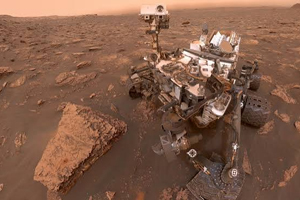
NASA Curiosity (Mars Science Laboratory) rover surpasses another full year of operations on Mars surface today; launched Nov 26, 2011 – landed Aug 5,...
Virtual Series 2026 will offer deeper conversations on why PQC matters and the practical steps businesses should be taking; starts 1:00 pm AEST. Featuring:...
This international lunar science meeting has two objectives: to provide a platform for leading experts to review recent advances across lunar research, from the...
At CSIR International Convention Centre. Key topics are Earth Observation, Developing Space Tourism, Space Supply Manufacturing. Cultural tours are offered.
 The 8th Japan ‘Kounotori’ (Stork) H-2 Transfer Vehicle (HTV-8) launch is scheduled for September 10 atop H-2B booster from Tanegashima Space Center to ISS. HTV-8 carries 3,400 kg payload in a pressurized compartment and 1,900 kg of unpressurized payload. It will deliver 6 new 200-kg lithium-ion batteries to replace older nickel-hydrogen batteries for ISS power during times of low sunlight. Among the JAXA experiments aboard Kounotori is Hourglass, which will investigate the behavior of small dust particles in reduced gravity. To prepare for docking, ISS crew have completed checkout of the Proximity Communication System (PROX) to be used for contact with HTV-8. On October 21 Northrop Grumman Cygnus NG-12 will be launched to ISS aboard an Antares launcher. The Cygnus module is selected by NASA in a sole-source contract as the basis for a lunar orbital habitat. In Oct Boeing plans an uncrewed launch of Starliner on an Atlas V to ISS, vying with SpaceX to be first to return astronauts to space in an American spacecraft. HTV-9, planned for Feb 2020, will carry 6 more lithium-ion batteries and the Australia CUAVA-1 satellite. The new HTV-X, planned to fly in Feb 2022, will be able to carry 5,800 kg of payload. With a larger electrical capacity, HTV-X is also designed to transport goods to lunar orbit in support of Moon exploration. (Image Credits: JAXA)
 Sep 9 —
  Sep 9 — NewSpace: Germany
  Sep 9 — USA: NASA
 = All times
 = All times for international terrestrial events in local time unless noted.
 = All times for space events, and…
 = All times for international space / astro events in Hawaii Standard Time unless noted. Add 10 hours to obtain UT (‘Universal Time’).