International Space Station Enters 20th Year of Continuous Human Occupation
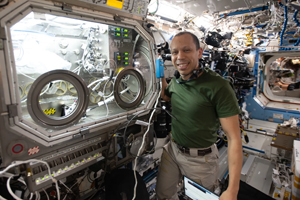
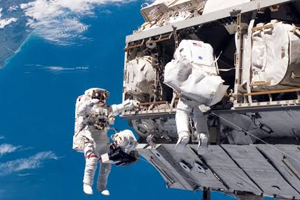
November 2 marks 19 full years and the beginning of year 20 for continuous human occupation at ISS. After historic all female USA EVA 59, in which Battery Charge Discharge Unit was replaced, a series of 5 EVAs are planned to repair Alpha Magnetic Spectrometer instrumentation. 3 remaining battery related EVAs will be rescheduled to a later date, as will planned Russia EVA 47, in which Cosmonauts Oleg Skripochka and Alexander Skvortsov are to work on the Russian module Zvezda (NET Jan 2020). That will be the first Russian spacewalk since Alexei Leonov, first human to walk in space, passed away October 11. Leonov was commemorated by Expedition Commander Luca Parmitano – “Farewell Alexei, and ad astra” during US EVA 58. To date, 221 ISS EVAs have been performed over the course of a cumulative 57 days, 20 hours, and 29 minutes. The ISS now nearly doubles the record for longest continuous human presence in earth orbit set by Mir (9 years and 357 days). ISS has from inception been a decidedly international effort: 19 countries have sent their citizens to work and reside together in space, with significant contributions by Germany, France, Italy, Canada, Japan, Russia and USA. Next launch to the ISS will be the uncrewed commercial resupply mission NG-12, in which Northrop Grumman Antares rocket will carry Cygnus cargo freighter. (Image Credits: NASA)
MONDAY
Highlights… Oct 28 — ISS, 405-km LEO: Expedition 61 six-member crew prepare to utilize Canadarm2 in release of HTV-8 cargo craft, conduct studies on surface tension and agriculture in space and perform medical ocular check – monitoring cornea, lens and optic nerve for structural changes; planning for Made In Space Braskem Recycler experiment.
Oct 28 — Solar System: PI Alan Stern and New Horizons team reveal best ever map of Pluto far side; new study finds most accurate Venus rotation rate which will affect future landings; Lucy asteroid mission enters next phase after critical design review.
Oct 28 — Galaxy: Very Large Telescope makes first detection of element strontium in space; Atacama Large Millimeter Array finds star-forming galaxy in early universe; Breakthrough Listen initiative will collaborate with Transiting Exoplanet Survey Satellite to search for signs of intelligent life.
Oct 28 — Global: Japan formally participating in Artemis and joining ISRO on lunar mission; Australia Space Agency signs cooperation agreements with NASA and Tasmania state government; China space station expected to launch early 2020 on Long March 5B booster.
Oct 28 — USA: Blue Origin enlists Lockheed Martin, Northrop Grumman and Draper in bid for Artemis lunar lander; Boeing and Airstream unveil updated Astrovan to transport crews to launchpad; RS-25 engines attached to Space Launch System core stage for Artemis 1.
Oct 28 — Hawai’i: MAROON-X instrument at Gemini North Observatory begins search for exoplanets; Keck Telescope observations indicate problems with standard model of cosmology; Subaru and Gemini Telescopes combine to map supercluster CL1604.
= All times
for terrestrial events in local time unless noted.
= All times for international terrestrial events in local time unless noted.
= All times for space events, and…
= All times for international space / astro events in Hawaii Standard Time unless noted. Add 10 hours to obtain UT (‘Universal Time’).
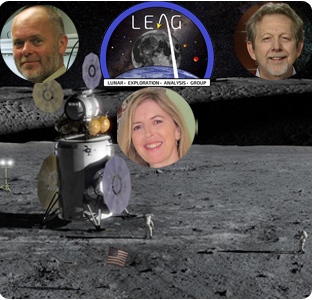
Lunar Exploration Analysis Group Meets Ahead Of Nov 1 Artemis Human Lander Proposals Due Date
Lunar Exploration Analysis Group meets at Washington DC Hilton October 28-30. The annual meeting brings together members of the lunar science community to offer input to Artemis program. The first day will focus on planning a Planetary Decadal Survey. The remaining two days will focus on Artemis, with speakers from the NASA Human Exploration and Operation Missions Directorates. LEAG hopes to help in sustaining lunar exploration, developing a cislunar economy, and creating opportunities for international collaboration. LEAG seeks to aid NASA with a Lunar Exploration Roadmap. The LEAG Executive Committee includes Clive Neal (L) from University of Notre Dame and Louise Prockter of Lunar & Planetary Institute. Commercial and international partners will attend the LEAG meeting. In a keynote speech at the International Astronautical Congress in Washington, NASA Chief Scientist Jim Green (R) talks about unanswered scientific questions on the Moon. Artemis and the First Women on the Moon are winning international support with Canada and Japan officially collaborating, ESA seeking approval from member states and Roscosmos sorting out ways to support Artemis. Blue Origin teams with Lockheed Martin and Northrop Grumman to bid for an Artemis lunar lander. Lockheed Martin plans to provide a crewed reusable ascent element based on their Orion spacecraft. Bids for human landing system from industry teams have an early due date of Nov 1. (Image Credits: NASA, Notre Dame University, LPI)
Oct 28 — Keck Institute of Studies, Caltech,Pasadena CA:Lecture: Exploring Jupiter; by Candice Hansen-Koharcheck from Planetary Science Institute.
Oct 28-29 — European Space Agency, Atomic Clock Ensemble in Space, Paris, France: ACES Workshop 2019; colloquium for scientists working with ACES atomic clock to be launched to ISS in 2020.
Oct 28-29 — National Space Science Center of the Chinese Academy of Science, National Academies of Sciences, Engineering and Medicine,Washington DC:10th Forum for New Leaders in Space Science.
Oct 28 — Apollo Asteroid 2019 UT1: Near-Earth Flyby (0.012 AU)
Oct 28 — Apollo Asteroid 2019 UE1: Near-Earth Flyby (0.022 AU)
Continued from…
Jan 2019 – Sep 2020 — New Horizons, Kuiper Belt: Full data collected from 7 instruments during KBO Ultima Thule flyby to be transmitted to Earth over this time period.
NET Aug – Nov — Hayabusa2, Asteroid 162173 Ryugu: JAXA Hayabusa2 with 2 sample returns planned to remain at Asteroid for observations during this time period, then return to Earth.
Oct 31 — Apollo Asteroid 2019 UJ3: Near-Earth Flyby (0.019 AU)
Oct 31 — Apollo Asteroid 2011 SE97: Near-Earth Flyby (0.098 AU)
FRIDAY
NET Nov-Dec — Hayabusa2, Earth Trajectory: JAXA Hayabusa2 with 2 sample returns collected to depart C-type asteroid 162173 Ryugu and return to Earth in 2020.
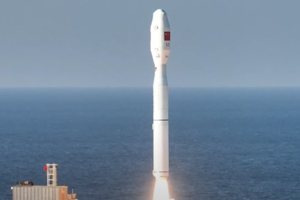
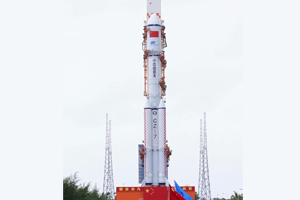
NET Nov — CNSA, Launch Long March 5 / Shijian 20 (SJ 20), Wenchang Satellite Launch Center, Hainan Island, China (19° N): China Long March 5 return to flight carrying SJ-20, an 8-metric ton technological demonstration satellite, into geosynchronous orbit.
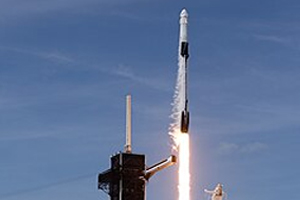
NET Nov — SpaceX, Launch Falcon 9 / Starlink 1, LC-40, Cape Canaveral AFS FL: Launch of second batch of ~60 satellites, designated Starlink 1, for SpaceX Starlink Broadband.
Nov 1 — ISS, HTV-8 Release, LEO: JAXA HTV-8 “Kounotori” cargo capsule with waste to be released from ISS today and disintegrate in Earth atmosphere tomorrow.
Nov 1 — Deep Space, Jupiter Orbit: Juno spacecraft in a 53.4-day orbit of planet with 9 instruments operating nominally will continue to gather science data for at least 19 more months; scientists maneuver craft to avoid Jupiter shadow during next close flyby.
Nov 1 — Apollo Asteroid 2019 UM4: Near-Earth Flyby (0.029 AU)
Nov 1 — Apollo Asteroid 2014 UC192: Near-Earth Flyby (0.084 AU)
SATURDAY
Nov 2 — International Space Station, LEO: Today marks 19 full years / start to 20th year of continuous Human occupation of ISS; first component launched Nov 20, 1998, human missions began Nov 2, 2000.
Nov 2 — Northrop Grumman, Launch Antares / NG-12, Pad 0A, Wallops Island VA: Antares rocket to launch 13th Cygnus cargo freighter on 12th operational cargo mission to ISS.
Nov 2 — University of California – San Francisco, Baylor College of Medicine – Translational Research Institute, San Francisco CA:Space Health Innovation Conference.
Nov 2 — Standard Time (USA): Change clocks back 1 hour from Daylight Saving to Standard Time; does not include Hawai’i, American Samoa or Arizona (except the Navajo Reservation).
Nov 2 — Apollo Asteroid 2019 UU3: Near-Earth Flyby (0.034 AU)
SUNDAY
Nov 3 — Juno, Perijove 23 / 22nd Science Flyby,Jupiter Orbit: NASA craft in 53-day orbit to come within ~3,500 km of Jupiter cloud tops during Perijove 23, its 23rd close flyby of Jupiter and 22nd science flyby with instruments turned on; 23:32:56 UTC.
Nov 3 — Maunakea Observatories, University of Hawai’i at Hilo, IfA, et al,Kailua-Kona HI:3rd Annual AstroDay West; at Kealakehe High School 11:00-15:00, with annual Hawaii Island Robotics Expo and Showcase (HI-RES).
Nov 3 — Apollo Asteroid 2019 UH3: Near-Earth Flyby (0.027 AU)
Nov 3 — Apollo Asteroid 2015 JD1: Near-Earth Flyby (0.033 AU)
Emanating from ~6km-wide comet with 5.3-year Solar orbit, visible in constellation Aquarius near star Delta Aquarii, fast, faint meteors peak on this night, best...
The International Research Conference is a federated organization dedicated to bringing together a significant number of diverse scholarly events for presentation within the conference...
Includes ~150 meetings covering the fields of COSPAR Scientific Commissions / Panels / Task Groups, such as SC B: The Earth-Moon System, Planets, and...
From 02 to 07 August 2026, a few thousand geoscientists across diverse disciplines will gather at the 23rd annual meeting of the Asia Oceania Geosciences...
2:45 pm EDT from Johnson Space Center, NASA astronaut Chris Williams will recap his recent eight-month mission aboard the International Space Station. Williams returned to...
NASA Curiosity (Mars Science Laboratory) rover surpasses another full year of operations on Mars surface today; launched Nov 26, 2011 – landed Aug 5,...
Virtual Series 2026 will offer deeper conversations on why PQC matters and the practical steps businesses should be taking; starts 1:00 pm AEST. Featuring:...
This international lunar science meeting has two objectives: to provide a platform for leading experts to review recent advances across lunar research, from the...
At CSIR International Convention Centre. Key topics are Earth Observation, Developing Space Tourism, Space Supply Manufacturing. Cultural tours are offered.
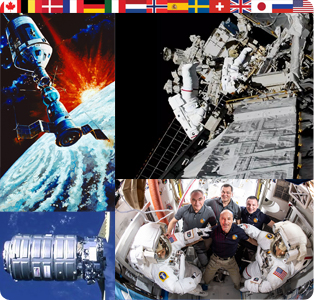 November 2 marks 19 full years and the beginning of year 20 for continuous human occupation at ISS. After historic all female USA EVA 59, in which Battery Charge Discharge Unit was replaced, a series of 5 EVAs are planned to repair Alpha Magnetic Spectrometer instrumentation. 3 remaining battery related EVAs will be rescheduled to a later date, as will planned Russia EVA 47, in which Cosmonauts Oleg Skripochka and Alexander Skvortsov are to work on the Russian module Zvezda (NET Jan 2020). That will be the first Russian spacewalk since Alexei Leonov, first human to walk in space, passed away October 11. Leonov was commemorated by Expedition Commander Luca Parmitano – “Farewell Alexei, and ad astra” during US EVA 58. To date, 221 ISS EVAs have been performed over the course of a cumulative 57 days, 20 hours, and 29 minutes. The ISS now nearly doubles the record for longest continuous human presence in earth orbit set by Mir (9 years and 357 days). ISS has from inception been a decidedly international effort: 19 countries have sent their citizens to work and reside together in space, with significant contributions by Germany, France, Italy, Canada, Japan, Russia and USA. Next launch to the ISS will be the uncrewed commercial resupply mission NG-12, in which Northrop Grumman Antares rocket will carry Cygnus cargo freighter. (Image Credits: NASA)
 Oct 28 —
  Oct 28 — NewSpace:
  Oct 28 — USA:
 = All times
 = All times for international terrestrial events in local time unless noted.
 = All times for space events, and…
 = All times for international space / astro events in Hawaii Standard Time unless noted. Add 10 hours to obtain UT (‘Universal Time’).