ISS Biomedical Research Offers New Era of Benefits for Both Space Medicine and Terrestrial Health
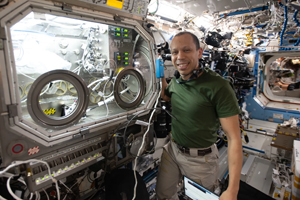
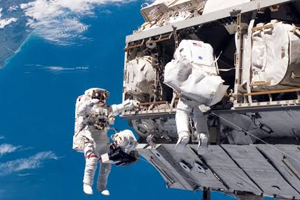
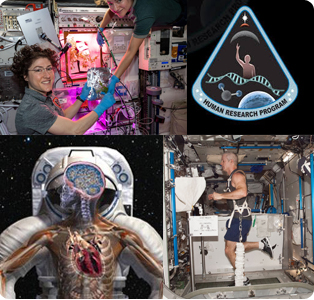
As the International Space Station is set to mark 20 years of continuous human occupation in Nov and prepares for the National Academies of Science, Engineering and Medicine 2020 Decadal Survey which will determine future biological space science priorities for NASA, humanity’s outpost in space makes significant strides on what is arguably the most important use of the facility – biomedical advancement. Division of Space Life and Physical Sciences Research and Applications oversees NASA Human Research, Space Biology and Physical Sciences Programs in collaboration with National Institute of Health through National Center for Advancing Translational Sciences. Human Research Program and university partners (Baylor, Caltech, MIT) connected by Translational Research Institute for Space Health are in the midst of cutting-edge biomedical studies to understand the effects of long duration spaceflight and how to mitigate risks – studies focus on a multitude of health elements: Human Factors and Behavioral Performance, Exploration Medical Capability, Human Health Countermeasures, International Space Station Medical Projects, and Space Radiation. Since ISS National Lab was designated a U.S. National Laboratory in 2005, commercial research has also become commonplace – the nonprofit Center for the Advancement of Science in Space facilitates drug research by pharmaceutical giants such as Merck, Eli Lilly and Novartis. Invitro, a Russian biomedical company, has deployed a 3D tissue printer named Organ-Avt. Current studies being conducted on ISS include simulated cardiac tissue stress tests, microbiome investigations, protein structure formation analysis and immune system regulation. (Image Credits: NASA)
MONDAY
Highlights… Mar 23 — ISS; 405-km LEO: Three-member crew on Station until April 17; Andrew Morgan testing Lower Body Negative Pressure Suit; Jessica Meir monitoring bone cell samples in Kibo module; Oleg Skripochka servicing oxygen generator and plumbing hardware in Russian segment, awaiting Expedition 63 launch scheduled April 9.
Mar 23 — NewSpace: Rocket Lab acquires Toronto satellite manufacturer Sinclair Interplanetary; SpaceX investigating Falcon 9 engine anomaly during successful Starlink launch; UK Sen startup plans to provide high-definition video from space.
Mar 23 — Galaxy: Globular cluster 47 Tucanae provides clues to Milky Way evolution; TESS spacecraft finds planet of star LHS 1815 orbiting outside galactic disk; ESO Very Large Telescope finds exoplanet WASP-76b with temperatures in excess of 2400°C.
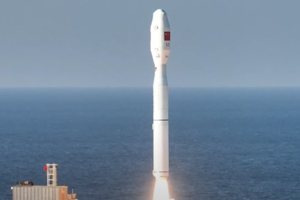
Mar 23 — Global: Zhongguo preparing for Long March 5 launches while experts investigating Long March 7A recent satellite launch failure; Egyptian Space Agency proposes new National Space Program; India ISRO and France CNES sign agreement for TRISHNA satellite program.
Mar 23 — Hawai’i: “Kamehameha” added to name of Hawaii big telescope could bring success and reconciliation for all; Subaru developing MKID sensor for imaging exoplanets; CFHT and TESS spacecraft make observations of chemically peculiar star HD 63401.
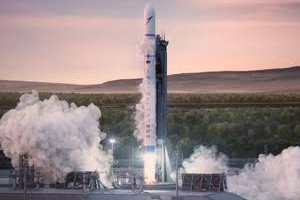
NET Mar 23 — Astra Space, Launch Astra Rocket 3.0 • “1 of 3”, Pacific Spaceport Complex, Kodiak Island AK: Astra Space to launch its first orbital mission.
= All times
for terrestrial events in local time unless noted.
= All times for international terrestrial events in local time unless noted.
= All times for space events, and…
= All times for international space / astro events in Hawaii Standard Time unless noted. Add 10 hours to obtain UT (‘Universal Time’).
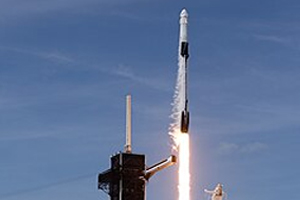
On March 26 the 14-day launch window opens for the 12th Rocket Lab Electron mission, nicknamed “Don’t Stop Me Now,” from Launch Complex 1 at Mahia Peninsula in New Zealand. Electron is scheduled to orbit ANDESITE CubeSat for Boston University and the NASA CubeSat Launch Initiative, which will study Earth magnetosphere and space weather. The Australia government and University of New South Wales M2 Pathfinder satellite on the same mission will be a communications and technology demonstrator. NASA certifies the Electron launcher as key part of Venture Class Launch Services initiative for small satellites. On Mar 26 a United Launch Alliance Atlas V is scheduled to launch from SLC-41 at KSC carrying a Lockheed Martin Advanced Extremely High Frequency (AEHF) satellite for USAF. On March 30 a SpaceX Falcon 9 is scheduled to carry the SAOCOM 1B satellite for Argentina space agency CONAE. SAOCOM 1B is the second of two Argentina Earth observation satellites designed to use radar to aid emergency response and monitor the environment. Multinational satellite launches will continue during historic year 2020. Arianespace delays Vega VV16 Small Spacecraft Mission Service (SSMS) launch of 42 satellites due to human health concerns at French Guiana launch site, but looks forward to launch within 1-6 months. (Image Credits: Arianespace, Rocket Lab, United Launch Alliance)
Mar 23 — Arianespace, Launch Vega / SSMS POC, Kourou, French Guiana: Arianespace Vega rocket, designated VV16, to launch Small Spacecraft Mission Service (SSMS) Proof of Concept mission with 42 microsatellites, nanosatellites and CubeSats for commercial and institutional customers; Postponed.
Mar 23 — Mercury: At westernmost elongation, 27.8° from Sun in morning sky, 16:00.
Continued from…
Jan 2019 – Sep 2020 — New Horizons, Kuiper Belt: Full data collected from 7 instruments during KBO Arrokoth flyby to be transmitted to Earth over this time period.
Nov 2019 – Nov 2020 — Hayabusa2, Earth Trajectory: JAXA Hayabusa2 with two samples collected from C-type asteroid 162173 Ryugu on trajectory for Earth return.
Mar 22-27 — Les Houches Physics School, University of Grenoble, French National Centre for Scientific Research, National Polytechnic Institutes, ENS Lyon, Les Houches, France: Interstellar Shock School.
TUESDAY
Mar 24 — CNSA, Launch Long March 2C / Yaogan 30-06, Xichang Satellite Launch Center, China: Long March 2C rocket to launch three Yaogan 30-06 surveillance satellites for China military.
Mar 24 — The Space Show, Online / Tiburon CA: Dr. David Livingston talks with Bob Zimmerman about the LPI meetings.
Mar 24-26 — International Astronautical Federation, International Academy of Astronautics, International Institute of Space Law, Paris, France: IAF Spring Meetings 2020; Cancelled.
Mar 28 — Moon: 6.5° SE of Venus, 06:00; 6.7° SE of Pleiades, 18:00.
Mar 28 — Apollo Asteroid 2020 FE2: Near-Earth Flyby (0.012 AU)
SUNDAY
Mar 29 — Rocketlab, Launch Electron / “Don’t Stop Me Now”Launch Complex 1, Mahia Peninsula, New Zealand: 14-day launch window begins for 12th Electron launch to carry ANDESITE and NRO satellites.
Mar 29 — The Space Show, Online / Tiburon CA: Dr. David Livingston talks with Paul Jaffe from United States Naval Research Laboratory about Space Solar Power.
Mar 29 — Daylight Saving Time (Europe): Change clocks forward 1 hour, from Standard Time to Summer Time.
Mar 29 — Moon: 3.5° N of Aldebaran, 12:00.
Mar 29 — Aten Asteroid 2010 GD35: Near-Earth Flyby (0.039 AU)
Emanating from ~6km-wide comet with 5.3-year Solar orbit, visible in constellation Aquarius near star Delta Aquarii, fast, faint meteors peak on this night, best...
The International Research Conference is a federated organization dedicated to bringing together a significant number of diverse scholarly events for presentation within the conference...
Includes ~150 meetings covering the fields of COSPAR Scientific Commissions / Panels / Task Groups, such as SC B: The Earth-Moon System, Planets, and...
From 02 to 07 August 2026, a few thousand geoscientists across diverse disciplines will gather at the 23rd annual meeting of the Asia Oceania Geosciences...
2:45 pm EDT from Johnson Space Center, NASA astronaut Chris Williams will recap his recent eight-month mission aboard the International Space Station. Williams returned to...
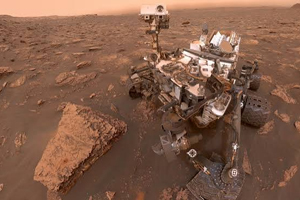
NASA Curiosity (Mars Science Laboratory) rover surpasses another full year of operations on Mars surface today; launched Nov 26, 2011 – landed Aug 5,...
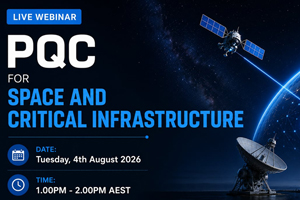
Virtual Series 2026 will offer deeper conversations on why PQC matters and the practical steps businesses should be taking; starts 1:00 pm AEST. Featuring:...
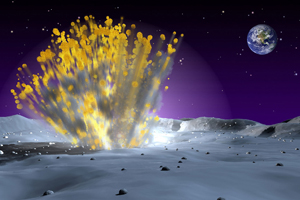
This international lunar science meeting has two objectives: to provide a platform for leading experts to review recent advances across lunar research, from the...
At CSIR International Convention Centre. Key topics are Earth Observation, Developing Space Tourism, Space Supply Manufacturing. Cultural tours are offered.
 Mar 23 —
  Mar 23 — NewSpace:
  Mar 23 — USA: Ad Astra Aloha to
 = All times
 = All times for international terrestrial events in local time unless noted.
 = All times for space events, and…
 = All times for international space / astro events in Hawaii Standard Time unless noted. Add 10 hours to obtain UT (‘Universal Time’).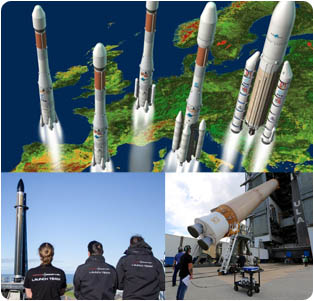
 Mar 24 — The Space Show, Online / Tiburon CA: Dr. David Livingston talks with Bob Zimmerman about the LPI meetings.