Farthest Current Human Outpost Provides Unique Insight and Ongoing Scientific Advancement
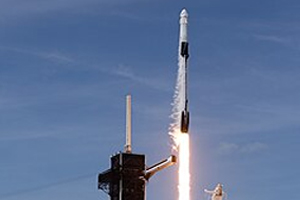
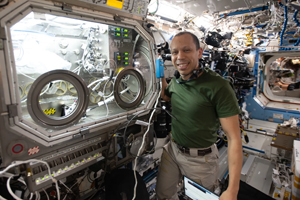
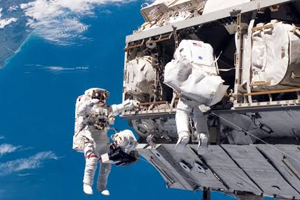
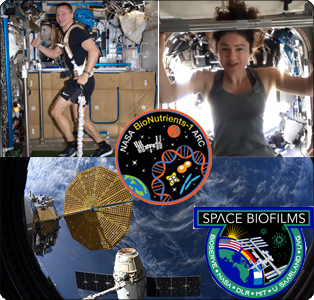
Following CRS-20, final contracted commercial resupply mission of the first generation SpaceX Dragon, ~1,815 kg of cargo – much of which consists of science projects now undergoing analysis – has returned to Earth. Researchers involved in the NASA Ames BioNutrients investigation, concerned with in-space nutrient cultivation utilizing beta-carotene producing yeast cultures, measure growth rates of 4th sample return – reaching 1-year point in 5-year experiment. The Space Biofilm study also received samples for analysis from CRS-20. Conducted by NASA, DLR, UC Boulder, MIT, Universidad del Valle de Guatemala and Saarland University, the Space Biofilm team works to describe the nature of organic accumulations on spacecraft surfaces, both interior and exterior – an issue of great importance for achieving homeostasis in artificial environs. ISS resident Jessica Meir and Andrew Morgan offer advice from space on coping with isolation, as they prepare to return to a world changed by Covid-19: exercise and telecommunication with loved ones are among their recommendations for maintaining normalcy. In a video message posted to Twitter, Meir and Morgan demonstrate space exercises utilizing Advanced Resistive Exercise Device (ARED) and more familiar options such as stationary biking, treadmill running and calisthenics. Not since Sergei Krikalev returned to a dissolved Soviet Union have space residents been forced to grapple with such abrupt changes to terrestrial life in comparison to conditions upon their departure from Earth. (Image Credits: NASA, SpaceX)
MONDAY
Highlights… Apr 13 — ISS, 405-km LEO: Expedition 62 three crew members return to Earth this week, Expedition 63 commences with Command shifting to Chris Cassidy; 242 people from 19 countries have now visited ISS, which has hosted >2,800 research investigations from 108 countries.
TESS Exoplanet Telescope Enters 3rd Observation Year; Current Inventory of International Space Observatories
Transiting Exoplanet Survey Satellite reaches its 2nd full year / enters 3rd year in space April 18. The MIT-led NASA satellite with 4 identical cameras is using the transit method to search for exoplanets. During this 2-year primary mission it was expected to find up to 20,000 exoplanets, and has thus far identified 1,766 candidates. The first space telescope, Hubble, is producing spectacular science and images with its 2.4-meter diameter instrument since 1990; its successor James Webb is set to launch 2021. NASA-ESA SOHO studying the Sun since 1995 remains active. Both launched in 1999, NASA Chandra and ESA XMM-Newton are studying X-ray emissions. 2002-launched Integral craft, built by ESA, NASA and Russia, is detecting radiation in space. Swift is observing gamma-ray bursts since 2004. Twin STEREO (Solar Terrestrial Relations Observatory) A & B operate in Heliocentric Orbit since 2006. 3 THEMIS satellites are in LEO, while 2 renamed ARTEMIS are in Moon orbit, launched 2007. Fermi performing gamma-ray astronomy, and Interstellar Boundary Explorer (IBEX) launched 2008. NEO-WISE infrared survey explorer continues its work since 2011. Nuclear Spectroscopic Telescope Array and Van Allen Probes have been operational since 2012. In Sun-Synchronous Orbit, NASA IRIS studies Sol chromosphere, and ESA Gaia Milky Way Galaxy star mapper at Sun-Earth L2 are working since 2013. India 2015 first dedicated multi-wavelength space observatory Astrosat is at 650-km near equatorial orbit. NASA 2018 Parker Solar Probe is to come within 6.16M km of the Sun in 2024. (Image Credits: NASA, ESA, Roscosmos, ISRO, STScI, Hester & Scowen, ASU, MIT)
Apr 13 — LightSail 2 Visible Pass: Over Hawai’i Islands, LightSail 2 at magnitude of 5.3, to fly by WNW to E from 04:45:26 to 04:52:57.
Continued from…
Jan 2019 – Sep 2020 — New Horizons, Kuiper Belt: Full data collected from 7 instruments during KBO Arrokoth flyby to be transmitted to Earth over this time period.
Nov 2019 – Nov 2020 — Hayabusa2, Earth Trajectory: JAXA Hayabusa2 with two samples collected from C-type asteroid 162173 Ryugu on trajectory for Earth return.
Apr 14-15 — NASA Advisory Council (NAC),Online / Washington DC: NAC Human Exploration and Operations Committee Meeting; covering topics of Human Exploration, Budget, Advanced Exploration Systems, Gateway, Exploration Systems Development, International Space Station, Commercial Crew.
Apr 14-16 — University of Colorado Laboratory for Atmospheric and Space Physics,Boulder CO: 5th Titan Through Time Workshop; cancelled.
Apr 14 — Moon: At last quarter, 12:36; 2.00° SE of Jupiter, 14:00; with Jupiter and Saturn within circle of diameter 5.50°, 21:00.
Apr 15-17 — Mars Exploration Program Analysis Group, NASA,Arlington VA: MEPAG Meeting; virtual meeting.
Apr 15 — Moon: 2.45° SE of Saturn, 01:00; 1.97° SE of Mars, 20:00.
Apr 15 — Apollo Asteroid 2020 FX3: Near-Earth Flyby (0.036 AU)
THURSDAY
Apr 16 — ISS, Soyuz MS-15 / Expedition 62 Crew Return to Earth, 405-km LEO: Oleg Skripochka, Jessica Meir, Andrew Morgan in Russia Soyuz MS-15 to undock from ISS today, and land near Dzhezkazgan, Kazakhstan at 01:18 EDT on 17 Apr.
Apr 16 — SpaceX, Launch Falcon 9 / Starlink 6, SLC-40, Cape Canaveral AFS FL: SpaceX rocket to launch 7th batch of ~60 satellites for Starlink broadband network.
Apr 18 — Transiting Exoplanet Survey Satellite (TESS), Highly Elliptical HEO: Space telescope for NASA Explorers program, designed to search for exoplanets using transit method in an area 400 times larger than that covered by Kepler / K2 mission, reaches 2nd full year / enters 3rd year in space today; launched April 18, 2018.
Apr 19 — The Space Show, Online / Tiburon CA: Dr. David Livingston talks with Dr. Doug Plata on space settlement disease control, Covid-19 public health concerns.
Apr 19 — Moon: 3.9° SE of Neptune, 01:00.
Apr 19 — Apollo Asteroid 2020 FV6: Near-Earth Flyby (0.027 AU)
Emanating from ~6km-wide comet with 5.3-year Solar orbit, visible in constellation Aquarius near star Delta Aquarii, fast, faint meteors peak on this night, best...
The International Research Conference is a federated organization dedicated to bringing together a significant number of diverse scholarly events for presentation within the conference...
Includes ~150 meetings covering the fields of COSPAR Scientific Commissions / Panels / Task Groups, such as SC B: The Earth-Moon System, Planets, and...
From 02 to 07 August 2026, a few thousand geoscientists across diverse disciplines will gather at the 23rd annual meeting of the Asia Oceania Geosciences...
2:45 pm EDT from Johnson Space Center, NASA astronaut Chris Williams will recap his recent eight-month mission aboard the International Space Station. Williams returned to...
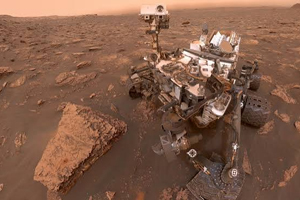
NASA Curiosity (Mars Science Laboratory) rover surpasses another full year of operations on Mars surface today; launched Nov 26, 2011 – landed Aug 5,...
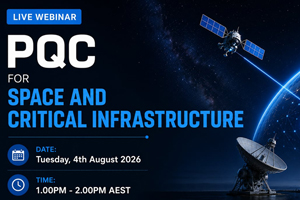
Virtual Series 2026 will offer deeper conversations on why PQC matters and the practical steps businesses should be taking; starts 1:00 pm AEST. Featuring:...
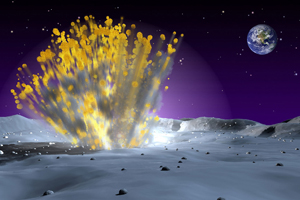
This international lunar science meeting has two objectives: to provide a platform for leading experts to review recent advances across lunar research, from the...
At CSIR International Convention Centre. Key topics are Earth Observation, Developing Space Tourism, Space Supply Manufacturing. Cultural tours are offered.
 Apr 13 —
  Apr 13 — NewSpace:
  Apr 13 — USA: USA Admin executive order would
 = All times for terrestrial events in local time unless noted.
 = All times for international terrestrial events in local time unless noted.
 = All times for space events, and…
 = All times for international space / astro events in Hawaii Standard Time unless noted. Add 10 hours to obtain UT (‘Universal Time’).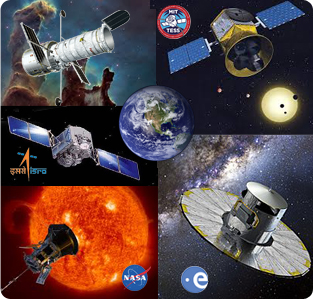
 Apr 19 — The Space Show, Online / Tiburon CA: Dr. David Livingston talks with Dr. Doug Plata on space settlement disease control, Covid-19 public health concerns.