‘New Era of Human Spaceflight’ as SpaceX Poised to Reestablish USA Space Access
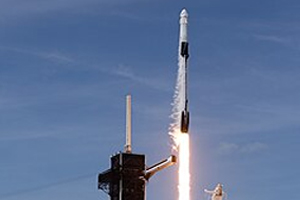
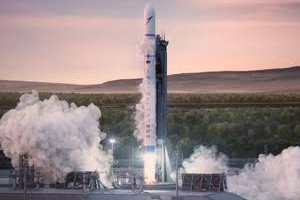
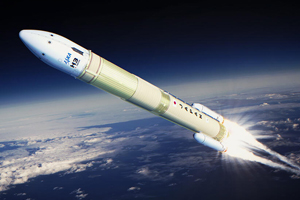
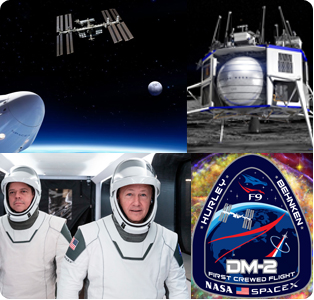
Crew Dragon Demo-2 mission (DM-2) will mark both the first time humans are to be taken to orbit by a private company and the long-awaited return of crewed launches from USA. Lifted by Falcon 9, DM-2 is to depart from KSC Launch Pad 39A to ISS May 27 at 16:32 EDT. NASA astronaut Doug Hurley’s leadership will bookend this auspicious historical interval, having piloted the last Space Shuttle mission STS-135 Atlantis and set to be Spacecraft Commander of DM-2. Bob Behnken will serve as Operations Commander, focusing on rendezvous and docking directly to ISS Harmony Module. Interestingly, space exploration is a family pursuit for Hurley and Behnken, as they are married to Astronauts Karen Nyberg and Megan MacArthur. Established just prior to the 2011 cessation of the Space Shuttle program as Commercial Crew Development, Boeing and SpaceX were granted contracts to fly NASA Astronauts in 2014. An uncrewed test flight of Boeing Starliner Dec 2019, showing possibility of ‘catastrophic’ software error, requires retesting. SpaceX will need to demonstrate parachute system readiness and account for a Merlin engine failure during Starlink 5 deployment prior to DM-2. Meanwhile, Blue Origin leads team including Northrup and Lockheed in development of human lunar lander for Artemis 2024. Independent of NASA, Virgin Galactic clears final test of carrier Cosmic Girl in April 12 flight. (Image Credits: NASA, V. Tangermann, A. Nyberg, SpaceX, Blue Origin )
MONDAY
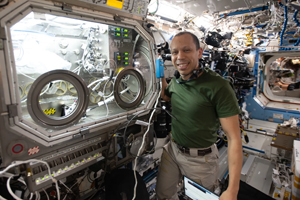
Highlights… Apr 27 — ISS, 405-km LEO: Expedition 63 crewmembers Chris Cassidy, Anatoly Ivanishin, Ivan Vagner are accompanied by CIMON-2 robot utilizing IBM Watson Tone Analyzer to monitor emotional state of Astronauts; expecting Progress 75 cargo transfer duties; NASA releases retrospective on ecological role ISS Earth observation data plays in conservation efforts.
Europa JPL / Caltech Virtual Workshop to Overview Ocean Worlds Research, Lander Mission Planning
Europa In Situ Workshop 2020 half-day virtual conference is planned by JPL / Caltech for April 28-30 (on which day TBA). The 362 registrants should also expect a multiday in-person meeting to be hosted NLT Jan 2021. Talks will cover Europa / ocean worlds lander mission, flight system, landing sites, Clipper mission recon, sampling processes, surface operations, autonomy, and contamination control strategies. The lander mission concept and tech development are being advanced by JPL, GSFC, APL, MSFC and Sandia National Laboratories; and participants speaking from these organizations include (L-R) Earl Maize, Kevin Hand, Cynthia Phillips, Miguel San-Martin, Lori Shiraishi and Grace Tan-Wang. The ~15,000-kg Europa lander, if funded, would launch 2025 on SLS about 1 year after Europa Clipper orbiter, for 2030 Jupiter arrival and 2032 Europa landing. It would search for subsurface biosignatures at 10-cm depth, characterize surface / subsurface material to assess habitability and optimally survive for >22 days. Juno is currently orbiting Jupiter, which contains 70% of planetary mass of the Solar System, and should operate until at least August 2021 collecting more data on Jupiter aurorae, gravity & magnetic fields, core and atmosphere layers, structures, composition. While Juno won’t perform close flybys of any of its intriguing 79 known moons, images of Io detected an unknown volcano, and future remote sensing / images are expected for the 4 Galileo satellites, some of the ring moons and outer irregular moons. (Image Credits: JPL, Caltech, NASA)
Jan 2019 – Sep 2020 — New Horizons, Kuiper Belt: Full data collected from 7 instruments during KBO Arrokoth flyby to be transmitted to Earth over this time period.
Nov 2019 – Nov 2020 — Hayabusa2, Earth Trajectory: JAXA Hayabusa2 with two samples collected from C-type asteroid 162173 Ryugu on trajectory for Earth return.
Apr 28-29 — Space Studies Board of the National Academies, Washington DC: Space Studies Board Meeting; virtual meeting.
Apr 28-30 — JPL, Caltech, Online / Pasadena CA: Europa In Situ Workshop 2020; virtual meeting being planned for half-day workshop with full conference to occur late 2020 or early 2021.
Apr 28-30 — NASA Science Mission Directorate, Human Exploration and Operations Mission Directorate, Science and Technology Mission Directorate Denver CO: Lunar Surface Science Workshop 2020; postponed.
Apr 28 — Venus: At brightest, magnitude -4.52°, 05:00.
Apr 28 — Apollo Asteroid 2020 HT1: Near-Earth Flyby (0.028 AU)
Apr 28 — Apollo Asteroid 2020 HP: Near-Earth Flyby (0.036 AU)
Apr 30 — Moon: 1.84° NNE of Beehive Cluster, 05:00; at first quarter, 10:38.
Apr 30 — Mercury: 0.30° SE of Uranus, 19:00.
Apr 30 — Apollo Asteroid 2020 HB3: Near-Earth Flyby (0.033 AU)
Apr 30 — Apollo Asteroid 2020 GY2: Near-Earth Flyby (0.044 AU)
Apr 30 — Apollo Asteroid 2020 HO3: Near-Earth Flyby (0.045 AU)
FRIDAY
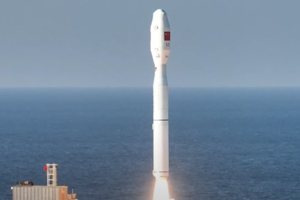
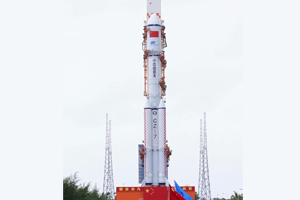
NET May 1 — CNSA, Launch Long March 5B / New Generation Crew Spacecraft First Flight, Wenchang Spacecraft Launch Center, Hainan Island, China (19° N): Ten-day launch window opens for Long March 5B variant Test Flight carrying next-gen crewed spacecraft.
May 1 — Deep Space, Hyperbolic Heliocentric Orbit: Nature Astronomy publishes data from Hubble and ALMA focused on interstellar object 2I/Borisov, finding high levels of carbon monoxide, suggestive of extremely cold origin around gas giant or red dwarf; Hubble continues to monitor object.
May 1 — Intrepid Sea, Air & Space Museum, NYC NY: Astronomy Nights: Water on Mars; with Vlada Stamenkovic of NASA JPL; postponed.
May 1 — May Day,Northern Hemisphere, Earth: Spring festival commonly held on this day (or about halfway between the spring equinox and the summer solstice) to celebrate fertility, fire, and abundance.
May 1 — Moon: 4.0° NNE of Regulus, 20:00.
May 1 — Apollo Asteroid 2020 HK3: Near-Earth Flyby (0.011 AU)
May 1 — Amor Asteroid 2020 HU2: Near-Earth Flyby (0.019 AU)
May 1 — Apollo Asteroid 2020 HF4: Near-Earth Flyby (0.023 AU)
SATURDAY
May 2 — The Astronomical League,Global: Spring Astronomy Day 2020; astronomical societies, planetariums, museums, observatories sponsoring remote viewing sessions, presentations, workshops.
May 2 — International Lunar Observatory Association, Daejeon National Science Museum (DNSM), KASI, Daejeon, S Korea: Galaxy Forum Korea 2020: Daejon; 14:00-18:00 at DNSM; postponed to September 26.
SUNDAY
May 3 — Maunakea Observatories, Hilo HI: AstroDay 2020; at Prince Kuhio Plaza, 10:00-16:00 featuring Starlab, demonstrations, solar viewing, science, prizes, bots; postponed.
May 3-8 — European Geoscience Union (EGU),Vienna, Austria: EGU General Assembly 2020; temporarily pausing registration – conference TBC.
May 3-8 — ESA, Observatoire de Paris, JPL, Caltech, Les Houches School of Physics (Ecole de Physique),Les Houches, France: Planet Mars V Workshop; cancelled.
May 3 — Apollo Asteroid 2020 HL1: Near-Earth Flyby (0.032 AU)
Emanating from ~6km-wide comet with 5.3-year Solar orbit, visible in constellation Aquarius near star Delta Aquarii, fast, faint meteors peak on this night, best...
The International Research Conference is a federated organization dedicated to bringing together a significant number of diverse scholarly events for presentation within the conference...
Includes ~150 meetings covering the fields of COSPAR Scientific Commissions / Panels / Task Groups, such as SC B: The Earth-Moon System, Planets, and...
From 02 to 07 August 2026, a few thousand geoscientists across diverse disciplines will gather at the 23rd annual meeting of the Asia Oceania Geosciences...
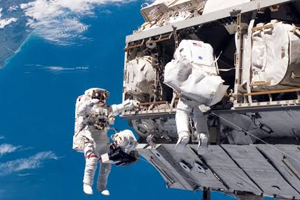
2:45 pm EDT from Johnson Space Center, NASA astronaut Chris Williams will recap his recent eight-month mission aboard the International Space Station. Williams returned to...
NASA Curiosity (Mars Science Laboratory) rover surpasses another full year of operations on Mars surface today; launched Nov 26, 2011 – landed Aug 5,...
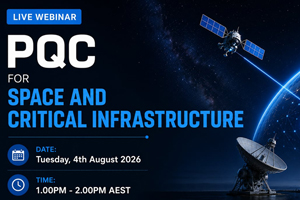
Virtual Series 2026 will offer deeper conversations on why PQC matters and the practical steps businesses should be taking; starts 1:00 pm AEST. Featuring:...
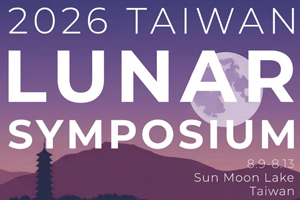
This international lunar science meeting has two objectives: to provide a platform for leading experts to review recent advances across lunar research, from the...
At CSIR International Convention Centre. Key topics are Earth Observation, Developing Space Tourism, Space Supply Manufacturing. Cultural tours are offered.
 Apr 27 —
  Apr 27 — NewSpace:
  Apr 27 — USA: Multi-partisan support for commercial sector partnerships to
 = All times for terrestrial events in local time unless noted.
 = All times for international terrestrial events in local time unless noted.
 = All times for space events, and…
 = All times for international space / astro events in Hawaii Standard Time unless noted. Add 10 hours to obtain UT (‘Universal Time’).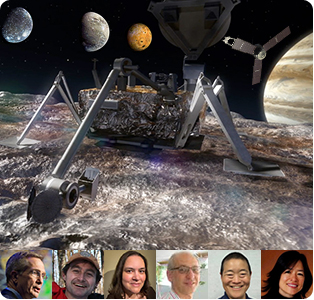
 Apr 30 — SpaceCom, Online / Houston TX: Abstracts Due: 6th SpaceCom 2020; to be held Nov 18-19.